Cape Coral Yacht Broker: Pre-Listing Checklist
The pre-listing walkthrough every Cape Coral yacht seller should demand from their broker — pricing, prep, paperwork, and marketing plan.
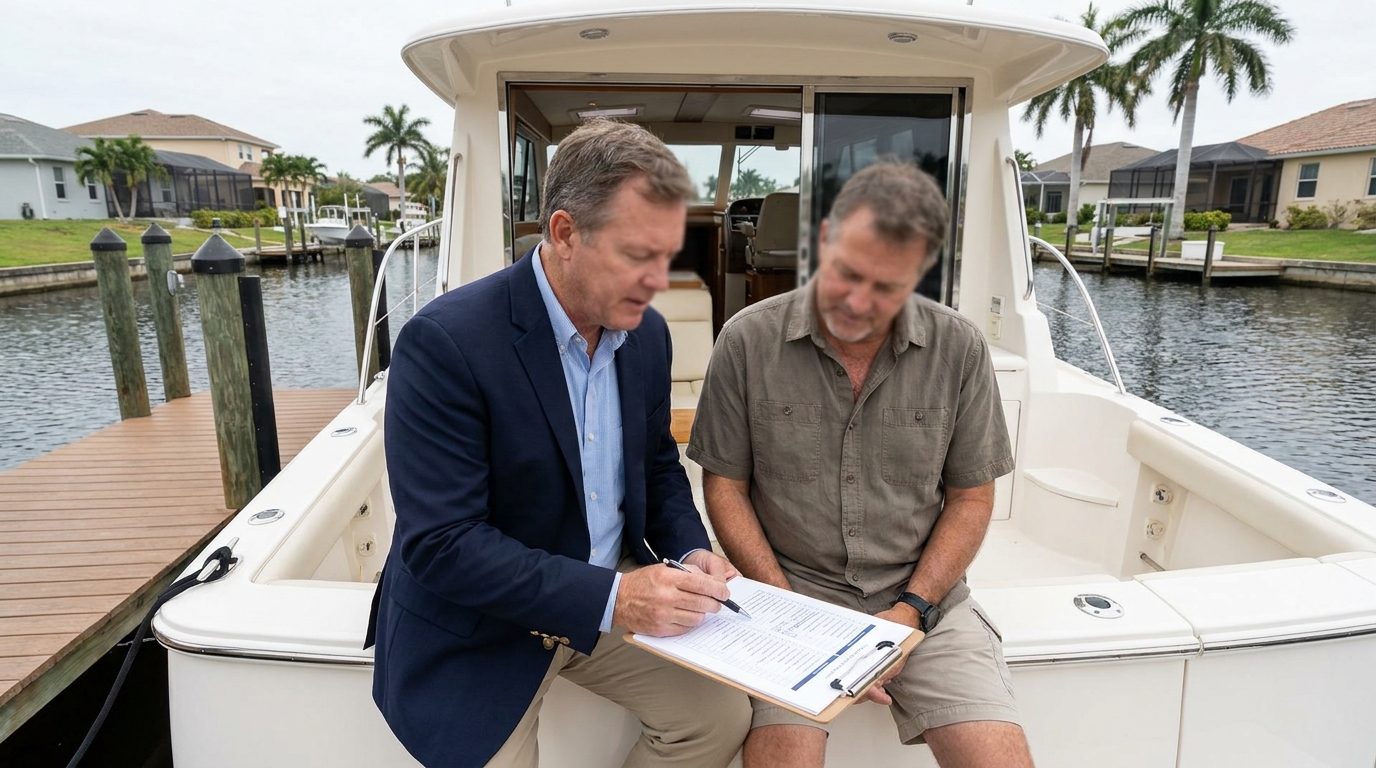
Before you sign a central listing agreement in Cape Coral, your broker should walk you through five specific things: a documented comparable-sales analysis for your hull and length, a written pre-listing condition punch list, a marketing plan that accounts for out-of-state buyers, proof of Florida DBPR licensure with an escrow-protected trust account, and a clear commission structure. If any of those five are missing from the first meeting, keep interviewing.
Cape Coral sellers occupy a distinctive corner of the Florida market. The canal network, the seasonal buyer cycle, and the sheer volume of 32-to-60-foot cruisers changing hands make pre-listing preparation the single biggest lever on both time-on-market and net proceeds. What your broker shows you in that first meeting tells you almost everything about how the listing will actually run.
What comparable listings should your broker pull first?
Before pricing your vessel, your broker should present three to five active and three to five recently sold comparables — same builder or peer builder, similar length, similar engine hours, and similar Gulf Coast location. Cape Coral pricing pulls from the broader Southwest Florida market, not national averages, and the comps should reflect that.
Ask specifically for sold data, not just active listings. Active listings tell you what sellers hoped for; solds tell you what buyers paid. A Cape Coral 40-footer competing against Fort Myers, Punta Gorda, and Naples inventory needs pricing that reflects the current absorption rate on the west coast, not last spring's asking prices.
What pre-listing condition items should you review together?
Your broker should walk the boat with you and produce a written punch list covering documentation, mechanical service records, rig or running gear condition, canvas and upholstery, bottom paint age, and cosmetic triage. Industry pre-listing guidance treats this as a standard deliverable — a photographed list with rough cost estimates, not a verbal shrug.
In Cape Coral, three items deserve extra attention:
- Bottom and running gear. Brackish canal water and year-round growth mean surveyors expect recent haul-out photos.
- Storm history and mooring plan. With hurricane season running roughly June through November, buyers and their insurers want to see that the vessel has a documented storm plan and a haul-out or protected berth arrangement.
- Draft and air-draft documentation. Because many Cape Coral canals have fixed bridges and shallow entrances, buyers filter aggressively on draft and bridge clearance. Publishing accurate numbers up front prevents wasted showings.
How should your broker verify title, HIN, and lien status?
Before your boat goes live, your broker should verify that the Hull Identification Number matches the state title and any USCG documentation, confirm lien status through a Florida title check, and confirm the registered owner has authority to sell. This is standard practice in Florida yacht transactions and it protects the closing, not just the listing.
If there's a loan on the vessel, the broker should also confirm the payoff process with your lender before marketing begins. Buyers who arrive with financing in hand lose patience quickly if title questions surface at closing — Cape Coral's out-of-state buyer pool is especially unforgiving on paperwork delays.
What should the marketing plan actually include?
Your broker should show you a specific marketing plan — not a promise. That means the MLS syndication list, the photography and video scope, the drone or walkthrough approach, the copywriting angle, and the remote-buyer workflow for FaceTime, WhatsApp, or Zoom showings. A seasonal Cape Coral listing without a remote-showing plan is leaving money on the dock.
A useful benchmark: a large share of Cape Coral buyers are out-of-state or seasonal residents arriving between fall and spring. Listings that go live before or during that window, with production-quality photography and same-day video response, consistently see more showings than listings dropped into the summer lull. Ask your broker to show you two or three examples of listings they've prepared this way.
Is your broker licensed, bonded, and using proper escrow?
Under Florida Statute 326.002, anyone selling vessels 32 feet or longer for compensation must hold a Yacht and Ship Broker or Salesperson license issued by the Florida Department of Business and Professional Regulation (DBPR). Verify the license through the DBPR online search tool before you sign anything — it takes 60 seconds and it is non-negotiable.
Your broker should also confirm, in writing, that deposits will be held in a licensed escrow or trust account — not a personal or general business account. This is a baseline requirement under Florida administrative rules and IYBA standards, and it is one of the clearest signals of a professional operation.
What commission and contract terms should you expect?
Yacht broker commission on used vessels in the Florida and Gulf Coast market typically runs 8–10% of the final selling price, with 10% common for mid-market boats. Cape Coral sellers should expect quotes inside that band. What matters more than the headline number is what the agreement says about term length, co-brokerage splits, cancellation, and marketing spend.
| Checklist Item | What Your Broker Should Show | Why It Matters in Cape Coral |
|---|---|---|
| Comparable sales | 3–5 active and 3–5 sold comps, Gulf Coast | Pricing follows SW Florida absorption, not national data |
| Condition punch list | Written, photographed, with rough cost estimates | Sets buyer expectations before survey |
| Title & HIN | Florida title check, HIN verification, lien payoff plan | Prevents closing delays with remote buyers |
| Marketing plan | MLS syndication, photo/video scope, remote showings | Reaches seasonal and out-of-state buyers |
| License & escrow | DBPR license number, trust account confirmation | Required by Florida Statute 326.002 |
| Commission | 8–10% with clear term and cancellation terms | Sets net-proceeds math up front |
How does Worldwide Yacht Sales approach a Cape Coral listing?
— the exact skill set a Cape Coral seller needs when a large share of the buyer pool is arriving from out of state.
Practically, that means the pre-listing walkthrough covers everything above in one session: comps, condition, title, marketing, licensing, and commission — with the paperwork to back each piece up.
Frequently asked questions
Do I need a licensed yacht broker to sell my boat in Cape Coral?
If your vessel is 32 feet or longer and you're hiring someone to sell it for compensation, that person must hold a Florida DBPR Yacht and Ship Broker or Salesperson license under Florida Statute 326.002. You can sell your own boat without a license, but any compensated representative must be licensed. Verify the license through the DBPR online search before signing a listing agreement.
What commission should I expect to pay a Cape Coral yacht broker?
Used yacht brokerage commissions on the Gulf Coast typically run 8–10% of the final selling price, with 10% common for mid-market vessels. Cape Coral pricing generally sits inside that band. More important than the headline number is the contract's term length, co-brokerage split, cancellation clause, and what marketing spend is included at that rate.
When is the best time to list a yacht for sale in Cape Coral?
Peak buying season in Cape Coral runs fall through spring, when seasonal residents and out-of-state buyers are in Florida. Listings that go live before or during that window typically see more showings and stronger pricing. Summer listings can still sell, but they compete against thinner buyer traffic and hurricane-season insurance friction between June and November.
What documents should I gather before meeting a broker?
Gather the state title, USCG documentation if applicable, current registration, engine and generator service records, survey reports, maintenance logs, warranty transfers, and any loan payoff information. Also collect original owner's manuals and equipment receipts. A broker who sees a complete document set at the first meeting can price and market more aggressively than one working from memory and guesswork.
How do Cape Coral canals affect who will buy my boat?
Cape Coral's canal network includes fixed bridges and shallow entrances that constrain draft and air-draft. Shallower-draft motor yachts generally have a wider buyer pool than deeper-draft sailboats in many neighborhoods. Your listing should publish accurate draft and bridge-clearance numbers so buyers filter themselves in or out before scheduling a showing.
Should my broker handle remote showings for out-of-state buyers?
Yes. A large share of Cape Coral buyers are out-of-state or seasonal, so remote showings via FaceTime, WhatsApp, or Zoom, plus digital documentation and remote closing capability, are essential. Ask your broker to walk you through their remote-buyer workflow specifically — how quickly they respond to inquiries, how they handle deposits, and how they coordinate surveys and sea trials for buyers who fly in for one visit.
Closing thought
The pre-listing meeting is the entire relationship in miniature. A broker who arrives with comps, a written condition punch list, a marketing plan, verifiable licensing, and clear commission terms is showing you how the sale will run. A broker who arrives with a handshake and a signature line is showing you that too. Cape Coral sellers who want the full walkthrough handled professionally can reach Worldwide Yacht Sales at https://worldwideyachtsalesinc.com to start the conversation.