When to Buy a Yacht in Florida: Cape Coral, FL Guide
Learn the best time of year to buy a yacht in Florida, with Cape Coral market timing, off-season pricing windows, and hurricane-season buying strategy.
The best time of year to buy a yacht in Florida is late summer through early fall — roughly August through October — when hurricane-season anxiety softens seller expectations, snowbird demand has receded, and inventory that lingered through the peak selling months becomes genuinely negotiable. In Cape Coral specifically, that window opens a bit earlier than it does farther up the coast because the local buyer pool thins sharply once winter residents head north.
If your priority is selection rather than savings, the calculus flips: November through April brings the freshest listings, the tightest pricing, and the fullest brokerage calendars. Below, we walk through how the seasons actually behave in Southwest Florida's yacht market, where the pricing leverage lives, and how to time an acquisition around Cape Coral's canal, bridge, and storm realities.
Why does yacht buying season in Florida swing so hard by month?
Florida's yacht market runs on two overlapping cycles: the snowbird migration and the Atlantic hurricane season. Peak buyer demand and firmer pricing hold from roughly November through April, driven by winter residents and visitors touring vessels in ideal weather. Late summer — August and September — sees a sharp slowdown in transactions, longer days-on-market, and sellers who are noticeably more open to offers.
Cape Coral amplifies both cycles. The city's identity as a snowbird and boating destination means the buyer pool contracts dramatically in July and August, while its Gulf exposure makes hurricane-season insurance quotes, haul-out logistics, and evacuation planning very real conversations at the negotiating table. This rhythm plays out every year across the 30–55 ft range that Cape Coral buyers most often target.
When is the off season for yacht deals in Florida?
The off season for yacht deals in Florida runs from roughly August through October, with the deepest discounts typically available in late August and September at the peak of hurricane season. During these months, listings that didn't sell during the winter high season have been on the market for four to six months, carrying costs are mounting for sellers, and storm risk pressures owners to move vessels before named-storm activity intensifies.
Nationally, brokerage context helps frame what "discount" means in this segment. As of the most recent reporting, the average asking price for a pre-owned yacht is $924,713 — roughly $19,799 per foot at an average 47 ft length — while the median sold price sits at $419,000 and the average actual sale price around $381,566 in Q2 2026. That spread between asking and sold is where off-season negotiation lives, and it widens materially in August and September.
How do yacht prices in Florida change by season?
Yacht prices in Florida hold firmest from November through April, soften modestly in May through July, and reach their most negotiable point from August through October. Sellers list aggressively ahead of the snowbird window and generally hold their numbers while showings are strong; once demand cools in summer, price reductions become routine and buyer concessions on survey issues, electronics upgrades, and closing timelines widen.
| Season | Months | Market Behavior | Buyer Leverage |
|---|---|---|---|
| Peak (snowbird) | November–April | Highest demand, fresh inventory, firm pricing | Low |
| Shoulder | May–July | Cooling demand, early price adjustments | Moderate |
| Off season (hurricane) | August–October | Sharp slowdown, longer days-on-market, motivated sellers | High |
| Transition | Late October–Early November | Inventory refresh ahead of snowbirds | Moderate |
How does Cape Coral's canal and bridge system affect buying timing?
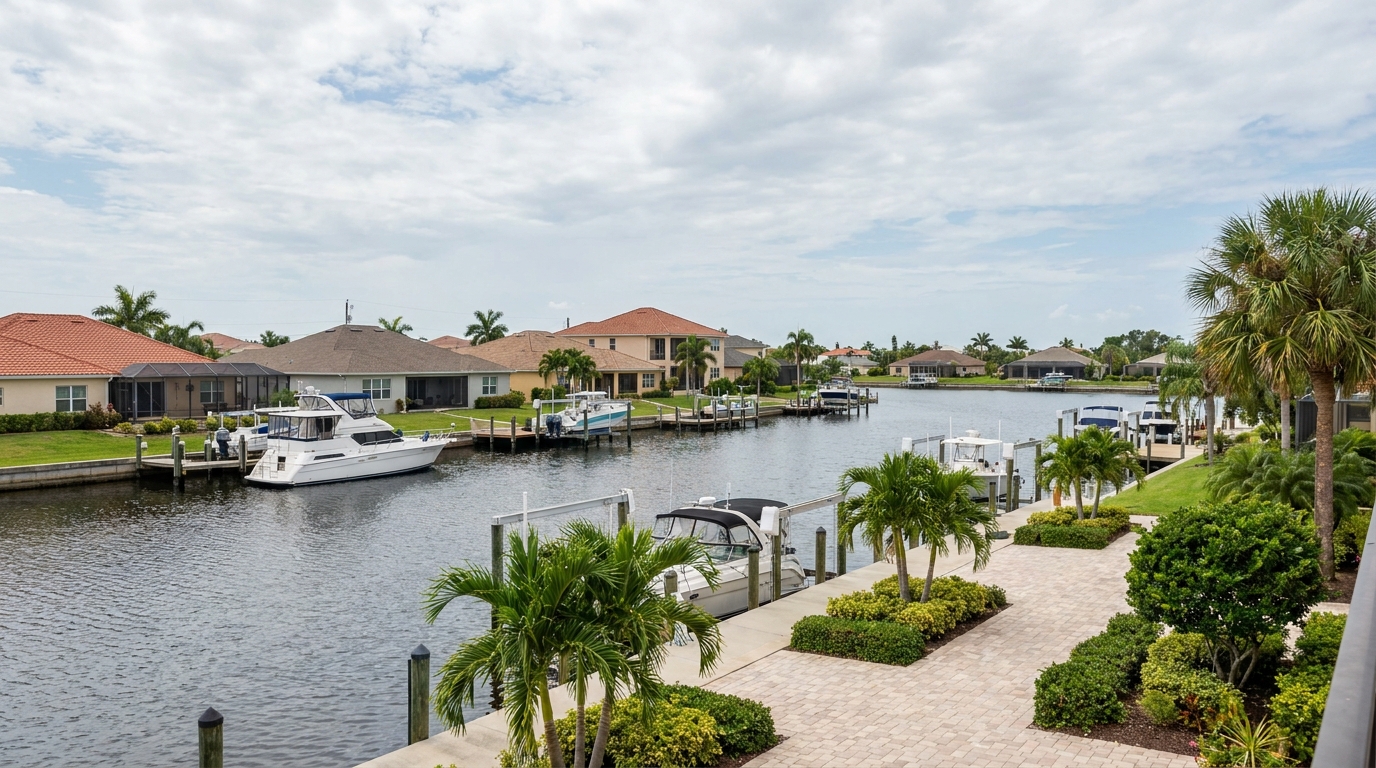
Cape Coral's canal network and bridge clearances shape which vessels a buyer can realistically own at a given address, which in turn changes the seasonal math. Larger flybridge yachts require direct Gulf-access properties with no bridge restrictions, and those homes are in structurally short supply — roughly 4.5 to 5.3 months of inventory as of mid-2026, with waterfront listings down approximately 25–28% year-over-year.
That tightness matters for timing. A buyer looking for a 45+ ft vessel isn't just shopping a yacht market — they're shopping a paired real-estate market where direct Gulf-access homes carry a median of about $692,500, Gulf-access-with-bridges homes sit near $615,000, and freshwater canal homes run around $465,000. Combined capital outlay for the yacht plus the property routinely pushes past $1 million, so the off-season savings on the vessel side often subsidize the tighter real-estate side.
Is hurricane season a good or bad time to buy a yacht in Cape Coral?
Hurricane season — June through November, peaking August and September — is the strongest buyer's market of the year in Cape Coral, but it carries real operational costs. Sellers face insurance renewals, mandatory marina haul-out or evacuation policies during named storms, and storage expenses that pressure them to accept offers they'd have rejected in February. Buyers willing to take on storm-preparedness planning inherit that leverage.
The trade-offs are concrete: higher insurance premiums, the need for a hurricane plan compliant with your marina's policies, and the possibility that a survey or sea trial gets delayed by weather. For buyers who already own a Gulf-access property with proper dockage, canopy, and lift permits under Cape Coral's dock setback and dimension rules, taking possession in September and cruising through the calm winter months is a genuinely smart sequence.
What should Cape Coral buyers do before the November snowbird rush?
Cape Coral buyers should lock in financing, complete a broker relationship, and identify target vessel classes before October so they can move decisively when the right listing appears. The November-through-April window brings the freshest inventory, but it also brings competing buyers from across the Midwest and Northeast, and desirable direct Gulf-access-appropriate yachts move quickly at asking or near-asking.
Pre-season preparation typically includes: confirming vessel registration requirements under Florida law, understanding manatee-zone and no-wake restrictions that affect your intended cruising areas, verifying your dock's air-draft and beam capacity, and clarifying hurricane haul-out obligations with your marina. That kind of pre-work keeps a peak-season acquisition from turning into a peak-season scramble.
Frequently Asked Questions
What month has the lowest yacht prices in Florida?
September typically sees the lowest yacht prices in Florida. It sits at the statistical peak of Atlantic hurricane season, snowbird demand is still months away, and any vessel listed since spring has been on the market long enough that carrying costs are pressuring the seller. Expect the widest gap between asking and accepted offers, along with more flexibility on survey concessions and closing terms.
Is it cheaper to buy a yacht in summer or winter in Cape Coral?
It is meaningfully cheaper to buy a yacht in summer than in winter in Cape Coral. Summer — particularly August and September — brings hurricane-season pressure on sellers and thin buyer competition, while winter (November through April) is peak snowbird demand with firm pricing. The tradeoff is that summer inventory is what didn't sell in winter, so selection is narrower even if pricing is softer.
How much do yachts typically cost in the Cape Coral market?
Cape Coral buyers commonly target the 30–55 ft range, where typical mid-range pre-owned yachts run $300,000 to $600,000. Nationally, the pre-owned brokerage median is $419,000 with an average asking price of $924,713 as of 2026. High-end 70–90 ft yachts start around $2,000,000. Larger vessels usually require pairing with a direct Gulf-access Cape Coral home at a median near $692,500.
Does hurricane season affect yacht insurance costs in Florida?
Yes, hurricane season materially affects yacht insurance costs and coverage terms in Florida. Underwriters price in Gulf storm exposure, and many policies require documented hurricane plans, haul-out arrangements, or evacuation protocols that align with your marina's named-storm policy. Cape Coral owners should factor these premiums and operational requirements into total ownership economics before closing on a vessel between June and November.
How tight is Cape Coral waterfront inventory in 2026?
Cape Coral waterfront inventory tightened approximately 25–28% year-over-year in mid-2026, with direct Gulf-access homes — the top tier for large-yacht owners — showing roughly 4.5 to 5.3 months of supply. That scarcity supports firm pricing on no-bridge properties at a median around $692,500 and pushes combined yacht-plus-property capital outlay well above $1 million for buyers of 40+ ft vessels.
What local rules should Cape Coral yacht buyers know before closing?
Cape Coral yacht buyers should confirm Florida vessel registration requirements, familiarize themselves with residential-canal no-wake zones and Lee County manatee-protection speed restrictions, and verify that their intended dockage complies with municipal rules governing dock setbacks, maximum dimensions, seawall standards, and boat-lift permitting. Standard Florida boating safety equipment applies, and marina policies may impose mandatory haul-out or evacuation requirements during named storms.
Should I buy a yacht before or after moving to Cape Coral?
Secure the direct Gulf-access property first if you're targeting a 40+ ft vessel, because Cape Coral's bridge clearances and canal geometry dictate which yachts a given address can accommodate. Buyers who purchase the vessel first often discover their intended property can't handle its air-draft, draft, or beam. Coordinating both purchases with a broker who understands the paired market avoids expensive mismatches.
The Bottom Line on Timing Your Cape Coral Yacht Purchase
If you're optimizing for price, plan to be ready to write offers in August, September, and October — the off-season window where hurricane pressure and thin demand hand real leverage to prepared buyers. If you're optimizing for selection and a smooth acquisition, position yourself in October to move on fresh listings as the November-through-April snowbird cycle brings inventory to market.
Either way, the work that separates a good outcome from a frustrating one happens before the transaction — matching vessel to property, understanding the local regulatory and storm-season landscape, and lining up financing and logistics. Readers in Cape Coral, FL who want this handled professionally can reach Worldwide Yacht Sales at https://worldwideyachtsalesinc.com — a Cape Coral-based brokerage publishing buyer guides and local market commentary aimed at Southwest Florida yacht buyers.