Bringing a Foreign Boat to the United States: Costs and Steps
A Seattle-focused guide to importing a foreign boat to the U.S. — CBP entry, duty rates, EPA compliance, Coast Guard documentation, and realistic costs.
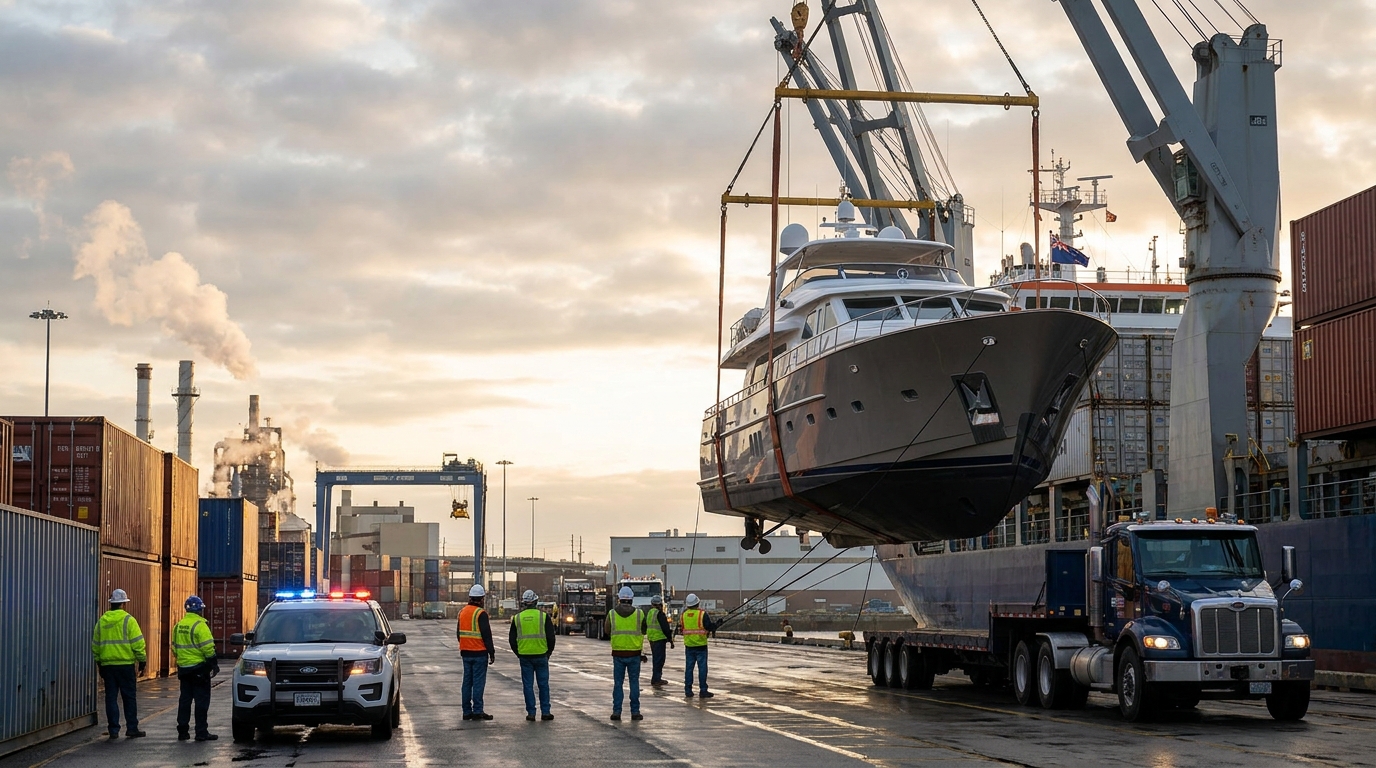
You've found the right boat. She's just flying the wrong flag. Whether she's a Dutch-built steel trawler crossing from Vancouver into Puget Sound, an Italian motoryacht acquired in the Mediterranean, or a Taiwanese sport fisher purchased through a broker overseas, bringing a foreign-flagged vessel into U.S. waters permanently is a formal process — one governed by U.S. Customs and Border Protection (CBP), the Environmental Protection Agency (EPA), and the U.S. Coast Guard.
The good news: the path is well-mapped. The less-good news: skipping steps is expensive, and Seattle is a port where CBP and USCG presence is meaningful. Here's how to bring a boat to the United States, what it costs, and where buyers in the Pacific Northwest tend to get tripped up.
When a Foreign Boat Becomes an "Import"
A foreign-flagged recreational vessel is considered imported into the United States the moment it enters U.S. customs territory with the intent to remain in U.S. commerce. That's the trigger. Once that intent exists, the importer of record must file a formal entry — CBP Form 7501, the Entry Summary — and pay the applicable federal customs duty under the Harmonized Tariff Schedule (HTSUS).
Form 7501 is the only official CBP proof that duty has been paid. Keep that in mind: a bill of sale, a foreign registration, and even a U.S. Coast Guard Certificate of Documentation are not substitutes. If you ever resell the vessel, the next buyer's broker will ask for the 7501.
The Cruising License Alternative
If you're not ready to import, and your vessel is flagged in a reciprocating country, you can enter U.S. waters temporarily under a CBP Cruising License per 19 C.F.R. § 4.94. The license is valid up to one year and lets you cruise freely — through the San Juan Islands, up to the Canadian border, down to the Columbia River — without formal importation or duty payment. The conditions are strict: the vessel must be used solely for private pleasure and cannot be offered for sale or charter to U.S. residents while under the license.
For buyers in Seattle who want to test-run ownership before committing to full importation, this is a legitimate bridge. But the moment you list the boat for sale to a U.S. buyer or intend to keep her here indefinitely, the cruising license no longer covers you.
The Real Cost of Importing a Boat to the U.S.
Buyers ask the same question first: how much does it cost to import a boat to the U.S.? The answer has three layers.
1. Federal Customs Duty
Recreational boats classified under HTSUS Chapter 89 (subheading 8903) are subject to a standard duty rate of approximately 1.5% of declared customs value. That's the baseline. On a $1.2 million motoryacht, that's roughly $18,000 in duty at the standard rate.
The complication is Section 301 tariffs, which apply based on country of build — not the flag the boat currently flies, and not the seller's nationality. Vessels built in China, for example, can face additional Section 301 tariffs of 15% to 50% or more on top of the base duty. A Chinese-built sport fisher and a Dutch-built trawler at the same declared value will produce very different duty bills. Country of build determines liability, and it's assessed under 19 U.S.C. § 1202 and the Tariff Act of 1930.
2. EPA Engine Compliance
At the time of customs entry, the importer must file an EPA engine import declaration (Form 3520-21 for nonroad engines, in most recreational cases) certifying that the vessel's marine engines comply with EPA emissions regulations under 40 C.F.R. Parts 1042 and 1045. CBP will not release the vessel without a properly completed EPA declaration.
For most late-model production boats with EPA-compliant engines, this is a paperwork step. For older vessels, custom builds, or boats with non-U.S.-spec engines, it can become the single largest headache in the import — non-compliant engines may require modification, export, or in some cases destruction. Narrow exemptions exist for display, research, or competition use, but they require specific EPA coding and sometimes prior approval.
3. Brokerage, Bonds, and Ancillary Costs
Beyond duty and EPA compliance, you'll typically pay:
- A licensed customs broker's fee to prepare and file entry documents
- A single-entry or continuous customs bond (required for formal entries)
- Marine survey and delivery costs (often the largest line items on the invoice)
- USCG documentation fees if you're documenting the vessel federally
- Washington State use tax on the vessel's value when principally used in Washington — this is separate from federal customs duty and is administered by the Washington Department of Revenue
That last point catches Seattle buyers off guard. Washington's use tax on boats moored or principally used in state waters is a significant cost, currently well above most sales-tax jurisdictions once local rates are added. Budget for it early. If you plan to keep the boat at Shilshole Bay Marina, Elliott Bay Marina, or anywhere along Lake Union, you're within the state's reach.
U.S. Coast Guard Documentation Is a Separate Process
Federal customs duty and Coast Guard documentation are often confused. They are not the same.
USCG documentation under 46 U.S.C. Chapter 121 and 46 C.F.R. Part 67 is filed via Form CG-1258 with the National Vessel Documentation Center (NVDC). To be eligible, the vessel must be wholly owned by U.S. citizens, measure at least 5 net tons, and meet the criteria in 46 C.F.R. §§ 67.3–67.19.
Documentation gives you a federally recognized title, easier international recognition, and eligibility for preferred ship mortgages — useful if you're financing. But it does not prove you paid customs duty. CBP and USCG maintain separate records, and dockside inspections in Puget Sound will occasionally test that boundary.
The Seattle-Specific Considerations
Importing through the Pacific Northwest has its own texture. Vessels frequently arrive from British Columbia — a short delivery from Vancouver or Sidney — and the Blaine and Friday Harbor ports of entry see steady recreational traffic. Winter weather windows matter: many buyers time deliveries between April and October to avoid the worst of the Strait of Juan de Fuca in a north-Pacific gale, and to give surveyors and yard time to complete pre-import work before the boat is presented to CBP.
If the vessel needs any pre-import work — engine compliance modifications, survey remediation, systems recommissioning — Seattle's boatyard capacity in Ballard and along the Ship Canal is deep but heavily booked in shoulder seasons. Planning your entry timing around yard availability, not just weather, is often the difference between a smooth import and a stalled one.
Frequently Asked Questions
Do I have to pay U.S. duty again if I sell the boat later?
No. Federal import duty is a one-time obligation. Once the vessel has been properly imported and duty paid — evidenced by CBP Form 7501 — she's treated as U.S. domestic goods and is not subject to federal customs duty again on resale or re-entry.
Can I keep the boat foreign-flagged and just visit the U.S.?
Yes, temporarily, under a CBP Cruising License if your flag state has a reciprocal agreement with the U.S. But you can't offer the vessel for sale or charter to U.S. residents while under that license, and you'll typically need to depart U.S. waters at least once per year.
What happens if I skip the formal entry?
CBP can assess unpaid duty plus interest, impose civil penalties for negligence or fraud, and — in serious cases — seize the vessel. CBP does check foreign-built boats during dockside inspections, especially those listed for sale without visible import documentation.
Does the boat's flag determine duty?
No. Country of build determines duty liability and HTSUS classification, not the flag or the owner's nationality.
Getting the Import Right the First Time
Importing a foreign vessel is a coordination problem more than a legal one. The rules are written down. What trips buyers up is sequencing — engaging a customs broker after the boat has already arrived, discovering EPA non-compliance mid-entry, or filing for USCG documentation without a 7501 in hand.
Seattle buyers evaluating an international purchase can reach Worldwide Yacht Sales at worldwideyachtsalesinc.com to discuss the vessel, the country-of-build implications, and how the import timeline fits with survey, delivery, and moorage planning in the Pacific Northwest. Bringing a foreign boat home should feel like the start of the adventure — not the hardest part of it.