How to Import a Boat from the Bahamas and Pay U.S. Customs Duty
A step-by-step guide to importing a boat from the Bahamas into the U.S., including CBP entry, duty rates, EPA compliance, and payment procedures.
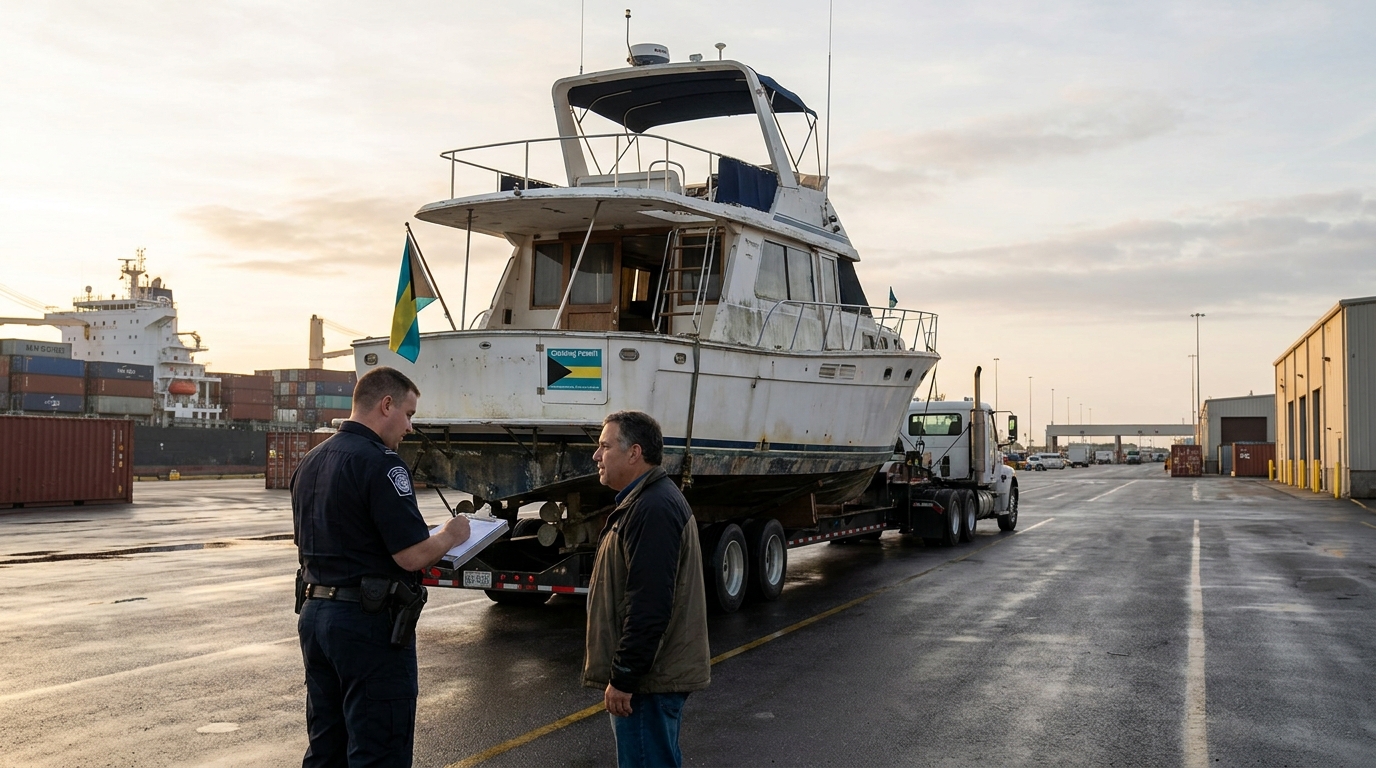
You've found the right boat in the Bahamas — or you've cruised your own vessel south, fallen for the freedom, and now want to bring her home under U.S. registry. Either way, the moment you point the bow toward a U.S. port of entry, you enter the world of Customs and Border Protection, the Harmonized Tariff Schedule, and a paper trail that will follow that hull for the rest of its life. Get it right the first time, and the vessel becomes a clean, freely transferable U.S. asset. Get it wrong, and you can face duty reassessment, penalties, or even seizure years down the road.
For Seattle buyers, the Bahamas is a long delivery away, but the appeal is real: a strong secondary market for cruisers, sportfishers, and motoryachts wintered in Nassau, the Abacos, and the Exumas, often at prices that justify a coastwise or overland move back to Puget Sound. Here's how the import process actually works, and where the money changes hands.
The Big Picture: What CBP Actually Requires
Importing a boat from the Bahamas into the United States is treated as a standard merchandise import under Title 19 of the U.S. Code. That means you — or your customs broker acting on your behalf — become the importer of record. You file a formal entry, declare the vessel's classification and value, pay duty, and only then does CBP release the vessel into U.S. commerce.
The core requirements break down into five moving parts: reporting arrival, filing the entry, certifying EPA emissions compliance, paying duty, and keeping the paperwork forever. Miss any of them and the whole chain is compromised.
Step 1: Report Arrival Immediately at a U.S. Port of Entry
The moment your vessel crosses into U.S. waters from the Bahamas, the master must report arrival to CBP at a designated port of entry. Under 19 U.S.C. § 1433 and 19 CFR Part 4, you're required to provide vessel name, registration or documentation number, owner and master information, passenger details, foreign ports visited, and — critically — the total value of all foreign acquisitions, including the vessel itself if you purchased her abroad.
For Pacific Northwest owners, this reporting typically happens at the vessel's first U.S. touch after the delivery voyage, whether that's a Florida port following a Bahamas departure or a West Coast port after a longer passage. If the boat is being shipped by transport rather than delivered on her own bottom, the reporting happens at the port where the ship offloads.
Step 2: File the Formal Entry (CBP Form 7501)
The heart of the import is CBP Form 7501, the Entry Summary. It's filed electronically through ACE (the Automated Commercial Environment) under 19 U.S.C. § 1484 and 19 CFR Parts 141–143. On it, you declare:
- The HTSUS classification — most pleasure craft fall under heading 8903
- The declared customs value (what you paid, or fair market value)
- The country of origin — meaning where the vessel was built, not the Bahamas as the country of export
- The applicable duty amount
Country of origin is the line where many buyers get surprised. A boat built in Italy, Taiwan, or China and later sold out of a Bahamian marina is still an Italian, Taiwanese, or Chinese boat for tariff purposes. Section 301 tariffs and other trade remedy measures attach based on where the hull was laid up, not where you signed the bill of sale.
Step 3: Understand CBP Boat Import Duty Rates
The commonly cited baseline duty for HTSUS heading 8903 pleasure craft is approximately 1.5% of declared value. That's the number most brokers quote first, and for a standard fiberglass motoryacht or sailing vessel it's often accurate.
But 1.5% is a starting point, not a guarantee. The exact rate depends on the specific HTSUS subheading — which varies by vessel type, length, and propulsion — and any active tariffs layered on top based on country of manufacture. A Chinese-built vessel, for example, can carry Section 301 tariffs that meaningfully change your total duty exposure. The current Harmonized Tariff Schedule published by the U.S. International Trade Commission is the authoritative reference, and the numbers shift with USTR notices.
This is why experienced brokers price the deal with duty modeled from the outset, rather than treating it as a rounding error at closing.
Step 4: File EPA Form 3520-1 for Engine Emissions
Every marine engine on the vessel has to be certified as compliant with EPA nonroad emissions regulations under the Clean Air Act and 40 CFR Part 1045. You do this by filing EPA Form 3520-1 at the time of importation.
If the engines are non-compliant, CBP can refuse entry, require modification, or refer the matter to EPA for penalties. For older vessels or repowers using non-U.S.-spec engines, this is the step to vet well before the vessel leaves Bahamian waters — not the morning of arrival.
Step 5: Pay the Duty Before Release
Under 19 U.S.C. § 1505 and 19 CFR Parts 24 and 141, all assessed duties, taxes, and fees must be paid at or before the time CBP releases the vessel. Payment is typically made electronically via ACH, or through a licensed customs broker's credit arrangement — which is how most yacht imports are actually settled.
Washington State sales and use tax is a separate matter from federal duty, and applies once the vessel is brought into Washington for use. Buyers moorage-shopping between Shilshole, Elliott Bay, and the freshwater side of the Ballard Locks should model that tax alongside CBP duty when comparing total landed cost — the two are independent obligations.
Step 6: Keep the CBP Form 7501 Forever
The original CBP Form 7501 is your definitive proof that duty was paid on that specific hull. Without it, CBP may reassess duty on any future re-entry or transfer of the vessel — even decades later. If the boat was previously imported and duty was paid, it may qualify for duty-free re-entry as "U.S. goods returned" under HTSUS heading 9801, but only if you can produce the original entry paperwork.
Store it with the documentation package, the builder's certificate, and the bill of sale. A missing 7501 is one of the most common problems in brokered resales of foreign-built yachts.
The Cruising License Alternative
Not every foreign-flagged vessel needs to be formally imported. A foreign-flagged boat owned by a U.S. person can cruise U.S. waters under a U.S. Cruising License, provided she's used solely for private pleasure, is not chartered, and is not marketed or sold to U.S. residents. The moment any of those conditions break — or the vessel is re-flagged in the U.S. — formal importation and duty become due.
This is a legitimate path for owners who plan to keep the vessel foreign-flagged for extended cruising. It's not a workaround for a straightforward purchase-and-bring-home transaction.
One Bahamas-Side Note: The AIS Rule
If your vessel is 50 feet LOA or greater and was in Bahamian waters, — requires a functioning AIS device kept on at all times while in Bahamian waters. Non-compliance carries a $1,000 fine on summary conviction under Bahamian law. Confirm your AIS is operational and logged before departure.
FAQ: Importing a Boat from the Bahamas
How long does the CBP import process take?
Timing depends on port workload, broker efficiency, and whether the EPA and HTSUS documentation is clean on arrival. A well-prepared entry can clear in days; a disputed classification or missing engine certification can stretch to weeks.
Can I file the entry myself, or do I need a customs broker?You can act as your own importer of record, but for vessels of any meaningful value, a licensed customs broker is standard practice. Misclassification and undervaluation carry penalties under 19 U.S.C. § 1592, and a broker's fee is small next to the exposure.Does the 1.5% duty apply to every pleasure boat?
It's the commonly cited baseline for heading 8903, but the exact rate depends on the specific subheading and any country-of-manufacture tariffs in effect. Confirm the current rate in the HTSUS at the time of entry.
What happens if I skip formal entry?
CBP can assess penalties, seize the vessel, or refuse entry under 19 U.S.C. §§ 1433–1436 and 1592. And every future buyer will discover the missing paperwork.
Bringing It Home to Seattle
Importing a boat from the Bahamas is a procedurally demanding but entirely manageable process — provided you treat CBP entry, EPA certification, and duty payment as first-class deliverables from the moment you make the offer, not afterthoughts at the dock. The documentation you generate becomes part of the vessel's permanent identity in the U.S. market.
Seattle buyers considering a Bahamas-sourced vessel can reach Worldwide Yacht Sales at worldwideyachtsalesinc.com to talk through the transaction end-to-end, from survey and sea trial in the islands to CBP clearance and the delivery home to Puget Sound. This article is general guidance, not legal advice — a licensed U.S. customs broker or attorney should review the specifics of your vessel and voyage before you commit.