How to Value Your Yacht Before Listing It for Sale — Port Orchard
A practical 2026 guide for Port Orchard yacht owners on how to value a vessel before listing — covering comps, surveys, and Seattle market dynamics.
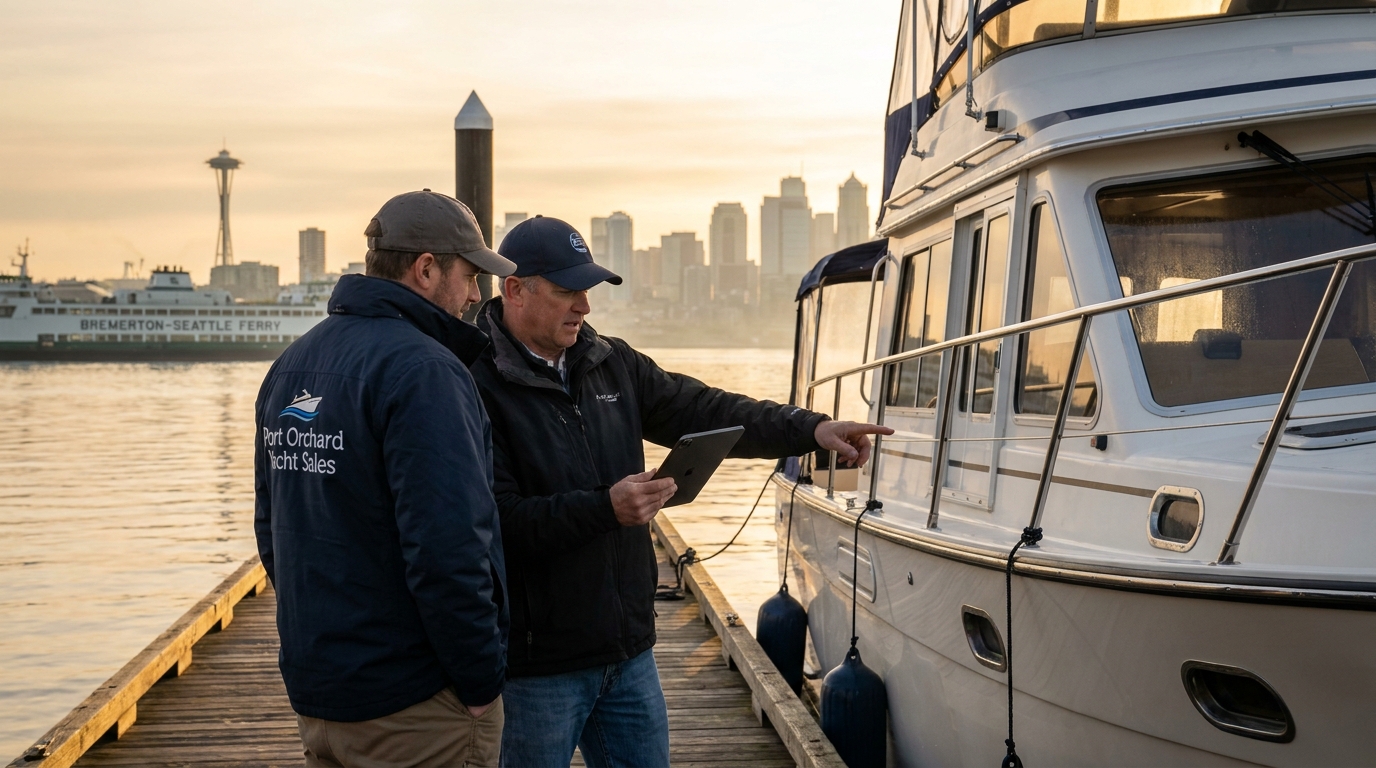
Owners along the Port Orchard waterfront who are thinking about selling face the same opening question every time: what is the boat actually worth in today's market? It's a deceptively simple question. Unlike automobiles, used yachts have no manufacturer-maintained MSRP, no standardized incentive schedule, and no single book value that brokers and buyers universally accept. Every hull is essentially a one-off — shaped by engine hours, refit history, electronics, and the cruising grounds it was built for.
That makes pre-listing valuation more art than arithmetic, particularly in the Puget Sound market, where Port Orchard sellers compete with — and benefit from — strong regional demand for cruising-oriented vessels. This guide walks through how to arrive at a defensible listing price before a broker agreement is signed.
Why Yacht Valuation in Seattle Is Its Own Discipline
Port Orchard sits across Sinclair Inlet from Bremerton and within a short run of the broader Seattle brokerage corridor that stretches from Shilshole to Elliott Bay. That geography matters. Buyers shopping the Pacific Northwest are typically looking for vessels suited to Puget Sound and Inside Passage cruising — trawlers, downeast cruisers, pilothouse motoryachts, and long-range expedition platforms. A well-equipped cruising boat berthed in Port Orchard is often closer to its ideal buyer than the same hull sitting in a warm-weather market.
That regional demand can support stronger asking prices for the right boat. It's worth noting that asking prices across Seattle-area brokerage listings reflect a meaningful spread depending on make, model, condition, and equipment — these are not transaction prices, and the gap between ask and sold is part of what valuation work tries to predict.
Step One: Build a Comparable Sales File
The foundation of any credible valuation is comparables — recent listings and, where available, sold data for the same make, model, and year. For Port Orchard sellers, useful comps come from three concentric circles:
- Local Puget Sound listings — boats berthed between Olympia and Bellingham. These are the most direct competition.
- West Coast listings — California and British Columbia inventory, which may price differently and carry relocation costs for a Seattle buyer.
- National listings — Florida, the Great Lakes, and the East Coast, where the same model may trade at a different price point. Quantifying that spread requires pulling comparable listings model-by-model rather than relying on a national average.
The objective isn't to find one perfect match — it rarely exists — but to build a range. A well-aged trawler with low hours and a recent refit will sit toward the top of that range; the same hull with original electronics and high hours sits at the bottom.
Step Two: Honestly Inventory Condition and Equipment
Condition is the single largest swing factor in used yacht value, and it's where sellers most often overestimate. The variables that materially move price include:
- Engine and generator hours, plus service history
- Hull, gelcoat, and paint condition
- Electronics generation — an older helm layout versus a current MFD suite
- Canvas, upholstery, and teak condition
- Recent surveys, haul-outs, and corrosion work
- Stabilizers, bow and stern thrusters, watermakers, and other cruising equipment
Factory options and documented upgrades are a meaningful example of this principle: boats with a well-documented options package at build can carry a premium asking price specifically because those specifications are verifiable. Documented options translate directly into a supportable asking price. Undocumented work — receipts in a shoebox, verbal accounts of refits — does not.
Step Three: Understand What the Puget Sound Climate Does to Value
The Pacific Northwest is gentler on hulls than the sun-baked Gulf or salt-saturated Florida coast, but it has its own signatures. Persistent moisture, freshwater intrusion at deck fittings, and long shoulder seasons of cool damp weather all affect canvas, brightwork, and interior joinery. A Port Orchard boat that has been actively cruised and properly covered typically presents better than a comparable vessel that sat uncovered through a decade of PNW winters.
Buyers in this market know that. A thorough pre-listing wash, detail, and a fresh haul-out can shift a survey outcome meaningfully — and survey findings are where asking prices most often get renegotiated.
Step Four: Account for Washington's Tax Position
Washington's tax treatment is a genuine factor in how Seattle-area boats are marketed. Certain new yacht transactions can be structured to avoid Washington state sales tax, and brokers in the region routinely surface that advantage in listings. For used vessels, tax treatment depends on the buyer's residency, the structure of the sale, and how the boat will be used. Sellers should not make tax representations to buyers; that's a question for a marine-experienced CPA or maritime attorney licensed in Washington.
Step Five: Decide Between a Broker Opinion and a Formal Appraisal
There are two practical paths to a defensible number:
- A broker's opinion of value — typically offered at no charge by a brokerage as part of a listing conversation. This pulls comps, factors in condition, and produces a recommended asking-price range. It's the right tool for setting a listing price.
- A formal marine survey and appraisal — a paid, written opinion from an accredited marine surveyor. This is the standard for financing, insurance, estate, and donation purposes, and it carries weight that a broker letter does not.
Most Port Orchard sellers preparing to list start with a broker's opinion and commission a full survey only if the buyer's lender or underwriter requires one. Worldwide Yacht Sales is among the Seattle-area brokerages that provide complimentary pre-listing valuations and comparable-market analysis for owners weighing whether to bring a boat to market. Founded in 1989 and now a family-owned business serving clients across the globe, Worldwide Yacht Sales offers selling services that include top-tier marketing, a global buyer network, and full transaction support from consultation through delivery.
Frequently Asked Questions
How much is my yacht worth if I just bought it last year?
Near-new boats — one to two model years old — generally hold value well in the Seattle market, particularly cruising-oriented hulls. A well-specified vessel with documented factory options and strong regional demand can trade near its commissioned cost, though condition and comparable inventory always factor in.
Is there a free yacht valuation available near Port Orchard?
Yes. Most Seattle-area brokerages, including Worldwide Yacht Sales, will prepare a no-cost opinion of value as part of an initial listing conversation. A formal written appraisal from an accredited marine surveyor is a separate paid engagement.
How long does it take to value a yacht properly?
A broker's opinion of value typically takes a few business days once the brokerage has access to the boat's specifications, equipment list, maintenance records, and recent photos. A full marine survey usually requires a haul-out and one to two days on site, plus report turnaround.
Should I price at asking or leave room to negotiate?
Used yacht asking prices are not transaction prices — that's a standing caveat across the market. Most sellers list with some negotiating room built in, anticipating that survey findings will produce a counteroffer. The right cushion depends on the boat, the season, and the depth of comparable inventory.
How do I know if my boat will sell quickly in the Puget Sound market?
Boats priced within a supportable range for the current market generate showings, surveys, and offers. Vessels suited to Puget Sound and Inside Passage cruising — trawlers, pilothouse motoryachts, and long-range platforms — tend to find engaged buyers in this region. Speed of sale depends on pricing accuracy, condition, documentation quality, and seasonal timing. A broker's comparable-market analysis is the most reliable starting point.
Does working with a remote or out-of-area brokerage work for a Port Orchard seller?
Yes, and it's increasingly common. Worldwide Yacht Sales, for example, routinely handles transactions for buyers and sellers in different states. As of May 2026, the brokerage holds a 4.8-star rating from 28 Google reviews, with customers specifically praising expertise in remote transactions. One customer wrote: "Traver's responsiveness, honesty, and hand-holding throughout made the experience easy" — describing a purchase where the vessel was located in Florida and shipped to Rhode Island.
Closing Thoughts
Pricing a yacht correctly the first time is the single biggest lever a Port Orchard seller controls. Boats priced above the supportable range sit; boats priced within it generate showings, surveys, and offers. The work of arriving at that number — comps, condition, equipment documentation, and an honest read of the Puget Sound buyer pool — is what separates a listing that moves from one that lingers.
Owners in the Port Orchard and greater Seattle area who want a pre-listing valuation handled professionally can reach Worldwide Yacht Sales at https://worldwideyachtsalesinc.com for a complimentary opinion of value and comparable-market analysis.
"