Understanding the Yacht Purchase Journey: The Yacht Buying Process Explained for 2026
A clear, current guide to the yacht buying process in 2026 — from search and survey to closing — written for Tierra Verde buyers navigating Florida's market.

Buying a yacht is rarely an impulse decision, and in 2026 it is even less so. With interest rates having settled into a new normal, brokerage inventory expanding after several tight years, and surveyors booking weeks out across the Gulf Coast, the path from "I'm thinking about a boat" to "keys in hand" has more moving parts than most first-time buyers expect. This guide walks through the yacht acquisition journey as it actually unfolds today — particularly for buyers based in or shopping out of Tierra Verde, where the proximity to the Gulf, the Intracoastal, and one of Florida's most active brokerage corridors shapes nearly every step.
Why the Yacht Buying Process Looks Different in 2026
The post-pandemic boom that drained brokerage listings in prior years is decisively over. Inventory across the 40- to 80-foot segment has rebuilt, and buyers now have negotiating leverage they did not have two years ago. At the same time, marine financing has become more documentation-heavy, insurance carriers are scrutinizing hull age and named-storm exposure more carefully, and surveyors in the Tampa Bay area are routinely booked three to four weeks out during peak season.
For Tierra Verde buyers, the local market context matters. The island sits at the mouth of Tampa Bay, with quick access to the Gulf through Pass-a-Grille and Bunces Pass, which makes it a natural home base for cruisers and sportfishermen alike. But that same Gulf exposure means insurance underwriters pay close attention to hurricane haul-out plans, dock locations, and named-storm deductibles — considerations that affect which vessels make financial sense to buy and where they can realistically be kept.
The Yacht Buying Workflow: A Step-by-Step Overview
The yacht purchase journey breaks into seven distinct phases. Each has its own timeline, its own decision points, and its own places where buyers commonly stall or overpay. The team at Worldwide Yacht Sales typically walks clients through the full sequence before any listings are even pulled, because clarity at the front end saves weeks at the back end.
1. Defining the Mission
Before any search begins, the buyer needs a written use case. Day cruising the Gulf out of Tierra Verde calls for a very different hull than extended Bahamas crossings or tournament-level offshore fishing. Range, draft (critical for the shallower flats around Boca Ciega Bay), accommodations, and crew requirements all flow from the mission statement.
2. Establishing the Budget — Including the Real Cost of Ownership
The purchase price represents only a portion of year-one cost. Buyers should budget for dockage (Tierra Verde slip rates have climbed steadily), insurance, fuel, annual haul-out, bottom paint, electronics updates, and a reserve for unexpected systems work. A reasonable rule of thumb is to budget a meaningful percentage of purchase price annually for operating costs, and that figure rises for older hulls and complex systems.
3. Engaging a Buyer's Broker
In a brokerage transaction, the seller typically pays the commission, which is split between the listing broker and the buyer's broker. This means professional representation on the buyer's side is, in most cases, included in the deal economics. A buyer's broker filters listings, arranges showings, runs comparable-sales analysis, and — critically — manages the offer, survey, and closing process. Worldwide Yacht Sales has seen firsthand that buyers who skip this step often pay more, miss red flags during inspection, or stall at documentation.
4. The Search and Sea Trial
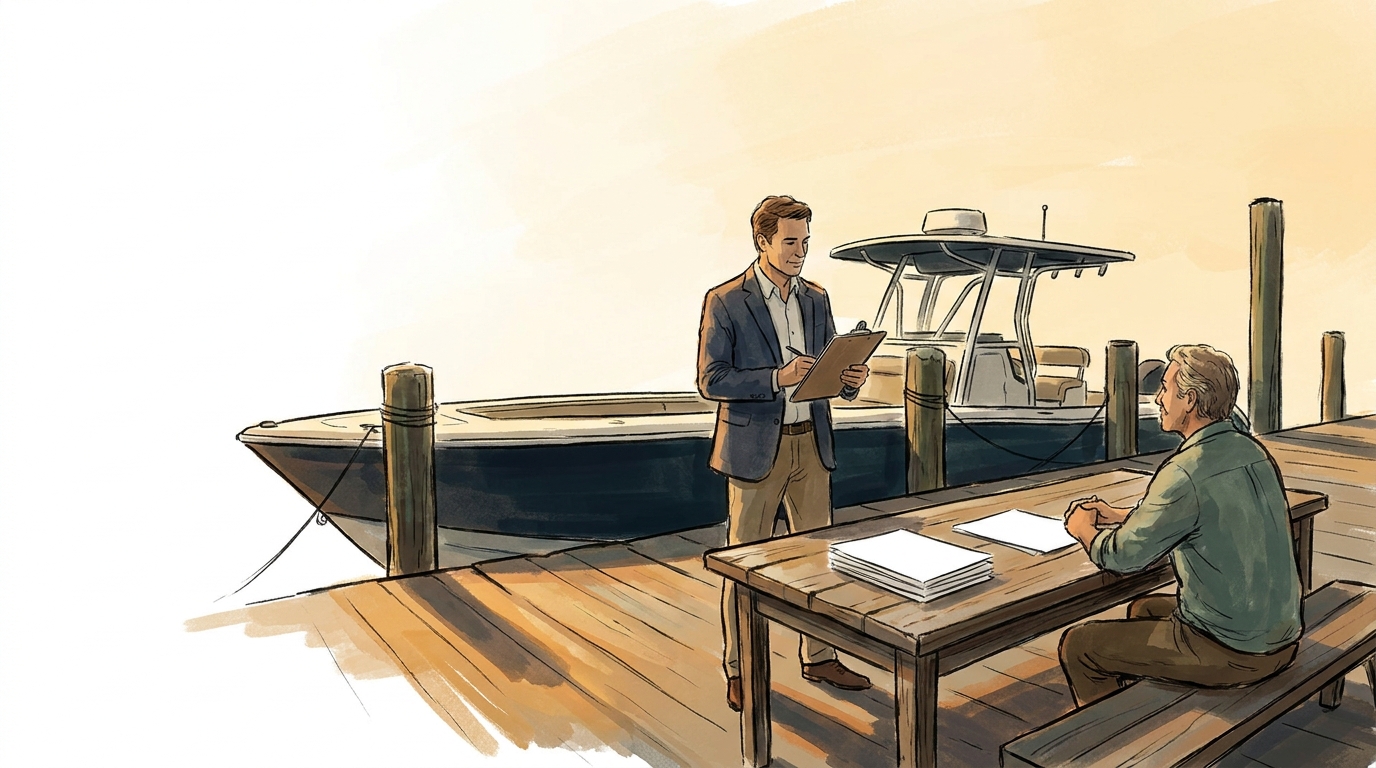
Once the brief is set, the broker pulls listings from YachtWorld, Boats Group, and off-market networks. Worldwide Yacht Sales also offers a guided five-step search tool on its website allowing clients to filter yachts by type, size, price range, and age. Initial showings happen dockside; serious candidates move to sea trial. For Tierra Verde buyers, sea trials often run out of Pass-a-Grille Channel into the Gulf, giving an honest read on the vessel's offshore behavior rather than just protected-water performance.
5. The Offer and Acceptance
Yacht offers are typically written on a standardized purchase agreement, with a deposit held in escrow by the broker's trust account. The offer is conditional on satisfactory survey and sea trial. Negotiation in 2026 is more buyer-favorable than it has been in several years, particularly on vessels that have been listed more than 90 days.
6. Survey, Sea Trial, and Acceptance of Vessel
This is where most deals are made or unmade. The buyer pays for a marine surveyor (SAMS or NAMS credentialed), an engine survey, and often an oil analysis. Haul-out is required to inspect the bottom, running gear, and through-hulls. Tierra Verde buyers typically use yards in the broader St. Petersburg area, and scheduling needs to be locked in early — particularly between October and April when snowbird-season demand peaks. After review, the buyer either accepts the vessel, rejects it, or negotiates a price adjustment based on findings.
7. Closing, Documentation, and Delivery
Florida imposes a state sales tax on vessel purchases, with a statutory cap that can make a meaningful difference on six- and seven-figure transactions. Pinellas County also adds a local discretionary surtax, so buyers should confirm the current rates and thresholds with a marine closing attorney before finalizing their budget. Buyers must also decide between state titling and U.S. Coast Guard documentation; documented vessels are generally required for marine mortgages and for cruising internationally. Closing involves the bill of sale, transfer documents, lien releases, insurance binding, and final wire — and is typically handled by the broker's closing coordinator.
Common Pain Points in the Yacht Acquisition Guide
Three issues derail more Tierra Verde yacht purchases than any others. First: underestimating insurance. Carriers writing in Pinellas County increasingly require named-storm haul-out plans, certain hurricane-rated dock configurations, or seasonal relocation north of a designated latitude line. Second: survey timing. Buyers who wait until after offer acceptance to start lining up a surveyor can lose a week or more, and most purchase agreements give a limited window for inspection. Third: documentation mismatches. Vessels with unclear ownership history, unrecorded liens, or mismatched HIN records can stall closing for weeks.
Frequently Asked Questions
How long does the yacht buying process typically take?
From first showing to closing, a financed brokerage transaction typically takes several weeks to a few months. Cash deals can close more quickly if survey and documentation move efficiently. Custom or international purchases routinely run longer.
Do buyers need their own broker if the boat is already listed?
Yes — and it generally costs the buyer nothing because the seller pays the commission split. An independent buyer's broker represents the buyer's interests through negotiation, survey, and closing, which a listing broker cannot do for both sides.
Can a yacht be purchased remotely?
Routinely. Remote and out-of-state purchases are now a standard part of the brokerage business. Worldwide Yacht Sales holds a 4.8-star rating from 28 Google reviews as of May 2026, and that track record reflects extensive experience with distance transactions. One customer described the firm's "responsiveness, honesty, and hand-holding" through a Florida-to-Rhode Island remote purchase — the boat arrived in even better condition than expected.
What is the difference between state titling and Coast Guard documentation?
Florida state titling is required for most recreational vessels. Coast Guard documentation is a federal registration available for qualifying vessels, and is generally required by marine lenders and for foreign cruising. Many Tierra Verde owners hold both.
Is 2026 a good time to buy?
Inventory is healthier than it has been in several years, sellers are negotiating more flexibly, and the pipeline of late-model brokerage boats coming to market is strong. For buyers who have done their homework on operating costs and insurance, the current market is favorable.
What should I bring to a first meeting with a yacht broker?
Come prepared with a clear sense of your intended use, a realistic total budget (not just the purchase price), and any financing pre-qualification you have already arranged. A brief written list of must-have features — length range, hull type, sleeping capacity — helps the broker filter the market efficiently from day one and avoids wasted showings on vessels that do not fit.
How does a marine survey differ from a home inspection?
A marine survey is performed by a credentialed surveyor (SAMS or NAMS) and covers the hull, structure, mechanical systems, safety equipment, and running gear — including a haul-out to inspect below the waterline. Unlike a home inspection, the buyer typically pays for the survey and uses it both to negotiate price adjustments and to satisfy the insurance carrier's underwriting requirements before coverage is bound.
Working With a Broker in Tierra Verde
The yacht buying process rewards preparation, patience, and professional representation. Buyers who define the mission clearly, budget honestly for the total cost of ownership, and work with an experienced broker through survey and closing consistently end up in better boats at better prices than buyers who try to navigate the process alone.
Tierra Verde buyers who want this process handled professionally — whether the search is just beginning or a specific listing is already in mind — can reach Worldwide Yacht Sales at worldwideyachtsalesinc.com for a no-obligation consultation on the current market and next steps.