What to Look for in a Yacht Dealer: Complete Buyer's Checklist
A complete checklist for choosing a yacht dealer in Tampa — credentials, transparency, service depth, and the criteria that separate reputable brokers.
Buying a yacht is among the largest discretionary purchases most people will ever make, and the dealer or broker guiding that transaction shapes nearly every part of the outcome — from the vessel's condition at delivery to the smoothness of titling, financing, and transport. In a market like Tampa, where the Gulf Coast climate, year-round boating season, and saltwater corrosion concerns add layers of technical complexity, the choice of dealer matters even more. This checklist breaks down what to look for in a yacht dealer, what questions to ask, and how to separate genuinely reputable operators from the rest.
Why Dealer Selection Matters More on the Gulf Coast
Tampa Bay sits at the intersection of saltwater exposure, hurricane season, and a constant flow of vessels moving in and out of state — particularly during the snowbird months between October and April when out-of-state buyers descend on Florida's brokerage market. A dealer's ability to manage remote inspections, coordinate haul-outs, navigate Florida documentation, and explain the realities of saltwater hull maintenance can meaningfully affect both the purchase price and the long-term ownership cost.
Florida also requires sales tax collection on vessel transactions, and titling rules differ for documented vessels versus state-titled hulls. A dealer who understands these specifics — and who has standing relationships with surveyors, transport companies, and marinas from Davis Islands to Westshore Marina District — saves buyers measurable time and money.
The Yacht Dealer Checklist: 10 Criteria That Separate Reputable Brokers
1. Licensing and Regulatory Standing
Florida is one of the few states that licenses yacht and ship brokers directly. Florida requires yacht and ship brokers to hold a state-issued license, and buyers should verify a broker's license through the state's online lookup before signing anything. Buyers should verify a broker's license number through the DBPR's online lookup before signing anything. A dealer who cannot provide a license number on request is a clear disqualifier.
2. Experience With the Specific Vessel Type
A broker who has moved dozens of center consoles is not automatically the right fit for someone shopping a 60-foot motor yacht — and vice versa. Ask how many transactions the dealer has closed on vessels comparable to the one being considered, and whether they routinely work with the systems involved (pod drives, diesel inboards, gyrostabilizers, etc.). Specialization matters.
3. Transparency on Listing Versus Buyer Representation
In yacht transactions, a single brokerage often represents the seller. Buyers should ask explicitly whether the dealer is acting as the listing broker, a co-broker, or a dedicated buyer's representative. Reputable yacht dealers like Worldwide Yacht Sales disclose this relationship up front and explain how commission splits work, rather than leaving the buyer to figure it out at closing.
4. Quality of the Survey and Sea Trial Process
A serious dealer will insist on an independent marine survey and sea trial before closing, and will have working relationships with surveyors throughout the Tampa Bay area — from Apollo Beach down through St. Petersburg. They should not steer buyers toward a single "preferred" surveyor with whom they have a financial relationship. Independence is the point.
5. Documented Comparable Sales Data
Reputable brokers have access to sold-boat databases (such as BUC, SoldBoats, or YachtWorld's closed-sale archives) and will share comparable pricing data to justify either an asking price or an offer. A dealer who relies only on "market feel" without data is either inexperienced or hoping the buyer is.
6. End-to-End Service Coordination
The transaction does not end when the purchase agreement is signed. Financing, documentation, insurance binding, transport, and post-sale commissioning all need to happen — often on a deadline tied to seasonal weather or a closing escrow. Reviews left for Worldwide Yacht Sales consistently highlight this coordination strength; as one customer wrote, the dealer handled "financing, inspection, and even transportation from Florida to Texas." That kind of full-stack handling is what buyers should be asking every dealer to demonstrate.
7. Communication and Responsiveness
Yacht transactions move fast once a deal is live — survey findings, financing contingencies, and escrow deadlines can all arrive within the same 72-hour window. A dealer who returns calls within hours rather than days is not a luxury; it is a baseline requirement. Worldwide Yacht Sales holds a 4.8-star average from 28 Google reviews as of May 2026, with customers consistently citing responsiveness and clear communication as standout traits — worth confirming with any broker through references.
8. Experience With Remote and Out-of-State Buyers
Florida sells more yachts to out-of-state buyers than almost any other state. A capable Tampa-area dealer should be fluent in remote video walkthroughs, third-party inspections, escrow services, and interstate transport logistics. One customer wrote of purchasing a boat sight-unseen and having it shipped from Florida to Rhode Island, noting it arrived "in even better condition than expected." Dealers who have done this repeatedly handle it differently than those treating each remote sale as an exception.
9. Honesty About Condition and Defects
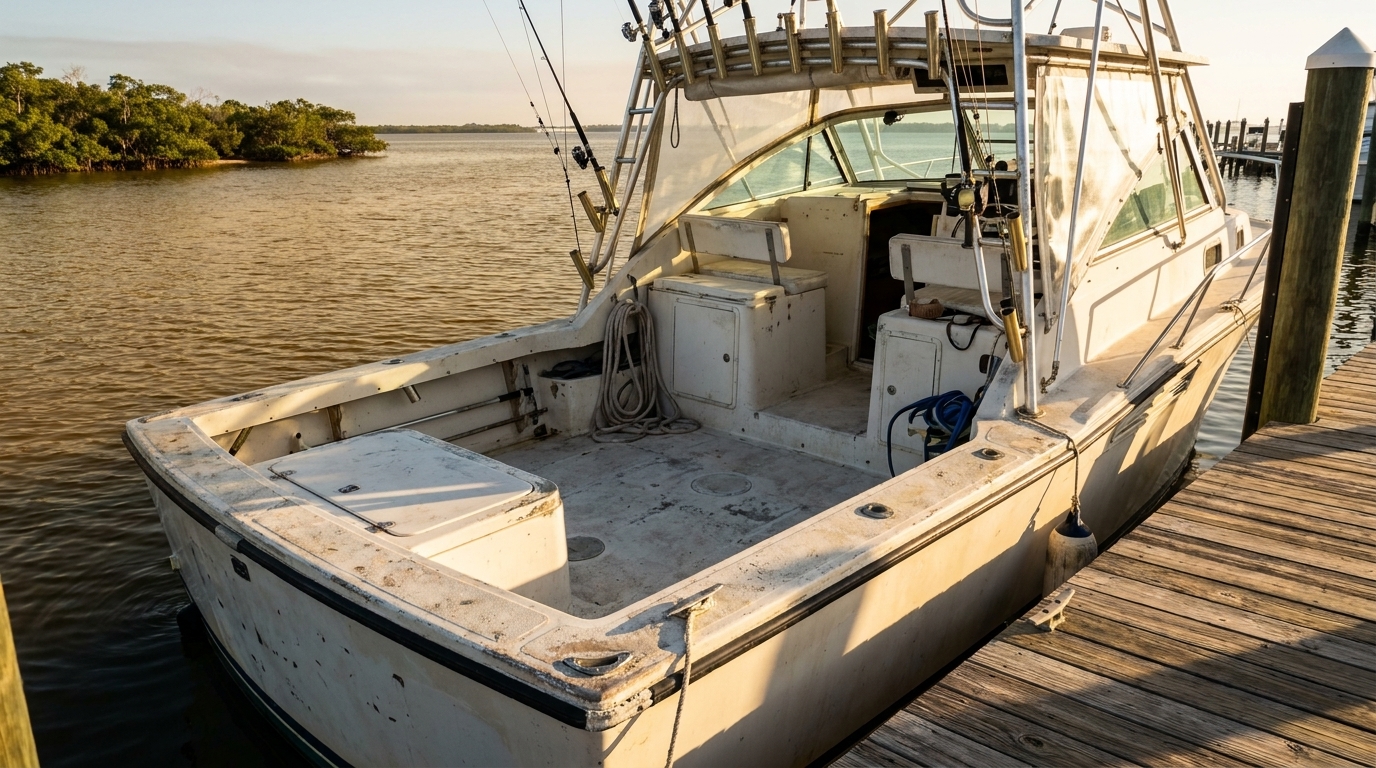
The Gulf Coast environment is rough on vessels. Saltwater corrosion, UV damage to gelcoat, and humidity-driven mildew are realities even on well-maintained boats. A dealer worth working with will point out condition issues proactively rather than waiting for the surveyor to find them. Buyers should walk away from anyone who downplays obvious defects.
10. Track Record and References
Online reviews, length of time in business, and referrals from marina staff, surveyors, and insurance agents all contribute to a dealer's reputation. Ask for two or three references from past buyers — particularly from buyers who purchased a vessel similar to the one under consideration.
Questions to Ask Before Signing a Purchase Agreement
- What is your DBPR yacht broker license number?
- Are you representing the seller, the buyer, or both in this transaction?
- How is the deposit held, and through what escrow service?
- What is the standard contingency window for survey and sea trial acceptance?
- Who pays for haul-out, and where will it take place?
- How is Florida sales tax handled if the vessel is being removed from the state?
- What documentation work do you handle in-house versus refer out?
- Can you provide three references from buyers of comparable vessels?
Red Flags That Should End the Conversation
Certain behaviors reliably predict a difficult transaction. Pressure to skip the survey, reluctance to provide a license number, vague answers about commission structure, refusal to put representations in writing, and any request to wire deposits to a non-escrow account are all reasons to walk away. Reputable dealers welcome scrutiny because their process is built to withstand it.
Frequently Asked Questions
Do yacht dealers in Florida charge buyers a commission?
Typically, commission is paid by the seller out of the sale proceeds, not the buyer. However, in some buyer-representation arrangements, separate fees can apply. Always clarify in writing before signing.
How long does a typical yacht transaction take to close in Tampa?
Most brokerage transactions take several weeks from accepted offer, allowing time for survey, sea trial, financing, documentation, and insurance. Cash deals with no financing contingency can close more quickly.
Should a buyer use the same broker as the seller?
Dual representation is common in yacht sales and legal in Florida, provided it is disclosed. Buyers who want a dedicated advocate can engage a separate broker as a buyer's representative.
What happens if the survey finds significant defects?
Standard purchase agreements give the buyer a window to accept the vessel as-is, renegotiate based on findings, or reject the vessel and recover the deposit. The specifics depend on contract language, which is why working with an experienced dealer matters.
How do I verify a yacht broker's license in Florida before working with them?
Visit the Florida Department of Business and Professional Regulation's online license lookup and search by broker name or license number. Florida requires brokers selling used yachts to hold a current Yacht and Ship Broker license. If a broker cannot provide their license number immediately on request, that alone is sufficient reason to walk away before investing further time.
What should I expect from a yacht dealer when buying remotely in 2026?
A dealer experienced with remote buyers should offer video walkthroughs, coordinate an independent third-party survey, hold your deposit in a proper escrow account, and manage interstate transport logistics from start to finish. Communication should be proactive throughout — not reactive. Buyers should confirm these capabilities upfront and ask for references from previous out-of-state customers before committing to a purchase agreement.
Choosing the Right Tampa Yacht Dealer
The criteria above — licensing, transparency, specialization, communication, and end-to-end coordination — are what separate a brokerage that closes deals from one that builds long-term client relationships. Buyers in the Tampa Bay area who want professional guidance through the full process, from listing search through post-closing transport, can contact Worldwide Yacht Sales at https://worldwideyachtsalesinc.com to discuss their search criteria and timeline. Whether the purchase is a local Gulf Coast vessel or a remote acquisition shipped across the country, the right dealer relationship is what makes the transaction work.
"