Yacht Sea Trial & Survey in Stuart, FL: 2026 Guide
How yacht sea trials and marine surveys work in Stuart, FL — what surveyors check, typical costs, haul-out logistics, and buyer contingencies explained.
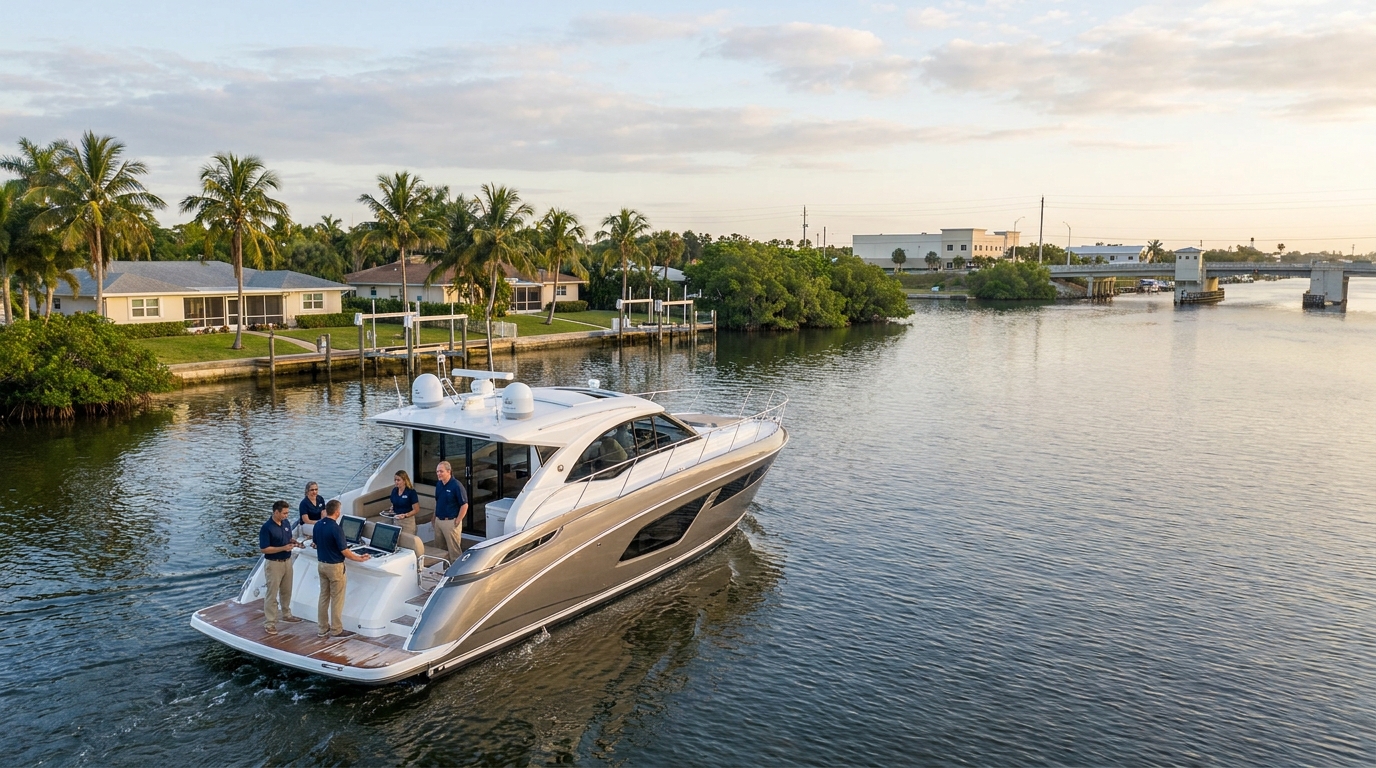
If you're buying a used yacht in Stuart, FL, the sea trial and marine survey are the two moments where the deal becomes real. Together they tell you whether the boat is worth the asking price, whether your lender and insurer will play along, and whether you can walk away with your deposit intact. Here's how the process actually works on the St. Lucie River — and where Stuart's geography, yards, and surveyor market shape what you should expect.
How a Yacht Sea Trial and Survey Work in Stuart, FL
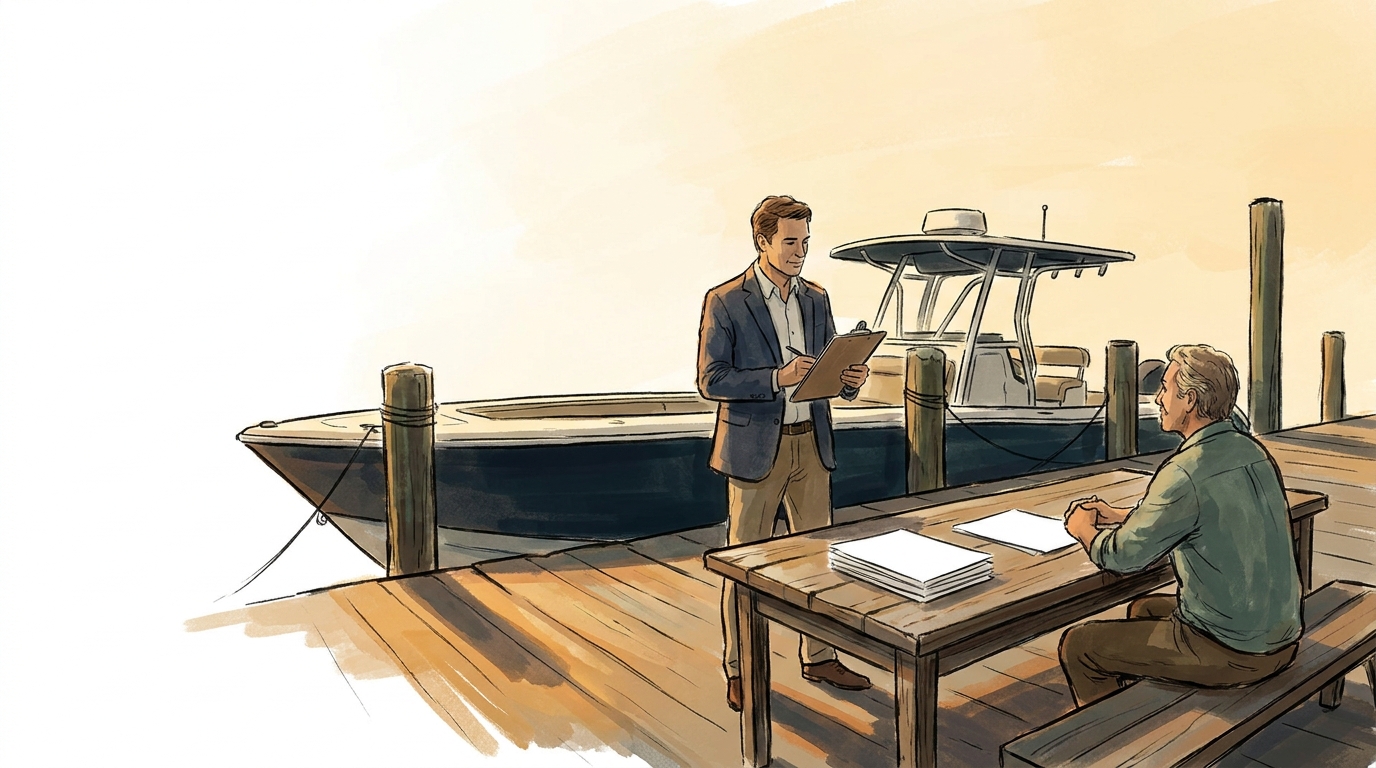
A Stuart pre-purchase inspection almost always bundles three things: a condition-and-valuation hull survey, a sea trial on the St. Lucie River or through the St. Lucie Inlet, and — for larger diesel yachts — a separate engine survey. Most buyers schedule the haul-out at a local yard and run the sea trial the same day, in tight coordination with the broker and the surveyor.
Under a typical Florida purchase agreement, you'll place a 10% deposit into escrow once your offer is accepted. That deposit is refundable through survey and sea trial contingencies, which is why this step is the buyer's real leverage point. If findings are material, you can renegotiate, request repairs, or withdraw.
What a Marine Surveyor Actually Inspects
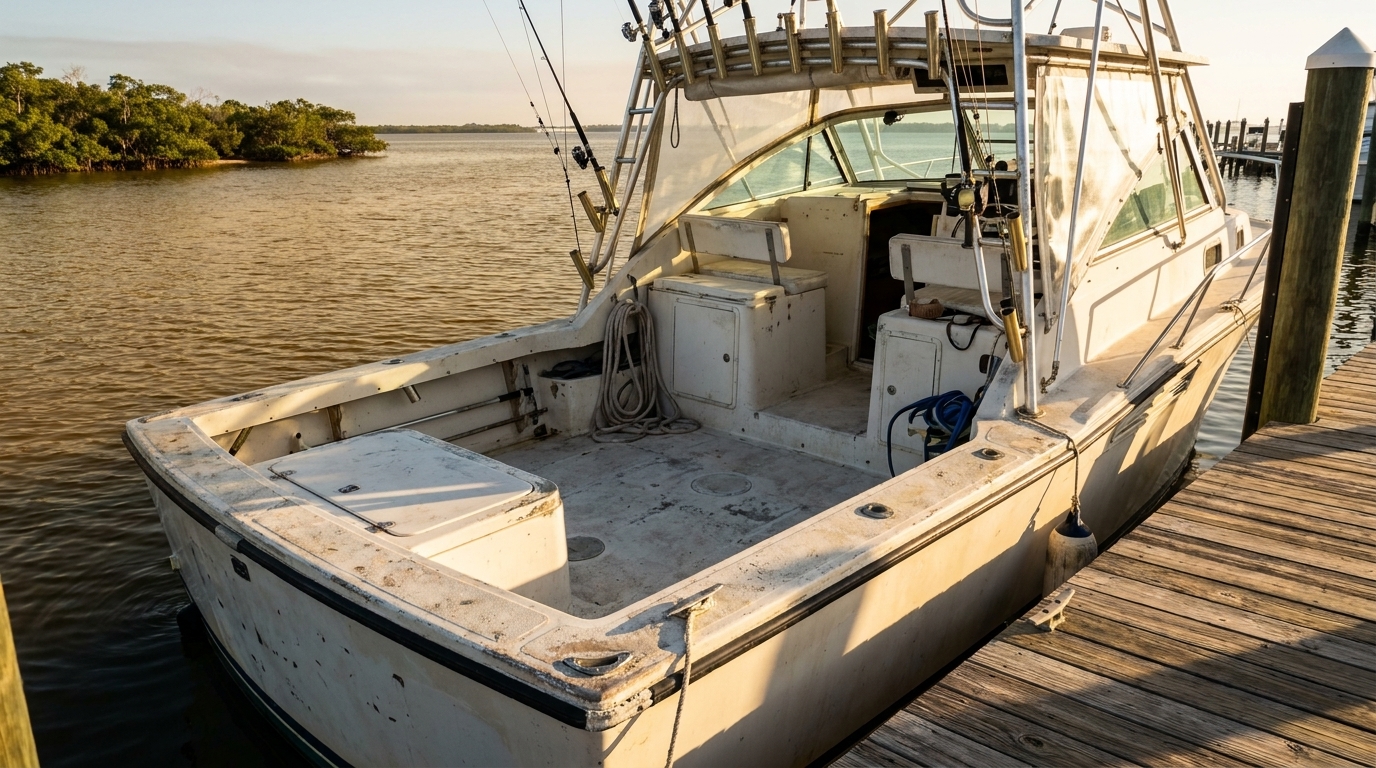
The surveyor evaluates the vessel's condition, systems, and fair market value — both afloat and out of the water. On a Stuart haul-out, you should expect the hull to be pressure-washed and inspected for blisters, prior repairs, moisture readings on cored areas, running gear condition, and through-hull integrity.
Above the waterline, a surveyor checks:
- Structural condition of decks, stringers, and bulkheads
- Electrical systems and fuel systems against ABYC and NFPA standards
- USCG-required safety equipment — PFDs, flares, fire extinguishers, and navigation lights
- Steering, hydraulics, electronics, and cosmetic condition
- Hull Identification Number (HIN) verification against registration and title
Credentials matter here. In Stuart, the standard is a surveyor holding ACMS, SAMS, or NAMS accreditation, often layered with ABYC certification. Florida does not license marine surveyors at the state level, but insurers, lenders, and reputable brokers treat these accreditations as the de facto requirement.
What Happens During the Sea Trial
The sea trial is where the boat performs under load — typically a 60-to-90-minute run that includes cold start, warm-up, acceleration through the RPM range, wide-open throttle, maneuvering, and shutdown checks. The surveyor watches engine temperatures, oil pressure, fuel burn, and how the hull carries itself at cruise and top speed.
Stuart's geography shapes this more than buyers expect. Sea trials generally run from the St. Lucie River out through the St. Lucie Inlet to open water, and inlet conditions are tide- and wind-dependent. A poorly timed trial in a shallow-drafting inlet can either be uneventful or genuinely rough — either way, coordinate the window with the captain and surveyor around tide tables, not just the calendar.
For larger diesel yachts, a specialist engine surveyor typically joins for or performs a separate machinery trial: oil sampling, compression or borescope checks where warranted, transmission behavior, and cooling system performance.
Haul-Out Logistics on the St. Lucie River
Stuart sits within a dense cluster of marinas and boatyards along the St. Lucie River and the Okeechobee Waterway, so haul-outs are relatively accessible — but lift capacity varies. Before you schedule, confirm the chosen yard can accommodate your yacht's length, beam, and draft. Larger motoryachts sometimes need to reposition to a yard with a bigger travel lift.
Yard fees for the lift, pressure wash, and lay-day typically run several hundred dollars, set by the yard rather than the surveyor. Many yards also require outside surveyors and mechanics to provide proof of insurance in advance, so ask your broker to confirm this ahead of the appointment to avoid a wasted trip.
What It Costs in 2026
Hull condition-and-valuation surveys in the Stuart market generally price at $18 to $35 per LOA foot. For a 40-foot yacht, that translates to roughly $500 to $1,500 for the hull survey alone, with larger or more complex vessels running $1,000 to $4,000.
A separate engine survey on inboard diesels typically adds $1,500 to $4,500, depending on horsepower, number of engines, and how deep the diagnostics go. Add haul-out yard fees on top.
All-in — hull survey, sea trial, engine survey, and haul-out — a 30-to-50-foot yacht in Stuart typically lands in the $2,000 to $8,000+ range, with low-to-mid four figures being common. These ranges reflect Florida and national survey cost guides; specific Stuart firms don't publish rates publicly, so get written quotes before you book.
Local Providers and Scheduling Realities
Stuart supports a concentrated market of credentialed surveyors. Named providers with a local footprint include Hamilton & Hamilton Marine Surveyors (ACMS members and ABYC Certified Marine Technicians), Ocean Marine Surveyors (NAMS Associate, ABYC-certified, USPAP-accredited appraiser, with gas and diesel engine surveying available and advertised 24-hour report turnaround), and TB Marine Surveyors (SAMS-accredited, operated by Captain Tim Brown, with dive inspection available when haul-out isn't possible).
Local specialization matters. The Treasure Coast market skews toward sportfishing boats, center consoles, and coastal cruising motoryachts, and local surveyors reflect that mix. If you're buying a blue-water sailboat, a steel-hulled trawler, or a heavily custom yacht, ask candidly whether the surveyor has repeated experience with that type — buyers of unusual vessels sometimes need to bring a specialist in from farther afield.
Timing is the other Stuart-specific variable. Snowbird season and the run-up to major Florida boat shows create real bottlenecks for surveyors and yards. If you're closing between late fall and spring, book the surveyor and haul-out slot as soon as your offer is accepted — waiting until after the contingency clock starts can cost you days you don't have.
Title, Documentation, and Insurance Due Diligence
Beyond the physical inspection, use the survey window to close out paper due diligence. Verify the HIN on the hull matches the title and registration, run a title and lien search, and confirm whether the vessel is federally documented through the USCG (required for vessels over 5 net tons that choose documentation) in addition to or instead of Florida state registration.
Insurers and lenders in Florida typically require a current condition-and-valuation survey — usually less than 12 to 24 months old — before binding coverage or funding a loan. If the seller has a recent survey, it may inform your negotiation, but it does not replace your own pre-purchase survey.
New vs. Used, and Yachts Under $1 Million in Stuart
For most buyers shopping the under-$1-million segment near Stuart, a well-surveyed used yacht delivers more boat for the money than new — provided the survey is done right. New builds carry warranty and known configuration; used yachts carry price advantage and, if the survey is thorough, a transparent record of condition. The sea trial and survey process is what closes the information gap.
The buyers who get hurt are the ones who compress the survey window, skip the engine survey on higher-hour diesels, or waive contingencies to win a competitive offer. In this market, that's a false economy.
Frequently Asked Questions
How long does the full survey and sea trial take in Stuart?
Most pre-purchase inspections on a 30-to-50-foot yacht run a single long day: haul-out and out-of-water inspection in the morning, splash and sea trial midday, systems and machinery checks after. Written reports often follow within a few days — Ocean Marine Surveyors advertises 24-hour turnaround.
Who pays for the survey, sea trial, and haul-out?
The buyer pays for the survey and haul-out. Fuel and captain arrangements for the sea trial are negotiated in the purchase agreement — practice varies, so confirm in writing before the day.
Can I use the same surveyor my broker recommends?
You can, but the surveyor should be working for you, not the transaction. Confirm the surveyor's accreditation (ACMS, SAMS, or NAMS), ask about experience with your specific vessel type, and make sure the written engagement is with you directly.
What if the yacht can't be hauled out?
Some Stuart-area surveyors, including TB Marine Surveyors, offer dive inspections when a haul-out isn't feasible. This is a workable fallback for scheduling issues but is not a full substitute for an out-of-water inspection on a purchase survey.
Working With a Local Broker
Brokers in Stuart, Jensen Beach, and Port Salerno routinely coordinate the moving parts — surveyor booking, haul-out slot, captain, sea trial route, and contingency timelines — and their local networks materially affect how quickly a survey can be scheduled. Buyers who want this handled professionally in the Stuart market can reach Worldwide Yacht Sales at worldwideyachtsalesinc.com to walk through listings, coordinate a pre-purchase survey, and structure an offer with the right contingencies. The sea trial and survey are where a good broker earns their keep — and where a careful buyer protects the deposit already sitting in escrow.