Buying a Yacht Through a Broker vs. a Private Seller in Florida: A Key West Buyer's Guide
Broker or private seller? Compare title risk, escrow, sea trials, and Florida tax rules for yacht buyers in Key West with this 2026 guide.
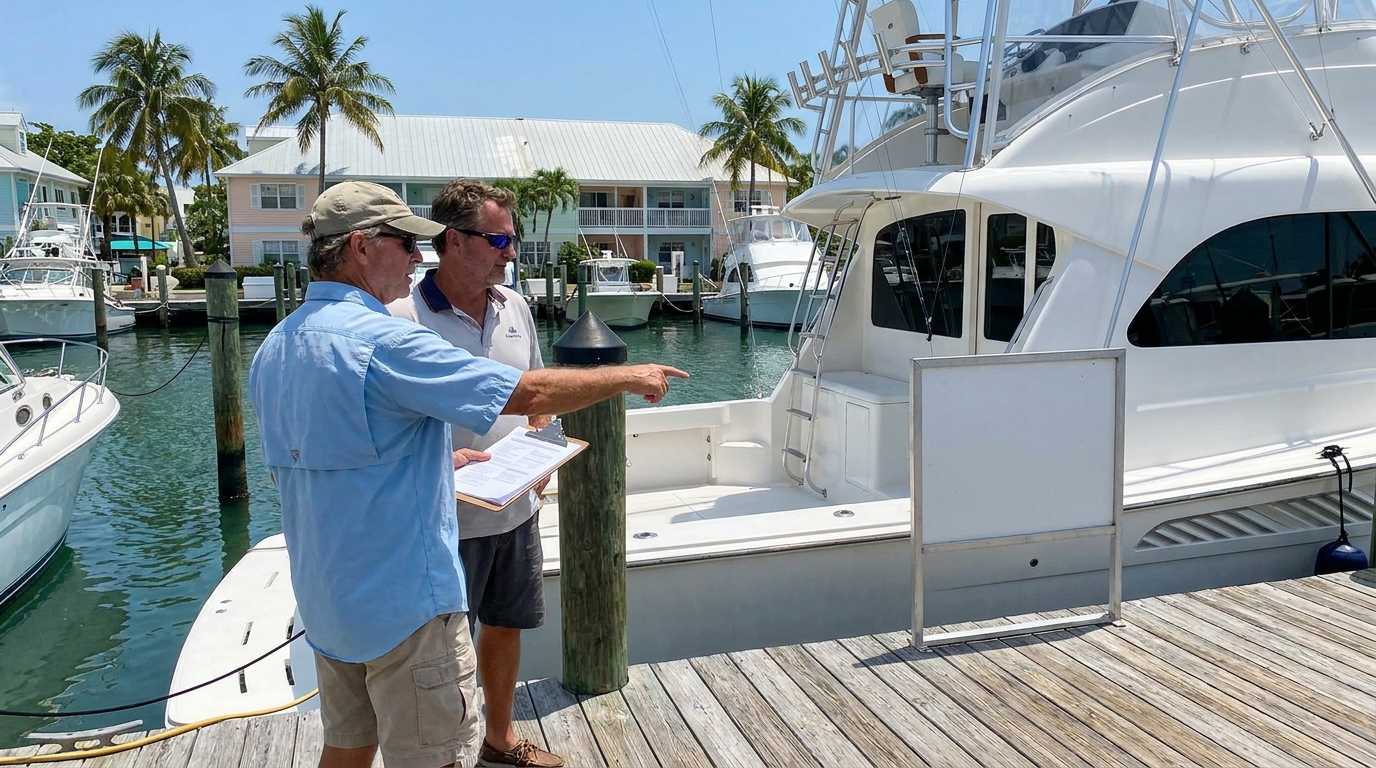
You've found the boat. Maybe it's a 52-foot sportfish tied up at a Key West marina, or a bluewater cruiser listed by an owner in Stock Island. The next question is the one that decides how smoothly the deal actually closes: do you buy through a licensed yacht broker, or handle the transaction directly with the private seller?
In Florida, that choice is more consequential than it looks. It shapes how your deposit is held, what happens if the title is clouded, whether you get a proper sea trial and survey, and how much recourse you have if something goes sideways after closing. Here's how the two paths compare for buyers in Key West and the surrounding Lower Keys.
The Core Difference: Regulated Intermediary vs. Direct Deal
A licensed Florida yacht broker sits between you and the seller as a regulated professional. Under Chapter 326, Florida Statutes, vessel dealers and yacht brokers must hold state licensure and are subject to disciplinary authority — including license suspension or revocation for mishandling funds or misrepresenting a vessel.
A private seller is simply another individual. There's no licensing board overseeing them, no fiduciary duty to you, and no state-mandated escrow requirement. The transaction lives or dies on the strength of your purchase agreement and your own due diligence.
That distinction ripples through every dimension of the deal.
Escrow and Deposit Handling
When you make an offer through a licensed broker in Florida, your deposit — often 10% of the purchase price — goes into a segregated escrow or trust account. Chapter 326, F.S. requires brokers and dealers to maintain those accounts with recordkeeping, reconciliation, and audit obligations. If a broker misuses client funds, they face administrative discipline from state regulators, including DHSMV and DBPR.
In a private sale, there is no statutory escrow requirement. Your options are to wire funds directly to the seller (risky), use a third-party maritime escrow service you retain yourself, or route the deposit through a closing attorney. All of those work — but you're the one arranging and paying for the protection that comes standard on the brokered side.
Title Transfer and Documentation
Florida title work is where private sales most often stumble. Under Chapter 328, F.S., non-Coast Guard-documented vessels require a Florida certificate of title. The seller must properly assign the existing title and deliver a bill of sale, and you must apply for a new title and registration with the Florida Department of Highway Safety and Motor Vehicles.
For Coast Guard-documented vessels — common on the yachts moving through Key West Bight and Garrison Bight — Florida does not issue a state title, but you still must register the vessel with DHSMV to operate in Florida waters. Ownership and lien priority are established through the U.S. Coast Guard National Vessel Documentation Center, and bills of sale must meet federal requirements.
A broker manages this workflow every week. They pull an abstract of title, identify undisclosed liens, coordinate payoff letters with lienholders, and prepare the closing documents that satisfy both state and federal requirements. In a private sale, you're either learning this process on the fly or hiring a maritime documentation agent or attorney to do it.
UCC §672.312, F.S. gives you a statutory warranty of title in any vessel sale — the seller warrants that title is good and the transfer is rightful. But enforcing that warranty against a private seller who has cashed your funds and moved on is a civil litigation problem, not a phone call.
Sea Trial and Survey Access
No serious yacht purchase in the Keys should close without a sea trial and a written survey by a credentialed marine surveyor. The waters around Key West — from the reef line down to the Marquesas — are unforgiving of neglected running gear, and salt air accelerates every latent defect.
Brokers structure sea trials as a standard contingency. The contract typically obligates the seller to make the vessel available, cover fuel to a specified level, and accept the buyer's right to reject after survey. Private sellers vary wildly. Some are cooperative; others resist hauling the boat, balk at the survey cost split, or push back on your surveyor's findings because there's no professional intermediary translating the report into a renegotiation.
Florida Sales and Use Tax — Same Rate, Different Mechanics
Florida imposes a 6% sales and use tax on vessel purchases, capped at $18,000 under §212.05, F.S. That cap applies whether you buy from a broker or a private party.
The mechanics differ. A licensed dealer or broker acting as a dealer typically collects the tax at closing and remits it. In a private sale — or a brokered sale where the broker is not acting as the dealer — you generally pay use tax when you title and register the vessel with DHSMV.
Two exemptions matter in Key West, given how much of the market involves out-of-state buyers:
- Nonresident removal exemption: If you're a nonresident and you remove the vessel from Florida within 10 days of purchase and register it in another state within 30 days, you may qualify for a sales tax exemption under Chapter 212, F.S. Strict documentation is required, including a sworn affidavit.
- Out-of-state delivery: If you never take possession in Florida and the dealer or broker documents delivery outside the state, Florida sales tax may not apply.
These exemptions are paperwork-intensive. Brokers handle them routinely; private sellers rarely do.
Buyer Protections If Something Goes Wrong
Broker-side buyers have layered remedies. FDUTPA (§501.204, F.S.) prohibits deceptive and unfair trade practices in trade or commerce and applies to licensed brokers and dealers, with remedies under §501.211–§501.213 including actual damages, attorneys' fees, and injunctive relief. Add administrative discipline, fiduciary duty claims, and standard breach-of-contract remedies, and you have real leverage.
Private-sale buyers are largely limited to general contract law, the UCC warranty of title, and civil court. FDUTPA may not apply to purely private (non-commercial) sales where the seller isn't engaged in trade or commerce. Express and implied warranties under §672.313–§672.315 can be — and usually are — disclaimed by "as-is" clauses in private purchase agreements.
When a Private Sale Can Still Make Sense
Private sales aren't inherently bad. If you know the seller, the vessel has a clean documented history, and you're willing to hire your own surveyor, maritime attorney, and escrow agent, you can close a legitimate deal and potentially save the brokerage commission. That path suits experienced owners buying a familiar model from a known party.
For most buyers — particularly out-of-state buyers cruising into Key West to look at boats over a long weekend — the friction, title risk, and tax paperwork make the brokered path the cleaner choice.
Key West–Specific Considerations
A few local realities shape how these transactions actually run in the Lower Keys:
- Hurricane season timing: Closings that straddle June through November raise questions about insurance binding, named-storm haul-out obligations, and marina availability. Brokered contracts typically address risk-of-loss clearly; private agreements often don't.
- Limited haul-out capacity: Yards serving Key West and Stock Island stay booked, especially before hurricane season. Coordinating a pre-purchase survey haul-out is a scheduling exercise that brokers handle as part of their workflow.
- Documented-vessel prevalence: A high share of yachts based in Key West are USCG-documented rather than state-titled, so buyers need someone comfortable with National Vessel Documentation Center filings, not just DHSMV forms.
- Nonresident buyers: Key West draws buyers from across the Southeast and beyond. The 10-day removal / 30-day out-of-state registration exemption is often the single biggest financial variable in the deal, and it has to be documented correctly from day one.
Frequently Asked Questions
Should I use a broker to buy a yacht in Florida?
For most buyers, yes — particularly if you're purchasing a documented vessel, buying from out of state, or unfamiliar with Florida's title and tax mechanics. Licensed brokers hold deposits in regulated escrow, manage title and documentation work, and are subject to FDUTPA and state licensing discipline. Experienced buyers with maritime counsel and a known seller can reasonably handle a private sale.
What are the biggest private yacht sale risks in Florida?
Undisclosed liens on the title, deposits paid directly to sellers with no escrow protection, disclaimed warranties via "as-is" clauses, mishandled sales tax filings that surface later as assessments from the Department of Revenue, and limited FDUTPA recourse if the seller wasn't engaged in trade or commerce.
Does the 6% Florida sales tax apply to private yacht sales?
Yes. The 6% rate and the $18,000 cap under §212.05, F.S. apply regardless of whether you buy from a broker or a private party. In a private sale, you typically pay the use tax when you title and register the vessel with DHSMV.
Can I still get a sea trial and survey in a private sale?
You can, but you have to negotiate for it. Brokered contracts include sea trial and survey contingencies as standard terms. In a private sale, build these into your written purchase agreement explicitly, including who pays for haul-out, fuel, and the surveyor.
The Bottom Line for Key West Buyers
Both paths can lead to the same slip, but they carry very different risk profiles. A brokered transaction gives you regulated escrow, professional title handling, structured contingencies, and layered legal remedies. A private sale gives you direct negotiation and potential cost savings, at the price of doing the protective work yourself.
If you want the transaction handled professionally from offer through documentation, Worldwide Yacht Sales works with Key West buyers on both sides of the deal and can be reached at worldwideyachtsalesinc.com to talk through your specific vessel and situation. Whichever path you choose, go in with clear expectations about escrow, title, tax, and survey — the boat is the fun part; the paperwork is what protects it.