Center Console vs Pontoon Boat: Which Is Right for Seattle Waters?
Choosing between a center console and pontoon boat in Seattle? Compare Puget Sound performance, lake cruising, 2026 costs, and capability to find your right fit.
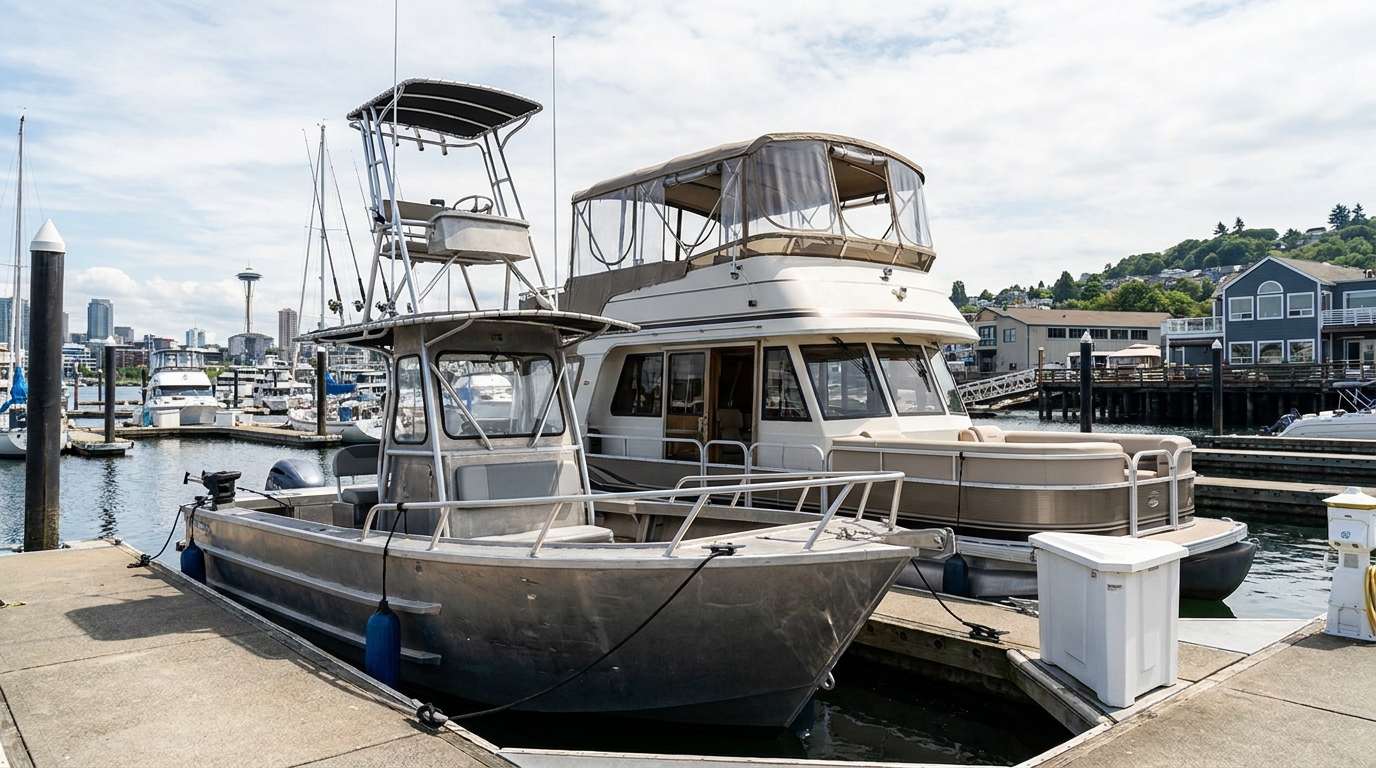
You've decided this is the year to buy a boat. The question isn't whether — it's what. And in Seattle, that question splits along a very specific line: are you chasing salmon off West Point, or hosting friends for a sunset cruise on Lake Washington? Because the honest answer to center console vs pontoon depends almost entirely on which water you're pointing your bow toward.
Puget Sound and our inland lakes are two different worlds. One is tidal, saline, and often lumpy. The other is calm, protected, and made for slow laps with a cooler on board. The right hull for one is the wrong hull for the other. Let's break down where each boat earns its keep, and how to pick the one that matches your Seattle boating life.
The Short Answer for Seattle Boaters
If your primary playground is Puget Sound, Hood Canal, the San Juans, or anywhere the tide runs, a center console is the boat built for the job. Its V-hull cuts chop, its 360° walk-around deck is engineered for fishing, and its outboard power handles the runs to Blake Island, Possession Bar, or up toward Admiralty Inlet.
If you're staying on Lake Washington, Lake Sammamish, or Lake Union — protected, freshwater, and social — a pontoon is the better tool. Wide, stable, and designed to seat a crowd, it turns a Saturday afternoon into a floating living room.
Most Seattle buyers already know which water they love. Start there.
Hull Design and Puget Sound Conditions
This is where the two boats diverge most sharply. A center console rides a fiberglass V-hull, which slices through the 2–3 foot chop that's routine on Puget Sound when the wind picks up out of the south. V-hulls can push impressive speeds in the right conditions, and they hold a line through tide rips and boat wakes. That matters when you're crossing from Shilshole out toward Bainbridge and the ferry traffic is stirring things up.
A pontoon rides on twin aluminum tubes with a flat deck across the top. On a glass-calm lake, it's serene. In waves over 1–2 feet, that flat hull starts to pound — uncomfortable at best, unsafe at worst. Pontoons are not built for open saltwater or offshore swell, and no amount of horsepower changes the geometry.
Rough-water capability is not close between these two. For Puget Sound, the center console wins clearly.
Stability at Rest and Social Layout
Flip the scenario, though, and the pontoon comes into its own. Anchor up in Andrews Bay off Seward Park for an afternoon swim, and a pontoon barely moves when people walk around, jump in, or climb back aboard. The wide platform is exceptionally stable at rest — a real safety advantage with kids, older guests, or a full deck of friends.
Center consoles are more tender at anchor. The V-hull that cuts chop underway also rocks more when weight shifts on deck. It's not a dealbreaker, but it's noticeable.
Seating tells the same story. Pontoons are built around social layouts — wraparound couches, changing rooms, Bimini tops, sometimes a wet bar. Local Seattle-area listings commonly show capacities around 8–12 passengers depending on length. Center consoles typically offer functional, forward-facing seating rather than lounge-style arrangements, with capacity varying by model and size.
Fishing: Two Different Games
Both boats fish. They just fish differently.
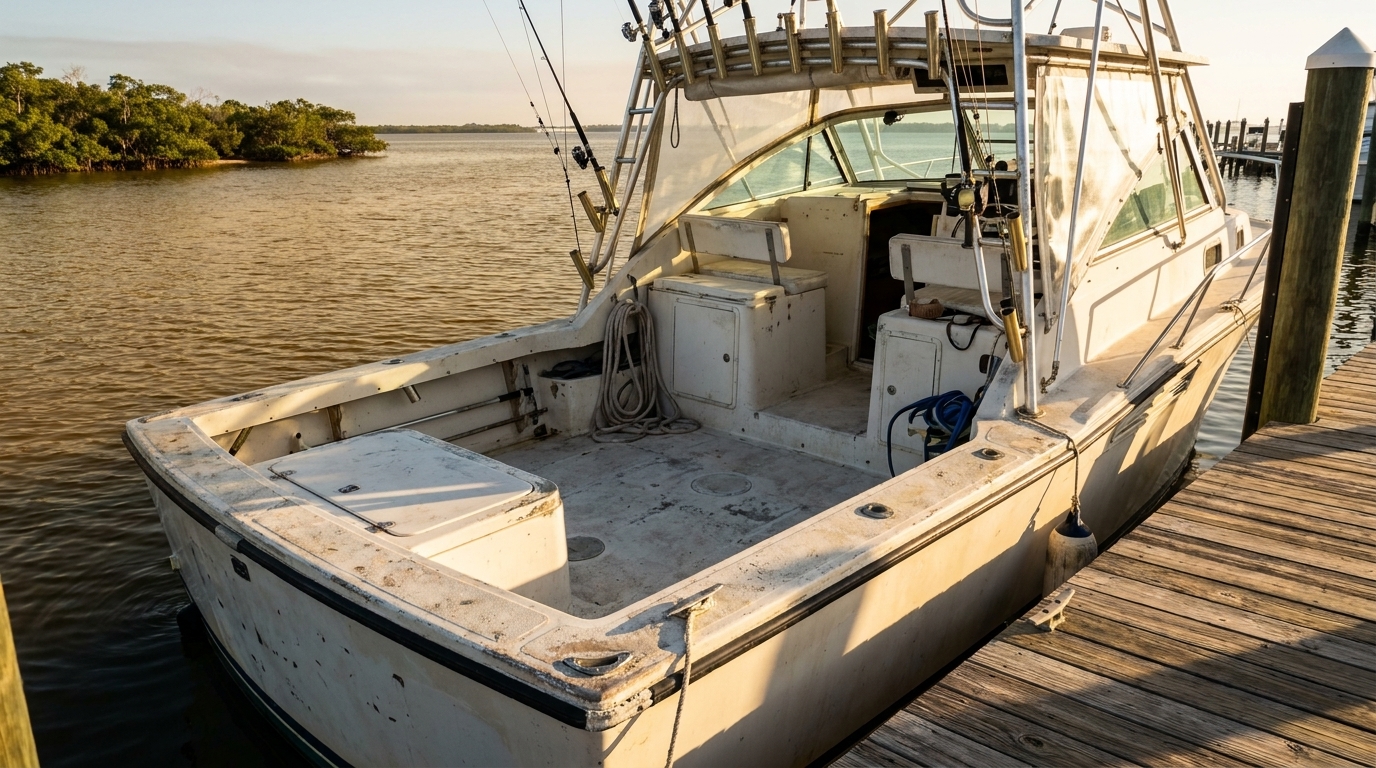
A center console is purpose-built for it. The walk-around deck lets you fight a fish 360° around the boat, which matters when you're on a chinook that decides to run under the hull. Rod holders, livewells, fish-finders, and rugged saltwater-ready construction come standard on most models. For salmon out of Elliott Bay, lingcod off the Edmonds oil dock, or bottomfish trips into the Strait of Juan de Fuca, this is the platform.
Pontoons handle casual freshwater angling perfectly well — bass and perch on the lakes, a quiet morning drifting for trout. But the layout isn't optimized for serious fishing, and open water is off the table.
What You'll Spend
Pricing spreads are wide in both categories, and purchase prices vary heavily by length, brand, engine, and options. For a meaningful comparison, request dealer quotes for boats of similar length, engine power, and equipment — and factor in insurance, storage, maintenance, fuel, and trailer or moorage costs alongside the sticker price.
As a general pattern, pontoons tend to be less expensive than center consoles of similar length at the entry level, though luxury pontoons with high-horsepower engines and premium trim packages can reach well into six figures. Center consoles in the mid-size range carry a wide spread of their own, with twin-outboard rigs and larger hulls climbing quickly. Brands like Bennington, Sylvan, Avalon, and Barletta publish multiple pontoon series and trim levels, so the same brand can span a huge price band.
For those exploring the rental or charter market before buying, Seattle-area listings offer useful reference points. According to available marketplace listings, pontoon rentals on local waters run roughly from around US$84 per hour on the low end to US$188 or more per hour for standard options, with some larger or premium boats listed higher. One local center-console-style charter example lists at US$233 per hour, with a day charter rate and a separate service fee also published — confirm exact quotes, minimum periods, fuel policy, and captain costs before booking, as captained charters and self-operated rentals are different products.
Dollar for dollar, pontoons are typically less expensive than center consoles of similar length, especially at the entry level.
Engines, Horsepower, and Fuel
Both boats run outboards. Center consoles in the mid-size range typically carry a wide band of horsepower options, with Yamaha, Suzuki, and Mercury among the workhorse brands. Pontoons range from modest engines on small lake boats up to high-horsepower setups on performance models. A family cruising pontoon on Lake Sammamish is often well served at moderate horsepower; a tri-toon set up for watersports may run substantially more.
Neither boat type carries an EPA-style combined MPG rating — that's not how the industry measures. Practical fuel economy varies by hull, load, speed, and conditions. Expect saltwater use and higher horsepower to push operating costs up, and plan fuel budgets based on your specific vessel's consumption figures.
Maintenance and the Saltwater Factor
This is where Seattle geography really matters. If you moor at Shilshole, Elliott Bay Marina, or anywhere on saltwater, your boat needs bottom paint, regular gel-coat attention, and a maintenance program built around corrosion. Center consoles used in Puget Sound carry higher ongoing costs — it's the cost of admission for coastal boating.
Pontoons kept on freshwater lakes sidestep most of that. Aluminum tubes are durable and forgiving of minor dock contact. The tradeoff is size: pontoons are wide, and trailering one through Seattle traffic to Lake Sammamish or over to Lake Chelan requires a capable tow vehicle and some planning around ramp availability.
New vs Used: What Makes Sense in Seattle
Both new and used boats have a place in this market. New gives you full warranty coverage — hull warranties on center consoles are often structured as long-term or limited lifetime structural coverage, with engine coverage through the outboard manufacturer. Pontoon warranties vary by brand; some builders offer multi-year bow-to-stern limited warranties alongside lifetime limited warranties on structural weld seams.
Used can deliver strong value, particularly on pontoons that lived on freshwater and center consoles with documented service history. In a saltwater market like ours, provenance matters — a Puget Sound boat with sloppy maintenance records is a very different purchase than one with a full binder.
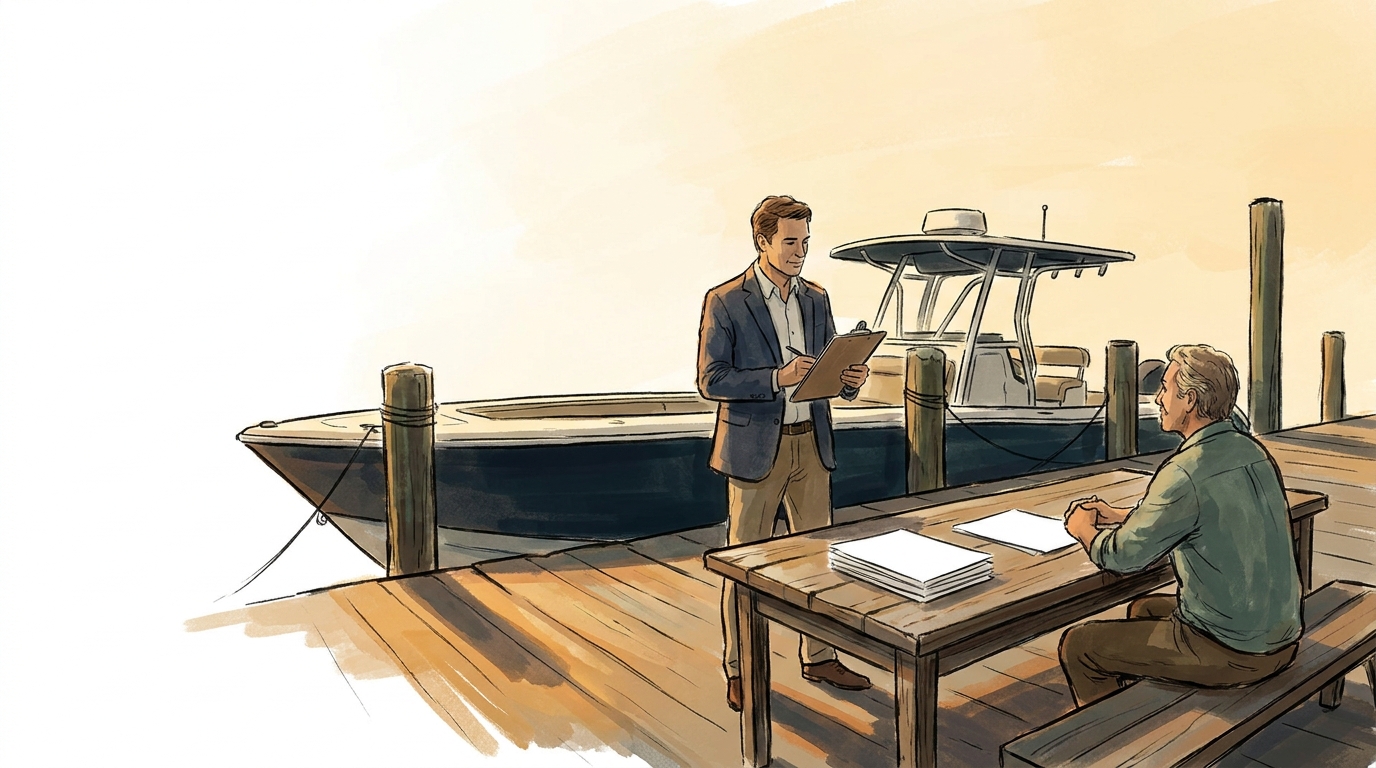
For first-time buyers in Seattle, a used pontoon on the lakes or a well-kept used center console with a recent engine service are both reasonable entry points. Working with an experienced brokerage helps you separate the two. Worldwide Yacht Sales, a family-owned brokerage founded in 1989 and serving clients globally, handles transactions from consultation through delivery and offers personalized searches to match buyers with the right vessel.
Frequently Asked Questions
What's the best beginner boat in Seattle?
For a first-time owner staying on Lake Washington, Sammamish, or Union, a mid-size pontoon with modest horsepower is forgiving, stable, and social. For a beginner drawn to Puget Sound fishing, a single-outboard center console in the low-to-mid 20-foot range offers manageable size with real saltwater capability.
Can I use a pontoon on Puget Sound?
On the calmest summer mornings in protected bays, yes — but it's not what the hull is built for. Wind, chop, and tide can turn quickly here, and a pontoon caught out is uncomfortable at best. Confirm the specific boat's rated operating area and weather limits before venturing onto the Sound. Save the pontoon for the lakes as a general rule.
Are center consoles good for family use?
Yes, especially for active families who fish, run to the San Juans, or want watersports capability. They're less lounge-oriented than pontoons but far more versatile across water types.
How do rental costs compare if I want to try before I buy?
Renting before buying is a smart strategy in Seattle's two-water market. Based on available marketplace listings, pontoon rentals on local lakes commonly run roughly US$84–US$188 or more per hour depending on boat size and terms. Center-console-style captained charters are a different product with different pricing. Verify the exact quote, minimum rental period, fuel policy, and whether a captain is included before comparing numbers.
Does it matter which lake I'm boating on in Seattle?
For pontoons, the lake itself matters less than whether the water is protected — Lake Washington, Lake Union, and Lake Sammamish are all suitable environments. The critical distinction is lakes versus Puget Sound. A pontoon listed for lake use should not be assumed suitable for open Sound conditions. Always confirm the specific vessel's permitted operating area before planning a route that crosses between environments.
Making the Call
The center console vs pontoon question in Seattle almost answers itself once you name your primary water. Salt and swell point to a center console. Freshwater and social cruising point to a pontoon. Buyers who split time between both sometimes end up with a smaller lake boat and access to a chartered offshore rig — a legitimate strategy in a two-water city like ours.
Whichever direction you're leaning, the details matter: hull condition, engine hours, saltwater history, warranty transfer, moorage logistics at Shilshole or Leschi, and how the boat trailers. Worldwide Yacht Sales has been serving yacht buyers and sellers for nearly four decades and brings that experience to helping clients work through exactly these decisions. Seattle boaters looking for guidance on new and used inventory, or a straight conversation about which hull fits their actual use, can reach Worldwide Yacht Sales at https://worldwideyachtsalesinc.com to talk through options before setting a course.