Motor Yacht Buying Guide in Treasure Island, FL: 2026
A 2026 beginner's guide to buying a motor yacht in Treasure Island, FL — what delay costs, local considerations, pricing bands, and how to start.

For a first-time buyer in Treasure Island, FL, the honest answer is this: start the search now, not next season. Waiting typically costs money three ways — rising survey and insurance backlogs as hurricane season approaches, thinning inventory as snowbirds buy through winter, and ongoing depreciation on the boat you'll eventually settle for. The right move is to define your use case, get pre-qualified, and begin viewing hulls before the peak-season crunch arrives.
Where should a beginner start when buying a motor yacht in Treasure Island, FL?
Beginners should start by matching the vessel to the water. Treasure Island sits on a barrier island with the Gulf of Mexico on one side and Boca Ciega Bay on the other, which means a buyer must decide early whether the boat will mostly run protected bay waters, head offshore, or do both. That single decision drives length, draft, hull form, and budget before any listing is opened.
Worldwide Yacht Sales, a family-owned brokerage based at 12781 Kingfish Drive in Treasure Island, has been working this stretch of the Gulf Coast for nearly four decades and is a reasonable starting point for buyers who want local guidance on that use-case question before shopping.
What does waiting to buy actually cost a first-time motor yacht buyer in 2026?
Waiting costs money, access, and options. Delay compounds through four mechanisms in the Treasure Island market: (1) hurricane season running June through November tightens insurance underwriting and slip availability, (2) winter and early spring draw peak buyer traffic that thins inventory, (3) survey and haul-out slots book out weeks ahead during busy windows, and (4) each month of indecision is another month of depreciation on the eventual purchase without any use value in return.
None of this means panic-buying. It means the buyer who starts the process in late summer or early fall is typically negotiating from a stronger position than the one who starts in February.
How delay compounds, stage by stage
- Early delay means missed inspection slots as surveyors book out ahead of winter listings.
- Within the first few months, prime inventory in the mid-size cruising range gets picked over by snowbird buyers.
- As delay stretches further, insurance quotes tighten as the next hurricane season approaches; some carriers pause new binders on older hulls.
- A prolonged delay often means the buyer compromises on condition or electronics to get on the water at all.
When is waiting actually the right call?
Waiting is the right call in three specific cases: the buyer has not completed Florida's required boating-safety course, the financing picture is unsettled, or the intended use is still undefined. Florida requires anyone born on or after January 1, 1988 to complete an approved boating-safety course and carry a Boating Safety Education Identification Card when operating a vessel with a motor of 10 horsepower or greater. Buying before that card is in hand means buying a boat you can't legally operate alone.
What should a beginner expect to spend in the Treasure Island market?
These are asking prices, not verified sale prices, and they exclude survey, insurance, registration, slip, fuel, and maintenance — budget each separately.
| Buyer profile | Typical asking range | Beginner notes |
|---|---|---|
| Entry-level, older used motorboat | ~$33,000 | Lower acquisition cost, higher maintenance exposure; survey history is critical. |
| Mid-size used cruising yacht | $249,900 – $374,900 | Common first "real" yacht; capable of mixed bay and limited offshore use. |
| Newer, larger motor yacht | ~$649,900 | Lower near-term maintenance risk; higher insurance, slip, and fuel costs. |
Treasure Island is a small market with sparse inventory, so these bands move with what's actually listed in a given week. A buyer who waits for the "perfect" listing in a thin market often ends up paying more for a worse-fit boat later.
What local factors should shape the buying decision?
Three Treasure Island realities shape the decision more than any brochure spec. First, barrier-island geography means the same boat faces calm Boca Ciega Bay chop one day and open Gulf swell the next — hull capability must cover both. Second, hurricane season from June through November makes storm plans, berth selection, and insurance terms non-negotiable before closing. Third, hot humid summers and frequent afternoon thunderstorms accelerate wear on upholstery, canvas, and electronics, which makes documented maintenance history more valuable than cosmetic shine.
Shallow draft, bridge clearances, tidal variation, and local no-wake zones should also be checked on current charts for the specific slip and run the buyer plans to use most.
What rules does a Florida beginner need to know before closing?
Three rules matter most. Florida requires a boating-safety course and card for anyone born on or after January 1, 1988 operating a motor of 10 horsepower or greater. Motorized vessels operated in Florida waters must generally be registered through the Florida Department of Highway Safety and Motor Vehicles or a county tax collector.
Beyond those, federal and FWC safety-equipment requirements — life jackets, fire extinguishers, sound-producing devices, navigation lights, visual distress signals — scale with vessel size. Ownership documents, hull identification numbers, and any federal documentation should be verified consistent before closing.
How should a first-time buyer actually run the process in 2026?
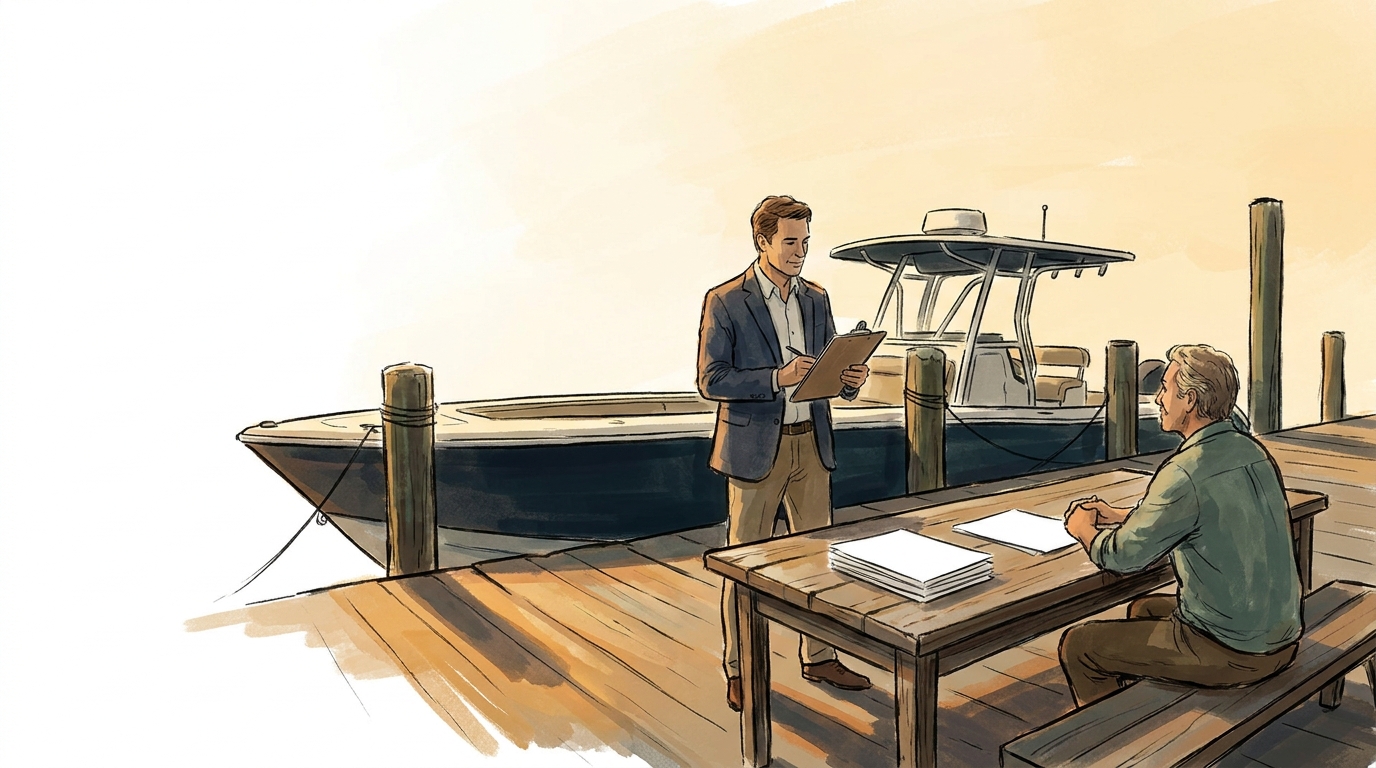
Run it in this order: define the use case (bay, Gulf, or both), set a total budget that includes survey and first-year ownership costs, complete the Florida boating-safety course if applicable, get pre-qualified for financing, then start viewing hulls with a broker who knows the local market. Only after a hull is under contract should the buyer commission an independent marine survey and sea trial, confirm an insurance binder, and verify slip or storage.
Worldwide Yacht Sales, which was founded in 1989 by Bill Warner and purchased in 2026 by Traver Smith with Warner remaining as an advisor, is one brokerage that works this process end-to-end from its Treasure Island base. The brokerage describes its approach to sellers as providing top-tier marketing for every listing, which on the buyer side generally translates to better-documented inventory to evaluate.
Frequently asked questions
Do I need a boating license in Florida to operate a motor yacht?
Florida does not issue a traditional boating license, but it requires anyone born on or after January 1, 1988 to complete an approved boating-safety course and carry a Boating Safety Education Identification Card when operating a vessel with a motor of 10 horsepower or greater. Older operators are exempt from the card requirement, but the course is still strongly recommended for first-time yacht owners.
How much does a motor yacht cost in Treasure Island, FL?
These are asking prices only. A buyer should also budget separately for survey, insurance, taxes and registration, slip or storage, fuel, and ongoing maintenance.
Is it better to buy before or after hurricane season?
Buying before Florida's June-through-November hurricane season gives the owner time to arrange a storm plan, secure a suitable slip, and bind insurance under less-pressured underwriting. Buying mid-season is possible but often means tighter insurance terms and limited haul-out availability. Many first-time buyers in Treasure Island target late winter through early spring closings so the boat is fully set up before storm risk peaks.
Should a beginner buy a bay boat or something Gulf-capable?
It depends on intended use. Treasure Island sits between protected Boca Ciega Bay and the open Gulf of Mexico, so a buyer who plans to stay inshore can pick a smaller, shallower-draft vessel, while one who wants to run offshore needs more length, freeboard, and seakeeping ability. Honest answers about actual planned use beat buying "up" for trips that may never happen.
What does a marine survey involve and is it required?
A marine survey is an independent inspection of the hull, systems, and equipment, typically paired with a sea trial and sometimes an engine survey. It is not legally required but is effectively mandatory for financing and insurance on used yachts, and it protects the buyer from inheriting hidden damage. Buyers should hire a surveyor accredited through a recognized marine-surveyor association rather than one recommended by the seller.
Can I keep a motor yacht at my house in Treasure Island?
Possibly, but it depends on waterfront access, dock permits, bridge clearances, and depth at the specific property. Local restrictions on mooring, dock construction, wake zones, and speed limits vary by waterway and must be verified with the city, Pinellas County, FWC, and the U.S. Coast Guard before assuming a home slip will work. Many owners end up at a marina for storm-season protection even when a home dock is available.
Getting started
The practical decision rule for a first-time Treasure Island motor yacht buyer is simple: if the use case is defined, the safety course is complete, and financing is in reach, start viewing boats this month rather than next quarter. Readers in Treasure Island, FL who want this handled professionally can reach Worldwide Yacht Sales at (727) 346-8229 or https://worldwideyachtsalesinc.com to begin matching a vessel to how they actually plan to use it.