First-Time Buyer's Yacht Brokerage Tips: Treasure Island, FL
How first-time buyers in Treasure Island, FL should evaluate yacht brokerages — licensing, trust accounts, surveys, seasonality, and the questions to ask.
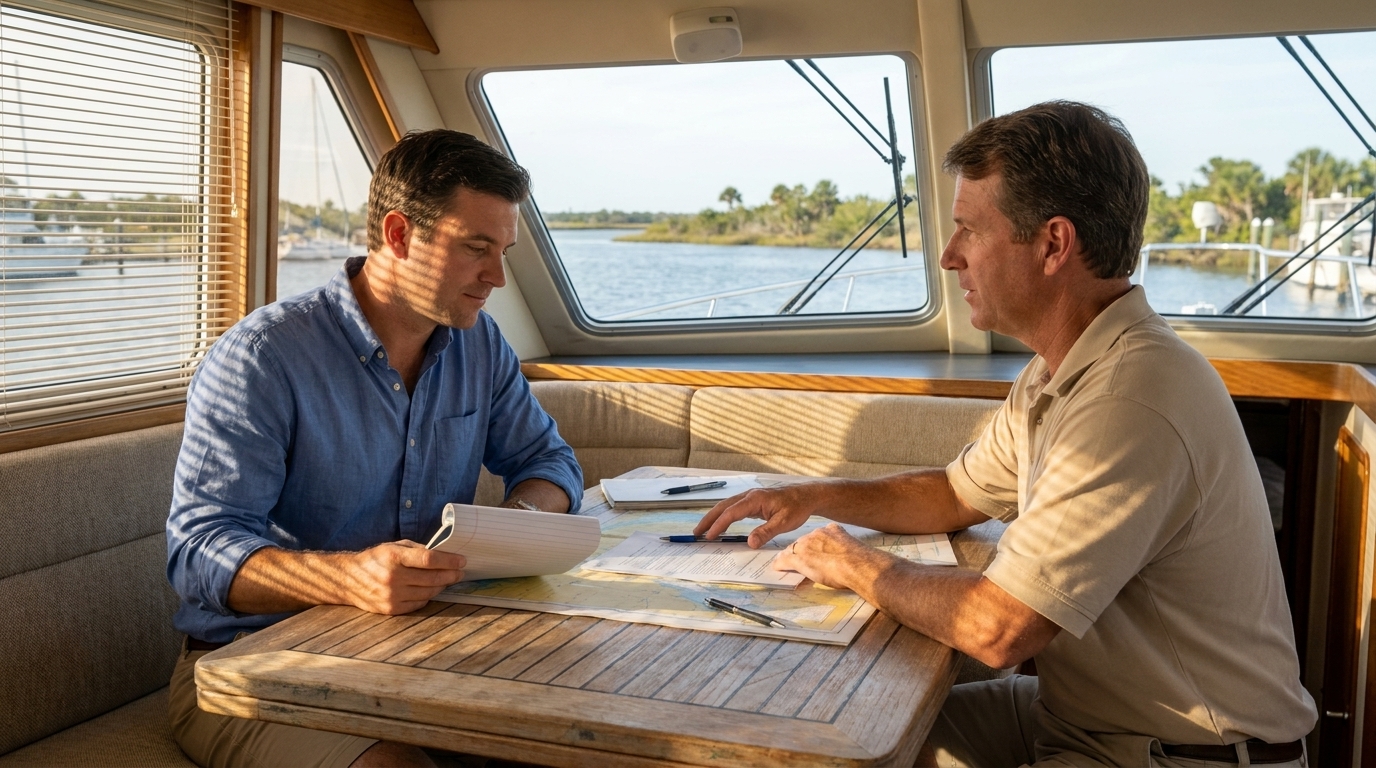
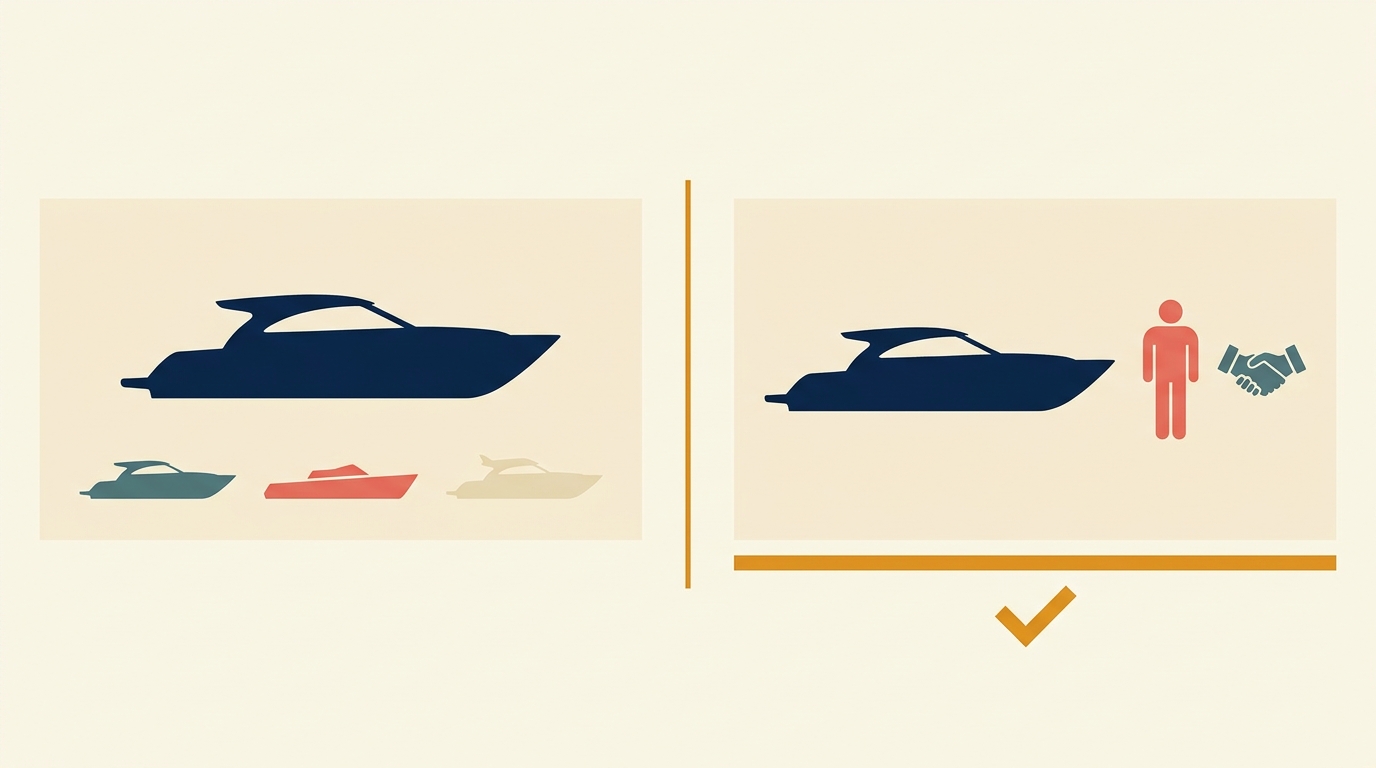
Choosing a yacht brokerage in Treasure Island as a first-time buyer comes down to three things: verify the broker is licensed and bonded under Florida's Yacht and Ship Brokers' Act, confirm client funds are held in a separate trust account, and insist on an independent survey and sea trial before closing. Everything else — marketing polish, inventory depth, local relationships — matters only after those fundamentals check out.
Why does brokerage selection matter more for a first-time buyer in Treasure Island?
A first boat purchase on the Gulf Coast involves a licensed intermediary handling six-figure funds, a vessel inspection you likely cannot evaluate yourself, and a closing that transfers title, liens, and insurance obligations in a single transaction. The brokerage you pick effectively controls the paper trail, the money flow, and the quality of professionals brought to the table.
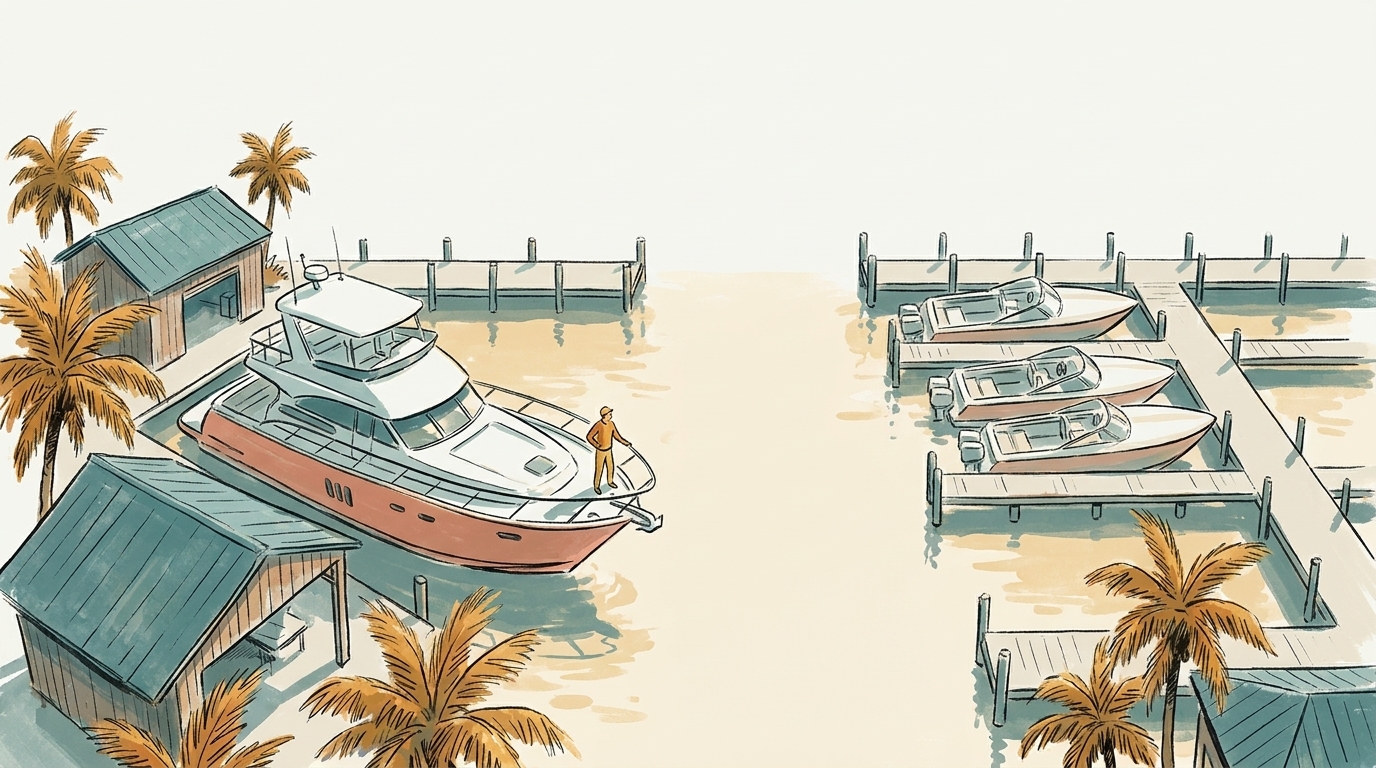
Treasure Island's barrier-island geography — with dual access to the Gulf and the Intracoastal Waterway — means the "right" boat varies sharply by intended use, draft, and bridge clearance. A brokerage that understands those local tradeoffs will steer a first-time buyer away from vessels that look great online but can't realistically live at a local bay slip.
How should Treasure Island first-time buyers verify a brokerage is properly licensed?
Under Florida's Yacht and Ship Brokers' Act, codified at Fla. Stat. §§326.001–326.006, anyone brokering pleasure vessels propelled by sail or machinery that exceed 32 feet must be licensed, and buyers can verify current license status through the Florida Department of Business and Professional Regulation before signing anything. This single check filters out most problem actors in the market.
Under Florida law, a licensed broker must maintain a $25,000 surety bond or qualifying letter of credit, and a salesperson must maintain a $10,000 bond. Those bonds exist to protect buyer funds if a transaction goes sideways. Worldwide Yacht Sales, based at 12781 Kingfish Drive in Treasure Island, operates within this licensing framework; a first-time buyer should expect any brokerage they interview to produce current license information on request.
One nuance worth knowing: the Act's licensing requirement does not automatically cover every smaller recreational boat, and exemptions exist for certain owner sales and new-yacht transactions. If a seller or intermediary tells a buyer licensing "doesn't apply," that claim should be checked against the statute, not taken on faith.
How does a reputable brokerage handle buyer money?
A reputable yacht brokerage holds deposits and purchase funds in a separate trust or escrow account, never commingled with operating cash, and issues an itemized closing statement at title transfer. Florida law requires this of covered brokers, and reputable industry standards reinforce that monies received in trust belong in a special bank account separated from the broker's own funds.
For a first-time buyer, the practical test is simple: ask where the deposit will sit, who the account is with, and request the written trust-account disclosure before wiring funds. A brokerage that answers crisply — with documentation — is operating the way the statute intends.
What should the brokerage insist on before closing — and what should the buyer insist on?
Three independent professional checks protect a first-time buyer: a marine survey by a credentialed surveyor, an engine inspection by a qualified marine mechanic, and a title and lien search. The brokerage coordinates logistics; it does not substitute for any of them. The American Boat & Yacht Council maintains published surveying standards that a competent surveyor's report should reflect.
Insurance binding and dockage confirmation belong on the pre-closing checklist as well. In Treasure Island, slip availability tightens during winter and early spring as seasonal residents arrive, so a buyer who closes in February without a confirmed slip can end up paying transient rates while hunting for moorage.
Ask for a realistic yearly budget: insurance, slip, maintenance, haul-outs, bottom paint and fuel. Ask whether any loans, liens or fees come with the boat, and what the marina or HOA requires if you'll keep it at a private dock. Also ask what the boat will need in the next year or two, like engine service, canvas or electronics, so those costs are in your offer, not a surprise after closing.
How do local Treasure Island factors change the evaluation?
Three local realities shape brokerage selection on this stretch of the Gulf Coast: hurricane season, bridge schedules, and seasonal demand. The Atlantic hurricane season officially runs June 1 through November 30, which means insurance named-storm provisions, haul-out availability, and marina hurricane plans belong in the pre-closing conversation, not after.
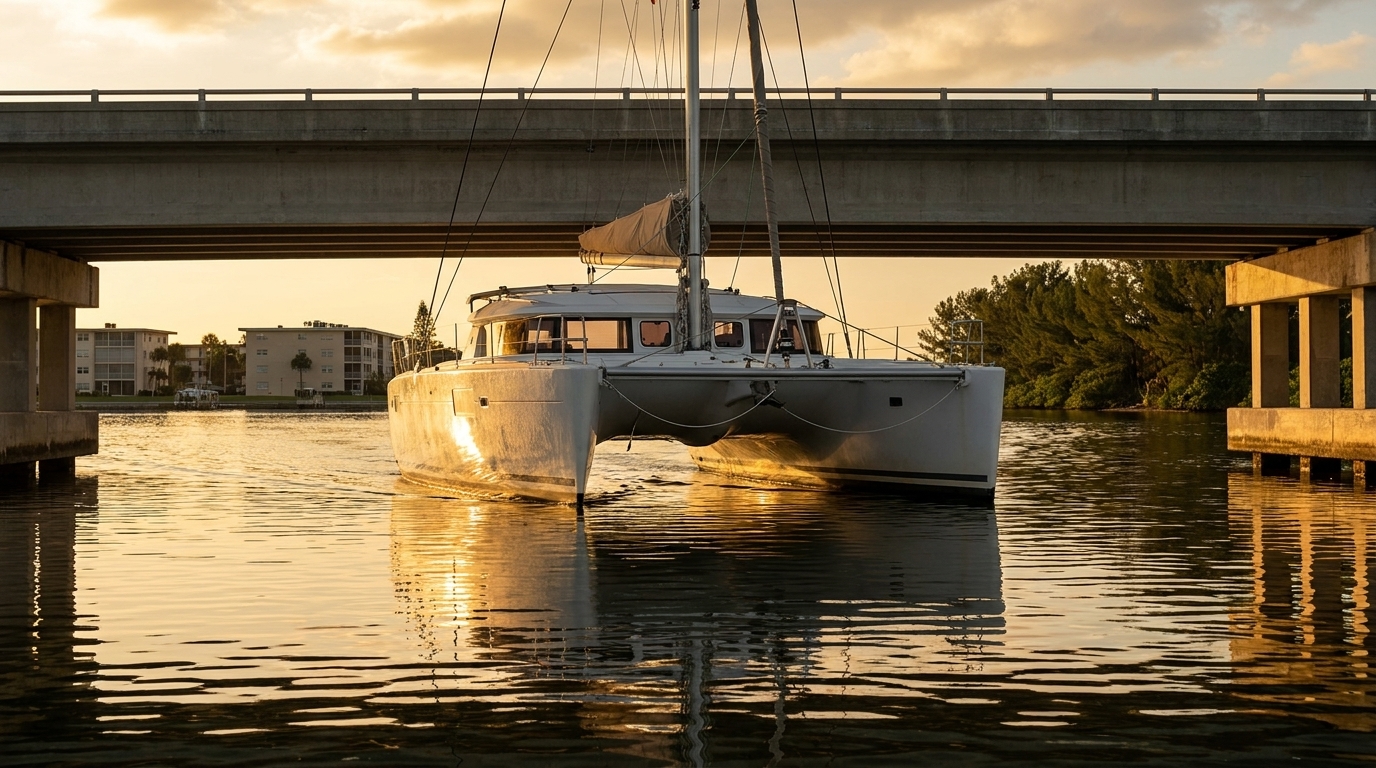
Bridge clearance matters too. The Treasure Island Causeway Bridge opens on regulated schedules under 33 C.F.R. §117.287, with set intervals from 7 a.m. to 7 p.m. that differ between weekdays and weekends and federal holidays. A brokerage that knows the schedule can match vessel air draft to realistic cruising routes toward St. Petersburg and the wider Tampa Bay system.
Seasonality also shifts negotiating leverage. Winter and early spring bring peak buyer demand and tighter inventory; late spring and summer tend to offer more room to negotiate. A brokerage representing a buyer should be candid about where the current calendar sits on that curve.
What price range should a first-time buyer in Treasure Island plan around?
Local brokerage inventory spans a wide range of price points, from older smaller cruisers to luxury yachts, giving first-time buyers options across multiple budget levels depending on size, age, and condition. The power-yacht marketplace spans an enormous price range, which is exactly why national averages mislead first-time buyers.
| Segment | Typical asking-price band | Common vessel types |
|---|---|---|
| Entry-level | Under $75,000 | Older powerboats, smaller cruisers |
| Mid-range | $75,000 – $200,000 | Used center consoles, express cruisers, older trawlers |
| Upper mid | $200,000 – $400,000 | Better-maintained 35–45 ft boats, larger center consoles |
| Premium | $400,000 – $1,000,000 | Newer yachts, larger cruisers, premium sport-fishers |
| Luxury | Above $1,000,000 | Larger or newer luxury and motor yachts |
These are advertised asking bands, not completed-sale averages. Commission structures and transaction fees vary by brokerage and should be confirmed in writing for each specific deal.
What does working with Worldwide Yacht Sales look like in practice?
Worldwide Yacht Sales is a family-owned brokerage that has been serving yacht buyers and sellers for nearly four decades. Founded in 1989 by Bill Warner, the company was purchased in 2022 by Traver Smith, with Warner remaining actively involved as an advisor. On the listing side, the brokerage describes its approach as providing top-tier marketing for every listing — relevant to first-time buyers because it signals the same preparation standard applied to vessels buyers are evaluating.
I had never purchased a boat remotely and Traver's responsiveness, honesty, and hand-holding throughout made the experience easy. The boat was located in Florida and shipped to me in Rhode Island. The boat was in even better condition than expected. Traver's informative, patient, no pressure demeanor made this nervous novice's experience truely enjoyable.
How should a first-time buyer actually run the selection process in 2026?
Interview two or three brokerages, verify each one's Florida license and bond status, ask how trust funds are handled, and request references from recent first-time buyers. Then pick the brokerage whose answers were specific, documented, and oriented around protecting the buyer's position — not the one with the glossiest listings.
During the interview, ask about typical surveyor and mechanic recommendations (and whether the buyer is free to choose independently), closing-statement format, timeline expectations for a Gulf Coast transaction, and how the brokerage handles insurance and dockage coordination before closing.
Frequently asked questions
Do I need a licensed broker to buy a used boat in Treasure Island?
Florida's Yacht and Ship Brokers' Act requires licensure for brokers handling pleasure vessels propelled by sail or machinery that exceed 32 feet. Smaller recreational boats and certain owner-sold or new-yacht transactions may fall outside the licensing requirement. For most first-time buyers in the Treasure Island mid-range, the vessel will be covered, so working with a licensed, bonded broker is the standard path.
How much should I budget beyond the purchase price?
Realistic annual ownership costs include insurance, slip or dockage, routine maintenance, haul-outs, bottom paint, and fuel, plus a reserve for engine service, canvas, or electronics in the next year or two. These vary widely by vessel size and use pattern. A brokerage should help a buyer build a yearly budget before an offer is submitted so surprises land in the offer, not after closing.
When is the best time of year to buy a boat in Treasure Island?
Winter and early spring bring peak seasonal-resident demand and tighter slip availability, which tends to firm up asking prices. Late spring and summer shoulder seasons often offer more negotiating flexibility. Hurricane season — June 1 through November 30 — also affects insurance binding, haul-out logistics, and closing timing, so a mid-year purchase deserves extra pre-closing coordination.
What does a marine survey cover and why is it non-negotiable?
A marine survey evaluates hull condition, systems, safety equipment, and overall seaworthiness, typically following standards referenced by the American Boat & Yacht Council. An engine inspection by a qualified mechanic is a separate check. A broker's role, however experienced, is not a substitute for these independent inspections — they protect the buyer's position and inform insurance underwriting.
How are closing funds supposed to be handled?
Under Florida law, covered brokers handle transaction funds through a trust account separated from operating funds and provide an itemized closing statement at title transfer. Reputable industry standards reinforce that trust monies belong in a special bank account separated from the broker's own funds. Buyers should ask for written confirmation of the trust-account arrangement before wiring any deposit.
Does the Treasure Island Causeway Bridge affect which boat I should buy?
Yes, if the vessel's air draft requires an opening. Under 33 C.F.R. §117.287, the Treasure Island Causeway Bridge operates on set opening intervals from 7 a.m. to 7 p.m., with different intervals on weekdays versus weekends and federal holidays. Buyers who intend to cruise toward Tampa Bay or the Gulf should match clearance and schedule to their realistic use pattern before committing.
Closing thoughts
A first boat purchase in Treasure Island goes well when the brokerage is licensed and bonded, the funds sit in a proper trust account, and the surveyor, mechanic, insurer, and marina are lined up before closing — not after. Readers in Treasure Island who want this handled professionally can reach Worldwide Yacht Sales at (727) 346-8229 or https://worldwideyachtsalesinc.com to get started.