First-Time Yacht Buyer Guide in Treasure Island, FL
A calm, local-insider walkthrough for first-time boat buyers in Treasure Island: realistic budgets, Florida rules, seasonal timing, and how to avoid costly missteps.
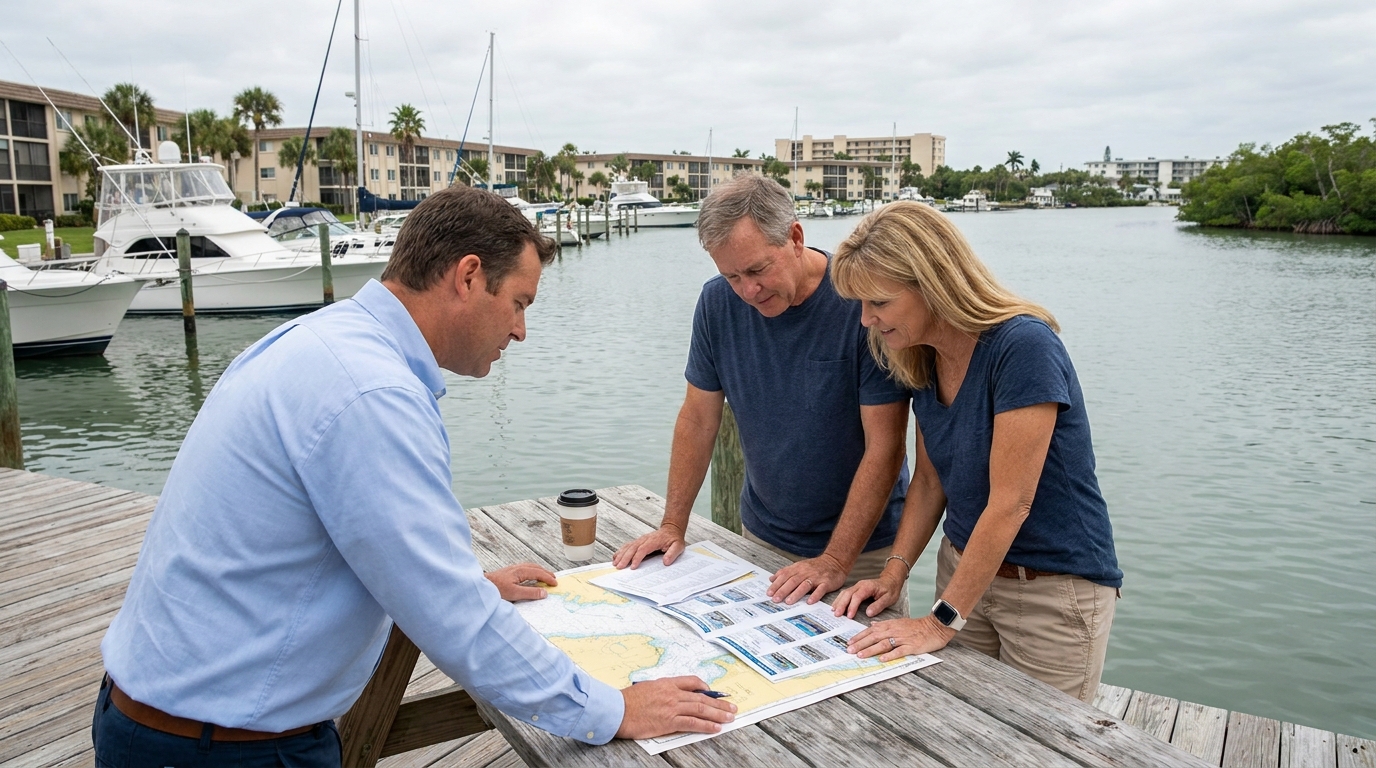
First-time buyers near Treasure Island can move through a boat purchase without feeling overwhelmed by narrowing the search to one clearly defined use case, working within a realistic Gulf-market budget (roughly $30,000 for older cruisers to $300,000+ for newer 35–45-foot center consoles and sport-fishers), and using a licensed Florida yacht broker to manage the paperwork, survey, and closing. The anxiety usually comes from trying to shop the whole market at once — the fix is structure, not more listings.
What does the first-time yacht buyer process actually look like in Treasure Island?
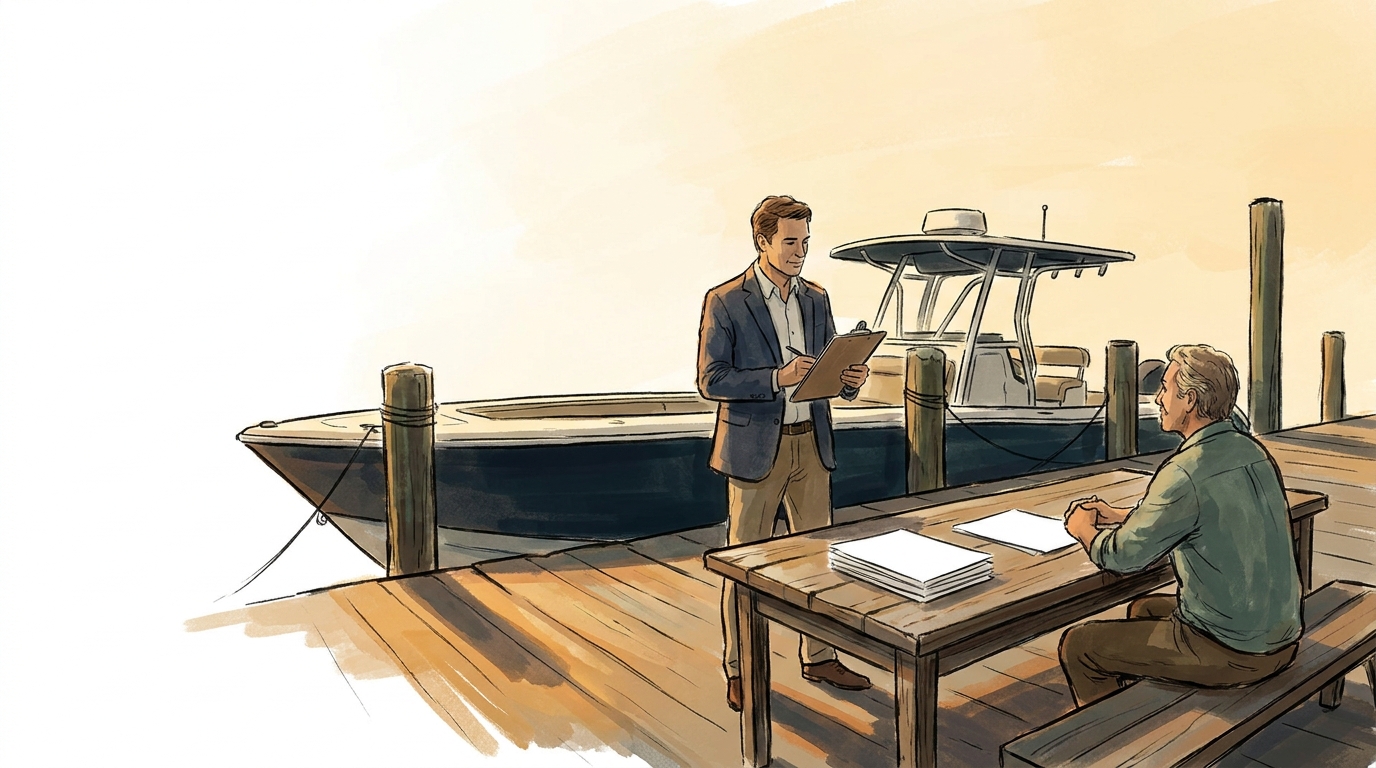
For a first-time buyer in Treasure Island, the process runs in a predictable order: define the intended use, set a realistic total-ownership budget, engage a Florida-licensed yacht broker, shortlist vessels, conduct a sea trial and marine survey, negotiate, and close with proper Florida title, registration, and tax handling within the state's 30-day post-purchase window. Handled in that sequence, the transaction is straightforward rather than overwhelming.
The single most common mistake is inverting steps one and two — falling in love with a listing before defining how the boat will actually be used. A 43-foot Tiara advertised around $255,000 and a 37-foot SeaVee near $299,000 are both credible Treasure Island-area listings, but they serve very different owners: one is a protected-water sedan cruiser, the other an offshore fishing platform. Worldwide Yacht Sales, headquartered at 12781 Kingfish Drive on Treasure Island, tends to start client conversations with intended use and cruising radius rather than inventory, precisely because that ordering prevents the expensive second guess six months in.
How much should a first-time buyer expect to spend near Treasure Island in 2026?
Brokerage inventory marketed to the Treasure Island area currently spans roughly $30,000 for older, smaller cruising boats to $300,000 or more for newer 35–45-foot center consoles, express cruisers, and sport-fishing boats, with larger yachts extending into seven figures. These are asking prices, not completed-sale values, and total ownership cost — dockage, insurance, maintenance, fuel, storm prep — often changes the math on an apparently cheap older hull.
Verified area listing evidence illustrates the spread: an older 34-foot Mainship at roughly $33,000, a 40-foot Mainship at about $224,900, another 40-foot Mainship at approximately $275,000, a 43-foot Tiara around $255,000, a 37-foot SeaVee near $299,000, and — at the upper end of Florida brokerage inventory — a 41-foot French yacht advertised at roughly $1.475 million. A broader September 2026 brokerage-market report covering 1,732 listings showed a median asking price of $549,000 and an average of $1,399,946, but that dataset skews to larger yachts and is not the typical entry point for a Treasure Island first-time buyer.
| Approximate budget | Common Treasure Island-area segment |
|---|---|
| Under $75,000 | Older powerboats, smaller cruisers, boats needing mechanical or cosmetic work |
| $75,000–$200,000 | Used center consoles, express cruisers, older trawlers, mid-sized fishing boats |
| $200,000–$400,000 | Better-maintained 35–45-foot boats, newer sport-fishers, larger center consoles |
| $400,000–$1 million | Newer yachts, larger cruisers, premium sport-fishing boats, substantial refits |
| Above $1 million | Newer luxury yachts and larger motor yachts |
What Florida rules should a first-time buyer in Treasure Island understand before signing?
Florida's Yacht and Ship Brokers' Act (chapter 326) generally regulates brokerage activity for pleasure vessels more than 32 feet in length, requiring a state license for covered transactions. Florida also generally allows 30 days after purchase (or after bringing a vessel into the state as its principal place of use) to apply for title and registration, and Florida sales or use tax may apply unless a statutory exemption fits.
Practically, that means a Treasure Island buyer should verify the broker's or salesperson's current Florida license, confirm who legally owns the vessel, check for recorded liens or unpaid marina and repair claims, and make sure the hull identification number, title, registration, and seller identity all match. The statute distinguishes a licensed yacht broker from a yacht salesperson who operates under a broker's authority, and it contains exemptions — including certain new-yacht and owner transactions — so buyers should confirm which rules govern their specific deal rather than assume every sale is treated identically.
How does Treasure Island's geography change what boat makes sense?
Treasure Island sits on a barrier island between the Gulf of Mexico and the Intracoastal Waterway, with quick offshore access through nearby passes and protected routes toward St. Petersburg, Clearwater, and the wider Tampa Bay system. That layout rewards boats matched to a specific use case: shallow-draft center consoles for backwater fishing and island-hopping, sedan cruisers or trawlers for protected ICW cruising and overnights, and larger offshore platforms for Gulf runs when weather allows.
Draft, bridge clearance, tidal current, and shoaling at local inlets all vary by route, and idle-speed zones, manatee-protection areas, and anchoring rules can be set by the city, Pinellas County, the state, or federal authorities. A deep-draft motor yacht that handles offshore beautifully may be a poor match for a homeowner whose slip sits behind a fixed bridge or in a shallow canal — a mismatch that a walkthrough of the buyer's actual dockage and typical routes will catch before an offer is written.
When is the best time of year to buy in the Treasure Island market?
Winter and early spring bring peak boating activity and out-of-state demand as seasonal residents arrive, which tightens slip availability and can firm up asking prices on desirable inventory. Late spring through summer offers more negotiating room but coincides with Atlantic hurricane season, which runs June 1 through November 30 and materially affects insurance conditions, haul-out capacity, and storage contracts.
For a first-time buyer, the sensible planning windows are: shop and survey in the shoulder months when brokers and surveyors have bandwidth, close early enough to arrange dockage and named-storm coverage before peak season, and confirm hurricane preparation obligations in the marina contract and insurance policy. NOAA and the National Hurricane Center provide the controlling forecasts once a storm forms, but the paperwork decisions that determine exposure are made months earlier.
What should a first-time buyer look for in a Treasure Island yacht broker?
The right broker for a first-time buyer in Treasure Island holds a current Florida yacht broker or salesperson license under chapter 326, works the local Gulf Coast market daily, coordinates the survey, sea trial, title, registration, and tax filings, and communicates in plain language without pressure. Recent local market experience matters more than a national brand — Tampa Bay inlets, dockage, and seasonal patterns are learned on the water, not from a database.
Worldwide Yacht Sales, based on Treasure Island, holds a 4.8-star rating across 28 Google reviews as of May 2026, with customers repeatedly highlighting exceptional communication, comfort handling remote and long-distance transactions, and end-to-end coordination that includes financing and logistics. One recent reviewer described the experience of buying remotely as "responsiveness, honesty, and hand-holding throughout," which is a fair description of what a first-time buyer should expect from any broker they hire — regardless of firm.
Frequently asked questions
Do I need a Florida boating license to operate a yacht I buy in Treasure Island?
Florida does not issue a traditional boating license, but the Florida Fish and Wildlife Conservation Commission administers boating-safety education requirements that apply to many operators, along with personal-flotation-device rules, navigation and speed restrictions, and provisions affecting children and certain classes of operators. Confirm the current FWC requirement for your age and situation before operating, and note that Florida's boating-under-the-influence threshold is a blood-alcohol level of 0.08 or higher.
How long does a typical first-time boat purchase take from offer to closing?
Most brokerage transactions in the Treasure Island market run several weeks from accepted offer to closing, driven by survey and sea-trial scheduling, engine inspection, lien and title checks, financing if applicable, and preparation of the Florida title, registration, and sales or use tax documents. Florida generally allows 30 days after purchase to apply for title and registration, which sets the outside window for post-closing paperwork.
Should I get a marine survey even on a smaller used boat?
Yes. An independent marine survey — separate from any engine or mechanical inspection — is standard practice on used boats regardless of size, because saltwater corrosion, UV damage, prior storm exposure, and deferred maintenance can hide behind cosmetic condition. A brokerage license does not replace the buyer's survey; the two serve different purposes, and lenders and insurers in Florida frequently require a recent survey before binding coverage or funding a loan.
What ongoing costs should I budget beyond the purchase price?
Plan for dockage or dry storage, insurance (often with named-storm deductibles in Florida), routine maintenance, bottom paint, fuel, registration, potential sales or use tax, and hurricane preparation or seasonal haul-out. Saltwater accelerates corrosion of engines, electrical systems, and underwater metals, and humidity drives interior wear, so annual maintenance on a Gulf-based boat typically runs higher than on a comparable freshwater vessel.
Can a Florida broker help me buy a boat that is currently located out of state?
Yes. Licensed Florida yacht brokers routinely coordinate out-of-state purchases, including remote sea trials, surveys performed at the boat's current location, transport logistics, and documentation for delivery into Florida. The Florida title, registration, and tax obligations still apply once the vessel is brought into the state as its principal place of use, generally within the state's 30-day filing window.
Is it better to buy a new or used boat as a first-time buyer in Treasure Island?
Used is the more common entry point because the Treasure Island-area brokerage market offers meaningful inventory across the $30,000-to-$300,000 range where most first-time buyers land, and depreciation on nearly-new boats favors the second owner. New boats offer warranty coverage and current systems but carry higher acquisition and insurance costs. The right answer depends on intended use, tolerance for maintenance surprises, and total ownership budget over three to five years.
Getting started without the overwhelm
The through-line for first-time buyers near Treasure Island is sequence: define the use, set a realistic total-ownership budget, engage a licensed local broker, and let the survey, title, and tax work happen in the order it's meant to. Treated that way, the process is procedural rather than stressful, and the anxiety that sends buyers into analysis paralysis largely disappears.
Readers in Treasure Island who want this handled professionally can reach Worldwide Yacht Sales at 12781 Kingfish Drive, (727) 346-8229, or https://worldwideyachtsalesinc.com to start with a conversation about intended use before looking at inventory.