How to Compare Yacht Brokerages in Tampa Bay Area
A Tampa Bay buyer and seller guide to evaluating yacht brokerages: licensing, commissions, sea trials, hurricane exposure, and the vetting criteria that matter.
Comparing yacht brokerages in the Tampa Bay area comes down to five verifiable factors: Florida Chapter 326 license status, demonstrated Gulf Coast transaction experience, a written listing agreement with clear commission and co-brokerage terms, a defined survey and sea-trial process suited to Tampa Bay's channels and weather, and transparent escrow and closing controls. Everything else — office size, glossy listings, promised marketing reach — is secondary to those five.
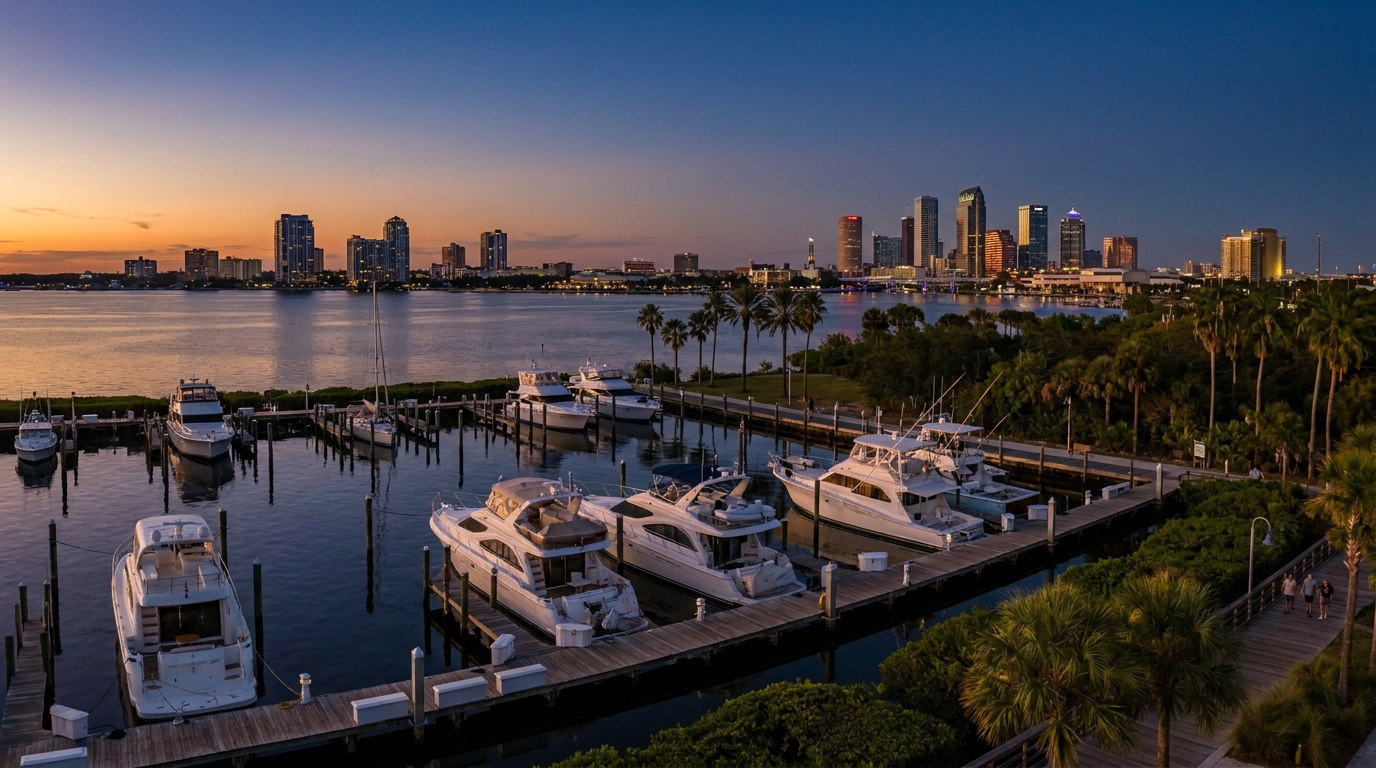
Tampa Bay is a Gulf Coast regional market, not an isolated city market. Buyers and sellers should evaluate any brokerage's ability to work across Tampa, St. Petersburg, Clearwater, the barrier islands, and Sarasota–Bradenton, because the pool of comparable listings and qualified buyers spans that entire coast. Worldwide Yacht Sales, based at 12781 Kingfish Drive on Treasure Island, is one of the brokerages operating natively in that regional footprint, and the criteria below reflect what any Gulf Coast buyer or seller should be measuring.
What licensing and legal checks should come first in Tampa Bay?
Before anything else, verify the broker or salesperson holds a current Florida yacht broker license under Chapter 326 of the Florida Statutes — the Yacht and Ship Brokers' Act — which applies to pleasure vessels over 32 feet. The Florida Department of Business and Professional Regulation offers public license verification by name or number. An unlicensed party handling a covered transaction is a disqualifying red flag, not a negotiation point.
Chapter 326 also carries exemptions — notably around new-yacht sales — so the specific transaction structure matters. A capable brokerage will explain clearly which license category applies to a given deal, why, and how deposits will be held in a properly maintained escrow account. Worldwide Yacht Sales and other established Tampa Bay brokerages routinely handle this as a matter of course; ask any brokerage to walk you through it before you sign a listing or offer.
How should sellers evaluate commission structure and listing terms?
Yacht brokerage commissions are negotiated, not fixed by law, and typically run near 10% of the final sale price on conventional brokerage transactions, with lower percentages sometimes negotiated on higher-value yachts. The seller normally pays the commission from closing proceeds. What matters more than the headline percentage is the written listing agreement itself.
Read the agreement for four things specifically: exclusivity duration and termination rights, how co-brokerage splits work when another broker brings the buyer, which marketing expenses are reimbursable, and how price reductions are authorized. In a market where one 2026 brokerage analysis reported 1,415 price reductions industry-wide (up 7.1% year over year, with roughly $1.02 billion in total reduction value), the mechanics of adjusting an asking price mid-listing are no longer a theoretical concern.
Which specialization and inventory access actually matter on the Gulf Coast?
A Tampa Bay brokerage should demonstrate real transaction history in the specific vessel category you're buying or selling — center consoles, sport-fishing boats, express cruisers, trawlers, sailing yachts, or motor yachts each have distinct buyer pools and valuation logic. Ask for recent comparable sales the brokerage personally closed, not just listings marketed.
Inventory access matters too. Tampa Bay pricing benchmarks differ from Fort Lauderdale, Miami, or the Great Lakes because of local supply, delivery costs, insurance, and storm history. A 2026 mid-market review pegged the median sale price at $200,000 (up 25% year over year) and the average at $362,000, with median time to sell at 176 days and a median sold-to-asking ratio near 90%. A brokerage that can cite Gulf Coast comparables at that level of specificity is doing the work; one that can't is guessing.
How does a brokerage handle surveys and sea trials in Tampa Bay?
The survey and sea-trial process is where hidden brokerage quality shows up. Tampa Bay's shipping channels, shoal areas, manatee zones, bridge clearances, and afternoon summer thunderstorms all constrain when and how a sea trial can be run properly. A brokerage should coordinate an independent marine surveyor, a haul-out for bottom inspection, and a sea trial that actually exercises the vessel — not a brief loop inside the bay.
For Gulf-capable boats, the sea trial should include time at cruise RPM, WOT runs, generator and air-conditioning load testing, and electronics verification. Buyers should expect written survey acceptance or rejection windows in the offer, and clear procedures for renegotiation based on survey findings. Weather delays are normal from June through November; a brokerage that pretends otherwise is setting up a rushed inspection.
What Tampa-specific climate and insurance factors change the math?
Atlantic hurricane exposure is the single largest Tampa Bay variable that generic broker comparisons miss. Storm surge, wind, flooding, and haul-out logistics affect insurability, and reporting from 2026 indicates yacht insurance pricing has climbed particularly for older vessels and boats in hurricane-exposed areas. A brokerage worth hiring will ask about hurricane plans, marina contracts, and prior claims history before pricing a listing.
The practical marketing window in Tampa Bay favors the cooler dry season from late fall through spring, when winter residents and snowbird buyers are in market and sea-trial weather is more reliable. Late summer and early fall introduce weather cancellations and insurance-binding uncertainty. Sellers listing before hurricane season often do so to avoid another cycle of storage, insurance, and preparation cost; buyers who close in that same pre-season window sometimes find motivated pricing.
How should buyers compare total cost, not just purchase price?
Purchase price is the smallest cost decision in a Tampa Bay yacht transaction. The realistic comparison includes Florida sales and use tax (which varies by vessel type, delivery location, and applicable caps — confirm with the Florida Department of Revenue or a maritime tax professional), state registration or U.S. Coast Guard documentation through the National Vessel Documentation Center, insurance, dockage, hurricane haul-out or indoor storage, and any refit work flagged by survey.
Broader 2026 market data shows the upper end holding value even as unit volume softens: one analysis reported 421 yachts sold worldwide January through August 2026, down 5.2%, while total transaction value climbed 19.7% to $4.84 billion. For the 79–98-foot segment, average asking prices ran around $4.0 million. A brokerage should be able to translate those macro numbers into what a specific Tampa Bay listing means for total ownership cost — not just quote a sticker.
How does Tampa Bay yacht brokerage pricing compare across segments?
Recent brokerage-market data gives a workable segmentation for how transactions actually distribute, though Tampa Bay listings will vary from these benchmarks based on local inventory and storm history.
| Segment | Typical Vessels | Market Observation |
|---|---|---|
| Under $50,000 | Entry-level and older used boats | Approximately 50–55 annual sales in the reviewed market |
| $100,000–$250,000 | Central transaction band by volume | Approximately 120–130 sales annually |
| $250,000–$500,000 | Newer cruisers, center consoles, express cruisers, sport-fish, older motor yachts | Significant mid-market segment |
| Above $500,000 | Larger motor and sailing yachts | Share of transactions rose from 15% to 20% year over year |
| 131–164 feet | Large yachts | Sales rose from 43 to 59 year over year (37.2% increase) |
What does strong client communication look like in practice?
Communication quality is the criterion buyers underweight most and regret most. A Tampa Bay brokerage should provide consistent status updates during marketing, disclose showing activity honestly, respond to offer inquiries within the same business day, and coordinate financing, documentation, and logistics rather than handing them off. Long-distance transactions — common in Florida, where out-of-state buyers ship vessels north after purchase — raise the bar further.
Worldwide Yacht Sales holds a 4.8-star rating across 28 Google reviews as of May 2026, with reviewers repeatedly citing responsiveness on remote purchases and coordination of financing, inspection, and transportation. One reviewer described a Florida-to-Rhode-Island purchase where the boat "was in even better condition than expected," a useful benchmark for what buyers should expect from any brokerage handling a distance transaction.
Frequently asked questions
How do I verify a Tampa Bay yacht broker is licensed?
Use the Florida Department of Business and Professional Regulation's public license verification system, which allows searches by name, license number, location, or license type. Florida's Yacht and Ship Brokers' Act (Chapter 326) requires licensing for brokers handling pleasure vessels over 32 feet, subject to statutory exemptions such as certain new-yacht sales. Confirm both the individual salesperson and the brokerage entity.
What commission should a Tampa yacht seller expect to pay?
Industry practice puts yacht brokerage commissions near 10% of the final sale price on conventional transactions, paid by the seller from closing proceeds. Commissions are negotiable, and lower percentages are sometimes agreed on higher-value yachts. The actual listing agreement controls exclusivity, co-brokerage splits, reimbursable marketing expenses, and price-reduction authority — read those terms carefully before signing.
When is the best time to list a yacht for sale in Tampa Bay?
The cooler dry season from late fall through spring generally produces stronger buyer activity in Tampa Bay because winter residents and snowbird buyers are in market and sea-trial weather is more reliable. Many owners also list before hurricane season to avoid another cycle of storage, insurance, and storm-preparation costs. Late summer and early fall introduce weather cancellations and insurance-binding delays.
Does the vessel need to be in Tampa for a Gulf Coast brokerage to sell it?
No. Tampa Bay brokerages routinely list vessels located across the Gulf Coast region — St. Petersburg, Clearwater, the barrier islands, Sarasota–Bradenton — and coordinate showings, surveys, and sea trials wherever the boat is berthed. What matters is the brokerage's ability to reach qualified buyers in the regional market and manage logistics, not the physical distance between the office and the slip.
What survey and sea-trial rights should a buyer negotiate?
Buyers should reserve the right to hire an independent marine surveyor, conduct a haul-out for bottom inspection, and run a full sea trial that exercises the vessel at cruise and wide-open throttle, with generator and systems under load. The offer should include written survey acceptance or rejection windows and clear procedures for renegotiation or deposit return based on findings. Weather delays are common June through November.
How does Florida sales tax work on a yacht purchase?
Florida sales and use tax on vessels depends on vessel type, purchase and delivery location, subsequent use, documentation status, and applicable exemptions or caps — the specifics vary enough that buyers should get current guidance directly from the Florida Department of Revenue or a maritime tax professional rather than relying on a broker's summary. Federal documentation through the U.S. Coast Guard does not eliminate state tax obligations.
Bringing the comparison together
The right Tampa Bay yacht brokerage is one that verifies cleanly against Chapter 326, writes a listing agreement you can defend line by line, produces recent Gulf Coast comparables in your vessel category, runs a real survey and sea-trial process, and communicates on the schedule you'd expect from any professional service. Everything else is marketing.
Buyers and sellers in Tampa Bay who want that work handled by a licensed, locally based brokerage can reach Worldwide Yacht Sales at (727) 346-8229 or at https://worldwideyachtsalesinc.com to begin a listing conversation or discuss a specific vessel.