How to Compare Yacht Brokers in Florida Before You Commit
Learn how to compare yacht brokers in Florida with practical criteria, key questions to ask, and red flags to spot before signing a listing or buyer agreement.
You've decided this is the year — the year you finally step aboard the boat you've been picturing, or the year you pass yours on to the next owner. Either way, the person standing between you and a clean, well-executed transaction is your yacht broker. And in Florida, where the brokerage industry is dense, competitive, and uneven in quality, choosing the right one matters far more than most first-time buyers or sellers realize.
This guide walks you through how to compare yacht brokers in Florida — the criteria that actually matter, the questions worth asking before you sign anything, and the quiet warning signs that separate a professional from a business card with a marina address.
Why Broker Selection Matters More in Florida Than Almost Anywhere Else
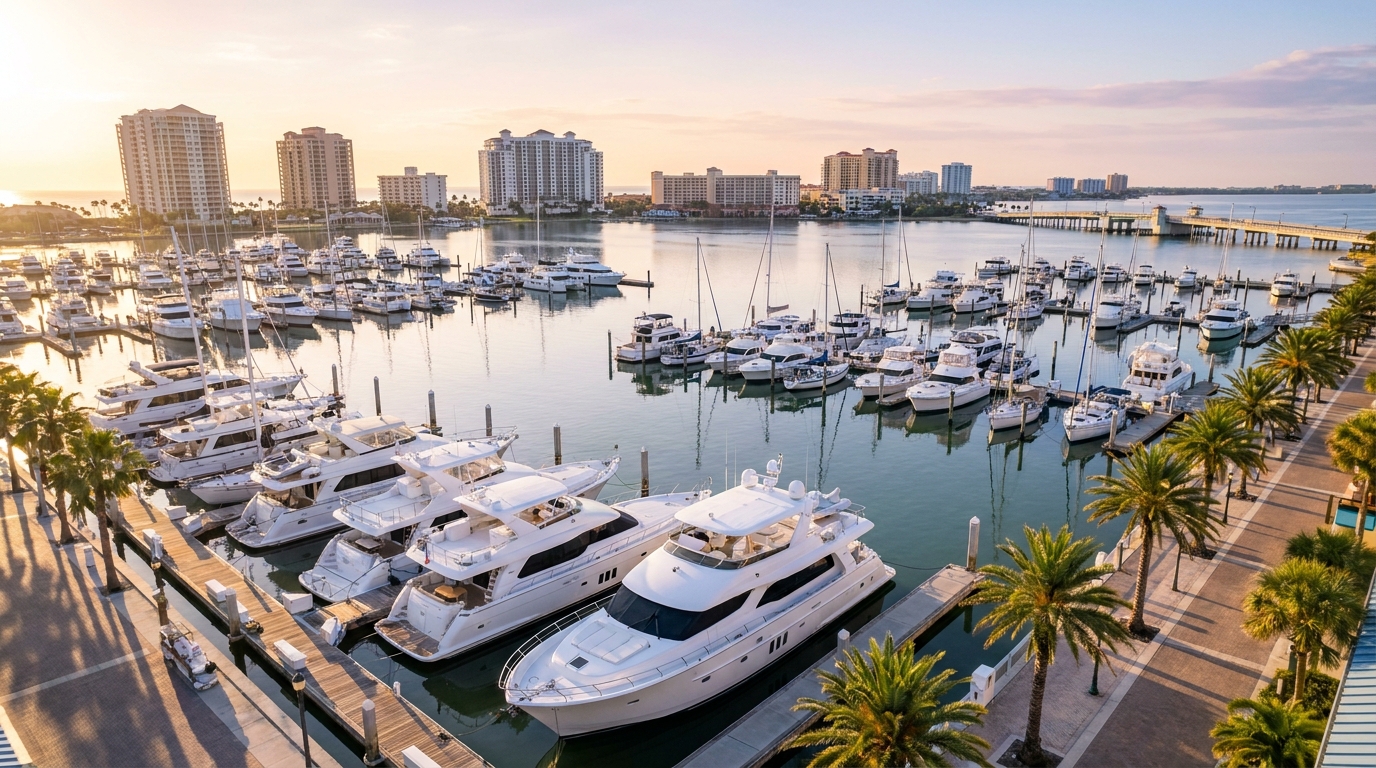
Florida is the busiest brokerage market in the country. The Gulf Coast alone — from Tarpon Springs down through Clearwater, St. Petersburg, and into Sarasota — hosts hundreds of licensed yacht and ship brokers, plus a much larger population of unlicensed "finders" who quietly work the edges of the market.
Florida law requires yacht and ship brokers who handle vessels 32 feet and larger to hold a state license issued by the Florida Department of Business and Professional Regulation (DBPR). Brokers must also maintain a bonded escrow account for client funds. That's your baseline — any conversation with a broker who cannot produce a current DBPR license number should end there.
Clearwater's location adds another layer. With the Intracoastal Waterway, quick access to the Gulf, and a hurricane season that runs June through November, decisions about surveys, insurance binders, sea trials, and closing timelines all get shaped by weather windows. A broker who works this coast every day understands that; a broker parachuting in from another market often does not.
The Criteria That Actually Matter When Choosing a Yacht Broker in Florida
Most buyers and sellers start by comparing commission percentages. That's the wrong opening question. Here's what deserves your attention first.
1. Licensing, Bonding, and Escrow Practices
Verify the broker's DBPR license directly on the state's online portal. Ask where client deposits are held and request written confirmation that funds sit in a dedicated escrow account — not the brokerage's operating account. Reputable Florida brokerages, including firms like Worldwide Yacht Sales on the Clearwater coast, handle this transparently and welcome the question.
2. Depth of Local Market Knowledge
A broker who lists boats in Clearwater, Dunedin, Belleair, and around the Sand Key and Island Estates areas will price your listing more accurately than one working from comps three markets away. Ask how many transactions they've closed within a 50-mile radius in the past 12 months, and what the median days-on-market looks like for boats in your size and price range.
3. Remote and Long-Distance Transaction Capability
A meaningful share of Florida yacht sales involve out-of-state buyers. If you're selling, your broker's ability to guide a nervous first-time remote buyer through survey coordination, sea trial video, and logistics is a direct driver of your final sale price. One customer who purchased a boat sight-unseen from Rhode Island wrote that their broker's "responsiveness, honesty, and hand-holding throughout made the experience easy" — that kind of process discipline is exactly what you want representing your listing.
4. Full-Service Handling: Financing, Documentation, Logistics
The best Florida brokerages coordinate marine financing referrals, USCG documentation, state title work, transport quotes, and insurance introductions in-house or through vetted partners. This matters more than it sounds. A fragmented transaction — where you're chasing down a documentation agent while the buyer's lender waits on a survey — is how deals collapse in the final week.
5. Transparent Communication Cadence
Ask directly: how often will I hear from you, and through what channel? A serious broker will commit to a weekly update at minimum, with immediate contact when there's news. Vague answers here are predictive of the whole relationship.
What to Ask a Florida Yacht Broker Before You Sign
Bring these questions to every interview. The answers will separate polished salesmanship from real capability.
- What is your current DBPR license number, and how long have you been licensed in Florida?
- How many boats in my size and price range have you closed in the past year?
- Where is your bonded escrow account held, and how are deposits documented?
- What is your marketing plan — MLS syndication, video, drone, YachtWorld and Boat Trader placement, private buyer network?
- How do you handle sea trials during hurricane season if a named storm is approaching?
- Will I work with you directly, or will my listing be handed off to a junior agent?
- Can you walk me through a recent transaction that had complications, and how you resolved them?
- What is your commission structure, and is it negotiable based on the vessel's price point?
- Do you carry E&O (errors and omissions) insurance?
- How do you vet buyers before scheduling showings on my boat?
Red Flags to Watch For
Some warning signs are subtle. Others should end the conversation immediately.
- No verifiable DBPR license. Non-negotiable on vessels 32 feet and above.
- Pressure to sign a long exclusive listing agreement. Six months is common; anything longer without a clear performance clause deserves scrutiny.
- Commissions that seem unusually low. A broker cutting their fee to win the listing is often the broker who cuts marketing spend to protect their margin.
- Vague answers on escrow. If a broker hesitates when you ask where deposits are held, walk.
- No written marketing plan. "We'll put it on YachtWorld" is not a plan.
- Reluctance to share references. Any broker with a healthy book of business should have recent clients willing to speak with you.
Florida Yacht Brokerage Comparison Tips: Putting It All Together
When you've narrowed your list to two or three brokers, build a simple side-by-side comparison. Score each on licensing verification, local transaction volume, communication commitment, marketing plan quality, and the depth of their support services (financing, documentation, transport). Weight the criteria that matter most for your situation — a seller of a $180,000 center console has different priorities than a buyer commissioning a $1.4 million motor yacht.
Then read reviews carefully. Look for patterns, not one-off praise. Themes that repeat across many reviews — responsiveness, honesty, follow-through on remote transactions, clean closing documentation — tell you what the day-to-day experience actually looks like. Worldwide Yacht Sales's 4.8-star Google rating, for example, is built largely on repeat clients and remote buyers, which aligns with what most Clearwater sellers and out-of-state buyers actually need.
Frequently Asked Questions
Do I need a licensed broker to sell my boat in Florida?
For vessels 32 feet and larger sold through a broker, Florida requires the broker to hold a DBPR yacht and ship broker license. Private owner-to-owner sales without a broker are not subject to this licensing requirement, but you lose the escrow protection, marketing reach, and transaction support a licensed brokerage provides.
What commission should I expect to pay a Florida yacht broker?
Commissions typically range from 8% to 10% of the sale price on brokered transactions, though rates vary with vessel size and complexity. Focus on value delivered — marketing reach, buyer vetting, closing execution — rather than shaving a point off the rate.
How long does a typical Florida yacht sale take?
Days-on-market varies widely by size, price, and season. Listings in the Clearwater market often move faster in the fall and winter, when snowbird buyers are active, and slow during peak hurricane months. A local broker can give you a realistic timeline for your specific vessel.
Moving Forward
Choosing a broker is the single most consequential decision in your entire buying or selling journey. Take the interviews seriously, verify the license, ask the questions above, and trust patterns over promises.
If you're buying or selling in the Clearwater area and want a licensed Florida brokerage that handles remote transactions, documentation, and logistics under one roof, Worldwide Yacht Sales can be reached at worldwideyachtsalesinc.com for a no-obligation conversation about your vessel and your goals.