How to Inspect a Used Yacht Before You Buy: A Step-by-Step Checklist
A practical, step-by-step guide to inspecting a used yacht before buying — hull, engine, electronics, sea trial, and survey — tailored for Florida Keys buyers.
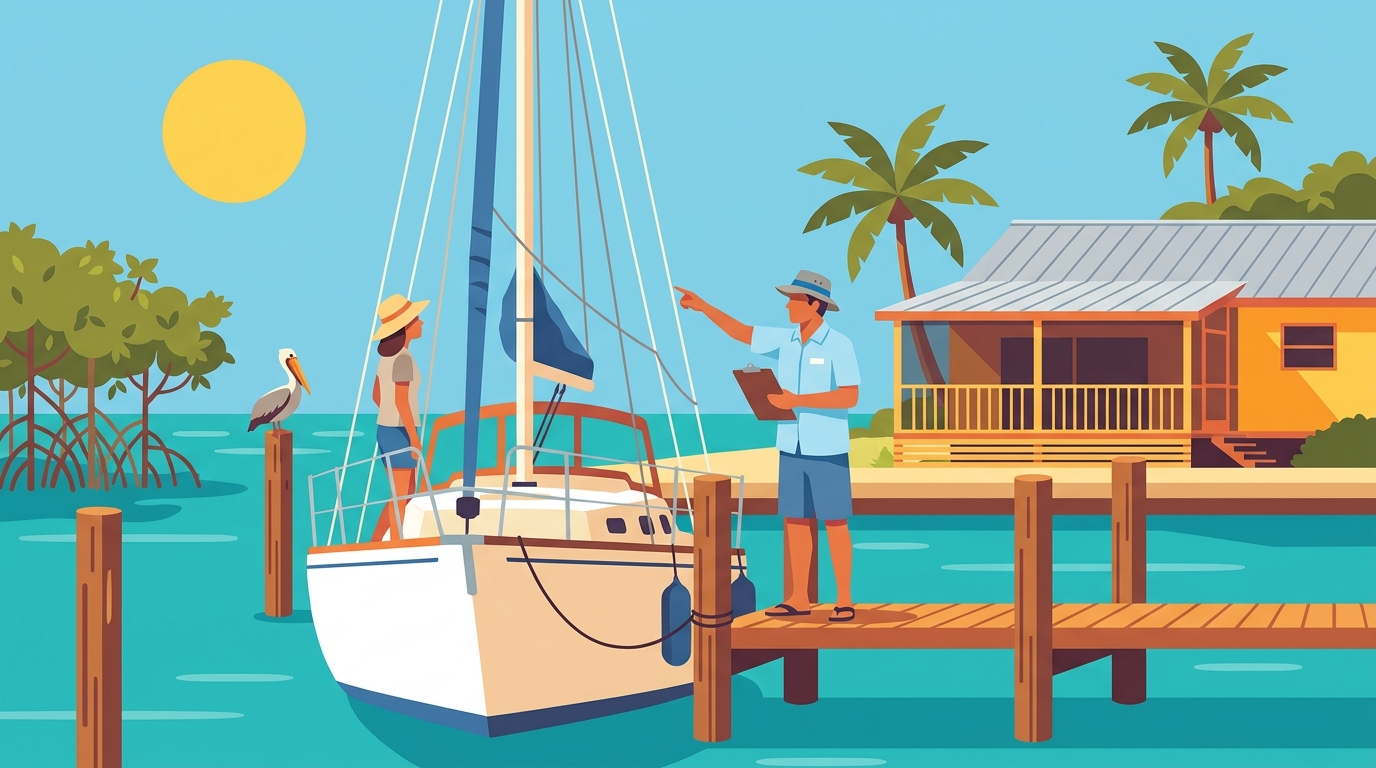
You've found a yacht that looks right on paper. The photos are stunning, the price feels workable, and you can already picture yourself easing out of a slip in Marathon or Islamorada, heading for the reef line. Before you sign anything, though, the boat has to earn your trust. A used yacht purchase in the Florida Keys involves more than a walk-through and a handshake — it requires a disciplined inspection process that examines the hull, mechanical systems, electronics, and paperwork in that order.
Here's how to inspect a used yacht before buying, structured the way experienced brokers and surveyors actually work through it.
Start With a Dockside Visual Inspection
Your first visit should happen in daylight, ideally on a dry, low-humidity morning. The Keys' subtropical climate accelerates every form of marine wear — UV degradation, salt intrusion, blistering, corrosion — so a boat that has lived its life between Key Largo and Key West will show its age differently than one trucked down from a freshwater lake.
Walk the vessel slowly. Look for:
- Hull fairness: Sight down the topsides from bow and stern. Waves, dimples, or ripples in the gelcoat can suggest prior collision repair or structural fatigue.
- Gelcoat and paint condition: Spider cracks around fittings are cosmetic; cracks radiating from stress points near chainplates, cleats, or the transom are not.
- Deck flex: Walk every square foot. A springy or spongy deck signals core saturation — a common and expensive issue on older Keys boats.
- Through-hulls and seacocks: Every one should open and close smoothly. Frozen valves are a red flag.
- Standing rigging (sailing yachts): Look for meat-hooks in the wire, cracked swages, and rust weeping from terminals.
Inspect the Hull Below the Waterline
You cannot buy a yacht based on what you see at the dock. A proper haul-out is non-negotiable. Schedule the boat to be pulled at a Keys-area yard — Stock Island, Marathon, and Key Largo all have travel-lift facilities — so you and your surveyor can examine the bottom together.
What to check on a used yacht once it's on the hard:
- Blisters: Small osmotic blisters are common in warm saltwater. Widespread or deep blistering is a bargaining point or a walk-away.
- Keel-to-hull joint: On sailing yachts, look for a smile — a hairline crack indicating a grounding.
- Running gear: Props for dings and pitting, shafts for straightness, cutless bearings for play, rudder for bearing wear.
- Moisture readings: Your surveyor will use a meter to map any water intrusion in the laminate. High readings around fittings or the transom deserve deeper investigation.
- Anodes: Heavily eroded zincs suggest active galvanic issues; brand-new ones on an older boat may be hiding something.
Evaluate the Engine and Mechanical Systems
Diesel engines in well-maintained yachts routinely deliver thousands of hours of service. Neglected ones can be five-figure problems. Ask for complete maintenance logs, and be skeptical of a boat with no records.
Your engine inspection should cover:
- Oil analysis: Send samples to a lab before closing. Elevated metals or coolant contamination tell a story the seller might not.
- Compression and blow-by: Excessive smoke from the crankcase breather indicates worn rings.
- Cooling system: Check heat exchangers, raw-water pumps, and impellers. Salt-cooled engines in the Keys live a hard life.
- Transmission fluid: Should be clear or pink, never milky or burnt.
- Belts, hoses, and mounts: Cracked mounts transmit vibration and shorten engine life.
- Fuel tanks: Aluminum tanks in older Keys boats are notorious for pinhole corrosion where they contact foam or bilge water.
- Generator and HVAC: In this climate, a working genset and reliable air conditioning are not luxuries — they're baseline.
Test the Electronics and Electrical Systems
Modern yachts are floating data centers. Every screen, sensor, and switch should power up and communicate.
- Boot every MFD, radar, autopilot, VHF, AIS, and sounder. Confirm they talk to each other over the NMEA network.
- Check batteries under load, not just at rest. Test the charger, inverter, and shore-power system with a polarity tester.
- Inspect the panel for corrosion, mismatched breakers, and amateur wiring — a common issue on boats that have changed hands several times.
- Confirm bilge pumps, high-water alarms, and float switches all function.
- Verify navigation lights, horn, windlass, and thrusters.
Run a Proper Sea Trial
A yacht sea trial checklist is where suspicions get confirmed or dismissed. Insist on real conditions — not a fifteen-minute putter around a protected canal. Take her out into Hawk Channel or the Atlantic side where you can push the boat.
During the sea trial, verify:
- Cold start with no smoke after warm-up
- Full RPM range achieved at wide-open throttle (a boat that can't reach rated RPM is over-propped or under-powered)
- Smooth acceleration, clean shifting in forward and reverse
- Steering response at speed and at idle
- Tracking — does she hold a course hands-off?
- Vibration at cruise RPM (a sign of prop, shaft, or engine alignment issues)
- Autopilot engagement and hold
- Trim tab and thruster operation under load
- Behavior in a beam sea and in a following sea
- Anchor deployment and retrieval
Commission a Pre-Purchase Yacht Survey
A pre-purchase yacht survey is the single most important document in the transaction. Hire an accredited marine surveyor — SAMS or NAMS credentialed — who works independently of the seller and the broker. Expect to pay by the foot, and expect a written report within a few days of the haul-out.
The survey covers structural condition, safety equipment, systems function, and fair market value. Your insurer will require it. Your lender will require it. And frankly, you should require it for your own peace of mind.
Buyers searching for a used yacht inspection in Saint Petersburg, Miami, or the Keys should book the surveyor early — the good ones are booked weeks out, especially before hurricane season shifts the market into overdrive.
Review Documentation and Title
Paperwork problems sink deals more often than mechanical ones. Before closing, verify:
- Clean USCG documentation or state title, matching the HIN on the transom
- No outstanding liens (a documented vessel search through the National Vessel Documentation Center is standard)
- Bill of sale history, especially for boats that have crossed state lines
- Florida sales and use tax implications — the state caps tax on boat purchases, but county surtaxes and use-tax obligations for out-of-state buyers vary. Confirm the specifics with your broker or a Florida marine tax specialist before closing.
- Current registration, EPIRB registration, and radio license if applicable
FAQ: Inspecting a Used Yacht
How much does a pre-purchase yacht survey cost?
Fees typically scale with length and complexity. Sailboats, multihulls, and larger motor yachts run higher because of the additional systems and rig inspection involved. Haul-out fees are separate.
Can I skip the survey on a newer boat?
You can, but you shouldn't. Insurers and lenders in Florida almost always require one, and even a two-year-old yacht can have hidden damage from a grounding, a lightning strike, or storm exposure — all common in the Keys.
Who pays for the sea trial and haul-out?
Customarily the buyer pays for the survey, haul-out, and sea trial fuel, while the seller provides the boat and crew. Your broker should spell this out in the purchase agreement.
What's the biggest red flag during an inspection?
A seller who resists the survey, rushes the sea trial, or can't produce maintenance records. Transparency is the tell.
The Bottom Line
Inspecting a used yacht before buying is a process, not an event. Dockside walk-through, haul-out, engine and systems check, electronics test, sea trial, survey, and title review — in that order, without shortcuts. Skip a step and you inherit someone else's problems.
Buyers in the Florida Keys who want this handled professionally can reach Worldwide Yacht Sales at worldwideyachtsalesinc.com. The team coordinates surveys, sea trials, financing, and documentation, and their 4.8★ Google rating reflects a reputation built on responsiveness and honest communication — qualities one recent reviewer described as making the process "truely enjoyable" even for a first-time remote buyer. Whether you're buying your first center console or moving up to a long-range cruiser, the inspection is where the dream meets reality. Do it right.