How to List a Yacht With a Broker in Saint Petersburg, FL
A Saint Petersburg yacht broker walks sellers through valuation, listing, survey, sea trial, and closing — plus Florida licensing rules and seasonal timing.

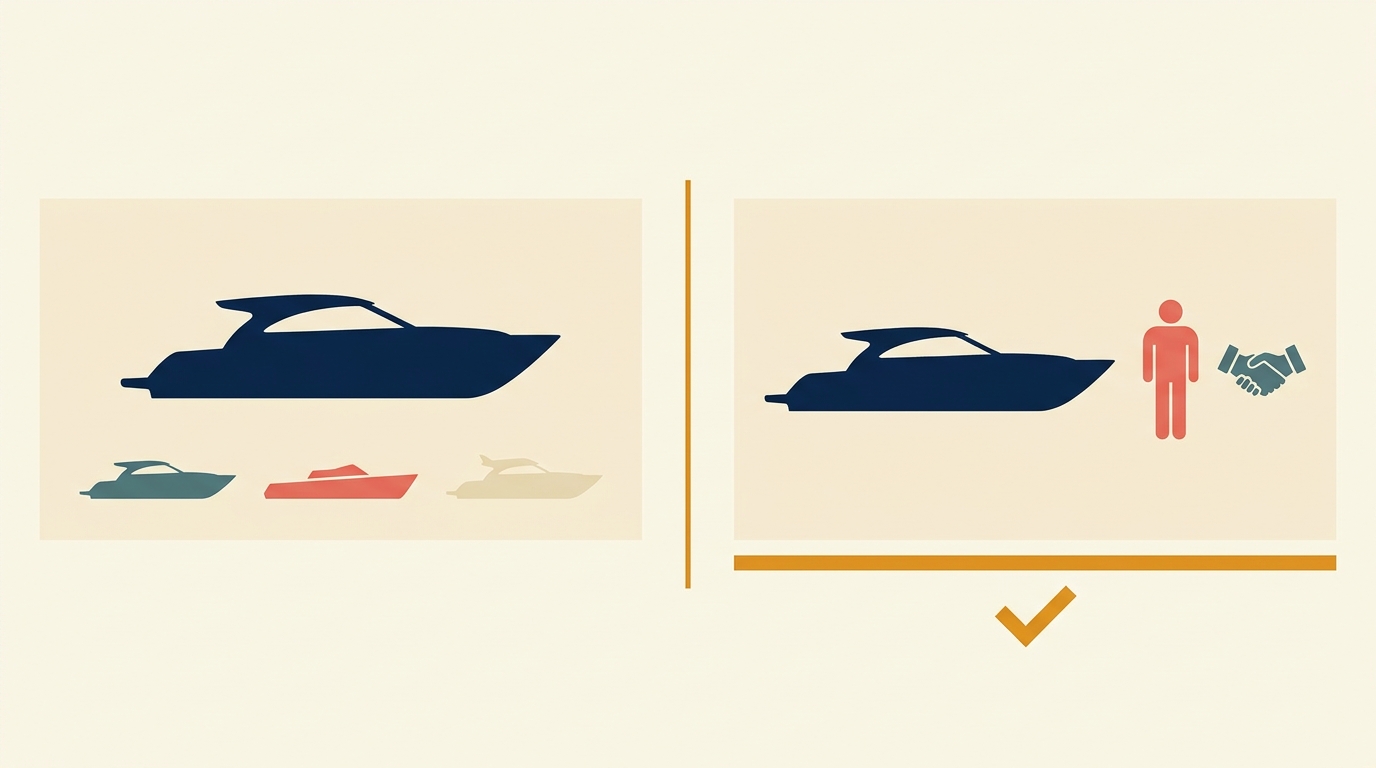
Listing a yacht through a Saint Petersburg broker in 2026 follows a defined sequence: a written listing agreement and pricing analysis, preparation of the vessel and its documents, marketing to qualified buyers, a written offer with escrowed deposit, buyer-arranged survey and sea trial, negotiation of findings, and a closing that transfers title and funds. In Florida, brokers handling pleasure vessels over 32 feet work under a state-specific licensing regime that shapes several of these steps.
What follows is a stage-by-stage look at how that workflow actually unfolds for a local seller — what the broker does, what the owner is responsible for, and where the region's climate, geography, and buyer pool change the calculus.
What does a Saint Petersburg yacht broker do before the boat is listed?
Before a listing goes live, a Saint Petersburg broker inspects the vessel, pulls comparable asking and sold data, drafts a written listing agreement covering price, term, commission, and marketing authority, and gathers the paperwork a serious buyer will ask for. This pre-listing stage is where sale timelines are either compressed or quietly extended by weeks.
Pricing is the first substantive conversation. A broker should separate three numbers for the owner: the current asking price, recent comparable asking prices, and verified completed-sale comparables where available. Local examples span a wide range — one Saint Petersburg listing search surfaced an 80-foot custom yacht advertised at $1.65 million, while mid-size cruisers on the Gulf Coast have been seen around $255,000 for a 43-foot cruiser and near $299,000 for a 37-foot fishing boat — but those are single data points, not a market index.
Worldwide Yacht Sales, a family-owned brokerage that has been serving yacht buyers and sellers for nearly four decades, approaches this stage as a consultation rather than a form-fill. The firm describes its seller approach as providing top-tier marketing for every listing, which in practice means the pre-listing week is spent on photography, systems documentation, and the comparables file a buyer's broker will scrutinize.
Document prep matters because Florida buyers routinely request maintenance and repair records, equipment inventories, lien information, and confirmation that the hull identification number matches the title or federal documentation. Gaps found later — a missing satisfaction of lien, a mismatched HIN — are the single most common cause of delayed closings.
How does the Florida Yacht and Ship Brokers' Act shape the transaction?
Florida regulates yacht brokerage directly. The Yacht and Ship Brokers' Act, codified in sections 326.001–326.006 of the Florida Statutes, generally defines a covered "yacht" as a pleasure vessel over 32 feet and requires anyone acting as a broker or salesperson in those transactions to be licensed, bonded, and to handle buyer funds through a trust account.
Two bonding figures anchor the licensing side. The Act requires a broker to post a $25,000 surety bond or irrevocable letter of credit, and a salesperson must post $10,000. Those bonds exist specifically to protect transaction funds and support the itemized closing statement the statute requires when title is transferred in a covered sale.
For a Saint Petersburg seller, the practical takeaway is twofold. First, if the vessel is over 32 feet, the broker on the listing side must be licensed under Chapter 326 — this is a baseline qualifier, not a differentiator. Second, the deposit a buyer puts up moves into the broker's trust account, not the seller's pocket, until contingencies clear. Smaller vessels may fall outside this particular licensing scheme, though Florida title, registration, and tax rules still apply.
What happens from offer through sea trial?
Once a written offer and deposit are in hand, the transaction moves to a time-boxed inspection phase: the buyer schedules an independent marine survey, usually an engine survey, and a sea trial on local waters, then has a defined window to accept the vessel, reject it, or negotiate on findings. The inspection window is defined in the purchase agreement and is negotiable between the parties.
The survey is the pivot point of the deal. Independent surveyors inspect hull, systems, safety equipment, and often moisture levels in cored structures. A sea trial typically runs the boat out through one of the Gulf passes so the buyer can see Gulf behavior, not just protected bay performance. Vessels sold for inshore use may stay inside the bay.
Negotiation of survey findings is where brokers earn their keep. Minor cosmetic issues rarely move price; failed through-hulls, soft decks, or engine compression problems routinely do. From Worldwide Yacht Sales's yacht selling team: From the listing side, a brokered boat usually means the paperwork is already in order: clear title, a lien search, escrow and a proper purchase agreement. A private seller can be a fine deal on a smaller boat, but if the title or the boat has a problem, the buyer carries that risk. The bigger the price and the more complex the vessel, the harder we lean toward a brokered deal.
"Knowledgeable, responsive, great communication and easy to work with. Made the whole process smooth and easy! Definitely recommend to anyone looking for a yacht."
How does the closing and title transfer work in Florida?
Closing in a Florida yacht brokerage transaction addresses four things in one sitting: final payment, payoff of any existing lien, execution of the bill of sale, and transfer of title or federal documentation. For covered vessels, the broker must issue an itemized closing statement showing receipt and disposition of all funds, as the Yacht and Ship Brokers' Act requires.
Florida sales or use tax typically applies to the buyer side, but sellers should expect the closing packet to include tax paperwork, lien satisfactions, and — if the vessel is federally documented — a federal bill of sale rather than, or in addition to, a state title. Sellers with existing financing should request a payoff letter from the lender a week before closing; delays here are the second most common cause of pushed closing dates.
Worldwide Yacht Sales handles transactions from consultation through delivery, which in practice means the brokerage coordinates the escrow, closing documents, and — where the buyer is out of area — the logistics of moving the vessel to its new home port.
How long does it take to sell a yacht with a broker in Saint Petersburg?
There is no reliable published days-on-market figure for Saint Petersburg specifically, but a realistically priced, well-prepared vessel in good condition can move from listing to closing in a timeframe that varies with price, condition, vessel category, and season. Price-to-market alignment, condition, vessel category, and the season the boat lists in all shift that range materially.
Seasonality is a genuine Gulf Coast factor. The Atlantic hurricane season runs through the summer and fall months, and a named-storm threat can suspend showings, haul-outs, sea trials, and insurance binding for days at a time. Dry, cooler weather from roughly late fall through early spring generally produces more inspection-friendly days and brings in snowbird buyers already in the region.
National context matters but does not forecast local outcomes. A secondary summary of NMMA data reported 231,576 new powerboat retail sales in 2024, down 9.1% from the prior year — useful as a demand-pressure signal, not a Saint Petersburg sales rate. Fishing and offshore-capable boats continue to have a clear local use case because of the area's access to both Tampa Bay and the Gulf.
What does the listing-to-closing timeline look like at a glance?
The table below summarizes the mechanical phases a Saint Petersburg seller moves through. Durations are typical ranges; a storm week, a failed survey, or a lien problem can extend any stage.
| Stage | Who leads | Typical duration |
|---|---|---|
| Pre-listing: valuation, agreement, document prep | Seller + broker | 1–3 weeks |
| Active marketing and showings | Broker | 1–6 months |
| Written offer, deposit to broker trust account | Buyer's broker + listing broker | 1–3 days |
| Survey, engine survey, sea trial, negotiation | Buyer + surveyor | 10–21 days |
| Closing: funds, bill of sale, title/USCG transfer | Listing broker | 5–15 days after acceptance |
Frequently asked questions
Does Florida require a yacht broker to be licensed to list my boat?
Yes, if the pleasure vessel is over 32 feet. The Florida Yacht and Ship Brokers' Act, in sections 326.001–326.006 of the Florida Statutes, requires anyone acting as a broker or salesperson in covered transactions to be licensed, with a broker posting a $25,000 surety bond or irrevocable letter of credit and a salesperson posting $10,000. Smaller vessels may fall outside this scheme.
Where does my buyer's deposit go during the inspection period?
Into the listing broker's trust account, not the seller's bank account. Florida's Yacht and Ship Brokers' Act requires licensed brokers to handle transaction funds through a trust account and to document their receipt and disposition. Funds release to the seller at closing, net of broker commission, lien payoff, and any agreed credits negotiated after the survey and sea trial.
Who pays for the survey and sea trial?
The buyer. Standard Florida yacht purchase agreements place the cost of the independent marine survey, any engine survey, and the fuel and captain costs of the sea trial on the buyer, because these inspections exist to protect the buyer's decision to proceed. The seller provides the vessel in a sea-ready condition and typically covers any haul-out needed strictly for the seller's own pre-listing prep.
Should I list my yacht before or after hurricane season?
Both windows work, but they behave differently. Listing in late fall or winter catches the dry, cooler Tampa Bay stretch and the snowbird buyer influx, which generally produces more inspection-friendly days. Listing during the June 1 to November 30 hurricane season, per NOAA, means planning for weather disruptions to showings, sea trials, and insurance binding — manageable with a flexible broker, but a real factor.
Is a brokered sale really worth it versus selling the yacht privately?
For larger or more complex vessels, generally yes. A brokered sale brings a licensed intermediary, escrowed deposits, lien search, title verification, and a proper purchase agreement — protections a private seller must either arrange separately or do without. On a small, simple boat with a clean title, a private sale can be workable; the risk-adjusted case for brokerage grows with price and complexity.
What paperwork should I pull together before meeting with a broker?
Have the state title or U.S. Coast Guard documentation, registration, loan payoff information if applicable, the hull identification number, maintenance and repair records, service invoices for engines and major systems, equipment and electronics inventory, and any survey reports from prior ownership. If the vessel sits in a Saint Petersburg marina, bring the slip agreement. Complete records shorten the gap between offer and closing.
Working with a Saint Petersburg broker
The mechanical steps of a yacht sale — listing, marketing, offer, survey, closing — are consistent across Florida, but execution varies widely by brokerage. Readers in Saint Petersburg who want the process handled professionally can reach Worldwide Yacht Sales at (727) 346-8229 or https://worldwideyachtsalesinc.com to begin a pricing conversation and listing plan.