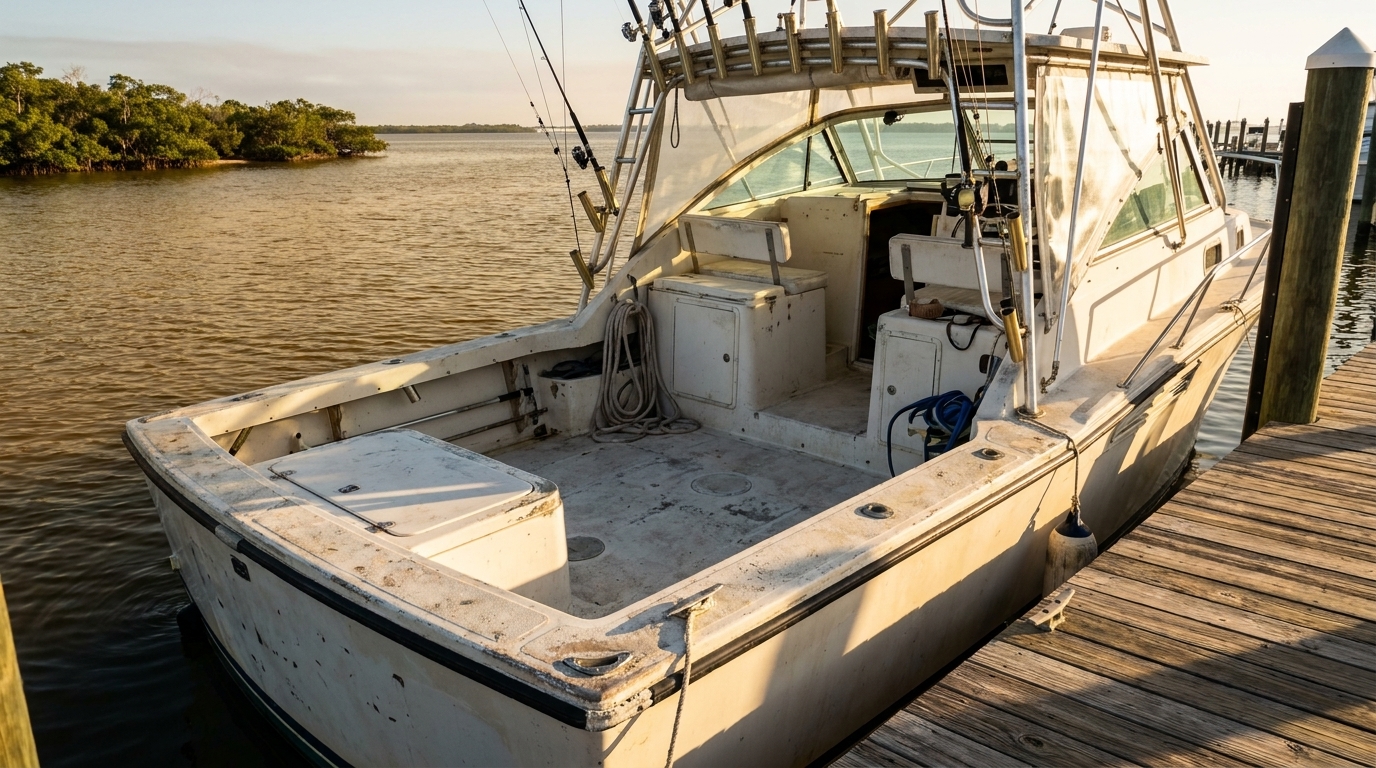
What Commission Do Yacht Brokers Charge in Saint Petersburg, FL?
Yacht broker commissions in Saint Petersburg, FL typically run 10% of the sale price. Here's how the structure works, what's negotiable, and when tiered rates apply.
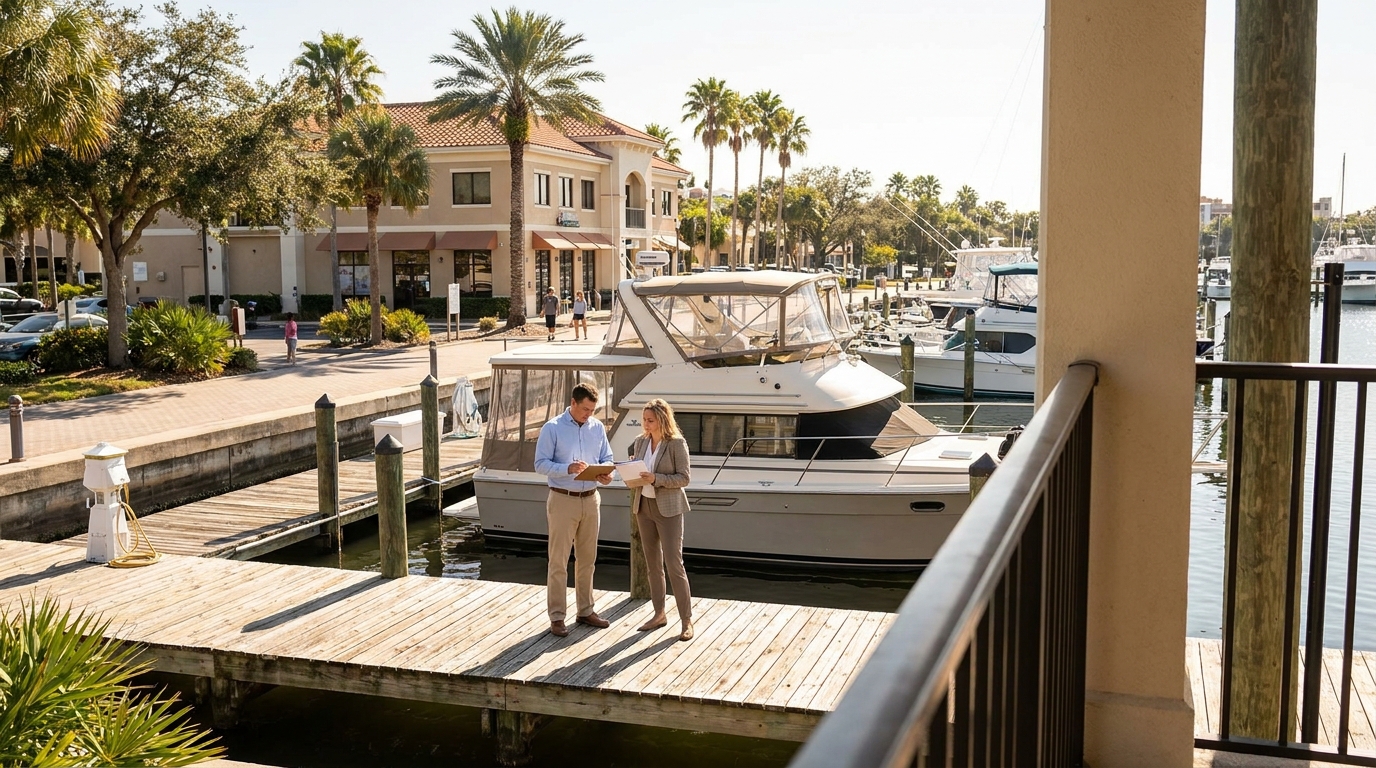
If you're preparing to sell a vessel along Florida's Gulf Coast — or you're weighing whether to bring on professional representation for a purchase — the first question is almost always the same: what commission do yacht brokers take in Saint Petersburg, FL? The short answer is 10% of the final sale price, paid by the seller at closing, and typically split between the listing broker and the buyer's broker. But like most things in yachting, the details matter, and the difference between a smooth voyage to closing and a stalled deal often lives in those details.
Here's what to expect when you're pricing out brokerage services in the Tampa Bay market.
The Standard Yacht Broker Commission in Saint Petersburg
Across Florida — and Saint Petersburg specifically — the prevailing yacht broker commission is 10% of the final sale price. That rate mirrors the national standard, and it's the number you'll see referenced in nearly every listing agreement written on the Gulf Coast.
A few things to keep in mind about that 10%:
- It's paid by the seller from sale proceeds at closing, not by the buyer as a separate add-on.
- It's conventionally split 50/50 between the listing broker and the buyer's (or selling) broker, though 60/40 splits appear in some listing agreements.
- It's not legally fixed. Every commission rate is negotiated privately between the seller and the broker and documented in the central listing agreement.
Put a real number on it: a $500,000 center console or express cruiser sold in Saint Petersburg would generate a $50,000 commission, typically $25,000 to each side of the deal. On a $1.2 million sportfisher, you're looking at $120,000 in commission out of the seller's proceeds.
How Much Does a Yacht Broker Charge to Sell My Boat?
For most vessels moving through Saint Petersburg — from the sportfishers berthed near the Vinoy Basin to the cruisers running out of Maximo Marina and the sailboats calling Salt Creek home — 10% is the working number. But three variables can shift what you actually pay.
Small Vessel Minimum Fee
On smaller boats, brokers commonly apply a flat minimum fee of $5,000 to $10,000 in place of the percentage. This typically kicks in when 10% of the sale price would fall below that minimum — think vessels priced under roughly $100,000. The math is simple: brokerage is labor-intensive work, and the sea trials, survey coordination, documentation, and marketing effort don't scale down just because the boat does.
Tiered Rates on High-Value Yachts
For larger yachts, commission structures often shift to a tiered framework:
- Up to $10 million: 10% of the sale price
- $10 million to $20 million: 5% on the portion within that band
- Above $20 million: 2.5% on any portion above $20 million
Saint Petersburg isn't Monaco, but the Tampa Bay region does see genuine superyacht activity, and tiered rates are the standard framework for those transactions. In the European superyacht market, sliding scales are similarly structured — roughly 10% under €10M, 5–6% between €10M and €20M, and 2–4% above €50M — which gives you a sense of how universally this tiered logic is applied at the top of the market.
Negotiated Reductions
There are no factory-style rebates or published discounts on brokerage commissions. What you may find are privately negotiated reductions — for example, from 10% to 8% — on very high-value yachts or with repeat clients. Some CPYB-certified independent brokers also advertise lower rates as a competitive differentiator. Worth knowing: fewer than 3% of Florida-licensed yacht brokers hold the CPYB (Certified Professional Yacht Broker) credential, so that certification is a legitimate marker when you're evaluating who to work with.
Is It Worth Hiring a Yacht Broker to Buy a Boat?
Here's the part many first-time buyers miss: in a standard yacht sale, the buyer does not pay a separate broker commission. The seller's proceeds cover both sides of the transaction. That means bringing a buyer's broker to the table costs you nothing directly — but gives you an experienced advocate handling sea trial logistics, survey review, documentation, escrow, and negotiation.
For a buyer stepping into a $400,000, $800,000, or multi-million dollar purchase, that representation is genuinely valuable. Your broker is the one flagging soft stringers in a survey report, pushing back on inflated asking prices, coordinating haul-out at yards along the Pinellas coast, and making sure your closing documents reconcile with USCG requirements. Doing that solo — especially on a used vessel — is where deals go sideways.
What About Charter Brokerage?
Charter brokerage is structured differently from sale brokerage. The combined commission for a central agent and retail broker runs approximately 20% of the base charter fee (BCF), and it's deducted from the yacht owner's side of the transaction. Charter clients don't pay this as a separate line item. If you're chartering out of Saint Petersburg for a Gulf cruise or a run down to the Keys, that's the framework operating behind the scenes.
Saint Petersburg Market Considerations
Selling a yacht in Saint Petersburg carries some regional realities worth planning around:
- Hurricane season timing. The peak listing window for Gulf Coast vessels typically runs from late fall through spring, coinciding with snowbird migration into Pinellas County. Serious buyers tour boats when the weather is settled — not during the June-through-November hurricane window when insurance binders get complicated and haul-out yards are booked with storm prep.
- Survey and haul-out logistics. Marine surveyors and lift yards around Tampa Bay stay busy. Building four to six weeks of scheduling flexibility into a deal timeline is realistic.
- Documentation and titling. Florida vessel titling and USCG documentation each carry their own procedural requirements. A local broker handles these routinely; a private seller often learns them the hard way.
Frequently Asked Questions
Who pays the yacht broker commission in Saint Petersburg, FL?
The seller pays the commission from sale proceeds at closing. Buyers in a standard sale do not pay a separate broker fee.
Is the 10% commission negotiable?
Yes. Commission rates are not legally fixed and are set in the individual listing agreement. Reductions are more common on high-value yachts or with repeat clients.
What if my boat is worth less than $100,000?
Expect a flat minimum brokerage fee of $5,000 to $10,000 rather than a straight percentage. This reflects the fixed workload involved in selling any vessel.
Does the buyer's broker get paid separately?
No. The seller's 10% commission is typically split 50/50 between the listing and buyer's brokers, though the exact split is defined in the listing agreement.
Getting Professional Representation in Saint Petersburg
Whether you're preparing to list a vessel ahead of the winter selling season or you're searching for the right yacht to call your own, working with an experienced local broker is what turns a complicated transaction into a smooth closing. Sellers in Saint Petersburg, FL who want the sale handled professionally — from pricing strategy through survey, sea trial, and documentation — can reach Worldwide Yacht Sales at worldwideyachtsalesinc.com to discuss a listing agreement and current market conditions in the Tampa Bay area.