Palm Harbor Boat Sales: Complete Guide to Finding Quality Boats for Sale
A practical 2026 guide to Palm Harbor boat sales: how to evaluate boats, navigate Tampa Bay's market, and work with reputable brokers in the region.

Buyers searching for a vessel in the Palm Harbor area face a market that rewards preparation. Tampa Bay's boating culture is dense, the inventory turns quickly, and the difference between a sound purchase and a costly mistake often comes down to how well a buyer understands the local conditions, the paperwork, and the broker behind the listing. This guide explains what to look for when evaluating boats for sale in Palm Harbor, how the Tampa-area market behaves in 2026, and how to approach the process with confidence.
Understanding the Palm Harbor and Tampa Bay Boat Market
Palm Harbor sits along the western edge of Pinellas County, with quick access to the Gulf through Anclote Key and protected cruising water through St. Joseph Sound. That geography shapes demand. Center consoles, bay boats, and mid-size cruisers dominate listings, while pure offshore sportfishers and shallow-draft flats skiffs both have steady audiences depending on whether buyers favor Gulf runs or backcountry fishing around Ozona and Honeymoon Island.
Inventory moves on a predictable rhythm. Listings tend to expand in late summer as owners prepare for hurricane season and reassess storage costs, then tighten again from January through March when snowbird buyers arrive and Tampa Bay's boat shows drive activity. Buyers who start their search in September or October often find better negotiating room than those who wait until peak season.
What to Evaluate Before Buying a Boat in Palm Harbor
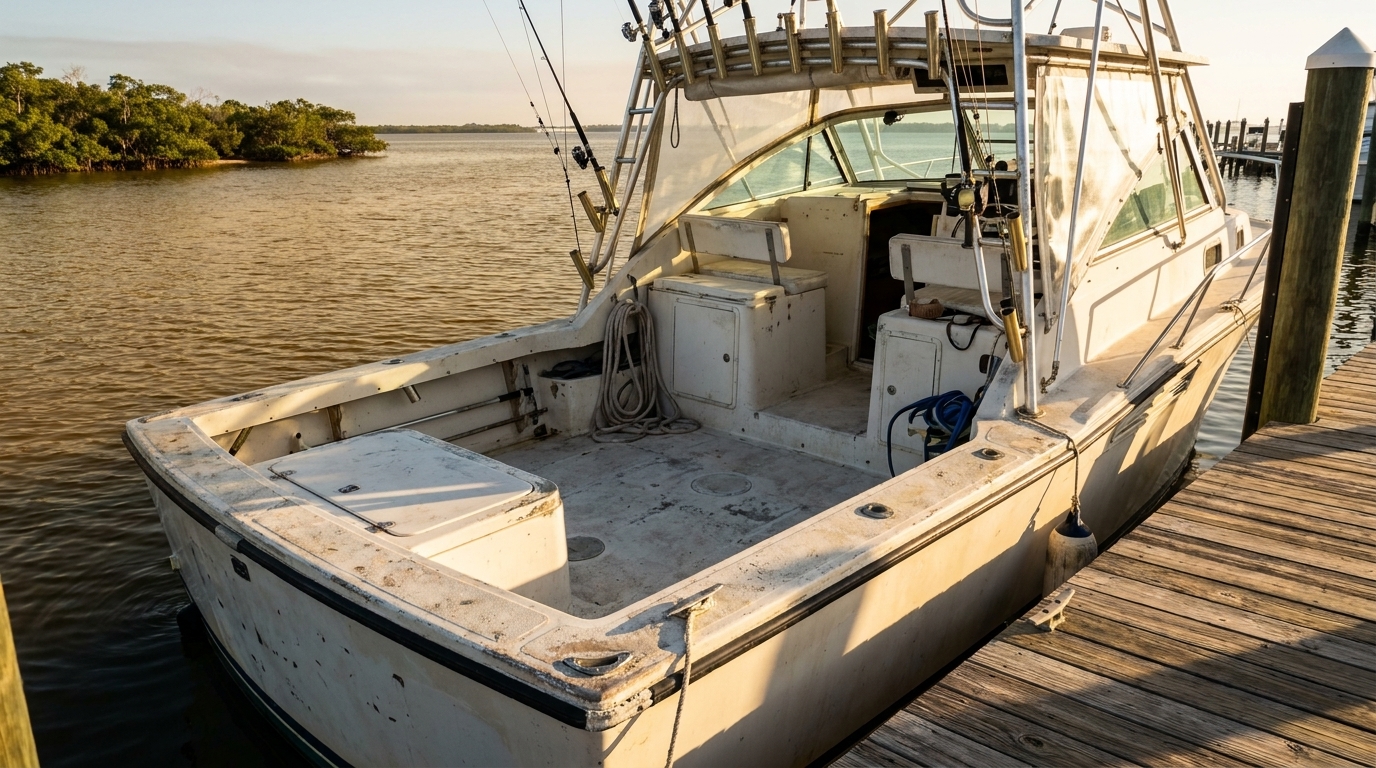
Boats in the Tampa region live a hard life. Year-round use, salt humidity, summer storms, and UV exposure accelerate wear on rigging, electronics, and gelcoat in ways that boats from cooler climates rarely show. A thoughtful evaluation goes well beyond the engine hours displayed on a listing.
Hull and Structural Condition
Stringers, transoms, and deck cores deserve scrutiny on any used boat that has spent time in the Tampa Bay heat. A surveyor familiar with Florida-built and Florida-kept hulls will tap-test suspect areas, check moisture readings, and assess the bottom paint history. Boats stored on lifts in covered slips around Ozona Marina or Tarpon Springs typically show better than trailer-kept boats left in driveways through hurricane season.
Engine and Mechanical Systems
Outboards dominate the Palm Harbor market, and most center consoles built in the last decade run twin or triple rigs. Buyers should request a recent compression test, a fuel sample analysis, and full service records. For diesel inboards on larger cruisers and sportfish, oil analysis and a sea trial under load are non-negotiable.
Electronics and Rigging
Salt air corrodes connections quickly. Multifunction displays that worked at the dock can fail offshore. Buyers should verify radar, autopilot, VHF, and GPS systems under operating conditions, not just at the slip.
Florida-Specific Paperwork and Costs
Boat purchases in Florida carry rules that differ meaningfully from other states. Florida assesses a state sales tax on vessel purchases, with a discretionary county surtax in Pinellas County subject to a statutory cap — buyers should confirm current rates and limits with their broker or a Florida marine tax professional. Titling and registration run through the Florida Department of Highway Safety and Motor Vehicles, typically handled at the Pinellas County Tax Collector's office in Clearwater or Palm Harbor.
Vessels operated in Florida waters beyond a certain period generally must be registered in the state, even if owned by an out-of-state buyer. Documentation through the U.S. Coast Guard is a separate process and is common for larger vessels or those used as collateral for marine financing. Buyers should also confirm any open lien status before transferring funds — a step where experienced brokers earn their commission.
Why Working With a Broker Matters
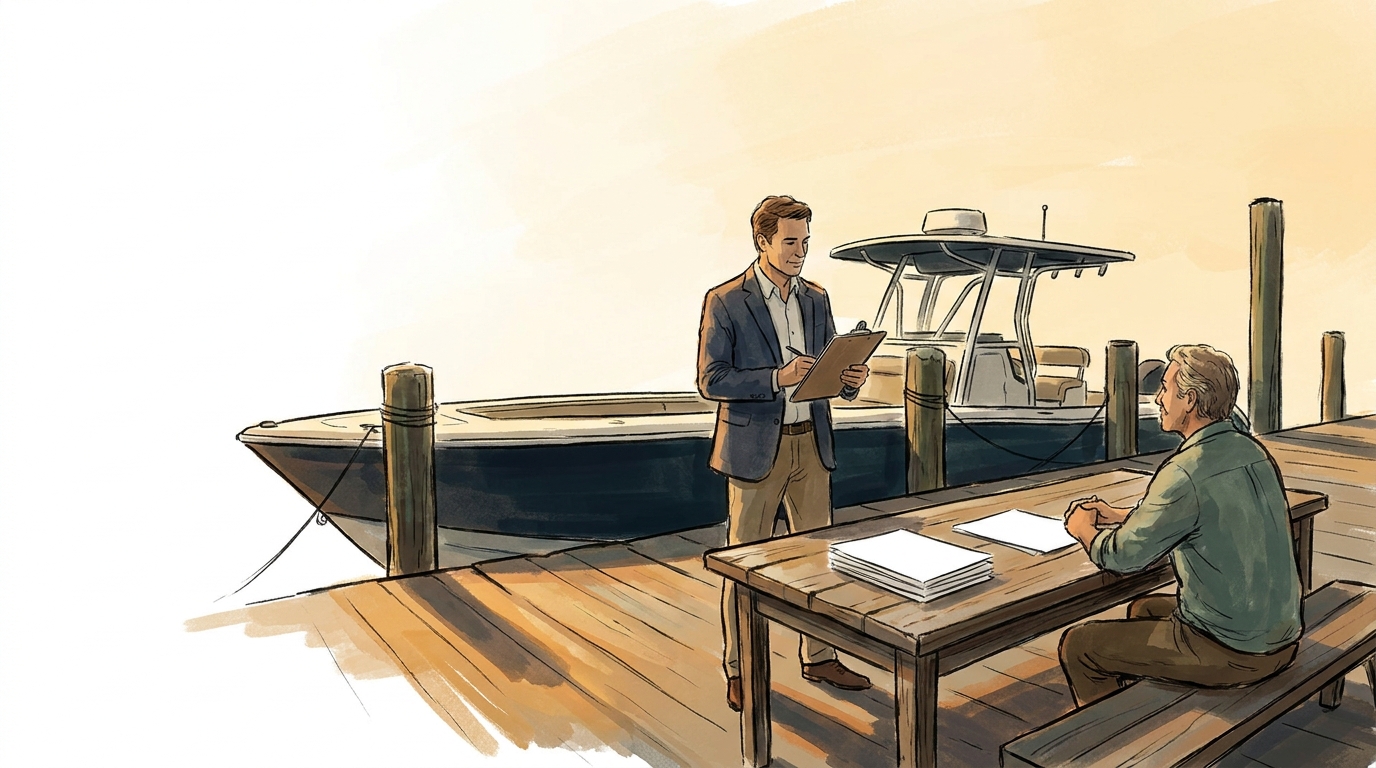
Private-party listings on classified sites can look attractive on price, but they shift the entire burden of survey coordination, escrow, lien searches, title transfer, and transport logistics onto the buyer. For a first-time buyer or someone purchasing remotely, that burden is significant.
Reputable yacht brokers handle those mechanics as part of standard service. Worldwide Yacht Sales, which works across the Tampa Bay region including Palm Harbor, structures transactions around licensed and bonded escrow, documented sea trials, coordinated surveys, and clear closing paperwork. The firm holds a 4.8-star Google rating from 28 reviews as of May 2026, reflecting an emphasis on communication during what can otherwise be a confusing process, particularly for buyers purchasing from outside Florida.
One customer wrote of a remote purchase with a boat shipped from Florida to Rhode Island: "Traver's informative, patient, no pressure demeanor made this nervous novice's experience truely enjoyable."
How to Choose a Boat Sales Partner in Palm Harbor
Not every broker offers the same depth of service. Buyers comparing options should weigh several criteria:
- Transaction transparency. Clear written agreements, documented escrow, and itemized closing statements are baseline expectations, not premium features.
- Remote-purchase capability. Many Palm Harbor buyers come from out of state. A broker who can coordinate survey, sea trial, transport, and documentation without requiring the buyer to fly down repeatedly adds real value.
- Inventory access. Brokers with strong MLS participation and regional networks surface boats that never reach public listings.
- After-sale support. Financing introductions, insurance coordination, and transport arrangements should be part of the package.
- Track record on both sides. Brokers who actively represent sellers as well as buyers tend to price more accurately and negotiate more credibly.
Common Boat Categories in the Palm Harbor Market
Inventory in the region tends to cluster around a handful of use cases:
- Center consoles (22–32 feet) for nearshore Gulf fishing and family use.
- Bay boats (20–24 feet) for inshore fishing around the flats and grass beds.
- Express cruisers and dual consoles (28–40 feet) for weekend trips to Tarpon Springs, Clearwater Beach, and the Anclote anchorage.
- Sportfish convertibles (40+ feet) for serious offshore work out to the Middle Grounds.
- Pontoon and tritoon boats for protected-water use on Lake Tarpon and the Intracoastal.
Frequently Asked Questions
How long does a typical boat purchase take in Palm Harbor?
From accepted offer to closing, most transactions run two to four weeks, allowing time for survey, sea trial, financing, insurance binding, and title transfer. Cash purchases with no survey contingency can close in a week.
Should buyers get a survey on a newer boat?
Yes. Even boats under three years old can have rigging issues, electronic failures, or hidden damage from grounding or storm exposure. A survey is required by most marine insurers and represents a worthwhile investment relative to the cost of the vessel.
Is sales tax owed if a buyer ships the boat out of Florida?
Florida offers a sales tax exemption for vessels purchased by non-residents who remove the boat from Florida waters within a specified window, provided strict documentation requirements are met. Buyers should confirm current procedures with their broker and a Florida marine tax professional before closing.
What's the best time of year to buy?
Late summer and early fall typically offer the strongest negotiating position, before the snowbird-driven demand cycle resumes in January.
Can a buyer in another state complete the entire Palm Harbor purchase remotely?
Yes. Experienced brokers in the Tampa Bay area routinely manage the full process for out-of-state buyers, including survey coordination, sea trial documentation, title transfer, and transport logistics. Worldwide Yacht Sales has handled transactions shipping boats to multiple states, and its process is specifically structured to keep remote buyers informed and protected at every step without requiring multiple trips to Florida.
What should a buyer ask a broker before signing a purchase agreement?
Ask how escrow funds are held, who coordinates the survey and sea trial, what happens if the survey reveals significant issues, and whether the broker represents the seller, the buyer, or both. Confirm that all closing costs will be itemized in writing before funds are released. A broker who answers these questions clearly and without hesitation is a strong sign of professional, trustworthy representation.
Moving Forward With Confidence
Buying a boat in Palm Harbor is more rewarding when the process is handled by people who understand both the regional market and the mechanics of marine transactions. Buyers who take time to evaluate hull condition, verify paperwork, and work with an experienced broker tend to end up on the water sooner and with fewer surprises.
Buyers and sellers in the Palm Harbor and greater Tampa Bay area who want professional representation can contact Worldwide Yacht Sales at (727) 346-8229 or visit worldwideyachtsalesinc.com to discuss current inventory, listing services, or remote-purchase logistics.