Sport Fishing Boat vs Center Console for the Gulf of Mexico: A Bradenton Buyer's Guide
Sport fishing boat vs center console for Gulf of Mexico fishing out of Bradenton, FL — how to choose based on range, cost, and real offshore conditions.
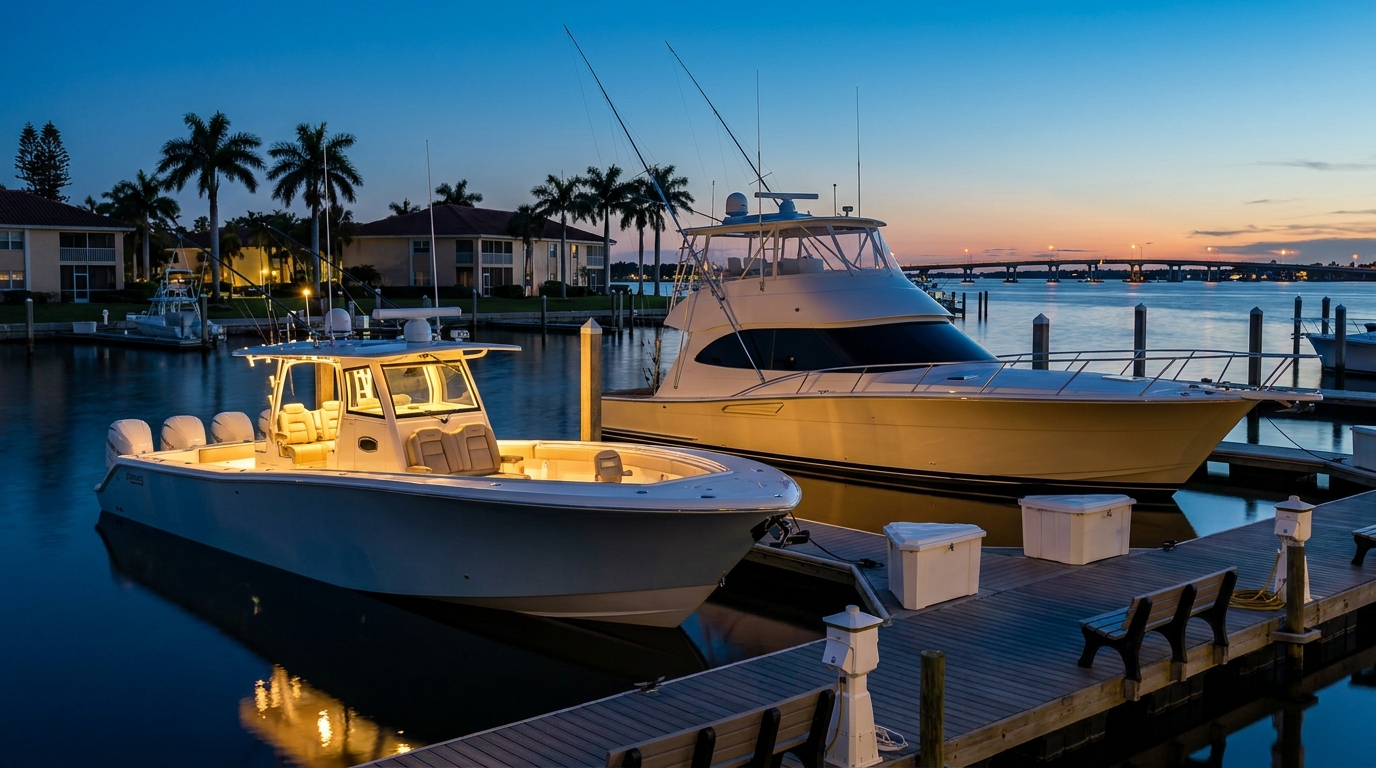
You've watched the sportfish yachts idle out of the marina at dawn, outriggers folded like wings, headed for the blue water off the Florida Middle Grounds. You've also watched the center consoles blast past them — three outboards singing, a cooler full of ice, and a plan to be back at the sandbar by three. Both boats catch fish. Both belong on the Gulf. But for anglers in Bradenton, FL, they answer very different questions.
This is a comparison built for the Gulf of Mexico specifically — a shallow, sometimes moody body of water where the good bottom is a long run from shore and the afternoon chop has a personality of its own. Here's how sport fishing boats and center consoles stack up when the launch point is the Manatee River, and how to decide which one belongs at your dock.
The Core Difference: Two Boats, Two Missions
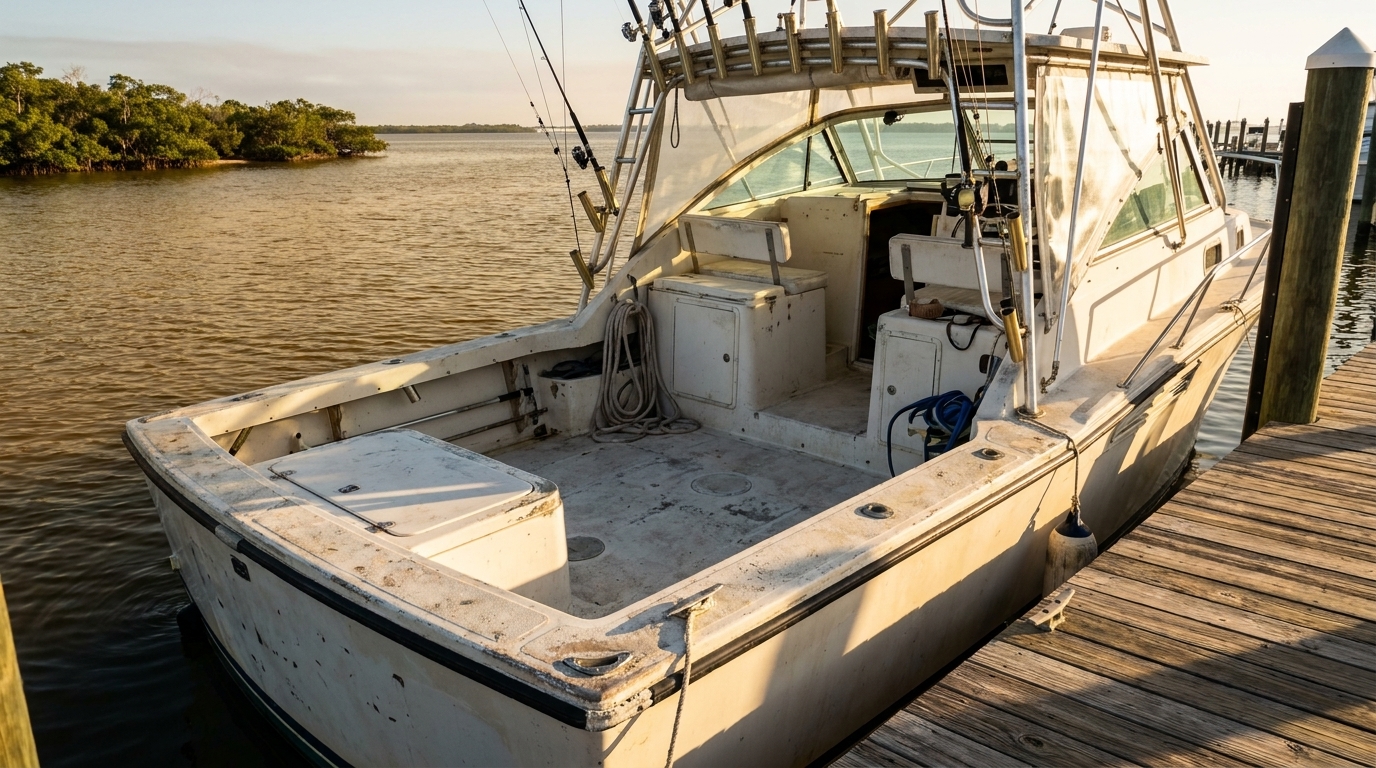
A sport fishing boat — in the yacht sense — is a 40 to 70-plus foot inboard-diesel platform built for multi-day offshore campaigns. Full cabins, climate control, private staterooms, mezzanine seating, tuna towers, outriggers. Acquisition typically runs from $1 million to $10 million or more, per general market guidance from Galati Yachts. These are tournament machines and floating homes.
A center console is an open, outboard-powered boat — commonly 22 to 30 feet in the Bradenton market — built for 360-degree fishability, speed, and easy handling. New boats in the 22 to 26-foot range typically price between $60,000 and $150,000, with larger offshore models climbing well beyond that. The Sea Pro 202 Center Console, for reference, starts at $58,233 with a Suzuki 150ATX outboard and runs to $71,672 fully equipped.
The mission gap is the whole story. One boat sleeps six offshore for four nights. The other gets you to the reef, through a limit of red grouper, and home for dinner.
Gulf of Mexico Conditions: What the Water Actually Demands
The Gulf out of Bradenton is not the Atlantic canyon. It's shallow for a long way. To reach genuine offshore depth — the kind that holds pelagics and serious bottom fish — you're often running 40, 60, sometimes 100 miles west. That range demand is the single biggest factor in your boat decision.
Gulf chop tends to build sharp and short in the afternoon, especially in summer when sea breezes stack against outgoing tide. A deep-V hull matters. Freeboard matters. And whatever boat you choose, it needs to handle a beam sea coming home when the wind clocks around.
For most Bradenton anglers running day trips from the Manatee River, Cortez, or Anna Maria Sound, a 22 to 24-foot center console is widely recommended as the minimum sensible platform for occasional offshore work — ideally with twin outboards for redundancy on longer runs. That's not a marketing pitch; it's a range-and-safety calculation for these waters.
Speed and Range: Getting There and Back
Center consoles win on speed almost every time. Many modern hulls cruise 30 to 40 knots and top 50 with multiple outboards. A Regulator 25 with twin Yamaha F250s exceeds 55 mph. That speed compresses a 60-mile run into something you can do before the wind gets up.
Sportfish yachts cruise slower — typically 25 to 30 knots — because their mission is seakeeping and clean trolling wakes, not blast-and-cast day trips. They eat weather beautifully. They also burn diesel by the barrel.
For a Bradenton day angler, speed to the spot is often more valuable than luxury on the way. For a tournament crew chasing tuna and billfish across multiple days, that calculus flips.
Fishing Performance: Trolling Spread vs. 360-Degree Deck
Sportfish boats are purpose-built for offshore trolling. Large cockpits, mezzanine seating, outriggers, tuna towers, and — critically — a clean trolling wake that lets you run a wider, more productive spread. Captains talk about "clean water" behind the boat as a real competitive advantage in tournament conditions.
Center consoles offer something different: complete deck access. You can walk a fish 360 degrees around the boat, which is a genuine advantage when a big cobia or amberjack decides to circle the hull. They're also more versatile — the same boat runs the flats one morning, the reefs the next, and hosts a sandbar afternoon at Egmont Key on Sunday.
Where Each Boat Wins
- Sport fishing yacht: Multi-day offshore campaigns, tournament billfish and tuna, overnight comfort, blue-water range.
- Center console: Day trips, mixed inshore-nearshore-offshore fishing, family use, sandbar days, island hopping to Anna Maria and Longboat Key.
Cost of Ownership on Florida's Gulf Coast
Acquisition is only the beginning. Yacht-class sportfish boats require marina slips — dry-stack and trailering aren't options — and Bradenton-area dockage is a meaningful recurring cost. Add professional yard work, complex diesel and generator service, HVAC systems, insurance premiums calibrated to seven-figure hulls, and often a paid captain or crew.
Center consoles under 40 feet can typically be dry-stacked or trailered home. That single fact eliminates slip fees and dramatically simplifies hurricane prep — a real consideration on the Gulf Coast, where the June-through-November season shapes every boat owner's calendar. Outboard service intervals are predictable. Insurance is manageable. Mobile techs handle most work at your dock or driveway.
For most recreational buyers in Manatee County, the total cost of ownership on a center console isn't just lower — it's on a different order of magnitude.
Storage, Trailering, and Hurricane Season
Bradenton boat owners live with hurricane season as a design constraint. A trailerable center console can be pulled from the water, moved inland, and secured at home when a system enters the eastern Gulf. A 55-foot sportfish yacht cannot — it stays in its slip or, at best, moves to a hurricane hole. That's a genuine risk profile difference, and it should factor into your decision if you plan to keep the boat locally year-round.
Dry-stack facilities along the Manatee River and around Cortez make center console ownership particularly practical here. You call ahead, they splash the boat, you fish, they rinse and rack it. It's the most low-friction way to own an offshore-capable boat in this market.
Which Boat for Which Bradenton Angler
Choose a sport fishing yacht if you're running multi-day tournaments, if overnight comfort matters more than trailerability, and if a seven-figure acquisition plus significant annual carrying costs fit comfortably in your plan. These boats reward serious offshore commitment.
Choose a center console if you want a versatile, fast, fishable platform for Tampa Bay, Sarasota Bay, nearshore reefs, and the offshore spots you can reach on a long day run. A 24-foot boat with twin outboards is a reasonable starting point; a 28 to 32-footer opens up more weather windows and longer range. Center consoles thrive in Florida's Gulf and Caribbean waters — the category and the geography were made for each other.
Frequently Asked Questions
What size center console do I need for offshore Gulf of Mexico fishing?
For occasional offshore work out of Bradenton, a 22 to 24-foot center console with twin outboards is a common minimum recommendation. For regular runs 40-plus miles out, most anglers step up to 26 to 32 feet for better sea-keeping and range.
Is a sport fishing yacht overkill for day fishing in the Gulf?
For most Bradenton anglers running day trips, yes. Yacht-class sportfish boats are built for multi-day offshore campaigns, and their strengths — overnight accommodations, blue-water range, tournament-grade trolling platforms — are largely wasted on short runs to nearshore reefs.
Can center consoles handle rough Gulf chop?
Modern deep-V center consoles handle Gulf chop well within their design envelope. The key is matching hull size and design to your typical conditions — and knowing when to stay at the dock. Gulf afternoons can build quickly.
What's the resale market like for each type?
Center consoles have a broad, active resale market on the Gulf Coast because the buyer pool is large. Yacht-class sportfish boats have a smaller, more specialized market — sales cycles can be longer, and pricing is more sensitive to condition, hours, and equipment.
Making the Call in Bradenton
The right boat is the one that matches how you'll actually use it — not the one that looks best at the dock. For most Bradenton anglers, that answer is a well-specced center console. For a smaller group with the range, budget, and offshore ambition to justify it, a sportfish yacht is a category unto itself.
Buyers in Bradenton, FL who want a knowledgeable walkthrough of the tradeoffs — including how specific hulls handle Gulf conditions and what ownership looks like locally — can reach Worldwide Yacht Sales at worldwideyachtsalesinc.com. Whether you're weighing your first center console or stepping up to a full sportfish platform, having a broker who knows the Gulf makes the decision cleaner.