Yacht Broker vs. Boat Dealer: Which One Do You Actually Need?
Buying a boat in Treasure Island, FL? Here's the real difference between a yacht broker and a boat dealer — and how to know which one you actually need.
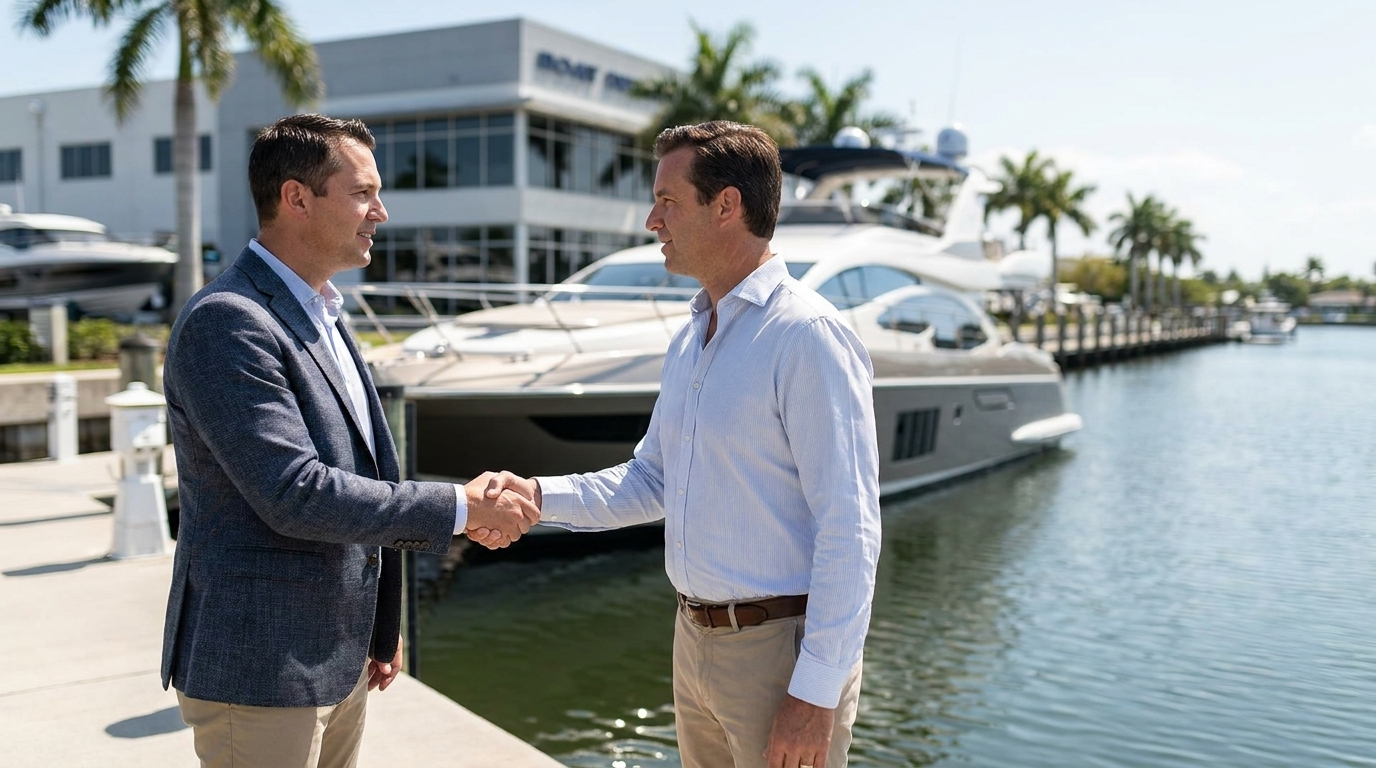
You've decided this is the year you finally step aboard your own boat. Now comes the question almost every Gulf Coast buyer trips over: do you work with a yacht broker or walk into a boat dealership? On the surface, they look like they do the same thing. In practice, they operate on entirely different business models — and choosing the wrong one can cost you tens of thousands of dollars, months of time, or the wrong vessel entirely.
Here's how to think about it clearly, especially if you're buying or selling around Treasure Island, FL, where the mix of blue-water cruisers, sportfishers, and trailerable center consoles means both channels are readily available.
The Core Difference Between a Yacht Broker and a Boat Dealer
A yacht broker is a commission-based intermediary. Think of them the way you'd think of a real estate agent — they don't own most of the inventory they represent. They list boats on behalf of owners, market them across co-brokerage networks, and typically earn around a 10% commission when a deal closes. Their incentive is aligned with getting sellers close to market value and matching buyers to the specific vessel they want, across any brand or era.
A boat dealer, by contrast, is a retail business. Dealers own or floor-plan their inventory and sell new and pre-owned boats from a defined set of brands — think production lines like Key West, Avalon, Stingray, or Skeeter. Their profit comes from the margin on each boat, plus financing, add-ons, trade-in spreads, and ongoing service work.
That single structural distinction — agent vs. retailer — drives almost every other difference that matters to you.
Inventory: Multi-Brand Brokerage vs. Franchised Lineup
Brokers give you access to a much wider universe. A broker's inventory can include sailboats, motor yachts, sportfishers, trawlers, and cabin cruisers across dozens of builders, sourced from private owners worldwide. If you're looking for a specific 42-foot express cruiser from a particular hull year, a broker's co-brokerage network is how you actually find it.
Dealers offer depth within a narrower band. You'll see current model-year production boats — bowriders, center consoles, deck boats, pontoons — with standardized equipment packages and factory support. That's the right channel if you want a new, warrantied hull straight from the builder. It's the wrong channel if you want a well-loved 50-foot Hatteras.
Pricing and What Sellers Actually Net
This is where the models diverge sharply. A broker aims to sell at market value and takes a commission (typically around 10%) from the proceeds. A dealer taking your boat in trade is buying at wholesale — because they need room to remarket it at retail. That spread is real money.
Sellers of medium- to high-value vessels almost always net more through a broker, even after commission, than through a trade-in. Dealers win on speed and simplicity: if you want to roll equity from your current boat into a new hull the same afternoon, that's a dealer transaction, not a brokerage one.
The Buyer's Experience
Buying through a broker is a deliberate process: listings, showings, offer, independent marine survey, sea trial, negotiation on findings, and closing. It's more work — and for a used yacht, that work is protection. A qualified surveyor crawling through the bilge of a 15-year-old sportfisher is worth every dollar you pay them.
Buying through a dealer is streamlined. Financing, registration, accessories, and delivery happen under one roof, often with same-day loan approvals. For a first-time buyer stepping into a new 24-foot bay boat, that convenience matters.
Warranty and What Happens After the Sale
New boats from a dealer come with layered manufacturer warranties — often a limited lifetime structural warranty on the hull, multi-year coverage on decks and interiors, and a separate 3–5 year OEM warranty on the engine from Yamaha, Mercury, or similar. The dealer's service department handles claims for the brands they carry.
Brokerage vessels are almost always used and sold as-is, with the survey serving as your disclosure document. A newer yacht may still have transferable manufacturer coverage; anything older relies on the survey and your own due diligence. A good broker will walk you through exactly what remains and what doesn't.
Financing: Read the Fine Print in Both Channels
Dealers offer in-house financing with fast approvals, but the rate they quote often includes a markup of 0.5 to 2 points over the lender's buy rate, plus bundled products like GAP insurance or extended service contracts that can add several thousand dollars to the loan.
Broker-side financing typically runs through a marine finance specialist, with origination fees around $899, title and documentation charges of $495 or more, and survey costs of $300 to $700. Rates can be competitive or higher depending on the lender.
The honest advice: request the buy rate, get a quote from your own bank or credit union, and compare total interest — not just monthly payment — regardless of which channel you use.
Regulation and Professional Standards
Yacht brokerage is more lightly regulated than real estate. Voluntary credentials exist — the Certified Professional Yacht Broker (CPYB) designation requires three-plus years of experience and a comprehensive exam — but the bar to hang a shingle is lower than most buyers assume. That makes vetting your broker's experience, references, and transaction history genuinely important.
Dealers operate under state dealer licensing, consumer protection statutes, and franchise agreements with the manufacturers they represent. It's a more standardized framework, though it says nothing about how the dealer will treat you after the check clears.
Which One Should You Use in Treasure Island, FL?
Treasure Island sits along Florida's Gulf Coast, with access to both inshore and offshore waters. That geography drives what people buy here: offshore-capable center consoles, cruising motor yachts, sailboats that can day-sail across Tampa Bay, and sportfishers rigged for the Gulf. Most of those categories, especially at the used and larger end, are broker territory.
Local realities matter, too. Hurricane season is a real consideration in this area, and insurers typically scrutinize survey findings and vessel condition before binding coverage. A broker who works this market knows which marinas have available slips, which yards handle storm haul-outs, and how to pace a closing so you're not taking delivery a week before a named storm enters the Gulf. Seasonal buyer patterns add another wrinkle — inventory can tighten as out-of-area buyers arrive shopping the same listings.
Choose a broker if you're buying a specific used yacht, selling a medium- or high-value vessel, or you want representation through survey and sea trial on a complex boat.
Choose a dealer if you're buying new, want a fast trade-in and financing under one roof, and prefer factory warranty coverage backed by a local service department.
Frequently Asked Questions
Should I use a broker or a dealer to buy a boat?
Use a broker for used and higher-value yachts, especially anything requiring a survey and sea trial. Use a dealer for new production boats where you want warranty, financing, and service bundled together.
Do yacht brokers charge the buyer?
Typically, the seller pays the commission (around 10%), which is split between listing and selling brokers when co-brokered. Buyer-broker agreements exist and should be disclosed upfront.
Can a broker also sell new boats?
Some do, but the core brokerage model is representing used and privately owned vessels rather than holding a dealer franchise for a specific brand.
Is a marine survey really necessary?
Yes, for any brokerage purchase. A surveyor's report drives insurance, financing, and your negotiating position after inspection. Budget $300 to $700 or more depending on vessel size.
Working With a Broker in Treasure Island
If your search points toward a specific used yacht, a larger cruiser, or a sale where netting close to market value matters, a broker is the channel built for that outcome. Buyers and sellers in Treasure Island, FL who want experienced representation for that kind of transaction can reach Worldwide Yacht Sales at worldwideyachtsalesinc.com to discuss listings, valuations, or a buyer-broker engagement for their next vessel.