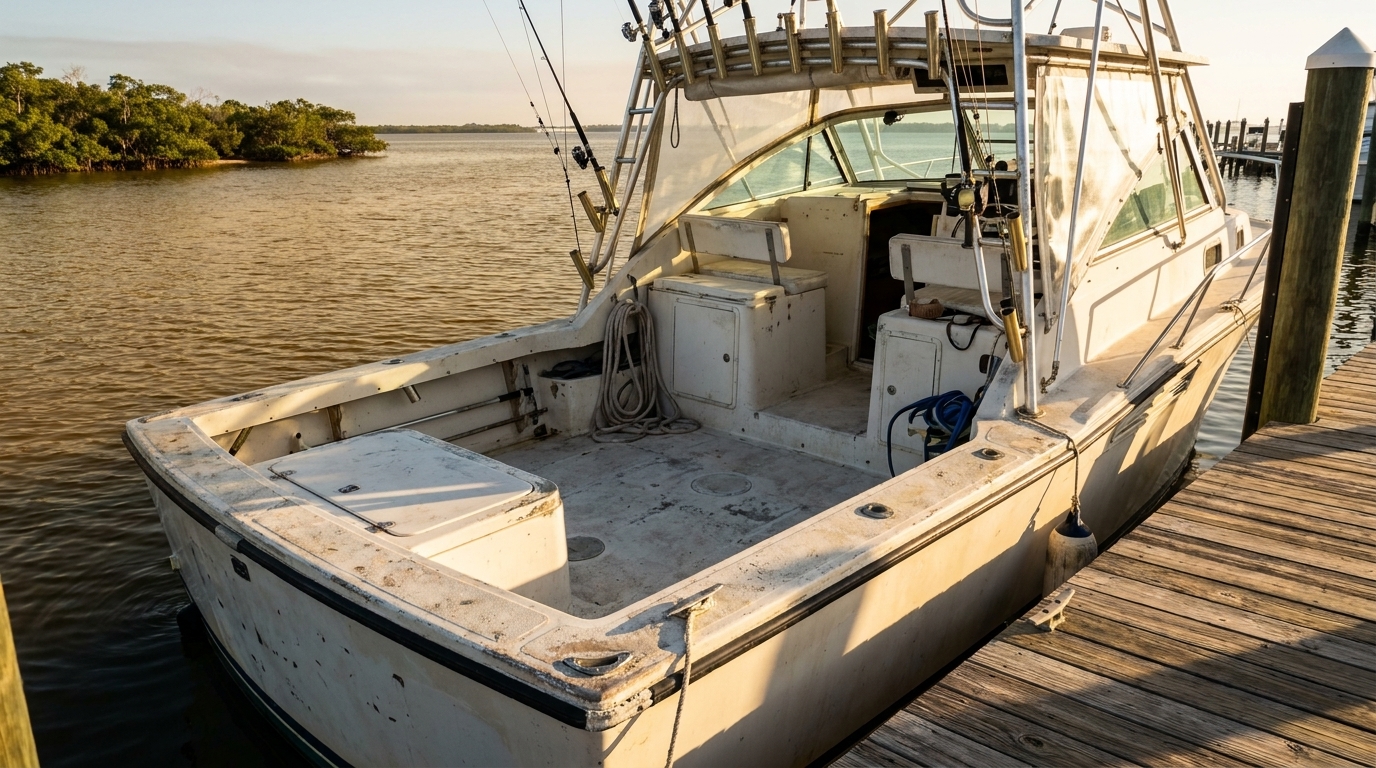
Boat Financing in Saint Petersburg, FL: What Credit Score Do You Need?
A practical guide to boat financing in Saint Petersburg, FL — credit score benchmarks, how loans work, Florida disclosure rules, and what to expect.
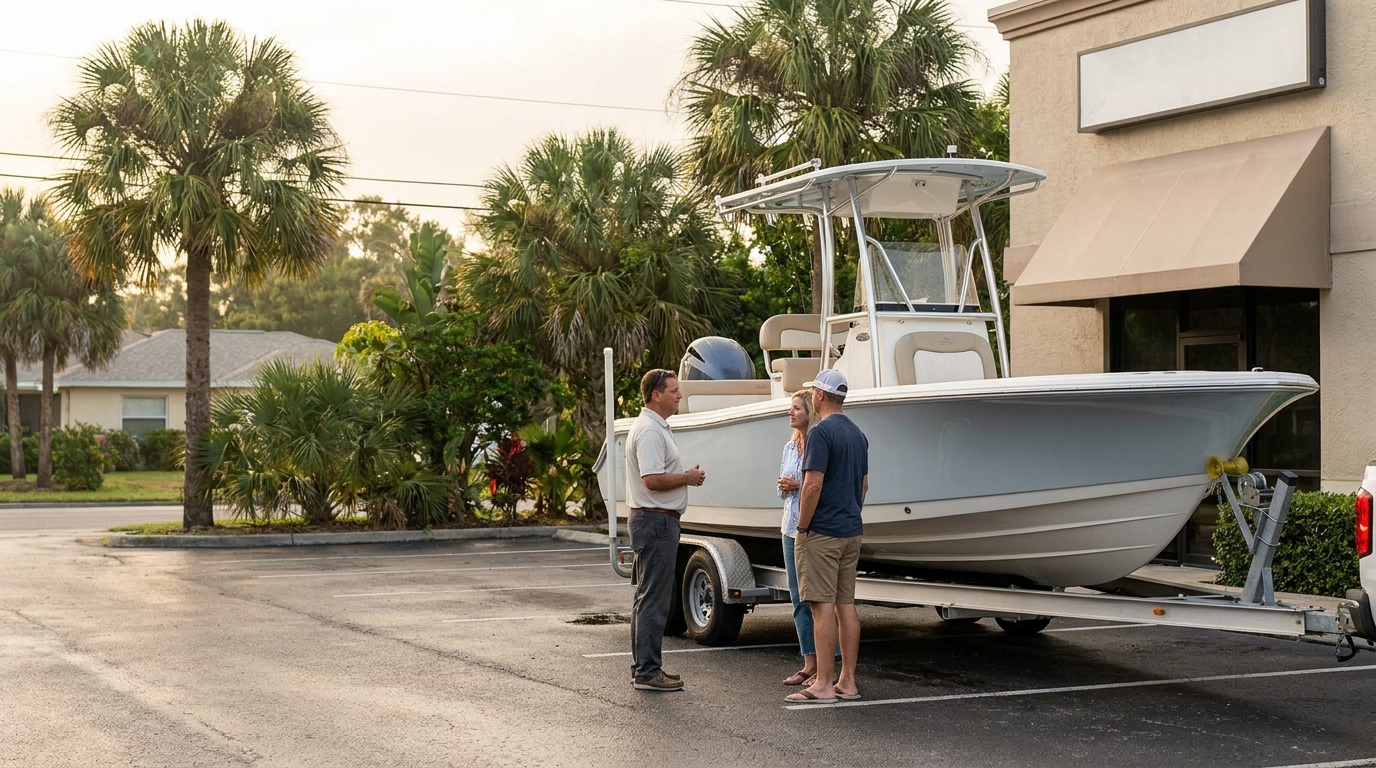
You've been eyeing the water off the Pinellas coast for a while now — maybe from the pier downtown, maybe from a friend's center console cruising through Boca Ciega Bay — and you're ready to stop watching and start owning. The question that stops most first-time buyers isn't which hull to choose. It's the financing. What credit score do you actually need? How does a boat loan work in Florida? And what should you expect when you sit down with a dealer in Saint Petersburg?
Here's a clear look at how marine financing works in the Tampa Bay market, what lenders are looking for, and how Florida law shapes the paperwork you'll sign.
What Credit Score Do You Need to Finance a Boat in Saint Petersburg?
Marine lenders generally treat boat loans as recreational asset financing — closer to an RV or luxury vehicle loan than a car note. Underwriting is tighter, and the credit bar sits higher than most buyers expect.
As a working benchmark for the Saint Petersburg market:
- 700 and above: You'll see the strongest rates and terms across the widest lender pool. This is the comfort zone for most marine banks.
- 680–699: Financing is available with competitive rates, though lenders may look more closely at debt-to-income and down payment.
- 640–679: Approvals still happen, but expect higher rates, larger down payment requirements (often 20% or more), and more documentation.
- Below 640: Traditional marine lenders become selective. Specialty lenders may still work with you, typically on shorter terms and steeper rates.
Credit score is only part of the picture. Marine underwriters also weigh income stability, existing debt load, boating experience, and — critically — the age, type, and value of the vessel itself. A late-model center console typically finances more easily than a 20-year-old cruiser, regardless of your score.
How Boat Financing Actually Works
Most boat purchases in Saint Petersburg happen one of two ways: through a dealer-arranged retail installment contract, or through a direct loan from a bank or credit union. Both routes get you on the water, but the paperwork and legal framework differ.
Dealer-Arranged Financing
When you finance through a dealer, you're typically signing a retail installment contract governed by Florida Statutes Chapter 520, Part III. The dealer submits your application to one or more marine lenders, then presents you with terms.
Under Fla. Stat. § 520.34(3), the seller must provide a separate written itemization of the amount financed, disclosing the cash price, down payment, the difference between them, any amounts included for insurance or optional benefits (with types specified), and taxes and official fees not built into the cash price. If the contract complies with the federal Truth in Lending Act, § 520.34(2) treats it as satisfying Florida's disclosure requirements — but that itemization still has to be handed to you.
Florida also caps finance charges on covered retail installment contracts at $12 per $100 per year on the amount financed, per Fla. Stat. § 520.35(6)(a). That's a ceiling, not a going rate — market rates for well-qualified borrowers in 2026 sit well below that cap.
Direct Bank or Credit Union Financing
A direct loan bypasses the dealer's finance office. You apply to a marine lender or your own bank, get pre-approved, and walk into the dealership with financing already in hand. Federal TILA and Regulation Z still require the lender to disclose the finance charge in dollars, the APR, amount financed, total of payments, payment schedule, total sale price, and any security interest taken in the vessel or trailer before you sign.
What to Expect on Paper
Whether you finance through a dealer or a bank, expect these disclosures before consummation:
- Annual percentage rate (APR)
- Finance charge in dollars
- Amount financed
- Total of payments over the life of the loan
- Payment schedule (amount, frequency, number of payments)
- Total sale price
- Security interest in the boat and trailer
TILA's right of rescission — the three-day cancellation window — generally does not apply to standard boat-only purchase loans. That right primarily attaches to home-secured credit. Read your paperwork before you sign, not after.
Commercial and Charter Vessel Financing
If you're financing a vessel for charter operations or another commercial use out of a marina in Saint Petersburg, a different rulebook can apply. Under the Florida Commercial Financing Disclosure Law (Fla. Stat. §§ 559.952–559.964), non-bank providers who make more than five covered commercial financings per year in Florida — on amounts up to $500,000 — must deliver written pre-consummation disclosures. Those include APR or estimated APR, total dollar cost, payment amount and frequency, term length, itemized fees, and prepayment terms.
Federally insured banks and credit unions, transactions above $500,000, and real-estate-secured loans are exempt. Covered providers must register with the Florida Office of Financial Regulation before offering these products.
How Much Does a Boat Cost for a Family of Four?
Realistically, a family-friendly bowrider or dual console in the 20-to-24-foot range — enough deck space for four, a head compartment, and the power to run out to Fort De Soto or Egmont Key for the day — will finance across a wide price band depending on brand, age, and equipment. Larger cruisers with cabins for overnight trips push the number materially higher.
Rather than fixating on sticker price, work backward from a monthly payment you can carry alongside slip fees, insurance, fuel, and annual haul-outs. Saint Petersburg's year-round boating season means you'll actually use the vessel — which is a gift, but also means operating costs land every month, not just in summer.
Saint Petersburg-Specific Considerations
A few local realities shape financing decisions in this market:
- Hurricane season: Insurance underwriters look closely at storage plans from June through November. Lenders will require proof of insurance before funding, and coverage for named-storm risk on the Gulf Coast is priced accordingly. Have a hurricane plan — dry stack, trailer, or hurricane hole — before you close.
- Salt exposure: Boats kept in Boca Ciega Bay, Tampa Bay, or the Gulf run harder on components than freshwater vessels. Lenders factor expected condition into loan-to-value calculations on used boats.
- Registration and titling: Florida requires titling and registration through the county tax collector — in Pinellas County, that's handled locally. Your lender will want to be listed as lienholder on the title.
- Slip and storage availability: Waitlists at municipal marinas around downtown Saint Petersburg and the Vinoy Basin are real. Some lenders ask about storage arrangements during underwriting for larger vessels.
FAQ
Can I get boat financing in Saint Petersburg with a 650 credit score?
Yes, in most cases. Expect a higher rate, a larger down payment (often 20% or more), and possibly a shorter term. The vessel's age and value will matter more than they would for a 720 borrower.
How long are boat loan terms?
Terms commonly run from 10 to 20 years depending on loan amount and vessel age. Longer terms lower the monthly payment but increase total finance charges — the TILA disclosure will show you exactly how much.
Does Florida's $12 per $100 finance charge cap apply to my boat loan?
It applies to covered retail installment contracts under Chapter 520. Direct bank loans are governed by different rules. Whether Chapter 520 applies to a specific transaction depends on how it's structured; the itemization requirement under § 520.34(3) is the disclosure most buyers will see.
Do I have a right to cancel a boat loan after signing?
Generally no. TILA's three-day right of rescission applies primarily to home-secured credit, not to standard boat purchase loans. Review terms before signing.
Working With a Local Dealer
The financing conversation goes smoother when your dealer knows the Tampa Bay market, the vessels that hold value on the Gulf Coast, and the lenders who understand marine risk in a hurricane-exposed state. Buyers in Saint Petersburg who want experienced guidance through the credit application, disclosure review, and vessel selection process can reach Worldwide Yacht Sales at https://worldwideyachtsalesinc.com to discuss options and get pointed toward the right financing partner for their situation.
This article is general information, not legal or financial advice. For transaction-specific questions, consult a licensed Florida attorney or a qualified marine finance professional.