Boat Financing in Saint Petersburg, FL: First-Time Buyers
How marine lenders, Florida down payments, and dealer in-house financing actually work for first-time boat buyers in Saint Petersburg, FL.
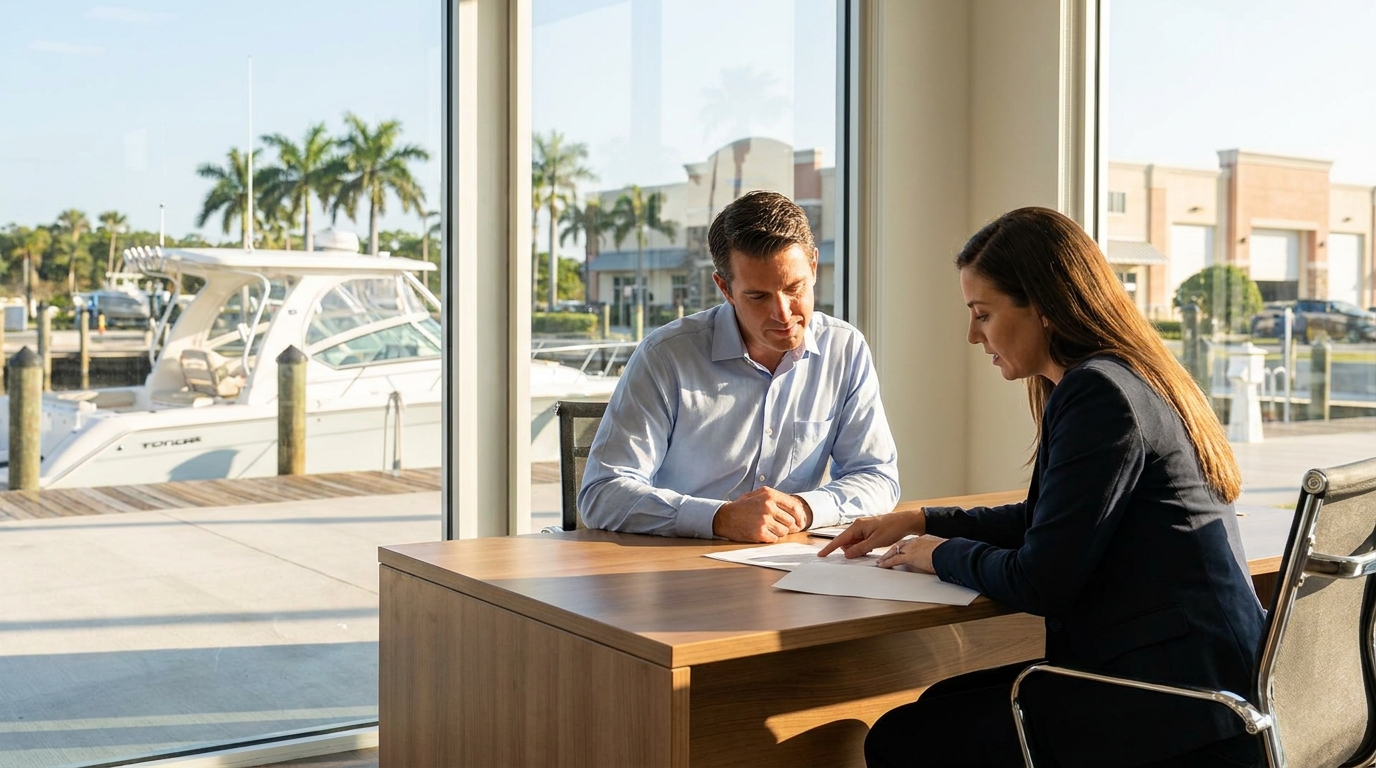
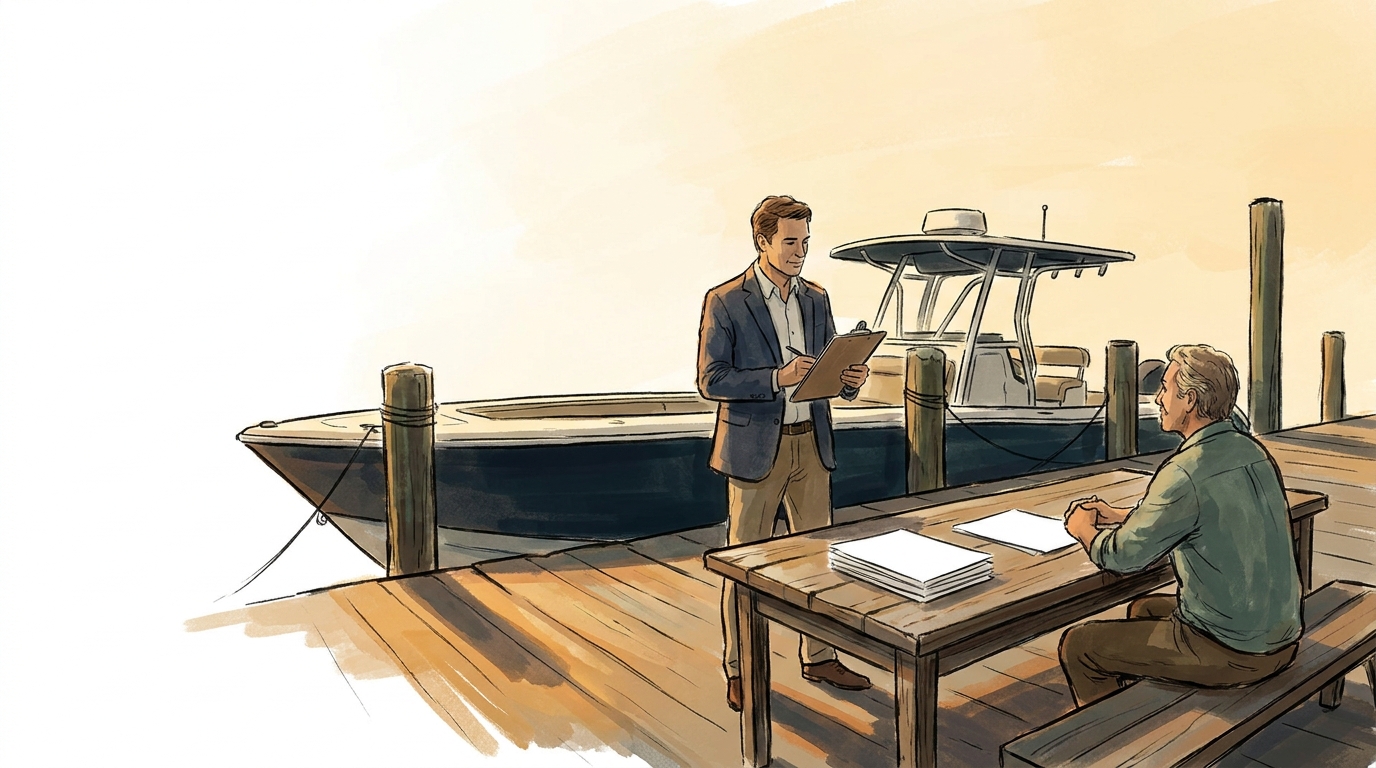
Boat financing for first-time buyers in Saint Petersburg works through specialized marine lenders — not auto banks — who evaluate the vessel as collateral alongside the borrower's credit, requiring down payments that typically scale with boat age and price, plus Florida-specific title, registration, and 6% sales tax (capped at $18,000 per vessel) built into the closing. A dealer with in-house financing coordinates the lender relationships, paperwork, and lien recording so the buyer signs one set of documents rather than assembling the deal piece by piece.
That is the short version. The mechanism underneath it — why marine lenders behave differently from auto lenders, how Florida structures the transaction, and what a Saint Petersburg dealership actually does when it offers financing in-house — is what separates a smooth first purchase from an expensive surprise. This guide walks through each moving part.
How is boat financing different from auto financing in 2026?
Marine lenders treat a boat as a discretionary, depreciating asset exposed to weather and water, so they underwrite more conservatively than auto lenders: they scrutinize the vessel's age, model, survey condition, title status, and marketability alongside the borrower's credit, income, and debt-to-income ratio. Loan terms can run longer than auto loans on newer or larger boats, but down payment expectations and documentation requirements are heavier.
Auto lending is largely commoditized because cars are standardized, easily valued, and quickly repossessed. Boats are none of those things. A 22-foot center console with 800 engine hours in Saint Petersburg has a very different risk profile than the same hull in Michigan, and marine lenders price that in. They also care about intended use — private recreation versus charter — because commercial activity changes both the risk and the required insurance.
This is why Worldwide Yacht Sales and other specialized dealers work with a network of marine-specific lenders rather than routing buyers to a general consumer bank. The lender wants a survey, a hull identification number, a clean title search, and evidence of comprehensive insurance before funding — items an auto finance office never asks about.
What down payment should first-time buyers plan for in Florida?
Marine lenders in Florida generally expect a down payment that reflects both the boat's price and its age, with newer and larger vessels often qualifying for lower percentages down and older or higher-risk boats requiring more equity at closing. First-time buyers should also budget for Florida's 6% sales and use tax — capped at $18,000 per vessel — plus registration and title fees separate from the down payment.
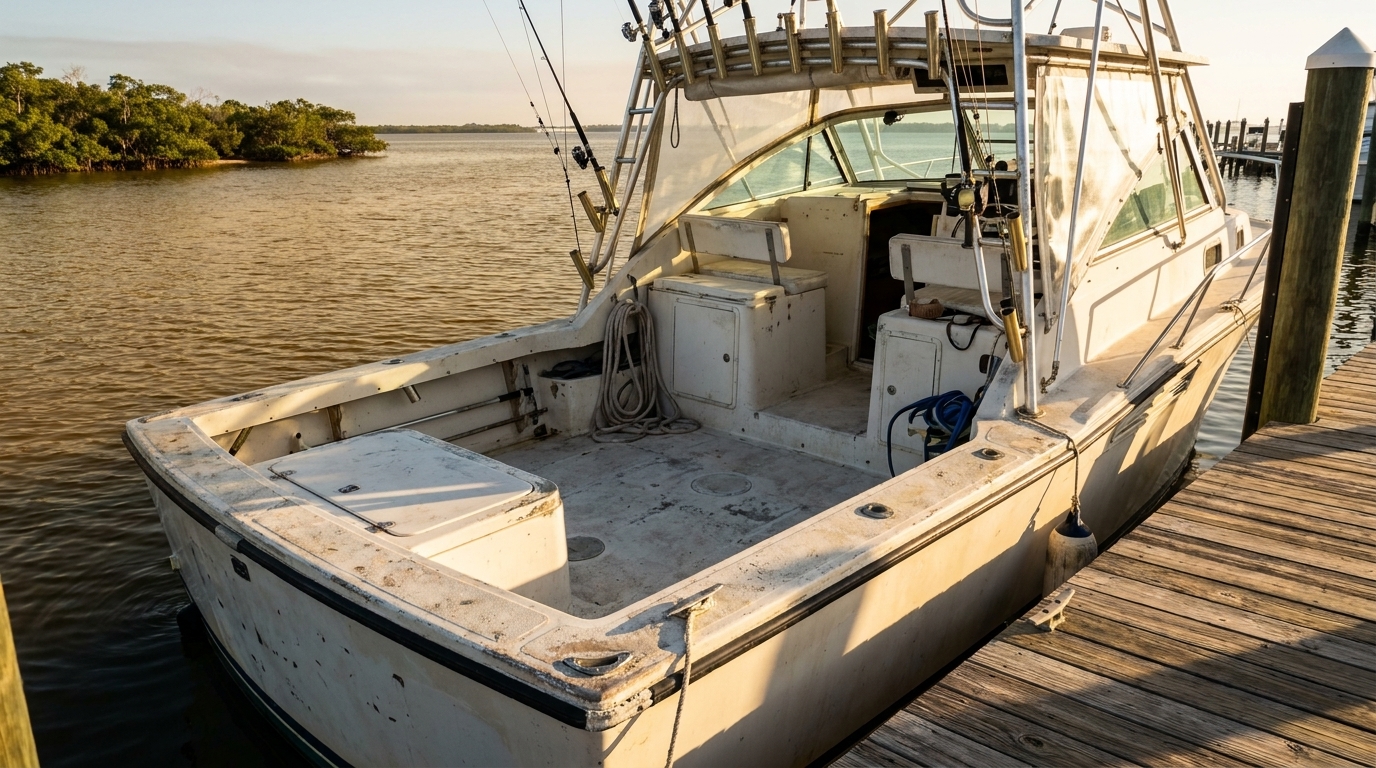
The loan-to-value ratio is the lender's central lever. On a well-documented newer boat with a strong survey, financing terms are more flexible. On an older used boat — say a used entry-level center console in the $10,000 to $30,000 range — lenders often want more equity down because the collateral depreciates faster and resale is less predictable in a softening market. Florida unit sales were reported running roughly 4% below the trailing 12-month average at about 27,774 annualized units in the cited snapshot, and that normalization is one reason lenders are re-examining older-boat underwriting.
Buyers should also treat the down payment as one line in a larger cash-at-closing figure. Florida registration ranges from $5.50 for vessels under 12 feet to $28.75 for 16-to-under-26-foot boats and $78.25 for 26-to-under-40-foot boats, with title fees of $5.25 electronic, $7.75 paper, or $11 expedited. None of that is financed.
How does Florida sales tax and titling affect the loan structure?
Florida charges 6% sales and use tax on boat purchases, capped at $18,000 per vessel — meaning the tax cap is reached at roughly a $300,000 purchase price before discretionary surtax — and requires titling and registration generally within 30 days of purchase. The lender's lien must be recorded correctly at titling, which is why financed transactions route through a county tax collector or authorized agent rather than being handled casually between buyer and seller.
For a first-time buyer, this matters because the tax and title work is not optional and is not something a lender will fund after the fact. The dealership typically collects tax at closing, submits title and registration paperwork, and coordinates lien recording with the marine lender in a single workflow. A private-party purchase pushes all of that onto the buyer.
Operators born on or after January 1, 1988 also need a Florida boating-safety education credential to run a motorboat of 10 horsepower or more — an operating requirement that does not affect the loan itself but does affect who can legally use the boat the loan is paying for.
What does a Saint Petersburg dealer with in-house financing actually do?
A boat dealer with in-house financing in Saint Petersburg does not typically lend its own money; instead, it maintains direct relationships with multiple marine lenders and submits the buyer's application, survey, insurance binder, and title paperwork through those channels. The buyer signs one coordinated package rather than shopping lenders individually, and the dealer handles the Florida tax, title, and lien-recording steps at closing.
The practical value is workflow. A first-time buyer walking in without a lender pre-approved is looking at simultaneously arranging a marine survey, sourcing hurricane-compliant insurance, verifying title history, negotiating price, and satisfying a lender's documentation checklist. Worldwide Yacht Sales, based at 12781 Kingfish Drive in Treasure Island on the western edge of the Tampa Bay boating system, coordinates those pieces in parallel — one recent reviewer described a remote purchase where the dealership handled financing, inspection, and transportation from Florida to Texas as a single package.
In-house financing coordination also matters for the insurance side. Lenders require comprehensive physical-damage coverage, and Florida's hurricane exposure — with the Atlantic season running June 1 through November 30 — means named-storm deductibles and navigation limits are common. A dealer that works with local insurers regularly can align the policy with what the lender needs before funding is delayed.
How should Saint Petersburg buyers budget beyond the loan payment?
The monthly loan payment is only part of the ownership cost in Saint Petersburg. Buyers should also budget for insurance (with named-storm deductibles common on Tampa Bay and Gulf-facing coverage), fuel, routine engine service, haul-outs, slip or dry-storage fees, annual registration renewal, and a reserve for hurricane preparation and repairs. Lenders factor several of these into approval decisions.
Storage is a Pinellas-specific pressure point. Waterfront slips near downtown Saint Petersburg, along the Gulf beaches, and around Treasure Island command different rates than dry storage inland, and marinas often require documented hurricane plans and proof of insurance. Buyers who plan to trailer their boat sidestep slip fees but take on trailer maintenance and launch-ramp logistics instead.
A useful rule of thumb: the annual carrying cost of a boat — insurance, storage, maintenance, fuel, registration — often runs a meaningful percentage of the purchase price, and lenders will ask about it. A buyer who shows up with a realistic operating budget gets a better underwriting outcome than one who has only calculated the loan payment.
What boat price ranges are realistic for first-time buyers?
| Segment | Typical Price Range | Common Use in Tampa Bay Area |
|---|---|---|
| Used entry-level | $10,000–$30,000 | Older or smaller center consoles, bowriders, skiffs, compact pontoons |
| New small recreational | $25,000–$60,000 | Smaller new hulls with engine, electronics, trailer, options |
| Newer or larger family | $50,000–$100,000+ | Many 20–28-foot center consoles, pontoons, deck boats, dual-consoles |
| Offshore-capable / cruisers | $100,000–$300,000+ | Larger offshore boats and cruisers; higher-end yachts run substantially above |
These are planning ranges, not Saint Petersburg transaction averages. Actual prices vary with engine hours, model year, hurricane exposure, trailer inclusion, electronics, bottom condition, and whether the boat is intended for protected Tampa Bay water or Gulf offshore use. A separate yacht-market review reported a median sale price of $160,000 and an average of $328,000 in its covered segment — figures that describe higher-priced yachts, not first-time recreational buys.
Frequently asked questions
Do marine lenders require a boat survey before funding?
Yes, marine lenders generally require a pre-purchase survey on used boats and often on larger new vessels before funding a loan. The survey documents hull condition, engine hours, systems, and any prior damage — including storm or flood history, which is especially important in Florida. Lenders use the survey to confirm collateral value and insurability, and insurers frequently require it independently for coverage.
Can a first-time buyer finance a used boat with hurricane history?
Financing a used boat with prior storm exposure is possible but more difficult. Lenders and insurers scrutinize the title history, survey findings, and any prior insurance claims closely, and may require additional documentation or a larger down payment. Buyers should confirm the hull identification number matches, request the full claims history, and factor higher insurance premiums into the monthly ownership budget.
How long does Florida give buyers to title and register a financed boat?
Florida generally requires vessel titling or registration action within 30 days of purchase, and a financed boat must have the lender's lien correctly recorded during that process. Transactions are handled through a county tax collector or authorized agent. Missing the window can trigger penalties and complicate the lien recording, which is one reason financed purchases usually route through a dealership rather than being handled privately.
Is Florida's 6% boat sales tax financed into the loan?
Florida charges 6% sales and use tax on boat purchases, capped at $18,000 per vessel, and it is generally collected at closing rather than financed separately. Some lenders will allow tax and fees to be rolled into the total loan amount depending on the loan-to-value ratio and the borrower's credit, but many first-time buyers bring tax, title, and registration fees as cash at closing alongside the down payment.
What credit and income documentation do marine lenders ask for?
Marine lenders typically evaluate credit score and history, income, debt-to-income ratio, employment stability, and the down payment amount, alongside vessel-specific factors like age, survey condition, and title status. Documentation usually includes recent pay stubs or tax returns, bank statements, a completed application, the purchase agreement, the survey, and an insurance binder. Requirements tighten on older boats and larger loan amounts.
Does a boater education card affect boat financing approval?
A Florida boating-safety education credential does not directly affect loan approval, but it is required to legally operate the boat. Florida requires anyone born on or after January 1, 1988, who operates a motorboat of 10 horsepower or more, to complete an approved course and carry the credential with photo identification. Buyers should verify that anyone who will operate the boat, including family and guests, meets the requirement.
A practical closing note for Saint Petersburg buyers
First-time boat financing rewards preparation more than speed. A buyer who understands the marine-lender mindset, budgets for Florida's tax and registration on top of the down payment, arranges insurance that satisfies both the lender and Tampa Bay's hurricane realities, and chooses a boat sized honestly to their intended use will get better loan terms and fewer surprises than one who leads with the monthly payment number.
Readers in the Saint Petersburg and Tampa Bay area who want a first purchase handled end-to-end — lender coordination, survey, Florida titling, insurance, and delivery — can reach Worldwide Yacht Sales at 12781 Kingfish Drive, Treasure Island, FL 33706, by phone at (727) 346-8229, or online at https://worldwideyachtsalesinc.com. The dealership carries a 4.8-star rating across 28 Google reviews as of May 2026, with recurring feedback on communication, remote-transaction handling, and coordinated financing and logistics.