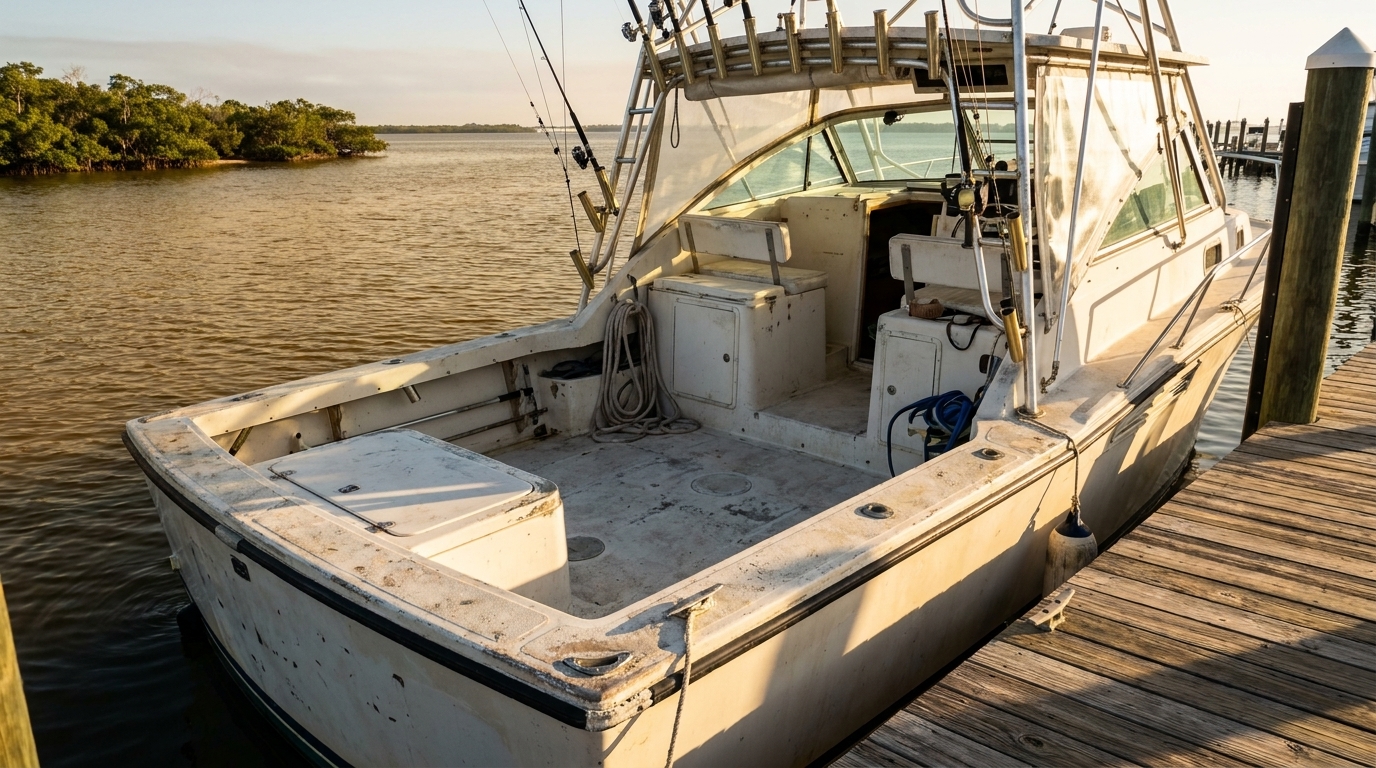
Pre-Purchase Yacht Inspection Checklist: What Madeira Beach Buyers Should Verify Before Closing
A practical pre-purchase yacht inspection checklist for Madeira Beach buyers — hull, systems, sea trial, documentation, and survey guidance.
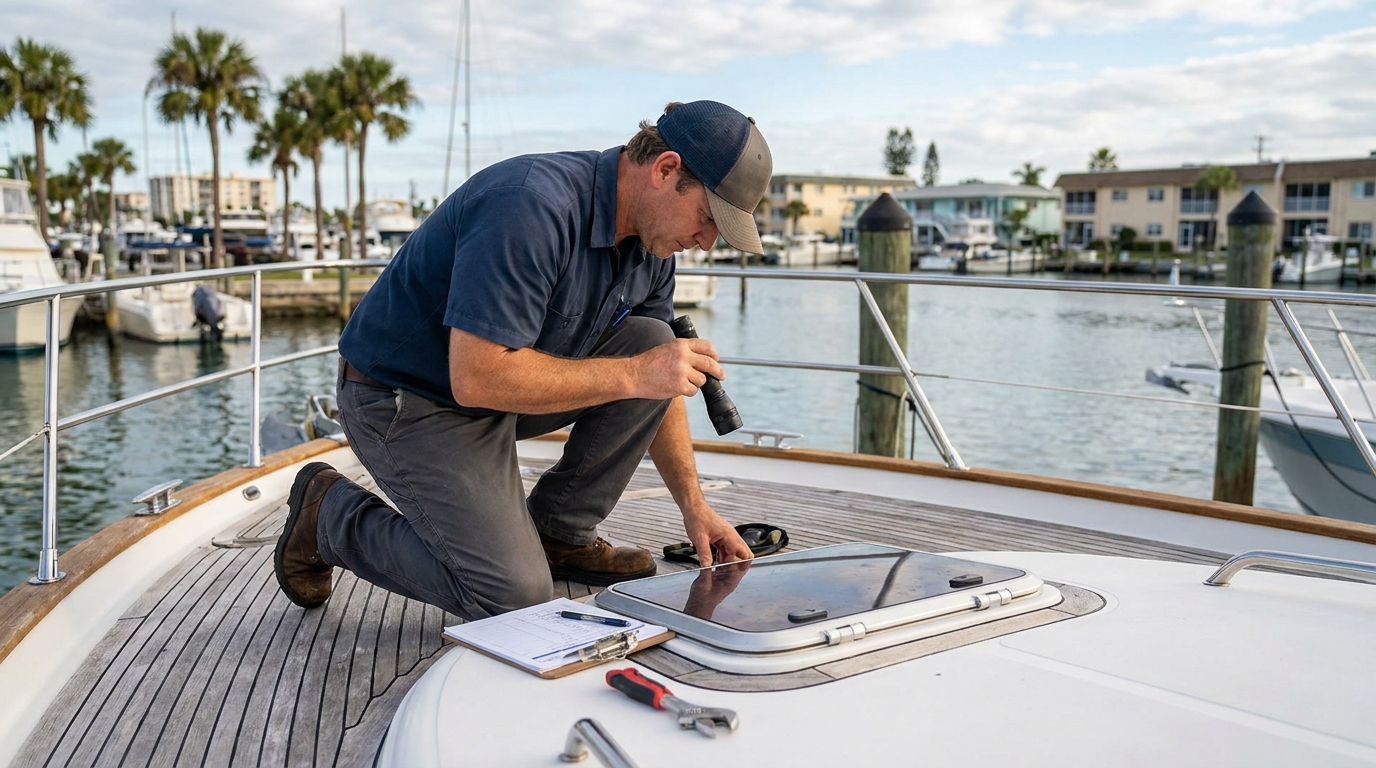
Buying a yacht is one of the more complex transactions a private buyer will ever undertake. The vessel sitting at the dock in Madeira Beach may look pristine in the Gulf sunlight, but cosmetics rarely tell the full story. Saltwater intrusion, deferred maintenance, and electrolysis damage often hide behind fresh wax and new upholstery — and once the closing documents are signed, those problems belong to the buyer.
This yacht inspection checklist before buying is designed to give serious buyers a structured framework for evaluating a vessel before committing capital. It is not a substitute for a marine survey conducted by an accredited professional, but it equips buyers to make a more informed offer, narrow a shortlist, and know what to demand during the formal pre-purchase yacht survey.
Why a Structured Yacht Evaluation Checklist Matters in Madeira Beach
Madeira Beach sits on a barrier island along Florida's Gulf Coast, where year-round saltwater exposure, summer humidity, and hurricane season all accelerate wear on boats kept at local marinas and along John's Pass. A vessel that has lived its life in these waters has been working harder than a freshwater boat of the same age — and that needs to be reflected in any yacht evaluation checklist.
Florida requires vessel titling and registration, and any documented vessel transfer must reconcile with federal documentation records. A clean documentation trail is part of the inspection, not a separate afterthought.
The Pre-Purchase Yacht Inspection Checklist
The checklist below is organized in the order an experienced buyer would walk a boat: exterior first, then interior, then systems, then on-water performance, then paperwork. Each section identifies what to look at, what to look for, and what a finding should signal.
1. Hull and Exterior
- Hull condition above the waterline: Look for stress cracks radiating from hardware, crazing in the gelcoat, and any repairs that don't match surrounding color or texture.
- Hull below the waterline: Inspect for blisters, prior bottom-paint layers, and signs of fairing compound used to mask deeper damage. A haul-out is essential here.
- Keel and running gear: Check struts, shafts, props, and rudders for pitting, bent blades, and play in bearings.
- Through-hulls and seacocks: Every fitting should open and close fully. Frozen seacocks are common on Gulf Coast boats and a frequent survey finding.
- Anodes (zincs): Heavily eroded or completely consumed anodes suggest stray current or bonding issues that demand investigation.
- Deck and non-skid: Walk every square foot. Soft spots underfoot point to wet core — one of the most expensive repairs on any yacht.
2. Interior and Accommodations
- Bulkheads and tabbing: Cracked or separated tabbing where bulkheads meet the hull is a structural concern, not a cosmetic one.
- Headliners and overhead panels: Stains indicate deck leaks. On Madeira Beach boats, leaks often trace back to hardware bedding that has failed under UV exposure.
- Cabin sole: Soft or spongy flooring suggests freshwater or saltwater intrusion below.
- Odors: Mildew, diesel, and holding-tank odors each point to different problems. None should be dismissed.
- Upholstery, joinery, and finishes: Note condition honestly.
3. Mechanical and Propulsion Systems
- Engine hours and service records: Request the complete maintenance log. Gaps matter more than total hours.
- Oil analysis: A laboratory oil sample from each engine and transmission is inexpensive and reveals internal wear before a sea trial can.
- Cooling system: Inspect heat exchangers, raw-water pumps, and impellers. Salt corrosion is unavoidable on Gulf boats — the question is whether it has been managed.
- Fuel system: Check tanks for corrosion (aluminum tanks are a known weak point), filters for water and debris, and lines for cracking.
- Generator: Verify hours, start it cold, and let it run under load.
- Steering and controls: Hydraulic steering should have firm feel with no air. Throttle and shift controls should engage cleanly.
4. Electrical, Electronics, and Plumbing
- Batteries and charging: Note battery age, condition, and whether the charging system holds proper voltage under load.
- AC and DC panels: Look for corroded terminals, undersized wiring, and non-marine-grade connections.
- Electronics suite: Power up every display, radar, autopilot, and VHF. Outdated chartplotters are common; failed networks are expensive.
- Bilge pumps and high-water alarms: Test each pump manually and on float switch.
- Freshwater and waste systems: Run the water pump, check for leaks at fittings, and verify the macerator and holding tank function.
- Air conditioning: In Madeira Beach's climate, a failing AC system is not a minor issue. Test each zone.
5. Safety Equipment and Compliance
- Current flares, EPIRB registration, life jackets sized for expected passengers, and fire extinguishers within service date.
- CO detectors and propane sniffers in enclosed accommodations.
- Compliance with U.S. Coast Guard carriage requirements for the vessel's length and use.
6. The Sea Trial
A sea trial is the single most informative part of any pre-purchase yacht survey. Insist on running the boat in conditions similar to how it will actually be used — which, for most Madeira Beach buyers, means open Gulf water, not just the protected runs through John's Pass.
- Cold start each engine and observe exhaust color and smoke.
- Run to wide-open throttle and confirm the engines reach rated RPM. Underperformance signals fouled bottoms, worn props, or deeper mechanical issues.
- Test handling at cruise, in turns, and at idle.
- Observe temperatures, oil pressures, and charging output throughout.
- Check for vibration that could indicate shaft alignment or prop balance problems.
7. Documentation and Title
- Verify HIN (Hull Identification Number) matches title, registration, and any USCG documentation.
- Confirm there are no outstanding liens. A documented vessel search through the appropriate federal documentation authority is the standard tool.
- Review Florida sales and use tax obligations with a qualified broker or marine attorney, as applicable tax rules can materially affect the closing math on larger vessels.
- Confirm slip transferability if the boat is staying in a Madeira Beach marina.
The Role of a Professional Pre-Purchase Yacht Survey
Even the most disciplined buyer-led inspection is not a substitute for an accredited marine surveyor. An accredited marine surveyor brings calibrated moisture meters, thermal imaging, and a trained eye for structural issues that buyers consistently miss. Insurance underwriters and most marine lenders require a recent survey before binding coverage or releasing funds.
An experienced broker coordinates the survey, sea trial, and haul-out so findings can be negotiated into the final price or escrow holdbacks before closing. Worldwide Yacht Sales works through this process routinely with buyers in the Madeira Beach market, including out-of-state purchasers who cannot personally attend every step. The firm holds a 4.8-star Google rating from 28 reviews as of May 2026, with customers consistently praising responsiveness and expertise in remote transactions. One customer wrote that a broker's "informative, patient, no pressure demeanor made this nervous novice's experience truly enjoyable" — including shipping the vessel from Florida to Rhode Island.
Frequently Asked Questions
How much does a pre-purchase yacht survey cost?
Survey fees typically scale with vessel length, with additional cost for haul-out and engine surveys performed by a separate mechanic. Buyers should budget for the survey, haul-out, mechanic's inspection, and oil analysis as separate line items.
Can a buyer rely on the seller's recent survey?
Generally, no. A survey is commissioned by and belongs to the party that paid for it, and lenders and insurers will require one in the buyer's name. A prior survey can be useful background but should not replace an independent inspection.
What findings justify walking away?
Wet core in the deck or hull, significant corrosion in aluminum fuel tanks, evidence of submersion, undisclosed structural repair, and unresolvable title defects are common deal-breakers. Most other findings are negotiable.
How long does the inspection process take?
Hurricane season can extend this on the Gulf Coast.
Do I need to be present in Madeira Beach for the inspection and sea trial?
Not necessarily. Buyers who cannot travel to Florida can work with a local broker who coordinates the haul-out, marine surveyor, and sea trial on their behalf. Worldwide Yacht Sales regularly manages this process for out-of-state and international buyers, with detailed reporting at each step so remote purchasers can make fully informed decisions before closing.
How does hull material affect what I look for during inspection?
Hull material changes the specific failure modes to prioritize. Fiberglass hulls are most susceptible to osmotic blistering and wet core; aluminum hulls to galvanic corrosion at dissimilar-metal connections; steel hulls to rust behind liners and in voids. The Gulf Coast environment accelerates all three, so inspecting with the correct material-specific criteria — and a surveyor experienced with that construction — is essential.
Closing Thoughts for Madeira Beach Buyers
A yacht inspection guide is only as useful as the discipline behind it. The buyers who avoid expensive surprises are the ones who treat every line on the checklist as non-negotiable and who surround themselves with professionals — surveyor, mechanic, broker — whose interests are aligned with a clean transaction rather than a fast one.
Buyers in Madeira Beach who want this process managed end-to-end, including survey coordination, sea trial logistics, documentation, and financing, can contact Worldwide Yacht Sales at https://worldwideyachtsalesinc.com or call (727) 346-8229 to discuss a specific vessel or build a search around defined criteria.
"