Used Yacht Inspection Checklist in Cape Coral, FL
A Cape Coral-specific pre-purchase yacht inspection checklist covering hull, running gear, electrical, storm history, survey costs, and sea trial logistics.
Before buying a used yacht in Cape Coral, inspect five things without exception: the hull below the waterline (blistering, osmosis, prior repairs), running gear and shafts, the electrical system for saltwater corrosion and electrolysis, engine condition with a standalone engine survey, and documented storm and repair history. All of it should be verified during a haul-out and sea trial with an ACMS-, SAMS-, or NAMS-accredited marine surveyor before your escrow deposit goes hard.
Cape Coral's 400-plus miles of saltwater canals, year-round humidity, and hurricane exposure make used-yacht inspections a different exercise than they are almost anywhere else in the country. A vessel that spent five years tied up behind a home off Chiquita Lock or in the Yacht Club neighborhood has been marinating in warm brackish water, UV, and storm surge the entire time. That environment accelerates the exact defects a rushed buyer misses.
At Worldwide Yacht Sales, we coordinate surveys, sea trials, haul-outs, and escrow for buyers acquiring vessels in Southwest Florida — many of them out-of-state clients who never physically see the boat before contract. The checklist below is what we walk clients through before their deposit becomes non-refundable.
What should you inspect on the hull and bottom in Cape Coral's saltwater canals?
During haul-out, inspect the hull for osmotic blistering, prior fiberglass repairs, gelcoat crazing, running gear condition, shaft alignment, rudder play, and the transducer and thru-hull fittings. Cape Coral's warm brackish canal water accelerates blistering and marine growth, and hurricane grounding events often leave hidden keel or strut damage that only appears with the boat out of the water.
The haul-out is non-negotiable. A meaningful pre-purchase survey requires the vessel lifted, and yard fees in the region typically run $14 to $20 per foot, or roughly $275 flat for a smaller recreational boat. Book the lift early — yard scheduling around Cape Coral, Fort Myers, and Punta Gorda tightens quickly in the fall and spring listing seasons.
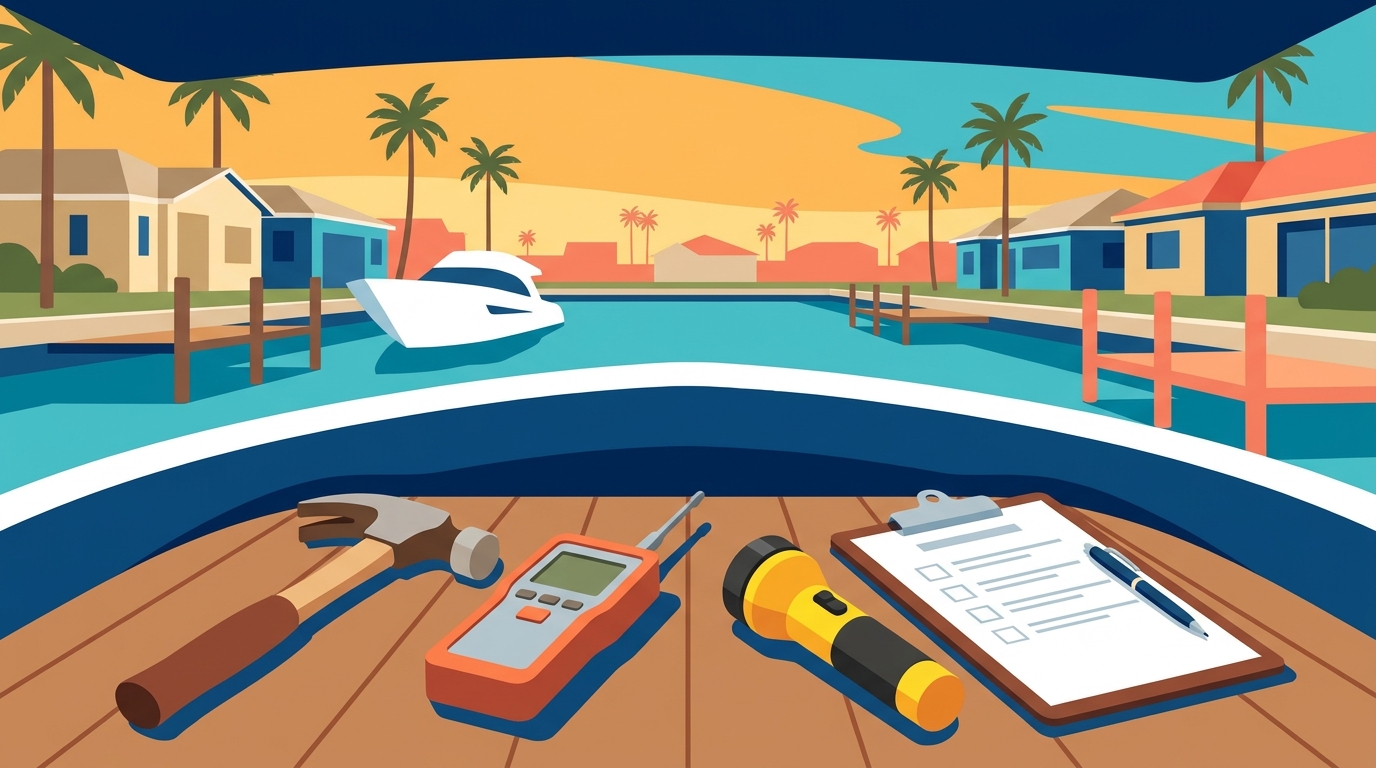
Have your surveyor sound the hull with a phenolic hammer, moisture-meter suspect areas, and photograph every through-hull, seacock, and prop-shaft seal. On any vessel that lived through a named storm, ask specifically about hard groundings, rub-rail damage, and stringer integrity.
What electrical and corrosion issues matter most on Cape Coral boats?
Prioritize inspection of shore-power connections, galvanic isolators, bonding systems, anode wear, and any signs of electrolysis on underwater metals. Cape Coral's humid saltwater environment corrodes terminals, connectors, and grounding straps faster than freshwater markets, and stray-current damage from neighboring canal-side docks can eat props, shafts, and trim tabs within a single season.
Open every electrical panel. Look for green corrosion on bus bars, chalky terminals, and heat-discolored breakers. On boats older than roughly a decade, budget for the possibility that shore-power inlets, battery cables, and bilge-pump wiring will need replacement regardless of what the seller discloses.
ABYC-certified surveyors — the standard insurers and lenders expect in Florida, since the state does not license marine surveyors — are trained to identify these failures. Confirm your surveyor holds ACMS, SAMS, or NAMS accreditation before hiring.
How should the engines and mechanical systems be inspected?
Hire a separate marine mechanic for a standalone engine survey — roughly $500 per engine — in addition to the general marine survey. The engine specialist pulls oil and coolant samples, scans ECMs, checks compression, inspects heat exchangers and raw-water systems, and verifies hours against maintenance records. Cape Coral's saltwater raw-water cooling loops corrode heat exchangers and exhaust risers on a predictable timeline.
The engine survey happens during the same sea trial as the general survey, so your captain runs the vessel through a full RPM range while the mechanic captures data. Ask for wide-open-throttle readings, cruise-RPM fuel burn, and thermal imaging of exhaust risers if available.
What storm and repair history should you demand documentation for?
Request written documentation of any hurricane or tropical storm exposure, all insurance claims filed against the vessel, and receipts for structural repairs. Southwest Florida's storm exposure means many used yachts have been through at least one significant weather event, and improper fiberglass repairs, freshwater intrusion into stringers, and undisclosed grounding damage are among the most common deal-killers our surveyors flag.
Cross-check the Hull Identification Number on the transom against title, registration, and any documentation paperwork. HIN verification is a standard part of every pre-purchase survey and catches title fraud, prior salvage histories, and mismatched hull-and-deck reassemblies.
How much should a full pre-purchase inspection cost in Cape Coral?
Budget $1,500 or more for a complete inspection package on a 38-foot vessel: the marine survey itself at $25 to $35 per foot (with a roughly $850 minimum), the haul-out yard fee at $14 to $20 per foot, and a standalone engine survey around $500 per engine. Larger yachts scale up proportionally, and twin-engine vessels double the mechanical inspection line.
| Service | Typical Cape Coral Cost |
|---|---|
| Pre-purchase marine survey | $25–$35 per foot ($850 minimum) |
| Haul-out / bottom inspection | $14–$20 per foot, or ~$275 flat |
| Engine inspection (per engine) | ~$500 |
| Broker commission (paid by seller) | 5%–10% of sale price |
| Buyer escrow deposit | ~10% of purchase price |
| Example total, 38-ft vessel | $1,500+ |
The buyer pays for the survey, haul-out, and engine inspection; the seller typically pays broker commission. Your escrow deposit — usually around 10% of purchase price — is refundable during the survey acceptance window, which is your leverage point for renegotiation or withdrawal.
Do yacht brokers handle sea trials and surveys, or does the buyer arrange them?
Reputable brokers coordinate the logistics — scheduling the haul-out, booking the surveyor and captain, arranging fuel, and managing escrow — but the buyer selects and pays the independent surveyor directly. That independence protects the survey's credibility with your lender and insurer. At Worldwide Yacht Sales, we handle the coordination end-to-end while keeping the surveyor selection in the buyer's hands.
For out-of-state buyers, this coordination matters enormously. Out-of-state buyers purchasing sight-unseen and coordinating remotely is the norm rather than the exception in this market.
Frequently asked questions
Does Florida require marine surveyors to be licensed?
No. Florida does not license marine surveyors at the state level. However, insurers, lenders, and reputable brokers treat accreditation from ACMS, SAMS, or NAMS — often layered with ABYC certification — as the de facto requirement. For any yacht purchase involving financing or marine insurance, use an accredited surveyor; a non-accredited report may not satisfy underwriting.
When during the transaction does the survey happen?
The survey happens after an accepted offer and signed purchase agreement, during a defined acceptance period while your ~10% escrow deposit is refundable. You review the survey report, negotiate credits or repairs based on findings, and then either accept the vessel, renegotiate, or withdraw. Skipping or rushing this window forfeits your primary leverage as a buyer.
Do I need a current survey for marine insurance in Florida?
Usually yes. Marine insurance companies commonly require a current survey for older boats, larger yachts, high-value vessels, liveaboards, and any boat operating in hurricane-prone waters — which includes all of Southwest Florida. Insurers typically want a survey within the last few years, and lenders financing the purchase will require one at closing.
Does the broker handle Coast Guard documentation or Florida title transfer?
Yes. Brokers typically handle either U.S. Coast Guard documentation or Florida title transfer, depending on vessel size and how the transaction is structured. Documented vessels above a certain tonnage go through the Coast Guard's National Vessel Documentation Center; smaller boats are titled through Florida. Your broker coordinates whichever path applies and files the paperwork on your behalf.
How long does the full inspection process take?
Plan on one to three weeks from accepted offer to survey completion, driven mostly by haul-out scheduling at nearby yards in Cape Coral, Fort Myers, and Punta Gorda. Yard availability tightens during peak listing seasons, and complex vessels or twin-engine boats may require additional days for engine mechanic reports, oil-sample lab returns, and any follow-up dives.
Can I skip the sea trial if the boat has been well-maintained?
No. The sea trial is where engines run under load, transmissions shift, electronics operate on battery and shore power in sequence, and the hull is observed underway. Dockside surveys miss overheating trends, prop-shaft vibration, autopilot faults, and steering issues. A vessel that looks pristine at the dock can still fail a sea trial, which is exactly why the trial exists as a buyer protection.
Working with a broker on your Cape Coral purchase
A rigorous inspection process is the single strongest form of buyer protection available in a used-yacht purchase, and Cape Coral's saltwater canals, humidity, and storm exposure make cutting corners especially costly. Coordinate the haul-out, hire an accredited surveyor, add a standalone engine survey, and use the acceptance window as the negotiation tool it was designed to be.
Readers in Cape Coral, FL who want this handled professionally — including out-of-state buyers coordinating a purchase remotely — can reach Worldwide Yacht Sales at https://worldwideyachtsalesinc.com to begin the process.