Selling a Boat in St. Petersburg, FL: Dealer vs Private
Dealer offer or private sale in St. Petersburg, FL? What each path actually nets a boat seller, plus Florida tax, title, and timing rules to know.
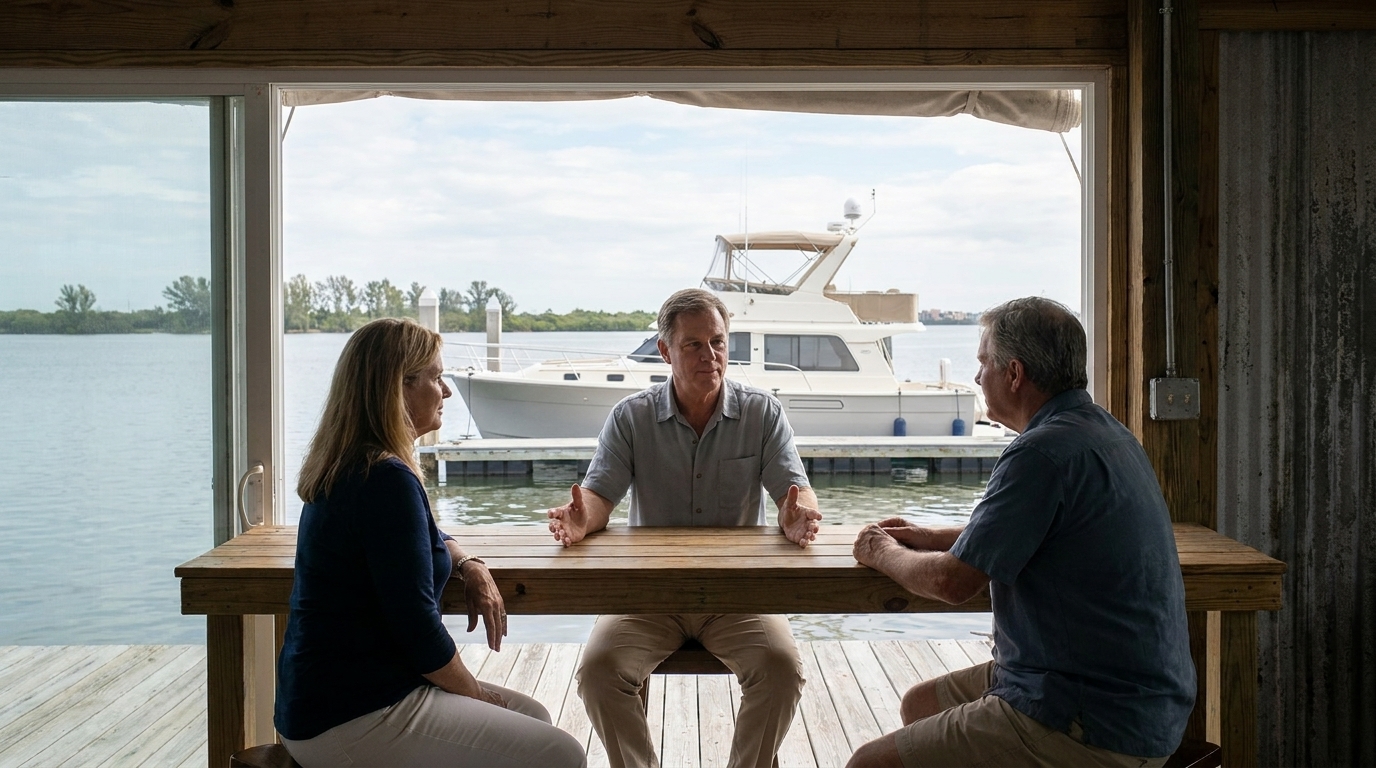
For boat owners in Saint Petersburg, FL, selling to a dealer is faster and simpler but typically produces a lower gross number; selling privately can produce a higher gross but requires the seller to do the marketing, screening, sea trials, and paperwork. The right choice turns on how the dealer's written cash offer compares to the seller's realistic net from a private sale after time, costs, and risk — not to the asking price a private seller hopes to post.
That distinction — offer versus net — is where most Saint Petersburg sellers trip up. A $90,000 private listing is not a $90,000 outcome, and a dealer's $75,000 cash offer is not automatically worse than it looks. This guide walks through what each path actually produces on the Gulf Coast, the Florida-specific rules that shape the math, and how to compare the two before signing anything.
What does a dealer actually offer for a boat in Saint Petersburg, FL?
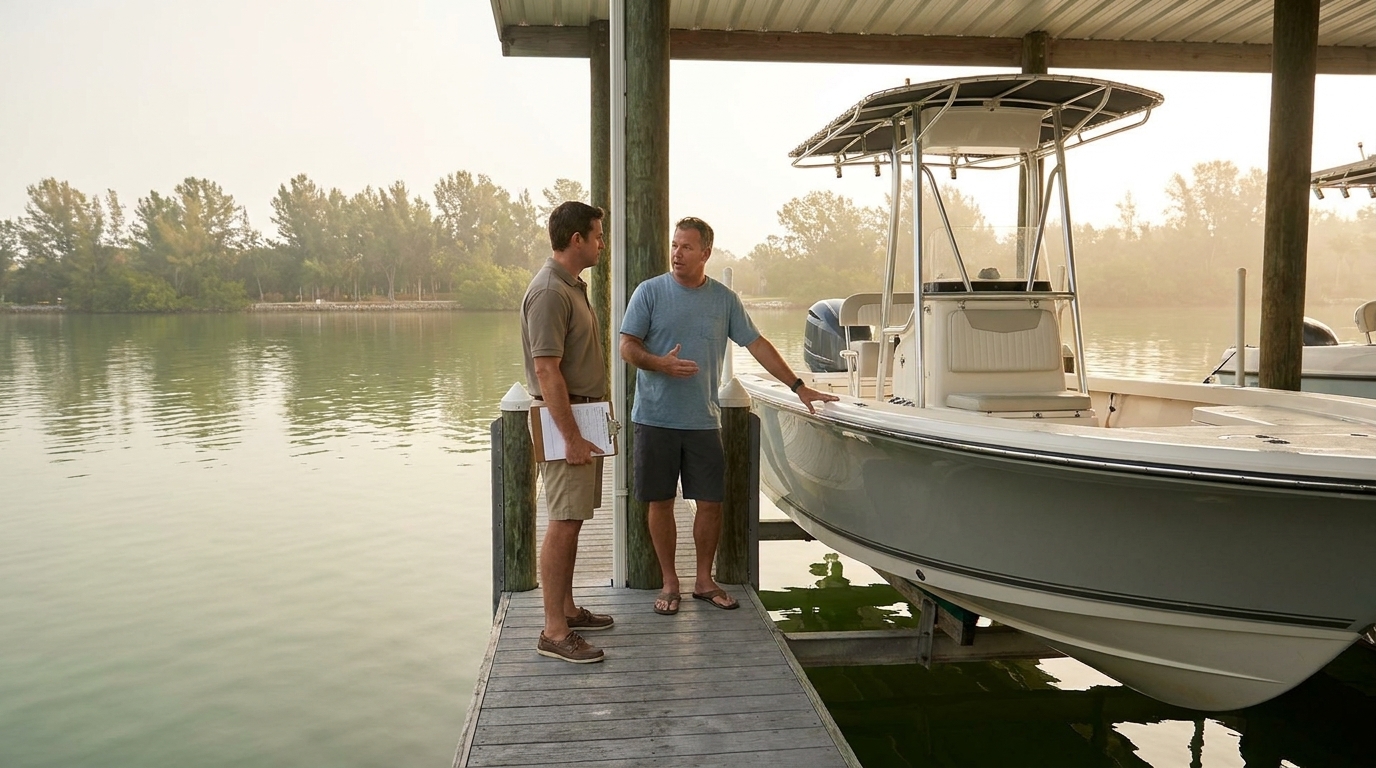
A Saint Petersburg dealer's offer is a written cash or trade-in figure based on the boat's year, make, model, engine hours, condition, equipment, and resale marketability — with room built in for reconditioning, holding costs, and the dealer's margin. Expect the number to land below private-party asking prices but above a quick wholesale flip, and expect it in writing after an inspection.
Dealer offers in this market generally come in one of three forms: an outright cash purchase, a trade-in allowance against another boat, and a consignment arrangement where the dealer markets the boat for a commission. These are different transactions with different economics. A trade-in allowance is not interchangeable with a cash offer — a higher trade number can be offset by a smaller discount on the next boat, so the only honest comparison is the difference between the two sides of the deal.
Worldwide Yacht Sales, a family-owned brokerage that has been serving yacht buyers and sellers for nearly four decades from Treasure Island just across the bay from Saint Petersburg, is one of the Gulf Coast outfits sellers often approach for a written valuation and a consignment conversation. The brokerage was founded in 1989 by Bill Warner, and in 2022 Traver Smith purchased the business from Warner, who remained actively involved as an advisor.
What will a seller actually net from a private sale?
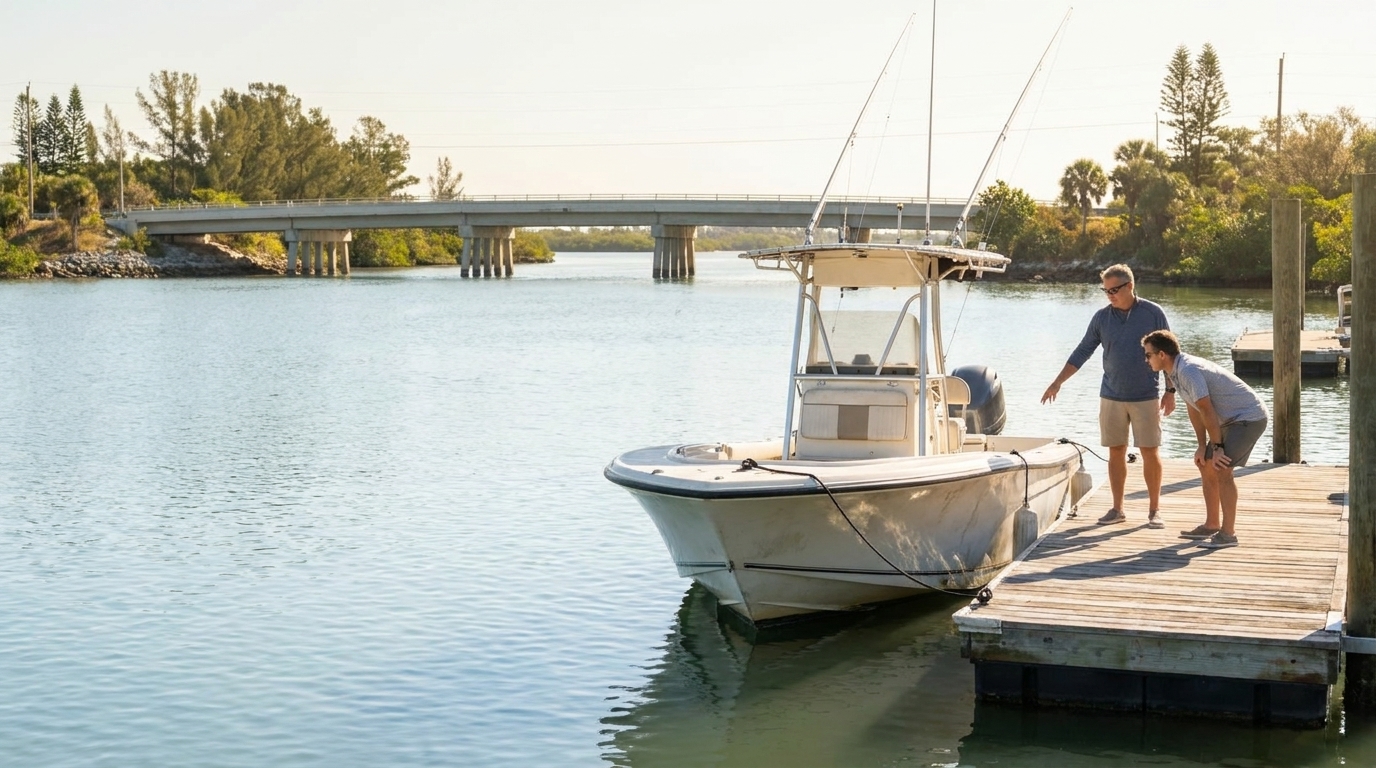
A private sale nets the final agreed price minus the seller's out-of-pocket costs: cleaning and minor repairs, a pre-sale survey if the buyer requests one, marketing and photography, dockage while the boat sits unsold, and the seller's own time fielding inquiries and running sea trials. For many sellers in the area, the net lands meaningfully below the listing price once those costs and concessions are counted.
The biggest unknowns are time and buyer financing. A well-priced center console in the smaller size ranges can move in weeks during the Gulf Coast's November-through-April boating and snowbird season; a larger cruiser or an odd configuration can sit through a full hurricane season before the right buyer appears. Dockage at a Saint Petersburg marina, insurance, and routine maintenance all keep running while the boat is listed.
Private buyers also negotiate against the survey. A marine surveyor almost always finds something — a soft spot, a weeping seal, a tired battery bank — and the buyer uses it to shave the price or ask for repairs. Factoring a realistic concession into the expected net, not the asking number, is what separates sellers who are happy with the outcome from sellers who feel they left money on the table.
How do dealer offers and private sales compare head-to-head?
The table below maps the two paths against the dimensions that actually move the seller's net in Saint Petersburg, FL. The right column is not a dealer's offer on any specific boat — it is a realistic private-sale outcome after costs and concessions, which is the apples-to-apples comparison a seller should run.
| Dimension | Dealer offer (cash or trade) | Private sale (net) |
|---|---|---|
| Gross price | Lower — accounts for reconditioning, holding, resale risk | Higher — closer to retail asking, minus negotiation |
| Time to close | Days to a few weeks after inspection | Weeks to months, depending on size and season |
| Seller workload | One inspection, one signature packet | Listing, showings, sea trials, survey management |
| Paperwork | Dealer prepares title transfer and bill of sale | Seller prepares bill of sale, files Notice of Sale within 30 days |
| Payment risk | Low — dealer check or wire at closing | Seller must verify funds before releasing title |
| Post-sale liability | Transfers to dealer | Seller must document the sale to end registration liability |
Consignment sits between the two. The dealer markets the boat, handles showings and paperwork, and takes a commission on the sale — the seller gets closer to retail without doing the retail work, but accepts a longer timeline than a straight cash buyout.
What Florida rules affect the sale in Saint Petersburg, FL?
Three Florida rules shape every boat sale on this coast: the sales-tax treatment of the "vessel rig," the seller's duty to report the sale, and the dealer's role in title transfer when a trade-in is involved. Getting these right protects the seller from lingering tax and registration liability after the boat leaves the dock.
On tax: Florida's vessel-title statute treats a taxable transfer between individuals as covering the complete rig — boat, motor, trailer, and accessories — unless the seller provides a properly executed, itemized bill of sale separating those components, in which case only the vessel and trailer are subject to sales tax. The Florida Department of Revenue sets state sales and use tax at 6% plus any applicable discretionary county surtax, with a maximum combined tax on a boat or vessel of $18,000. The buyer's exact tax exposure depends on the transaction and applicable local rules.
On reporting: Florida requires a seller to report a vessel sale within 30 days, per Florida tax-collector guidance, which can be done using the title's notice section or the appropriate HSMV form. On dealer transactions, tax-collector guidance indicates the dealer handles the transfer paperwork for a trade-in, including the process for both electronic and paper titles — a real convenience when the seller is rolling equity into another boat. Sellers should confirm the current process with Pinellas County before closing.
How should a Saint Petersburg, FL seller decide?
The decision comes down to a simple comparison: the dealer's written cash offer versus the seller's expected private-sale net after costs, concessions, and holding time. If those two numbers land within a few thousand dollars of each other on a mid-size boat, the dealer path almost always wins on a risk-adjusted basis. If the gap is wider and the seller has months of runway, private can be worth the work.
Season matters on the Gulf Coast. A boat listed in October or November, ahead of the snowbird influx and well before the June-to-November hurricane season closes buyers' wallets, has a materially better chance of a quick private sale than the same boat listed in late summer. Sellers who need the boat gone before hurricane season — or before an insurance renewal with a tight named-storm plan — usually find the dealer offer more attractive than the spreadsheet first suggests.
From Worldwide Yacht Sales's yacht selling team: Ask the seller what they actually spent keeping the boat up last year and what's coming due soon. Ask whether an insurer will write the boat for you in Florida and what the hurricane plan has to include. And ask where the boat will be taxed and registered, because that can change what you pay at closing.
Sellers who want a brokerage to market the boat rather than buy it outright should ask about consignment terms specifically — commission, listing duration, marketing scope, and who pays dockage during the listing. Worldwide Yacht Sales describes its approach to sellers as providing top-tier marketing for every listing, which is the lever that moves consignment results above a straight cash buyout.
Worked with Brandon to sell my Sea Hunt Gamefish25. He did a fantastic job and got it sold quickly. When it was time for closing Cynde made sure all the documentation was in perfect order. Communication throughout the process was excellent! I would definitely use them again and highly remomend them to anyone looking to sell or buy a boat.
Frequently asked questions
Is it better to sell a boat to a dealer or privately in Saint Petersburg, FL?
It depends on the gap between the dealer's written offer and the seller's realistic private-sale net. Dealer sales produce lower gross prices but close in days with no marketing, dockage, or buyer-screening cost. Private sales can produce higher gross prices but require weeks or months and absorb holding costs. For sellers who need speed or certainty, the dealer path usually wins on a risk-adjusted basis.
How much less will a dealer offer compared to a private sale?
There is no universal percentage because the gap depends on the boat's year, model, engine hours, condition, and current demand. The honest comparison is the dealer's written offer against the private asking price minus negotiation, survey concessions, marketing, dockage, and the seller's time. Sellers who run that full comparison often find the gap smaller than headline asking prices suggest.
How long does a private boat sale take in Saint Petersburg?
Well-priced mid-size boats listed during the November-through-April boating and snowbird season can move in a few weeks. Larger cruisers, unusual configurations, or boats listed in the summer hurricane-season lull can sit for several months. Dealer cash purchases, by contrast, typically close within days of an accepted written offer and inspection.
Does Florida require the seller to report a boat sale?
Yes. Florida tax-collector guidance indicates a seller should submit the Notice of Sale within 30 days of a vessel sale, using the title's notice section or the appropriate HSMV form. Filing on time ends the seller's registration liability for the boat. Sellers should confirm the current Pinellas County process before closing.
How is Florida sales tax calculated on a private boat sale?
The Florida Department of Revenue sets state sales and use tax at 6% plus any applicable discretionary county surtax, with a maximum combined tax on a boat or vessel of $18,000. Florida's vessel-title statute treats the transfer as covering the full rig unless a properly itemized bill of sale separates boat, motor, trailer, and accessories — in which case only the vessel and trailer are taxed.
What is the difference between a dealer cash offer and consignment?
A cash offer is an outright purchase: the dealer buys the boat and takes title, and the seller walks away with a check. Consignment is a marketing arrangement where the dealer lists and sells the boat on the owner's behalf for a commission, typically producing a higher net price than a cash buyout but over a longer timeline. Sellers should confirm commission, listing duration, and dockage responsibility in writing.
The bottom line for Saint Petersburg, FL boat sellers
The right answer is whichever path produces the better risk-adjusted net — and the only way to know is to get a written dealer offer, build an honest private-sale projection with costs and concessions included, and compare them side by side before listing. Sellers who skip the written offer and chase an asking price often end up with less than the dealer would have paid, after a longer wait.
Readers in Saint Petersburg, FL who want this handled professionally — whether that means a written valuation, a cash offer, or a consignment listing with full marketing support — can reach Worldwide Yacht Sales at (727) 346-8229 or https://worldwideyachtsalesinc.com to get started.