What Does a Ship Broker Do for Buyers in Tacoma?
A clear guide to what ship and yacht brokers do for buyers in Tacoma, WA — services, costs, local factors, and how to decide if hiring one is worth it.
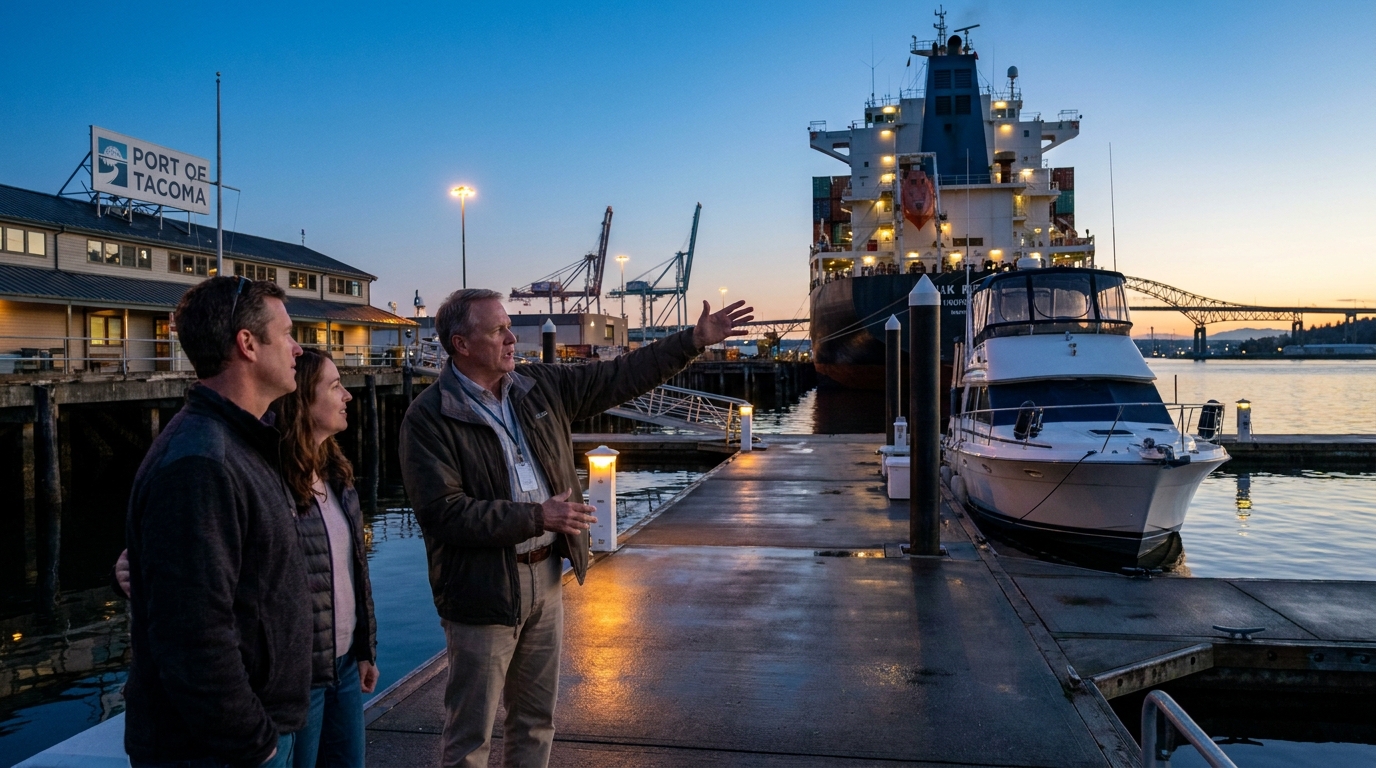
Anyone shopping for a vessel in the South Puget Sound — whether a cruising sailboat for weekend runs out to Gig Harbor or a working tug bound for the Port of Tacoma — quickly discovers that buying a boat is not like buying a car. Listings are scattered, condition varies wildly, documentation can be murky, and the financial stakes are high enough that mistakes are expensive. That is the gap a ship broker fills, and in a market like Tacoma, where recreational and commercial maritime activity overlap, the buyer-side broker plays a particularly useful role.
This guide explains what a ship broker actually does for buyers in Tacoma, how broker compensation typically works, how brokers differ from dealers, and when hiring one is worth it.
What a Ship Broker Does for Buyers
A buyer's broker represents the purchaser's interests throughout a vessel acquisition. Unlike a listing broker — who is contractually obligated to the seller — a buyer's broker is focused on finding the right vessel, validating its condition, and negotiating terms that protect the buyer. In practice, that work breaks down into a handful of core services.
Vessel Search and Market Access
Brokers tap into multiple listing services and national broker networks that aren't always visible to retail buyers. A family-owned brokerage like Worldwide Yacht Sales — founded in 1989 and serving clients across the globe — routinely runs national searches across broker inventories to surface candidates that match a buyer's use case, budget, and target moorage. That kind of broad market access, combined with co-brokerage relationships, widens the search well beyond what a buyer would find on public marketplaces alone.
Survey and Haul-Out Coordination
Once a candidate vessel is identified, the broker coordinates a marine survey, sea trial, and haul-out. A buyer's broker schedules the survey, arranges yard time, attends the inspection, and helps the buyer interpret the findings — including which deficiencies justify renegotiation and which are normal wear. Any purchase offer should be contingent on satisfactory survey results and title review.
Negotiation, Offers, and Contracts
Brokers draft and negotiate the purchase and sale agreement, manage the deposit in escrow, and structure contingencies around survey, financing, and clean title. Washington contract law governs disclosure standards, deposit handling, and remedies for breach, and a broker familiar with state-specific transaction structuring keeps those mechanics on the rails.
Title, Documentation, and Closing
Vessels in Washington may be either U.S. Coast Guard documented or registered through the Washington State Department of Licensing. A buyer's broker coordinates lien and title searches, confirms documentation is transferable, and handles the paperwork required for a clean transfer. For cross-border deals involving Oregon or Canadian sellers, the broker also coordinates with tax and documentation professionals on Washington sales and use tax implications. Buyers should confirm current registration, tax, and documentation thresholds with the relevant Washington agency or a maritime attorney before closing.
Logistics After the Sale
Good brokers don't disappear at closing. Delivery coordination, shipping arrangements, lender and insurer liaison, and referrals to local yards and vendors are part of the package. In a market with limited moorage and waiting lists for larger slips across South Sound marinas, brokers who know which facilities have availability can save buyers months of scrambling.
Yacht Broker vs. Boat Dealer: What's the Difference?
The distinction matters because the two operate under different incentives. A boat dealer sells inventory they own or represent on consignment, typically focused on new builds or a curated set of used vessels in a specific brand family. Their job is to move that inventory. A yacht broker, by contrast, works on a transactional basis — either listing a vessel for a seller or representing a buyer searching the broader market.
For a buyer in Tacoma weighing a used cruising trawler, a commercial workboat, or a specialty sailing yacht, the broker model usually offers wider selection and clearer representation. The buyer's broker has no inventory bias; their compensation depends on closing a deal the buyer is satisfied with, not on clearing a specific hull from a dealer lot.
How Buyer's Broker Compensation Works
One of the most common questions from first-time buyers is whether hiring a broker adds cost. In most yacht transactions, it does not — at least not directly. Buyer's broker compensation is typically drawn from the seller's listing commission, split between the listing broker and the buyer's broker. Buyers generally do not pay broker fees out of pocket. No Tacoma-specific commission rates or buyer-broker fee structures were substantiated in available sources; the exact terms must be confirmed in the written brokerage agreement.
That structure matters: it means a buyer in Tacoma can engage professional representation without writing a separate check for the service. Worldwide Yacht Sales handles transactions from consultation through delivery, offering personalized searches and white-glove delivery as part of its buying services.
Local Factors That Shape the Tacoma Market
Tacoma functions less as a standalone micro-market and more as the southern anchor of the Seattle–Tacoma Puget Sound marine economy. Brokers active here typically cover Tacoma, Gig Harbor, Olympia, and Seattle in parallel, which gives buyers access to a wider inventory pool than the city itself would suggest. The regional search area routinely extends to Seattle, Blaine, and other Puget Sound waterfront communities, so buyers should budget for travel, haul-out or survey logistics, and potential delivery or relocation voyages.
Several local considerations shape transactions in this market:
- Recreational market concentration. The active brokerage market in Tacoma is recreational in nature, with locally advertised vessels ranging from small trailerable boats in the hundreds to thousands of dollars up to larger motor yachts listed in the low-to-mid six figures. The Port of Tacoma is a major commercial port, but available evidence does not establish a distinct local market for commercial ship sales; buyers seeking commercial vessels should confirm broker expertise in that specific segment.
- Seasonality. Pacific Northwest seasonality concentrates recreational boating activity, sea trials, and vessel viewings in the drier summer months, while the wet season complicates scheduling and highlights a vessel's weather-related condition issues. Buyers should plan survey and haul-out logistics accordingly.
- Moorage scarcity. Larger slips in South Sound marinas often carry waiting lists. A broker familiar with moorage availability — including facilities in the Foss Waterway — is a meaningful differentiator, particularly for buyers acquiring vessels over 40 feet. Tacoma-area marinas have participated in Clean Marina certifications, indicating attention to environmental practices and moorage quality that buyers should evaluate.
- Cross-border tax structure. Washington sales and use tax, combined with Oregon and Canadian buyer/seller scenarios, makes deal structuring more involved than a simple in-state purchase.
- Government surplus channel. Federal surplus property — including vessels — may be available through government surplus disposal channels, representing a distinct acquisition channel for commercially oriented buyers. These as-is/where-is sales operate under federal surplus disposal rules and represent a distinct acquisition channel for commercially oriented buyers.
Is It Worth Hiring a Yacht Broker to Buy a Boat?
For most buyers in Tacoma, the answer is yes — particularly because the cost is generally absorbed by the seller's commission. The value shows up in market access, survey coordination, contract protections, and post-sale logistics. Buyers acquiring vessels under roughly 25 feet or buying from a known seller may find the math less compelling, but for any meaningful capital outlay, broker representation is the standard approach.
Worldwide Yacht Sales has earned a 4.8-star rating from 28 Google reviews as of May 2026. Customers consistently highlight the team's expertise in remote and long-distance transactions — a directly relevant skill when the right vessel may be moored hours from Tacoma. One customer wrote: "Traver's responsiveness, honesty, and hand-holding throughout made the experience easy... his informative, patient, no pressure demeanor made this nervous novice's experience truly enjoyable." Another noted: "I've been buying and selling boats from these guys for 20 years. Among the best in the industry. They're fair, honest, by the book and not greedy."
Frequently Asked Questions
Do I pay a buyer's broker directly?
Typically no. Compensation is drawn from the seller's listing commission, split between the listing broker and the buyer's broker. The exact terms must be confirmed in your written brokerage agreement, as no standard rate was substantiated for the Tacoma market specifically.
How much does a marine survey cost?
Pricing varies by surveyor and scope; confirm current rates directly with the surveyor you engage. The broker coordinates the survey but the buyer pays the surveyor directly. Any purchase offer should be contingent on satisfactory survey results.
Can a broker help with commercial vessels?
Some brokers active in the South Puget Sound handle tugs, workboats, and fishing vessels in addition to recreational yachts, and coordinate the Coast Guard documentation those vessels require. However, commercial ship brokerage is a distinct market; confirm a prospective broker's specific experience in that segment before engaging.
What about government surplus vessels?
Federal surplus vessel disposals follow a different process than private-market brokerage and operate under federal rules. These are as-is/where-is transactions under federal rules and follow a different process than private-market brokerage.
Do I need a written agreement to work with a buyer's broker in Washington?
Yes. Washington law requires buyer representation agreements to be in writing and to specify the scope of services, exclusivity terms, and compensation arrangements. Brokers owe statutory duties including loyalty, confidentiality, disclosure, and reasonable care. Any dual or designated agency conflict must also be disclosed in writing. Review the agreement carefully before signing.
How does Pacific Northwest seasonality affect buying a boat in Tacoma?
Recreational boating activity, sea trials, and vessel viewings concentrate in the drier summer months, making that window the most practical time to complete a thorough inspection. The wet season can complicate scheduling and may reveal weather-related condition issues that are less visible in summer. A knowledgeable broker will help you time the process and interpret findings in context.
Working With a Broker in Tacoma
Buyers who want a professional working their side of the transaction — from search through closing — can contact Worldwide Yacht Sales at worldwideyachtsalesinc.com to discuss a specific vessel search or representation engagement in the Tacoma and broader South Puget Sound market. The right broker shortens the path from listing to closing and reduces the chance of costly surprises along the way.
"