What Happens During a Yacht Sea Trial — and Why It Matters
A clear, expert explainer on what a yacht sea trial is, what to expect on the water, and why it matters when buying a yacht in Naples, FL.
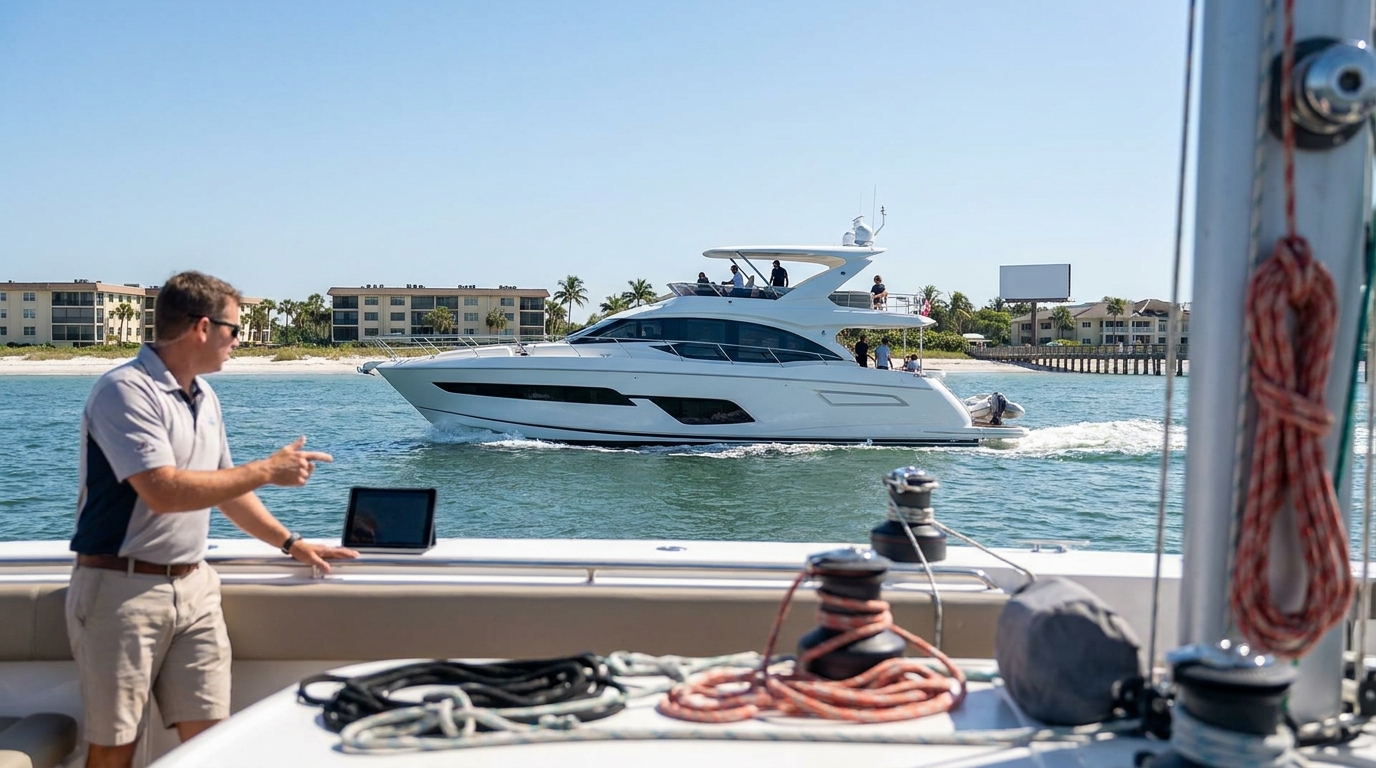
You've found her. The lines are right, the layout suits your life, and the survey report is on its way. Before you sign the closing papers, one moment still stands between you and ownership: the sea trial. It's the day the yacht stops being a listing and starts being a boat you're actually testing under her own power.
For buyers new to the process, the sea trial can feel mysterious. It shouldn't. Done well, it's the most revealing hour or two of the entire transaction — the difference between a smooth voyage and a costly surprise.
What Is a Sea Trial When Buying a Yacht?
A sea trial is an on-water performance test of the yacht you intend to purchase, conducted before closing and typically alongside — or immediately before — the marine survey. Think of it as a working demonstration: engines under load, systems live, hull moving through real Gulf chop.
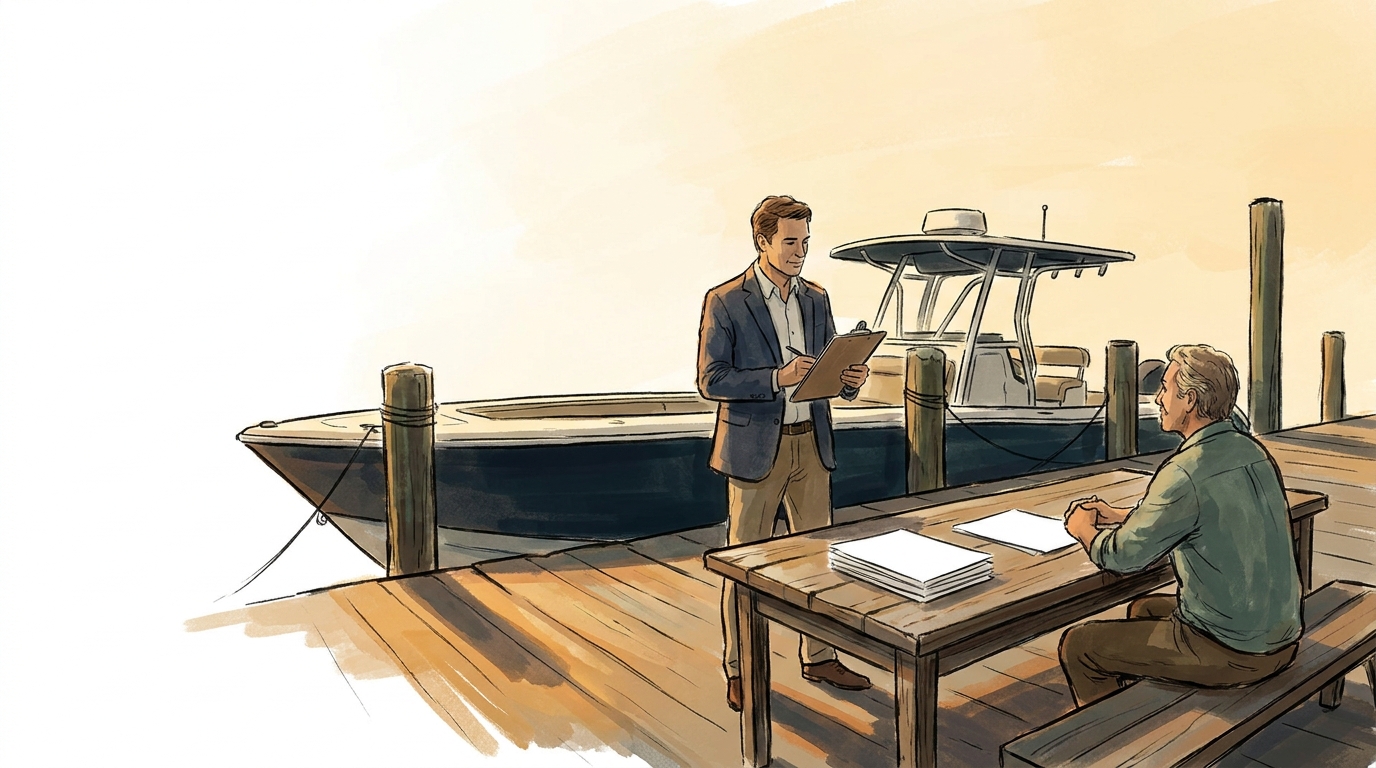
The seller (or their broker) captains the vessel. The buyer, the buyer's broker, and often the marine surveyor come aboard as observers. You're not there to drive. You're there to watch, listen, and take notes.
In Naples, FL, most sea trials launch from marinas along Naples Bay or the Gordon River, running out through Gordon Pass into the Gulf. The route matters — you want open water deep enough to push the engines, but also protected water for slow-speed maneuvering tests.
How Does a Sea Trial Work, Step by Step?
The sequence is fairly standard across brokerages, though the details shift with the size and type of yacht.
1. Cold Start and Dockside Checks
Before lines come off, the surveyor confirms that engines start cold — a critical tell. A yacht that's been idling for twenty minutes before you arrive is hiding something. Batteries, bilge pumps, gauges, and electronics get a first look here.
2. Departure and Low-Speed Handling
Leaving the slip, the captain demonstrates thruster response, transmission engagement, and steering at idle. In tight Naples marinas, this segment tells you a lot about how the boat behaves in real docking conditions.
3. Cruise and Wide-Open Throttle
Once clear of no-wake zones, the yacht is brought up through her RPM range. The surveyor logs oil pressure, coolant temperature, fuel burn, and — most importantly — whether the engines reach their rated wide-open-throttle RPM. A diesel that falls 200 RPM short of spec is telling you something is wrong: fouled bottom, worn injectors, tired turbos, or overloaded displacement.
4. Maneuvering Tests
Hard turns port and starboard. Crash stops. Backing down. On sportfish and express cruisers, the captain may run a few S-turns to check tracking and list.
5. Systems Under Load
While underway, the generator runs, the air conditioning cycles, the watermaker fires, and electronics stay live. You want every system exercised while the boat is working, not just at the dock.
6. Return and Post-Run Inspection
Back at the slip, the surveyor checks engine rooms for leaks, unusual heat, or fresh fluids that weren't there before. This post-run look is often where problems reveal themselves.
Sea Trial Checklist: What to Watch For
Bring a notebook. Or better, let your broker and surveyor bring the checklist while you focus on how the yacht feels. Key items to observe:
- Engine performance: Does she hit rated RPM? Any smoke at WOT? Temperature stable?
- Vibration and noise: Excessive shaking at cruise speed can signal shaft, prop, or cutlass bearing issues.
- Steering and autopilot: Responsive, centered, no hydraulic groan.
- Electronics: Radar, chartplotter, VHF, AIS — all functional underway, not just powered on.
- HVAC and refrigeration: Cooling properly with the sun beating down.
- Bilges: Dry, or wet in ways that make sense.
- Ride quality: How does she handle the Gulf's typical 1–2 foot chop? Does she pound, or does she settle?
Yacht Survey and Sea Trial: How They Fit Together
The sea trial and marine survey are separate inspections, but they're almost always scheduled back-to-back. The out-of-water survey — hull, running gear, moisture readings — happens on the hard at a nearby yard. The in-water portion and the sea trial happen the same day or the day after.
In Florida, yacht purchases are typically written with a satisfactory survey and sea trial as a contract contingency. If the results reveal material issues, you have leverage: renegotiate the price, require repairs, or walk away with your deposit. This is why skipping the sea trial — even on a boat that looks pristine — is almost never a wise call.
Florida also charges sales tax on vessel purchases, currently capped at $18,000 for boats, and buyers are responsible for registration and titling through the Florida Department of Highway Safety and Motor Vehicles. Your broker should walk you through the paperwork so nothing stalls after closing.
Why Naples Sea Trials Have Their Own Character
Naples is a serious yachting market with its own rhythms. Sea trials here are best scheduled outside of peak snowbird months when marina traffic is heaviest, and well ahead of hurricane season — insurance binders and haul-out availability tighten considerably from June through November.
The Gulf's shallow, sandy bottom near Gordon Pass means bottom fouling can be aggressive; a boat that's been sitting for months in a Naples slip may not perform to spec until she's cleaned. A good broker will know this and will insist on a recent bottom clean before trial — or will factor a slow WOT reading into the negotiation.
Frequently Asked Questions
Who pays for the sea trial?
The buyer typically pays for fuel, the surveyor's fee, and the haul-out. The seller provides the boat, the captain, and the crew.
How long does a yacht sea trial take?
Plan on two to four hours on the water for most cruisers and sportfish under 60 feet. Larger yachts and multi-engine setups can run longer.
Can I back out after the sea trial?
Yes, if your purchase agreement includes a survey and sea trial contingency — which it should. You generally have a defined window to accept the vessel, reject it, or submit a request for concessions.
Should I attend the sea trial in person?
Whenever possible, yes. Remote purchases are common — Worldwide Yacht Sales has handled plenty of them, including cross-country deliveries — but nothing replaces feeling the boat run. One recent reviewer described the remote process as "easy" thanks to a broker's "responsiveness, honesty, and hand-holding throughout," which is the standard to look for if you can't be there yourself.
The Bottom Line
A sea trial is where a yacht purchase becomes real. It's the last, best chance to confirm that what you're buying matches what you've been sold — and it's an experience that rewards preparation, a sharp surveyor, and a broker who knows the local water.
Buyers in Naples, FL who want an experienced hand guiding the survey-and-sea-trial process can reach the team at Worldwide Yacht Sales through worldwideyachtsalesinc.com. With a 4.8★ rating built on long-term client relationships and full-service support from offer through closing, they're a sensible starting point for anyone ready to set sail on their next yacht.