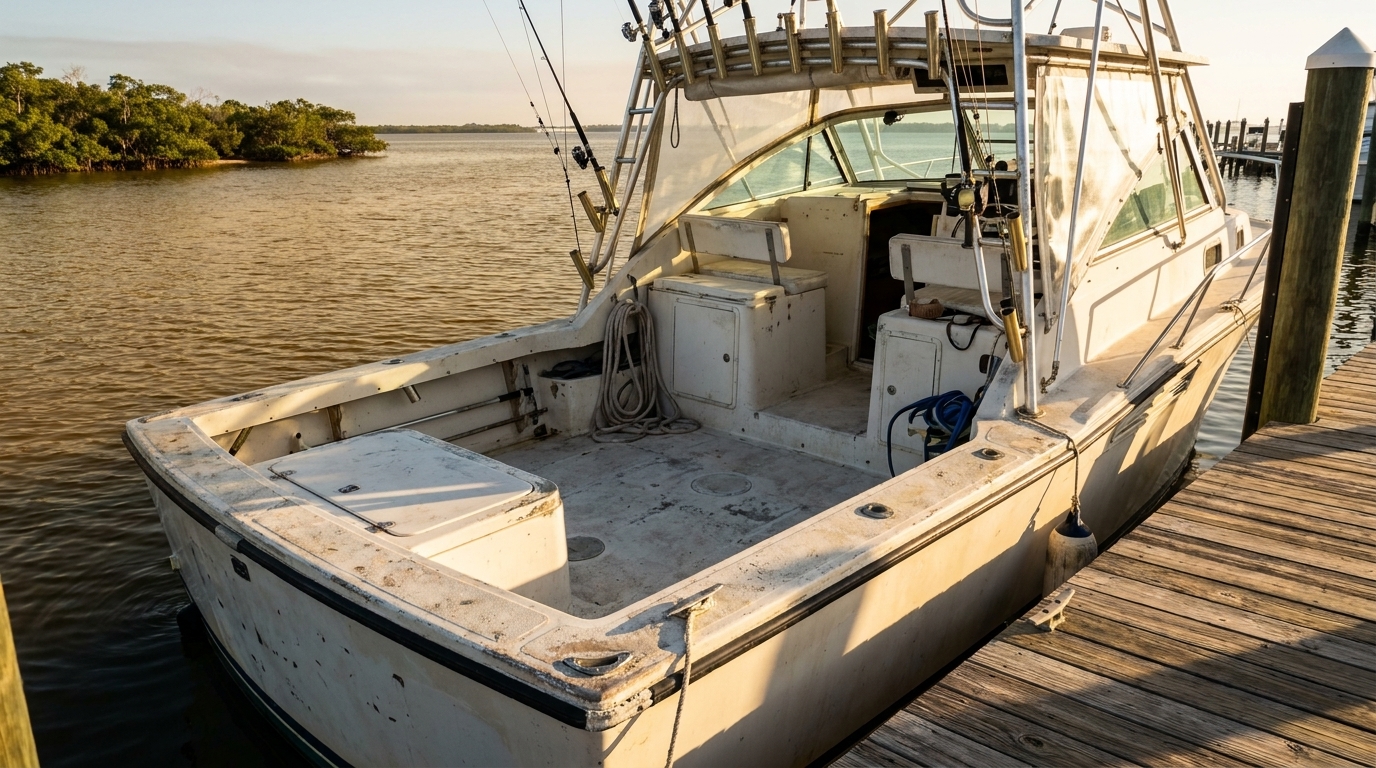
Yacht Broker for Relocation Buyers in Treasure Island, FL
Relocating and buying a boat in Treasure Island? Learn what delay costs on survey, insurance, slips, and registration — and when waiting is right.
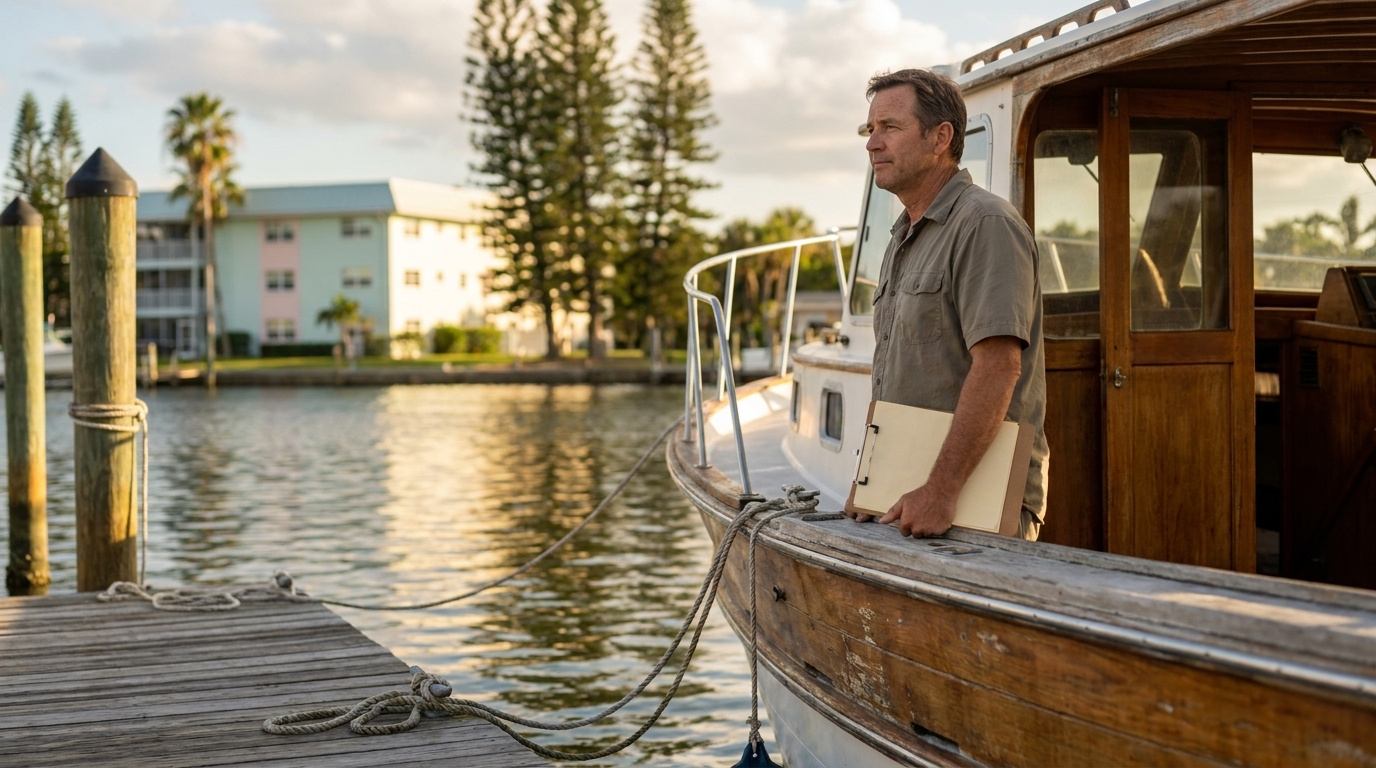
Relocation buyers moving to Treasure Island who delay engaging a yacht broker typically pay for the wait in four currencies: lost slip availability, tighter insurance binding windows as hurricane season approaches, compressed survey and sea-trial scheduling, and shrinking inventory in the price band they actually want. Engaging a buyer's broker early — before the moving truck is loaded — preserves optionality on all four. Waiting until arrival often means accepting the boat that is available rather than the boat that fits.
What does waiting actually cost a relocation buyer in Treasure Island?
Waiting costs relocation buyers access, not just price. In Treasure Island, delay typically means slip waitlists at the marinas closest to Gulf passes, insurance underwriters that pause new bindings as named storms approach, and surveyors booked out past the point where a seller will hold a boat. Price pressure is secondary; availability is the real meter running.
Worldwide Yacht Sales, headquartered at 12781 Kingfish Drive in Treasure Island, works with relocation buyers who are often shopping from another state months before they physically arrive. The barrier-island geography — Gulf of Mexico on one side, Boca Ciega Bay on the other — means a boat that fits one buyer's berth and route may be wrong for another a mile away because of draft or bridge clearance. That fit question is harder to answer under time pressure.
When does delay become materially worse?
Delay becomes materially worse at three inflection points: the start of Atlantic hurricane season on June 1, the arrival of winter visitors from roughly November through March, and the 30-day post-purchase registration window required by state law. Each one narrows the buyer's options in a different way, and they can overlap for anyone closing in late spring or early fall.
Hurricane season: June 1 to November 30
Atlantic hurricane season runs June 1 through November 30, which affects insurance binding, haul-out availability, and marina named-storm policies. Underwriters commonly stop binding new policies once a named storm enters a defined cone, so a buyer who waits until a system is forming may find coverage impossible to place that week — and no lender will fund without insurance.
Peak-season congestion: winter and early spring
Winter and early spring are high-traffic tourist periods in Treasure Island, increasing marina congestion, launch-queue wait times, and competition for available slips or storage. A buyer who finalizes a purchase in January without a confirmed berth may end up storing the boat well inland until spring, paying twice for the privilege.
The 30-day registration clock
All motorized vessels and non-motorized vessels 16 feet or longer must be registered through the local Tax Collector's Office within 30 days of purchase. A 90-day temporary operating exemption lets new purchasers operate while carrying a qualifying bill of sale aboard, but the underlying registration deadline still applies. Relocation buyers who close out of state and then move need to coordinate titling, state registration, and — for federally documented vessels — the state validation decal displayed on the port side.
How should the Florida relocation boat buying process actually run?
The process runs cleanest in roughly this order: engage a buyer's broker, define the vessel profile against the intended berth, inspect listings remotely, travel for sea trial and survey, close, then register. Each step has a Treasure Island–specific wrinkle, and sequencing them wrong is where relocation buyers lose weeks.
A buyer's broker handles the search, coordinates the survey and sea trial, and manages closing paperwork across state lines. Worldwide Yacht Sales was founded in 1989 by Bill Warner and has been serving yacht buyers and sellers for nearly four decades, which is the kind of continuity relocation buyers lean on when they cannot physically walk a dock.
What does an out-of-state yacht purchase in Treasure Island involve?
An out-of-state purchase involves three parallel tracks: the transaction itself (offer, survey, sea trial, closing), the tax and title transfer, and the operational setup (slip, insurance, boating safety card). State sales/use tax is 6%, with a possible county discretionary surtax applied to the first $5,000 of taxable price and an $18,000 cap on combined tax collected on a boat sale or use. Verify current treatment with the state revenue department before closing.
Brokerage activity for pleasure vessels generally over 32 feet is regulated under the state Yacht and Ship Brokers' Act (Chapter 326); broker and salesperson licensing status can be verified through the state's business regulation department. Relocation buyers should confirm their broker's status before signing a listing or buyer's agency agreement.
What should buyers budget beyond the sticker price?
Total acquisition cost should include survey and engine inspection fees, insurance, sales/use tax, title and registration fees, berth or storage costs, and any immediate maintenance or refit work. The U.S. used-boat market bands below are planning guideposts only — not local appraisals — and no verified Treasure Island–specific transaction dataset was available. Buyers should request recent closed-sale comparables for the same make, model, year, engine configuration, and condition.
| Vessel type (used) | Typical U.S. price band | Relocation-buyer notes |
|---|---|---|
| Small runabout, skiff, or simple fishing boat | $10,000 - $50,000 | Trailerable; registration and safety card still required |
| Mid-sized center-console or family cruiser | $50,000 - $200,000 | Draft and bridge clearance matter for Boca Ciega Bay routes |
| Larger powerboat or cruising sailboat | $200,000 - $750,000+ | Slip availability near Gulf passes drives timing |
| Larger motor yacht or premium yacht | $750,000+ | Named-storm plan and haul-out contract often required by insurer |
When is waiting actually the right call?
Waiting is the right call in two scenarios: when the buyer has not yet completed the state-approved boating safety course required for operators born on or after January 1, 1988, and when the intended berth, route, or storage plan has not been verified for the specific vessel. Buying a boat that cannot legally be operated by its owner, or that will not fit under the bridges between its slip and open water, is worse than waiting a month.
Persons born on or after January 1, 1988 must complete an approved boating safety course and obtain a Boating Safety Education Identification Card to operate a motorboat of 10 horsepower or greater. Bridge clearance figures and channel depths for specific routes in and around Treasure Island were not established by available sources and must be verified independently before purchase.
What does working with a buyer's broker look like in practice?
A buyer's broker represents the buyer's interests through search, survey, sea trial, and closing — not the seller's. Worldwide Yacht Sales describes itself as a family-owned business headquartered in Florida and serving clients across the globe, which is the operating model relocation buyers need: a local presence for dock walks and surveys, with the comfort of remote communication while the buyer is still finishing a job or selling a house elsewhere.
When people do what they say and follow through, I’m usually surprised because it’s so uncommon. These guys were great. I wish all businesses would operate like they do. They really showed up when someone else didn’t follow through and I can’t say enough good about them.
Frequently asked questions
Do I need a boating license to operate a boat after moving to Treasure Island?
There is no traditional boating license, but anyone born on or after January 1, 1988 must complete a state-approved boating safety course and carry a Boating Safety Education Identification Card to operate a motorboat of 10 horsepower or greater. The card does not expire. Out-of-state equivalents may be accepted; verify with the state wildlife commission before relying on one.
How long do I have to register a boat after purchase?
All motorized vessels and non-motorized vessels 16 feet or longer must be registered through the local Tax Collector's Office within 30 days of purchase. A 90-day temporary operating exemption lets new purchasers operate while carrying a qualifying bill of sale aboard the vessel. Registration numbers must be displayed on the forward half of both sides of the vessel above the waterline.
Does U.S. Coast Guard documentation replace state registration?
No. Federally documented vessels operating in state waters must still obtain a state registration and display the validation decal on the port side. Documentation addresses federal title and mortgage recording; it does not substitute for the state registration decal required for day-to-day operation. Buyers of documented vessels should budget time for both filings.
What sales tax applies to a boat purchase?
State sales/use tax is 6%, with a possible county discretionary surtax applied to the first $5,000 of taxable price and an $18,000 cap on combined tax collected on a boat sale or use. Treatment of out-of-state purchases, trade-in credits, and documented-vessel transfers can vary; confirm the current rule with the state revenue department before closing.
Should I buy before or after I physically relocate?
Most relocation buyers benefit from starting the broker engagement and vessel-profile work before the move, then timing the survey, sea trial, and closing to the arrival window. This preserves slip and insurance options and avoids compressing survey scheduling into the first stressful week on the ground. Buying sight-unseen without a broker and surveyor is rarely the right call.
What's the biggest mistake relocation buyers make in this market?
The most common mistake is choosing a vessel before confirming the berth and the route from that berth to open water. Treasure Island sits between the Gulf of Mexico and Boca Ciega Bay, so vessel draft, bridge clearance, and channel depth on the specific route from a berth to open water are critical purchase considerations. A beautiful boat that cannot clear a fixed bridge on the way to the Gulf is not the right boat.
A practical decision rule
Relocation buyers who have a defined vessel profile, a verified berth, a completed safety card, and insurance pre-qualified should move; those missing any one of those four should pause and close that gap first. Readers in Treasure Island who want this handled professionally can reach Worldwide Yacht Sales at (727) 346-8229 or https://worldwideyachtsalesinc.com to start the conversation.