Yacht Charter vs Sales Broker in Stuart, FL
Charter brokers arrange rentals; sales brokers close ownership deals. Here's how the two roles differ for Stuart, FL buyers — and how to pick the right one.
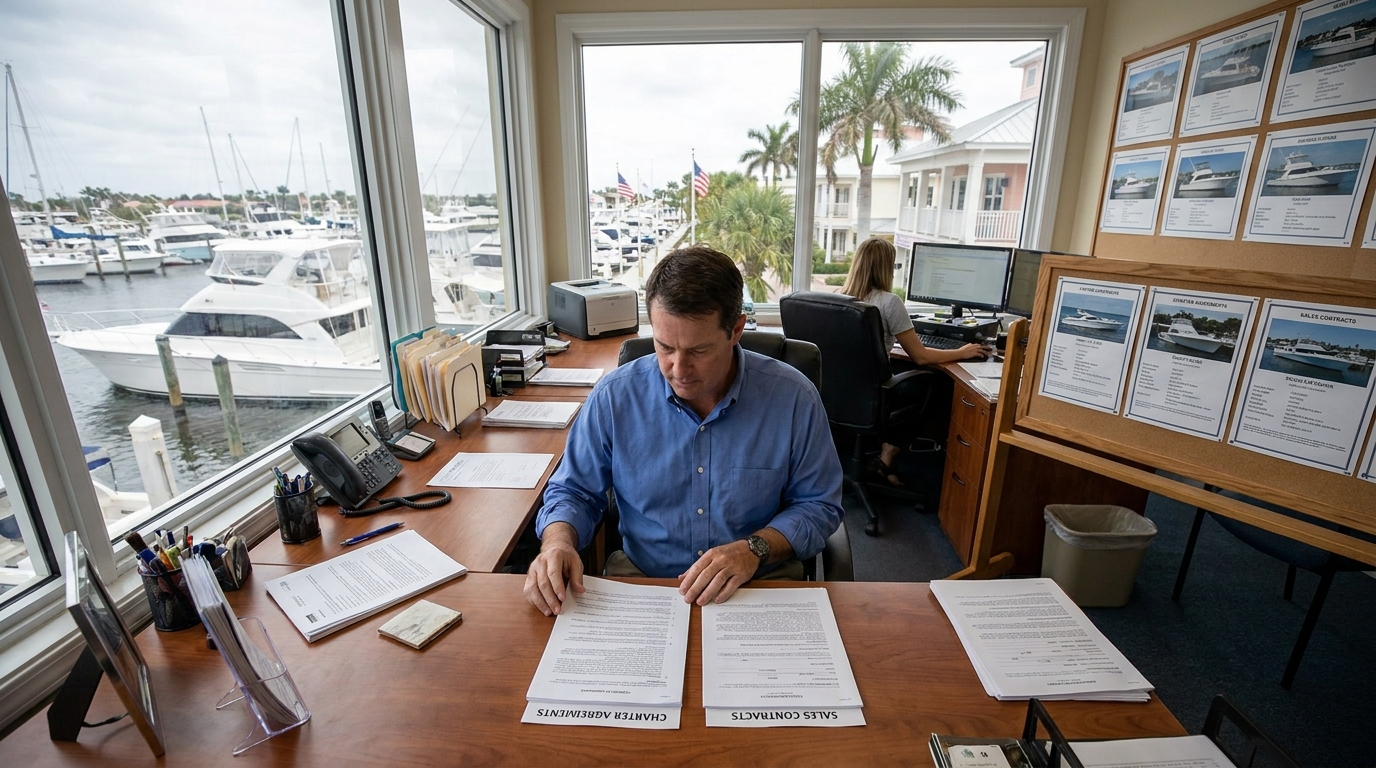
A yacht charter broker arranges short-term vessel rentals — matching clients to boats, crews, and itineraries for a defined trip. A yacht sales broker represents buyers or sellers in the ownership transfer of a vessel, handling valuation, listings, sea trials, surveys, and closing. In South Florida, the two roles use overlapping vocabulary but solve entirely different problems, and confusing them is one of the most common mistakes buyers make when they first walk into a Stuart brokerage.
What does a yacht charter broker actually do?
A yacht charter broker is a rental intermediary. They curate available vessels — typically 50 feet and up with professional crew — negotiate the charter contract, coordinate the Advance Provisioning Allowance, and manage logistics from pickup port to disembarkation. The client never takes ownership; they pay a weekly rate plus expenses and step off when the trip ends.
Their value is access and vetting: knowing which captain runs a tight galley, which boat handles a Bahamas crossing well in June chop, and which owner permits fishing off the transom.
What does a yacht sales broker do differently?
A yacht sales broker facilitates the purchase or sale of a vessel. On the buy side, that means sourcing listings, arranging showings, ordering a marine survey, coordinating sea trials, structuring the offer, and shepherding documentation through closing and Coast Guard or state titling. On the sell side, it means pricing the boat, marketing it through MLS-style networks like YachtWorld, screening buyers, and negotiating.
Firms like Worldwide Yacht Sales handle the ownership transaction end-to-end — including financing referrals, documentation, and transport — which is a fundamentally different workflow than booking a week aboard a chartered motoryacht.
How do the two roles compare side by side?
The clearest way to see the split is by transaction type, timeline, fee structure, and who pays.
| Dimension | Charter Broker | Sales Broker |
|---|---|---|
| Transaction | Short-term rental (3 days to 2+ weeks) | Ownership transfer |
| Client pays broker | No — commission from yacht | Seller pays; buyer's broker split from that |
| Typical commission | 15% of base charter rate | 10% of sale price |
| Timeline | Days to weeks to book | 30–90 days from offer to close |
| Documents involved | MYBA or AYCA charter agreement | Purchase agreement, survey, title, USCG docs |
| Post-transaction role | Ends at disembarkation | Often continues into ownership support |
Why does Stuart, FL sit at the center of both markets?
That geography — plus the Manatee Pocket's dense cluster of marinas and yards — makes it a natural staging point for both charter departures heading to the Bahamas and sales inventory moving between the Palm Beach and Fort Lauderdale markets.
The town's nickname, "Sailfish Capital of the World," also skews the sales market toward sportfish and center-console buyers, while charter demand leans motoryacht and catamaran for island itineraries. A Stuart broker who works both waterfronts sees different clients on each side of the desk, even when the boats are docked at the same marina.
Which broker does a South Florida buyer actually need?
The right broker depends on whether the goal is use or ownership. Buyers who want two weeks in the Abacos with a crew, chef, and tender should call a charter broker — ownership costs (dockage, insurance, ongoing maintenance, and hurricane-season haul-out) rarely pencil out for occasional users.
Buyers who plan to use a boat 50+ days a year, want to customize it, or view the vessel as a long-hold asset should engage a sales broker. Worldwide Yacht Sales and other established sales-side firms in the region work primarily with this second group, guiding buyers through survey findings, documentation choices (state title vs. USCG documentation), and the tax implications of Florida's sales tax cap on boat purchases — a genuine advantage over neighboring states that Stuart buyers should understand before closing.
What should Stuart buyers look for when hiring either broker?
For sales brokers specifically, ask how they handle remote buyers — a large share of Stuart inventory sells to out-of-state owners who never see the boat until delivery, and the broker's communication discipline is what makes those deals work.
Reviews are useful evidence when they describe process, not just outcome. Worldwide Yacht Sales holds a 4.8-star rating across 28 Google reviews as of May 2026, with recurring themes around remote-purchase handling and post-sale logistics. One reviewer described the broker's "informative, patient, no pressure demeanor" during a Florida-to-Rhode Island transaction — the kind of specificity worth looking for in any broker's review history, regardless of firm.
Frequently Asked Questions
Can one broker handle both charters and sales?
Some firms offer both services, but the individual brokers usually specialize. Charter work is relationship-driven with the yacht management side and requires constant knowledge of crew changes and availability calendars. Sales work is transaction-driven with heavy documentation. Buyers are generally better served by a specialist in the specific service they need rather than a generalist who does both occasionally.
Do buyers pay the yacht sales broker's commission in Florida?
Buyers should still sign a buyer-representation agreement to clarify duties, but they do not write a commission check.
Is a marine survey required to buy a yacht in Stuart, FL?
A survey is not legally required, but it is required by virtually every marine lender and insurance carrier before they will finance or bind coverage. Skipping the survey on a cash purchase is legal but almost universally advised against.
How long does a yacht sale take to close in South Florida?
Stuart-area yacht sales timelines vary, with financed or complex documented vessels typically taking longer to close than straightforward cash transactions. The main timeline drivers are survey scheduling, sea-trial weather windows, lender underwriting, and USCG documentation processing if the boat is federally documented rather than state-titled.
What is the difference between a crewed charter and a bareboat charter?
A crewed charter includes a professional captain and crew — cook, stewardess, deckhand — and is priced as an all-inclusive weekly rate plus expenses. A bareboat charter is a rental of the vessel alone; the client operates it themselves and must demonstrate the credentials the yacht owner requires. Charter brokers handle both, but crewed charters dominate the South Florida market above 50 feet.
Does Florida's sales tax cap apply to used yacht purchases?
Yes.
The bottom line for Stuart buyers
Charter brokers rent experiences; sales brokers transfer ownership. The two roles share vocabulary, licensing, and often marina space, but the workflows, fee structures, and buyer relationships are distinct — and picking the wrong specialist wastes time on both sides of the transaction. Readers in Stuart, FL who want a sales-side yacht transaction handled professionally — whether buying locally or shipping a vessel across state lines — can reach Worldwide Yacht Sales at https://worldwideyachtsalesinc.com to discuss their goals.