Documents You Need to Buy a Yacht in Florida: A Key West Buyer's Checklist
The complete paperwork checklist for buying a yacht in Florida — title transfer, USCG documentation, bill of sale, and registration requirements for Key West buyers.
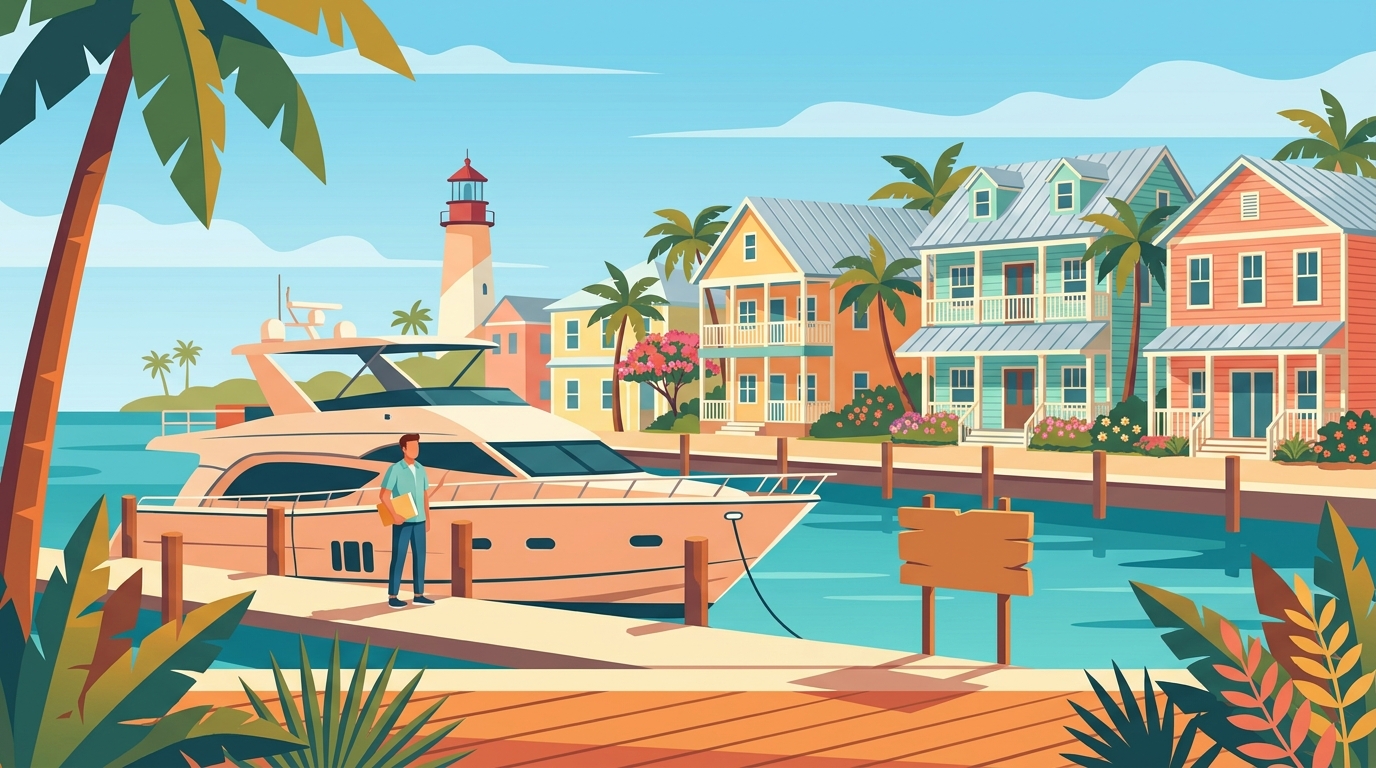
You've found the vessel. Maybe she's a sportfisher berthed at the Key West Bight, a cruising catamaran waiting in Stock Island, or a motoryacht ready to run the reef line off Sand Key Light. Before you can point the bow toward open water, there's a stack of paperwork between you and ownership — and in Florida, getting it right the first time is what separates a smooth closing from a stalled dream.
Here's what you actually need to buy a yacht in Florida, why each document matters, and how the process plays out for buyers in Key West specifically.
The Core Documents Every Florida Yacht Purchase Requires
Florida vessel transactions are governed by Chapter 328 of the Florida Statutes, administered by the Department of Highway Safety and Motor Vehicles (DHSMV) through your local county tax collector. For Key West buyers, that's the Monroe County Tax Collector's office. Whether you're purchasing a 32-foot express cruiser or a 90-foot expedition yacht, the foundational paperwork is the same.
1. The Bill of Sale
The bill of sale is the backbone of the transaction. Under Florida law, a valid yacht bill of sale must include the Hull Identification Number (HIN), the year, make, and length of the vessel, propulsion type, the selling price, the date of sale, and the names and signatures of both buyer and seller.
If the yacht is coming from a non-titling state, the bill of sale must be notarized to serve as valid proof of ownership under Chapter 328. Keep the original — not a copy — and keep it aboard the vessel for the entire 30-day period following purchase. Under Fla. Stat. § 328.46, that document functions as your temporary certificate of number, and Florida Fish and Wildlife Conservation Commission officers patrolling the Keys backcountry can and do ask to see it.
2. Proof of Ownership from the Seller
What you receive from the seller depends on the vessel's history:
- New yacht: Manufacturer's Certificate of Origin (MCO)
- Used Florida-titled yacht: The Florida Certificate of Title with the "Transfer of Title by Seller" section properly completed
- Out-of-state yacht: The out-of-state title or registration document
- Older or federally documented vessel: An executed bill of sale or the federal marine document
Originals only. Photocopies will not clear the tax collector's counter.
3. Form HSMV 82040 VS
This is the Application for Certificate of Title With/Without Registration for a vessel. You must submit it — along with the supporting documents above and a valid government-issued photo ID — within 30 days of purchase. Miss the window and Chapter 328 triggers a mandatory $10 late fee, plus exposure to non-criminal boating infractions if you keep running the boat unregistered.
4. Lien Release (When Applicable)
If the title or USCG documentation shows an outstanding lien, you'll need a written lien release or payoff documentation before the transfer can close. This is one of the most common places private-party deals fall apart — a seller assumes the loan is cleared, the paperwork says otherwise, and the transaction stalls. A qualified yacht broker verifies lien status before the survey is even scheduled.
USCG Documentation vs. Florida Titling
Here's where Key West buyers frequently get tangled. If your yacht measures over five net tons and is at least 75% U.S.-owned, she's eligible for U.S. Coast Guard documentation instead of a Florida state title. Most cruising yachts over roughly 28 feet qualify.
Federally documented vessels are exempt from Florida titling requirements under Chapter 328. That said — and this is the part that trips people up — you may still owe Florida registration if the yacht is principally used in Florida waters. A documented yacht kept year-round at a Key West marina almost certainly triggers state registration, even though she carries no state title.
USCG documentation has practical advantages for Keys-based owners: it's recognized in foreign ports (helpful if you're planning to run to the Bahamas or down-island), it establishes a clear chain of ownership through federal records, and it satisfies most marine lenders. The federal rules live in 46 U.S.C. Chapter 121 and 46 C.F.R. Part 67, separate from Florida law.
Florida Registration Requirements
Every vessel used on public Florida waters — from Garrison Bight out through the Northwest Channel — needs a valid Florida registration unless a specific exemption applies. Once registered, your certificate of registration must be carried aboard whenever the vessel is in operation, and the registration decal must be displayed on the port (left) side of the hull.
A few exemptions worth knowing for Keys buyers:
- Non-Florida residents whose vessels are temporarily in Florida waters for fewer than 90 consecutive days
- Vessels already registered under another state's federally approved numbering system, for their first 90 consecutive days in Florida
- Foreign-flagged vessels using Florida waters for not more than 90 days
- Non-motorized boats under 16 feet
If you're a snowbird buyer bringing a documented yacht down from the Northeast for the winter season, you may fall inside a 90-day window — but the moment Key West becomes your principal cruising ground, Florida registration is on the clock.
Sales and Use Tax Considerations
Florida imposes sales or use tax on vessel purchases, and Monroe County adds a local surtax on top of the state rate. The specific amounts and any applicable caps change over time, so verify current rates directly with the Monroe County Tax Collector or the DHSMV before closing. For higher-value yachts, tax planning — including delivery location, offshore closings, and use-tax timing — can make a material difference to the final cost. This is a conversation to have with your broker and, for larger transactions, a Florida maritime attorney.
Why Key West Adds Its Own Wrinkles
Buying in the Keys isn't quite like buying anywhere else in Florida. A few local realities shape the paperwork:
- Hurricane season. Between June and November, closings often hinge on named-storm clauses, haul-out logistics at Stock Island or Marathon yards, and insurance binders that reflect the elevated wind-zone risk south of Mile Marker 60.
- Limited slip inventory. A signed slip assignment or transient agreement at a Key West marina is often a prerequisite for financing and insurance — lenders want to know where the collateral will live.
- Salt, sun, and survey. A pre-purchase survey by a SAMS or NAMS accredited marine surveyor is standard practice here, and the survey report frequently becomes part of the negotiation and the insurance file.
- Federal waters proximity. With the Florida Straits at your doorstep, USCG documentation carries real practical weight for owners who cruise internationally.
Frequently Asked Questions
How long do I have to title and register a yacht after buying it in Florida?
Thirty days from the date of purchase. During that window, the original bill of sale must stay aboard the vessel and serves as your temporary certificate of number under Fla. Stat. § 328.46.
Do I need both USCG documentation and a Florida title?
No. Federally documented vessels are exempt from Florida titling. However, if the yacht is principally used in Florida waters, Florida registration may still apply even without a state title.
What happens if I miss the 30-day deadline?
Chapter 328 imposes a mandatory $10 late fee, and continued operation of an unregistered vessel is a non-criminal boating infraction enforceable on the water.
Can a bill of sale alone prove ownership?
For vessels from non-titling states or older boats without a title, yes — but the bill of sale must be notarized and include the HIN, year, make, length, propulsion type, price, date, and both parties' signatures.
Closing the Deal With Confidence
Yacht transactions are documentation-intensive by design. Between the DHSMV, the USCG National Vessel Documentation Center, the Monroe County Tax Collector, marine lenders, insurance underwriters, and the surveyor, there are a lot of hands touching the same paperwork — and small errors compound quickly.
Buyers in Key West who want the closing handled professionally can reach Worldwide Yacht Sales at worldwideyachtsalesinc.com. As an established yacht and ship broker serving the Florida market, the team coordinates title work, USCG documentation, escrow, survey scheduling, and closing logistics so you can focus on what actually matters: the moment the lines come off and you set sail.