Independent Yacht Broker vs Dealer in Treasure Island, FL
Myth: a franchise boat dealer always protects buyers better. Here's what Treasure Island yacht buyers actually get from each business model.
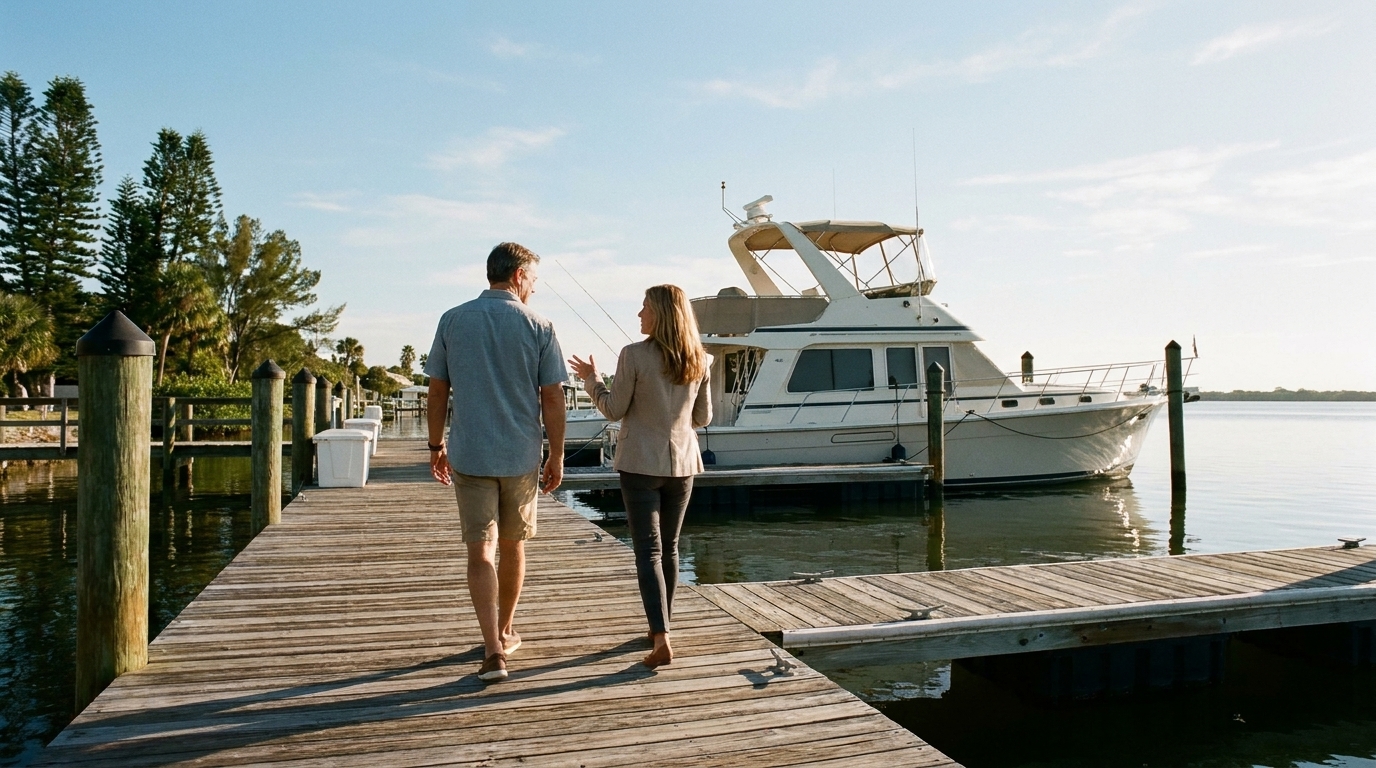
The common belief among Treasure Island buyers is that a franchise boat dealership automatically offers more protection than an independent yacht broker because of the manufacturer name on the building. That belief is incomplete. For a new production boat under warranty, a franchise dealer is often the right fit; for a used or larger yacht, a licensed independent broker typically delivers more transaction protection, regulated escrow handling, and closing support than a dealer's used-boat desk.
The distinction matters because the two business models are governed by different rules, compensated through different structures, and optimized for different kinds of transactions. Worldwide Yacht Sales, which has been brokering yachts from Treasure Island since 1989, operates on the brokerage side of that line, and the differences show up most clearly at closing.
What actually separates an independent yacht broker from a franchise boat dealer?
A franchise boat dealer is a retailer with a manufacturer agreement to sell new boats of a specific brand, carry inventory, and perform authorized warranty service. An independent yacht broker is a licensed intermediary who represents buyers or sellers in individual transactions, usually of used or larger vessels, and does not own the inventory. The dealer's revenue comes from markup and service; the broker's comes from a negotiated commission.
Worldwide Yacht Sales is a family-owned brokerage that has been serving yacht buyers and sellers for nearly four decades, handling transactions from consultation through delivery rather than operating a franchised showroom model.
Which model offers stronger buyer protections under Florida law?
For transactions that meet Florida's statutory definition of a yacht, the independent broker channel carries specific, codified buyer protections that a general boat dealership is not required to provide. Florida's Yacht and Ship Brokers' Act requires that a licensed broker receiving transaction funds deposit them into a trust account at a qualifying Florida financial institution, with separate records kept per transaction. At closing, that broker must deliver an itemized closing statement showing sale price, charges, and credits.
Florida's Yacht and Ship Brokers' Act also states that a person may not act as a broker or salesperson without a license, while separately exempting a person selling their own yacht. That exemption is why a dealership selling its own trade-in inventory is not always operating under the same escrow rules an independent broker is bound by. These protections apply only where the statutory definition of yacht is met, so a smaller recreational boat transaction may fall outside Chapter 326 entirely.
How does the business model change what you pay and what you get?
| Dimension | Franchise Boat Dealer | Independent Yacht Broker |
|---|---|---|
| Typical inventory | New boats of a contracted brand, plus trade-ins | Used and larger vessels across many builders |
| Warranty | Factory warranty on new; authorized service | As-is, where-is; any residual warranty verified at closing |
| Funds handling | Dealer account; varies by transaction | Regulated Florida trust account for yachts under Chapter 326 |
| Closing paperwork | Retail buyer's order | Itemized closing statement required for licensed yacht transactions |
| Representation | Represents the dealership | Represents the client named in the listing or buyer agreement |
On price, a franchise dealership typically earns a margin on each new boat, with incentives and floorplan financing shaping what ends up on the invoice. A brokerage transaction is usually commission-based against the negotiated sale price, which tends to align the broker's incentive with closing the deal rather than defending a sticker.
Does a dealer's warranty really transfer to the second owner?
Not automatically, and the terms vary sharply by manufacturer. Buyers often assume factory coverage follows the hull; in practice, most brokerage boats sell as-is, where-is, and any leftover manufacturer warranty on engines or equipment may or may not transfer. Worldwide Yacht Sales states it verifies warranty transferability before closing rather than leaving it as a post-sale surprise.
A concrete example illustrates how restrictive these terms can be. Smoker Craft/Starweld's published warranty transfer terms require a request within 30 days of purchase and, according to starcraftstarweld.com, a $500 fee. The limited lifetime structural hull warranty is stated as not transferable, and certain other warranties may be transferred once, with some coverage ending 10 years after the original purchase. Those specifics are brand-dependent, not a universal rule, which is precisely why the verification step matters.
How does the Treasure Island market change the calculation?
Treasure Island sits on barrier islands along Pinellas County's Gulf coast, where shallow flats, fixed bridge clearances across the Intracoastal Waterway, and a defined Gulf hurricane season shape which boats make sense and when transactions close. Draft, air draft, and where the vessel will be kept — a private dock, a marina slip, or a dry stack — are not abstract considerations here; they determine whether a buyer's shortlist is even viable.
Florida also requires a vessel used, operated, or stored on state waters to be titled by Florida, with the owner applying for title within 30 days after the later of the ownership transfer or Florida becoming the state of principal use. Late title applications carry an additional $10 fee on top of the statutory $5.25 title issuance fee, plus $4 for an initial Florida title for a vessel previously registered outside Florida. A broker closing a documented yacht routinely manages this paperwork; a retail buyer's order does not always walk the buyer through it.
What should a Treasure Island buyer actually do before signing?
Three steps separate a clean closing from a costly one, regardless of whether the boat is sitting on a dealer's lot or listed through a brokerage. First, order a hull survey AND a separate engine survey with oil analysis — Worldwide Yacht Sales recommends both, because a hull survey does not fully cover the engines. Second, get pre-qualified with a marine lender before making offers; marine lenders typically require a larger down payment and often need a survey and an insurance binder before funding. Third, verify title, liens, and documentation history in writing.
I went to Worldwide Yacht Sales. What stood out most was how easy the entire process was from start to finish. Above and beyond excellent customer service. These guys are dialed in! I'd recommend them to any boater who wants to buy or sell.
From Worldwide Yacht Sales's yacht brokerage consulting team: They skip the market research and overpay because they don't know what similar boats really sold for. They also skip checking the title, liens and documentation history. A market analysis and a lien search up front cost far less than fixing either problem after closing.
Frequently asked questions
Is an independent yacht broker licensed in Florida?
Yes, where the vessel meets Florida's statutory definition of a yacht. Florida's Yacht and Ship Brokers' Act states that a person may not act as a broker or salesperson without a license, while separately exempting a person selling their own yacht. Buyers should confirm licensure before transferring any funds into the transaction.
Where does my deposit go when I buy through a licensed yacht broker?
Into a regulated trust account. Florida law requires a licensed yacht broker who receives transaction funds to deposit those funds into a trust account at a qualifying Florida financial institution, with separate records kept. At closing, the broker must provide an itemized statement showing the sale price, charges, and credits.
Do I still need a survey if the boat is listed by a dealership?
Yes. Most brokerage boats, and many dealer-held used boats, sell as-is, where-is. An independent hull survey plus a separate engine survey with oil analysis protects the buyer regardless of who holds the listing, and marine lenders often require a survey before funding anyway.
Will the factory warranty transfer to me as the second owner?
Sometimes, with restrictions. Terms vary sharply by manufacturer; Smoker Craft/Starweld, for example, requires a transfer request within 30 days of purchase and a $500 fee per starcraftstarweld.com, excludes the limited lifetime structural hull warranty from transfer, and caps certain coverage at 10 years after the original purchase. Verify the specific brand's terms before closing.
How quickly do I need to title the boat in Florida after purchase?
Within 30 days. Florida generally requires a vessel used, operated, or stored on state waters to be titled by Florida, with the owner applying for title within 30 days after the later of the ownership transfer or Florida becoming the state of principal use. A late application adds a $10 fee to the standard $5.25 state title issuance fee.
Is a broker better than a dealer for a first-time buyer in Treasure Island?
It depends on the boat. For a brand-new production boat with full factory warranty and local authorized service, a franchise dealer is often the practical fit. For a used vessel, a larger yacht, or any transaction where title, liens, and escrow discipline matter, a licensed independent broker typically offers stronger transactional protections under Florida law.
The bottom line for Treasure Island buyers
The myth is that a franchise name automatically equals a safer transaction. The reality is that the business model determines which protections attach to the deal. A franchise dealer is optimized for new-boat retail and authorized service; a licensed independent yacht broker is optimized for transaction coordination, regulated escrow, and the itemized closing a documented yacht transaction calls for.
Buyers in Treasure Island who want a used or larger yacht handled professionally can reach Worldwide Yacht Sales at (727) 346-8229 or https://worldwideyachtsalesinc.com to discuss the specific boat, the paperwork, and what closing should look like.