How to Negotiate a Used Boat Price in St. Petersburg, FL
A 2026 playbook for negotiating used boat prices in Saint Petersburg, FL — reading inventory cycles, using survey findings as leverage, and structuring counter-offers.
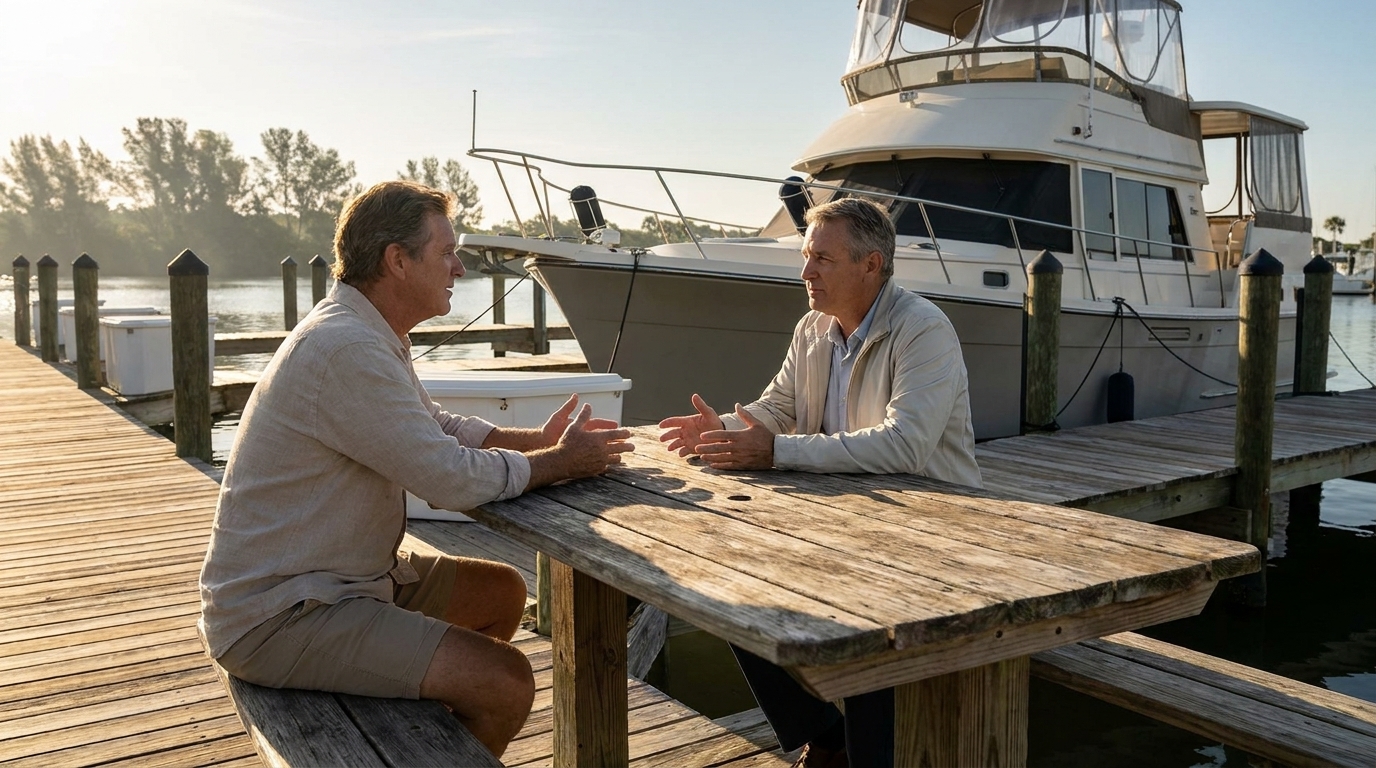
To negotiate a used boat price in Saint Petersburg, FL, anchor the conversation to three things: comparable asking prices across the Tampa Bay market, a written marine survey, and the total out-the-door cost including Florida sales tax, title, registration, and any deferred maintenance. The leverage is almost never the listing price itself — it is the documented gap between what the seller is asking and what the boat, in its actual condition, is worth to a buyer who understands saltwater wear and storm history.
What follows is a step-by-step framework for buyers working with dealers, brokerages, and private sellers across St. Petersburg and the broader Tampa Bay region. It is written for the realities of a year-round Gulf Coast boating market, where the usual northern-market seasonality is muted and the real negotiation levers are condition, documentation, and total cost of ownership.
What is a fair starting offer on a used boat in Saint Petersburg, FL?
A fair starting offer is grounded in comparable asking prices for the same hull type, length, and age — not a flat percentage off the listing. For context, boatzon.com puts used deck boats in the 20–22 ft range at roughly $12,000–$25,000 for hulls 15+ years old and $28,000–$55,000 for 5–10 year-old boats, and trycommonplace.com reports a Tampa-area used-pontoon median asking price of $6,500 (middle range $3,750–$10,400). Those benchmarks set the ceiling; your opening offer sets the floor.
Buyers in St. Petersburg should pull at least three to five comparable listings across Pinellas and Hillsborough counties before writing a number down. The Tampa Bay region effectively functions as a single market — a boat in Clearwater, Gulfport, or Apollo Beach is a legitimate comp for a boat sitting on a trailer in the Old Northeast. Worldwide Yacht Sales, which has been serving yacht buyers and sellers for nearly four decades, offers a guided five-step search tool that lets buyers filter by type, size, price range, and age — useful for building a defensible comp set before an offer goes on paper.
Indicative asking-price ranges by size and age
| Boat type & size | Age | Indicative asking range (U.S.) |
|---|---|---|
| Deck boat, 16–19 ft | 15+ years | $8,000–$18,000 (boatzon.com) |
| Deck boat, 16–19 ft | 5–10 years | $18,000–$35,000 (boatzon.com) |
| Deck boat, 20–22 ft | 15+ years | $12,000–$25,000 (boatzon.com) |
| Deck boat, 20–22 ft | 5–10 years | $28,000–$55,000 (boatzon.com) |
| Deck boat, 23–26 ft | 15+ years | $18,000–$35,000 (boatzon.com) |
| Deck boat, 23–26 ft | 5–10 years | $45,000–$85,000 (boatzon.com) |
| Used pontoon (Tampa area) | Mixed | $3,750–$10,400, median $6,500 (trycommonplace.com) |
These are asking prices from commercial listing aggregators, not verified St. Petersburg sale prices — treat them as the top of the range the seller believes the market will bear, and work downward from documented condition.
How does a marine survey become negotiation leverage?
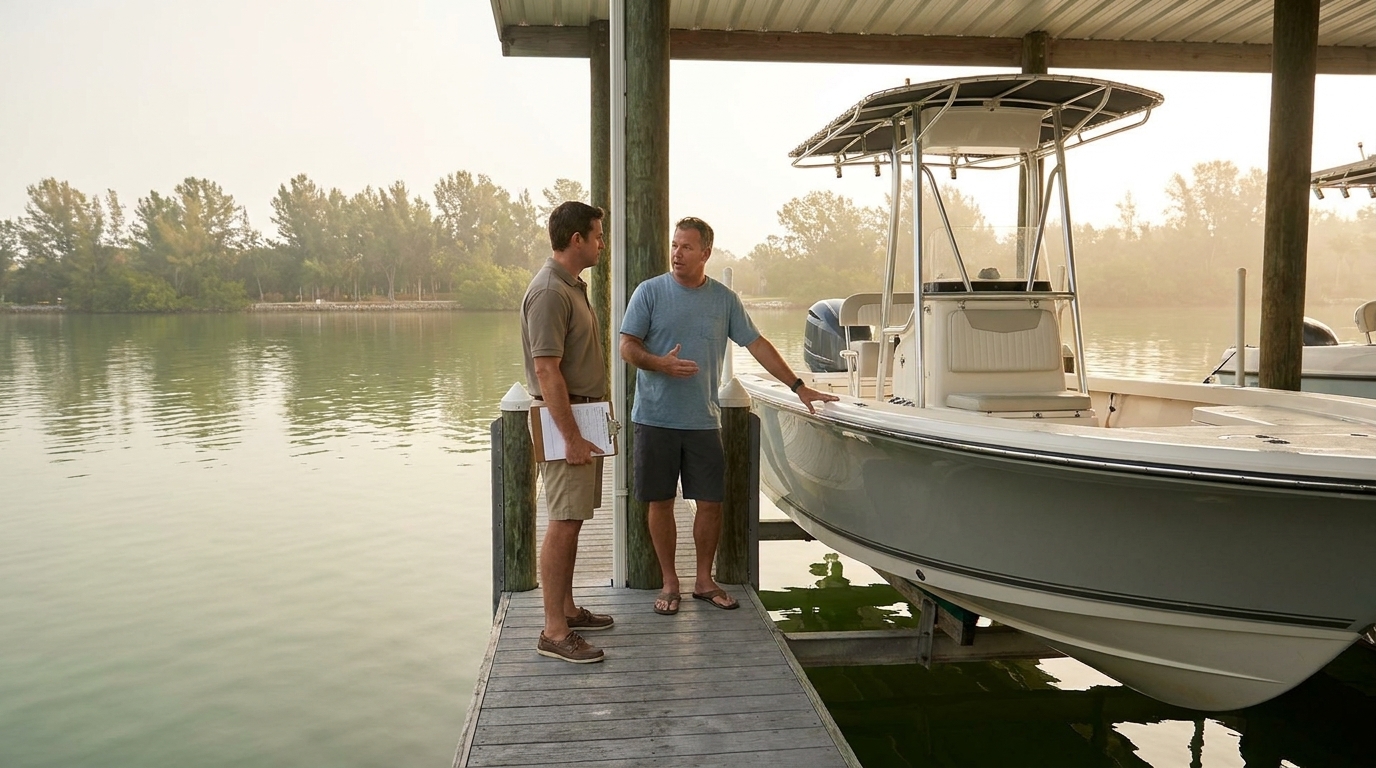
A marine survey converts a vague "needs some work" conversation into a line-item invoice the seller has to argue with. On any used boat over roughly $15,000, a buyer should budget for an independent surveyor accredited by SAMS or NAMS, plus a sea trial. The written report — with photos of corrosion, moisture readings, engine compression numbers, and estimated repair costs — becomes the single most powerful document in the price discussion.
Saltwater exposure in Tampa Bay and the Gulf accelerates corrosion on hulls, outboards, electrical systems, and trailers, so survey findings tend to be substantive rather than cosmetic. The right counter-offer is not "knock a few thousand off" — it is the asking price minus the surveyor's documented repair estimates, minus a reasonable discount for deferred maintenance the seller skipped. Sellers who refuse to engage with written survey findings are telling you something important about the deal.
Storm history matters equally. The Gulf Coast's hurricane and tropical-storm exposure makes a vessel's water-damage and insurance-claim history a material negotiation factor. Request full maintenance records, prior insurance claims, and any post-storm repair documentation before the second price conversation.
When should buyers negotiate — are there seasonal windows in St. Petersburg?
St. Petersburg's year-round boating climate flattens the sharp seasonal price swings seen in northern markets, so buyers should not expect dramatic winter discounts. That said, buyer activity typically increases ahead of spring and summer, which means the quieter stretches of late summer and early fall — after peak selling season but before snowbird demand returns — tend to produce more flexible sellers.
A second window opens in the weeks following tropical storm activity, when some owners decide to sell rather than repair, and ahead of hurricane season when sellers who missed the spring market face carrying costs and insurance renewals. National dealer surveys from 2026 indicate used retail has been relatively strong, with some dealers reporting used inventory as too low — a reminder that buyers should negotiate on condition and total cost, not on the assumption of a soft market.
How should the counter-offer be structured at a dealer or brokerage?
Structure the counter-offer as a written total-price proposal that itemizes the vessel price, trade-in allowance (if any), documented survey deductions, and the Florida tax and fee stack — then present the single out-the-door number the buyer is prepared to close at. A verbal "I'll give you X" lets the seller re-anchor; a written itemized offer forces a line-by-line response.
At a brokerage, remember that commissions sit inside the price. According to docksidepros.com, boat broker commission fees in St. Petersburg typically range from 5% to 10% of the sale price and are generally paid by the seller — meaning a brokerage listing has roughly that much embedded margin to work with before the seller's net is touched. That is useful context, not a target; experienced brokers won't give up commission casually, but they will often find movement on price when a buyer presents a clean, financed, survey-backed offer.
Worldwide Yacht Sales, a family-owned brokerage that handles transactions from consultation through delivery, approaches buyer representation with a preference for sorting out use case and operating costs before price discussions begin.
From Worldwide Yacht Sales: They fall for a boat before they've settled how they'll use it, where they'll keep it and what it costs to run. Then they find out it won't fit their slip, draws too much for their home water, or burns more fuel than they budgeted. We'd rather spend an hour on those questions up front than watch someone buy the wrong boat.
What Florida-specific costs belong in the negotiation math?
Florida imposes state sales and use tax on boat purchases, with an $18,000 cap on tax for a boat or vessel; Pinellas County discretionary surtax may also apply, and buyers should verify current rates with the Florida Department of Revenue or the Pinellas County Tax Collector. Title transfer, registration, and any unpaid liens or taxes must be resolved before closing, and use-tax and registration obligations may apply even if tax was not collected at the point of sale.
Operators born on or after January 1, 1988 are required to meet Florida boating safety education requirements for certain vessels; verify current rules with the Florida Fish and Wildlife Conservation Commission. One Saint Petersburg wrinkle worth factoring into intended-use plans: Bayboro Harbor is subject to a federal security zone under 33 CFR Part 165, and temporary marine-event safety zones under 33 CFR 100.701 can apply in the area — relevant if the buyer plans to keep or operate the vessel in or near downtown waters.
What does the Worldwide Yacht Sales buying experience look like?
Worldwide Yacht Sales offers yacht buying services that include personalized searches and white-glove delivery, with transactions handled from consultation through delivery. The brokerage was founded in 1989 by Bill Warner, and in 2022 Traver Smith purchased the business from Warner, who remained actively involved as an advisor.
I went to Worldwide Yacht Sales. What stood out most was how easy the entire process was from start to finish. Above and beyond excellent customer service. These guys are dialed in! I'd recommend them to any boater who wants to buy or sell.
Frequently asked questions
How much can a buyer typically negotiate off a used boat asking price in St. Petersburg?
There is no fixed percentage. Movement is driven by documented condition issues, survey findings, comparable listings across the Tampa Bay market, and how long the boat has been listed. A clean, well-priced boat in a tight inventory market may move only a few percent; a boat with deferred maintenance, cosmetic saltwater damage, or a slow listing can move materially more when a written, survey-backed counter-offer is presented.
Is a marine survey required to negotiate on a used boat?
It is not legally required, but it is the single most effective negotiation tool for any used boat priced over roughly $15,000. A written survey from a SAMS- or NAMS-accredited surveyor converts subjective concerns into itemized repair estimates, which gives the buyer a defensible basis for price reductions and gives the seller a specific number to respond to rather than a vague discount request.
Does Florida sales tax apply to a private boat sale?
Yes. Florida imposes state sales and use tax on boat purchases with an $18,000 cap on tax for a vessel, and Pinellas County discretionary surtax may also apply. Use-tax and registration obligations can apply even if tax was not collected at the point of sale, so buyers should verify current rates and procedures with the Florida Department of Revenue or the Pinellas County Tax Collector before closing.
Who pays the broker commission on a used boat sale?
According to docksidepros.com, boat broker commission fees in St. Petersburg typically range from 5% to 10% of the sale price and are generally paid by the seller. Buyers do not usually write a separate commission check, but should understand that commission is embedded in the asking price — which is useful context when evaluating how much room a listing may have before the seller's net proceeds are affected.
Are there seasonal price swings for used boats in St. Petersburg?
St. Petersburg's year-round boating climate reduces the sharp seasonal price swings seen in northern markets, though buyer activity typically rises ahead of spring and summer. Quieter stretches in late summer and early fall, and the weeks before hurricane-season insurance renewals, tend to produce somewhat more flexible sellers. No verified month-by-month St. Petersburg price-cycle data is available, so treat seasonality as a factor rather than a formula.
Does St. Petersburg require any special operator licensing to use a purchased boat?
Florida requires boating safety education for certain operators born on or after January 1, 1988. Buyers should verify current requirements, exemptions, and accepted courses with the Florida Fish and Wildlife Conservation Commission before closing, particularly if the vessel will be operated by multiple family members or guests of varying ages.
Closing the deal
The best-negotiated used boat purchase in St. Petersburg is the one that holds up a year later — when the buyer is still using the boat, still within budget, and not quietly discovering the deferred maintenance the survey warned about. Price discipline, written offers, and real comparable data do more than internet negotiation scripts. Readers in Saint Petersburg, FL who want brokerage representation on the buy or sell side can reach Worldwide Yacht Sales at (727) 346-8229 or https://worldwideyachtsalesinc.com to get started.