What Size Yacht Fits My Budget in Saint Petersburg, FL
A Saint Petersburg, FL buyer's guide to matching yacht size to total ownership cost — purchase tiers, annual expenses, and when waiting costs more.
For most first-time buyers in Saint Petersburg, the honest answer is this: the size of yacht that fits your budget is the one whose annual operating cost — dockage, insurance, haul-outs, bottom paint, fuel, and service — you can carry comfortably for three to five years, not just the one whose sticker price you can finance. A well-equipped 35–59 ft mid-range cruiser typically lands in the mid-six to low-seven figures; a 60 ft-plus yacht can clear several million before a line is tied. Waiting a season to "save up" often costs more than it saves once fouling, insurance renewals, and inventory cycles are factored in.
How should a Saint Petersburg buyer size a yacht to actual budget in 2026?
Size the yacht to the total cost of ownership you can sustain for three to five years, not the purchase price alone. In Saint Petersburg, that means budgeting for year-round dockage, hurricane-season insurance, bottom paint against constant Gulf fouling, and the fuel and service profile of the specific hull. A mid-range cruiser usually suits first-time owners; a larger offshore yacht demands a materially larger operating budget.
Worldwide Yacht Sales, a family-owned brokerage based at 12781 Kingfish Drive in Treasure Island — a short run across the Intracoastal from downtown Saint Petersburg — has been working with yacht buyers and sellers for nearly four decades, and the sizing exercise below reflects how experienced brokers actually frame the conversation with a first-time buyer.
What do the two purchase tiers actually look like?
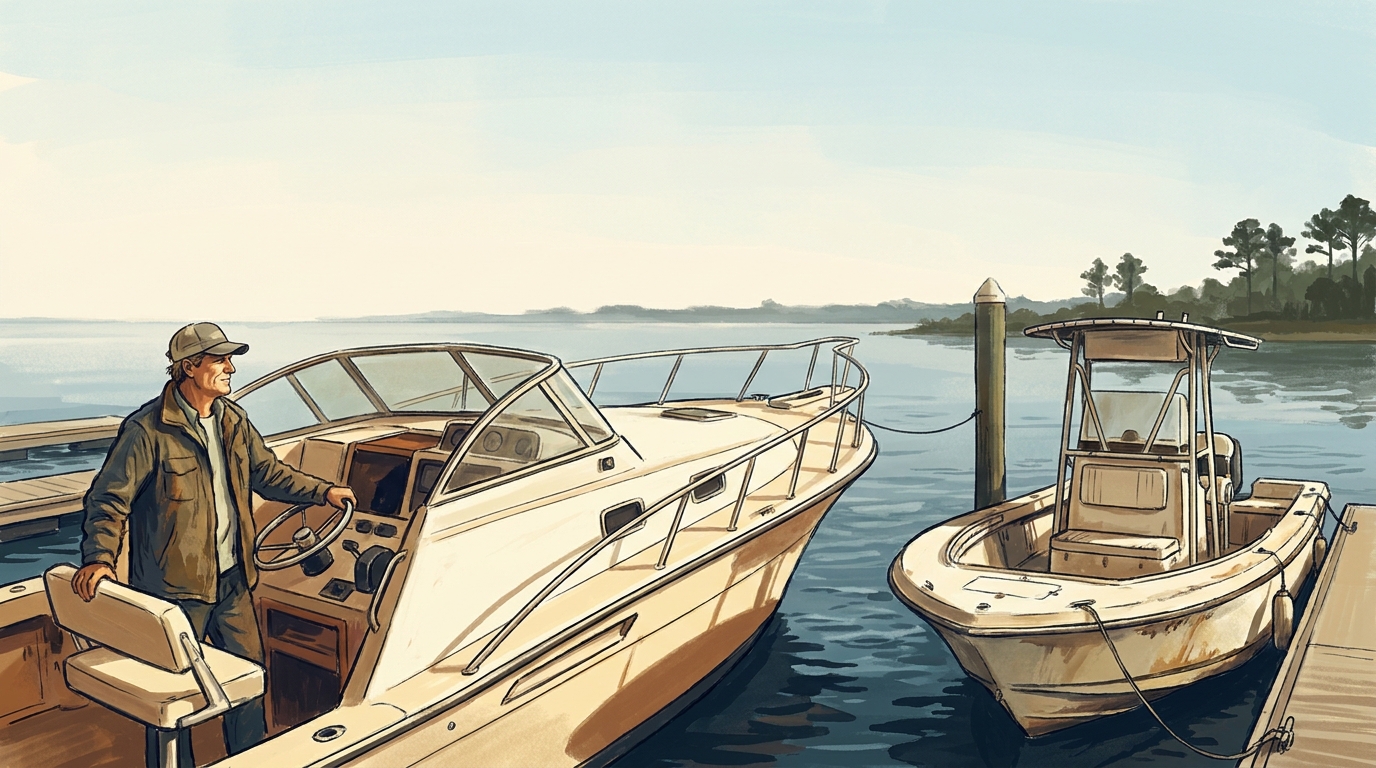
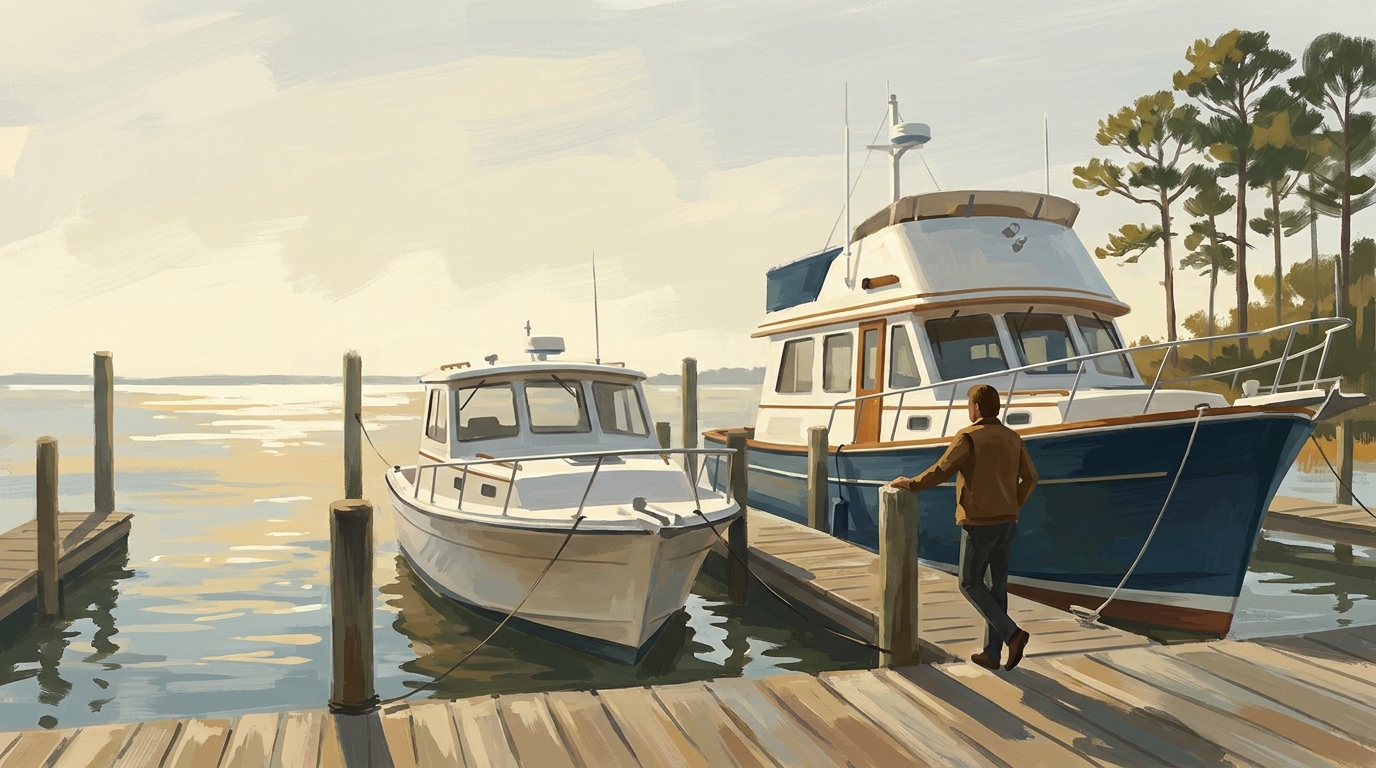
The two tiers differ less in length than in mission. A mid-range cruiser is built for day trips, weekends on the water, and occasional runs to the Keys or the Panhandle. A larger offshore yacht is built for extended stays aboard, longer-range cruising, and — in some configurations — crewed operation. Price ranges overlap at the top of the mid-range and bottom of the large-yacht tier.
| Dimension | 35–59 ft mid-range cruiser | 60 ft+ yacht |
|---|---|---|
| Typical use | Day trips, weekends, coastal cruising | Extended stays, long-range or crewed cruising |
| Representative new pricing | Mid-six to low-seven figures; a 2026 50-foot outboard cruiser was listed at $1,886,524 against an MSRP of $2,727,470 | Often several million; a 2026 project 60-footer was listed at $5,779,460.50 |
| Representative speed profile | Fast outboard and express cruisers; flybridge models prioritize comfort | Design-dependent: 10-knot long-range displacement to 46-knot high-performance outboard platforms |
| Fuel capacity (example) | 607–660 gallons on the cited 50-foot examples | Up to about 3,566 gallons on the cited long-range 60-foot project |
| Cabins (example) | One to three, depending on layout | Multiple cabins; crewed configurations possible |
| Owner-operation | Generally owner-operated | May benefit from or require professional crew |
Those listed examples illustrate how much propulsion, layout, and mission shift price.
How much does it cost to own a yacht per year in Saint Petersburg?
Annual ownership cost in Saint Petersburg is driven by five recurring buckets: dockage, insurance, haul-outs and bottom paint, fuel, and routine service. Larger yachts generally carry a higher percentage, not just a higher dollar amount.
Dockage is the largest controllable variable. Transient marina rates vary across the region and are a useful ceiling for budgeting short stays, though annual slip contracts are typically negotiated differently. Hurricane-zone insurance in Florida is its own line item, and underwriters increasingly scrutinize named-storm plans, hull age, and captain experience.
Bottom maintenance is not optional on the Gulf Coast. Florida vessels face constant fouling pressure from warmer year-round waters, which drives shorter paint cycles and more frequent haul-outs than owners in cooler climates typically plan for. A longer hull simply has more wetted surface — and more bill — than a shorter one when the yard pulls it.
New vs. used — which is the better buy for a first yacht?
For most first-time Saint Petersburg buyers, a well-surveyed late-model used yacht delivers more boat per dollar than a new build, because the steepest depreciation curve has already been absorbed by the first owner. New makes sense when a specific layout, warranty, or propulsion package is not available on the brokerage market, or when the buyer plans to keep the boat long enough to amortize the premium. Used requires a rigorous survey, engine-hour review, and service-record audit — non-negotiables on any Florida hull.
Buyers searching "yachts for sale under 1 million near me" will find the inventory concentrated in the 35–55 ft used market, where brokerage boats three to eight years old regularly clear strong surveys. A brokerage with deep local knowledge of Tampa Bay service yards and surveyors is worth more at this tier than any discount a distant seller might offer.
What does waiting a season actually cost?
Waiting carries real, quantifiable costs that first-time buyers routinely underestimate. The mechanism is simple: inventory turns over on a seasonal cycle in Florida, insurance premiums reset annually, and every month on the water adds fouling, wear, and service intervals to the hulls currently listed. Waiting "until next season" often means re-entering a thinner inventory at a higher carrying cost.
- Insurance renewals. Hurricane-zone underwriters re-rate annually; waiting through a storm season can shift terms before a buyer ever closes.
- Snowbird demand. From roughly November through March, Saint Petersburg's brokerage inventory moves fastest; buyers who wait until spring face a picked-over market.
- Haul-out backlogs. Pre-hurricane-season yard slots tighten sharply by late spring, pushing survey and pre-purchase haul-outs into longer queues.
- Fouling clock. On a boat already in Florida water, every month of delay before the next haul-out compounds bottom paint and running-gear costs that the next owner inherits.
Waiting is the right call in two specific cases: when the operating budget genuinely doesn't support the targeted tier yet, or when a buyer hasn't completed a captain's course and some on-water time on comparable hulls. Those are investments that reduce cost later; waiting for a "better market" is usually not.
How do Florida taxes and registration fit into the budget?
Florida boats sold or delivered in-state are generally subject to 6% state sales and use tax, per the Florida Department of Revenue, unless a specific exemption applies. On a listed $1,886,524 50-foot cruiser, that calculation alone comes to roughly $113,191 before any surtax, dealer charges, or delivery costs — a line item worth modeling before signing. Tax treatment should be confirmed against the specific sale, delivery, and ownership structure.
Annual registration through the Florida Highway Safety and Motor Vehicles agency runs $127.75 for vessels 40 to under 65 feet and $152.75 for vessels 65 to under 110 feet, before service and FRVIS fees. Both the 50-foot and 60-foot examples above fall in the 40–under-65-foot band, which keeps registration small relative to tax, insurance, and dockage.
Frequently asked questions
What size yacht fits a $1 million budget in Saint Petersburg, FL?
A $1 million all-in budget — including tax, insurance, dockage, and a reserve for haul-outs — typically points to a well-surveyed used cruiser in the 35–50 ft range on the Saint Petersburg brokerage market. New cruisers at the top of this length class often exceed $1 million before options and tax, as the cited 2026 50-foot listings show. A broker focused on brokerage inventory is the efficient path at this tier.
How much does a yacht cost to buy new versus used?
New 50-foot cruisers in 2026 have listed in the high six figures to low seven figures, with MSRPs reaching nearly $3 million on well-equipped flybridge models. Comparable used examples three to eight years old typically trade for a meaningful discount to original MSRP, depending on hours, condition, and equipment. The right answer depends on how long the buyer plans to own the boat.
How much does it cost to own a yacht per year on the Gulf Coast?
Are transient marina rates in Florida really $1.50 to $2.00 per foot per day?
Transient marina rates across the region vary and serve as a useful planning figure for short stays while cruising. That is a useful planning figure for short stays while cruising, but annual slip contracts in Tampa Bay are negotiated separately and vary by marina, vessel size, and amenities. Buyers should price a specific home slip before committing to a hull.
Does a 60-foot yacht require a professional crew?
Not automatically. Size alone does not establish a crew requirement; the specific vessel, its systems, the owner's experience, and the intended itinerary matter more. A fast 60-foot outboard yacht and a 10-knot long-range displacement yacht are fundamentally different ownership propositions. Many 60-foot owners run the boat themselves on day and weekend trips and hire a captain for longer passages or deliveries.
Is it better to wait for next season to buy in Saint Petersburg?
Usually not, unless the operating budget isn't ready or the buyer needs more on-water experience first. Florida inventory turns fastest during snowbird months (roughly November through March), insurance underwriters re-rate annually in the hurricane zone, and every month of delay on hulls already in salt water adds fouling and service exposure. Waiting for a "better price" rarely outperforms acting on a well-surveyed boat today.
Working with a local brokerage
Sizing a yacht to a Saint Petersburg budget is ultimately a matching exercise — between hull, mission, operating capacity, and timing. Worldwide Yacht Sales is a family-owned brokerage founded in 1989 by Bill Warner and purchased by Traver Smith in 2022, with Warner remaining actively involved as an advisor; the firm describes its approach to sellers as providing top-tier marketing for every listing, and that same market knowledge informs how it guides buyers through tier selection. Readers in the Saint Petersburg area who want this handled professionally can reach Worldwide Yacht Sales at (727) 346-8229 or https://worldwideyachtsalesinc.com to begin the conversation.