How to Read a Yacht Survey Report in Saint Petersburg, FL
Learn how to interpret marine survey findings — condition ratings, deferred maintenance, insurance flags, and price leverage — before closing on a yacht in St. Pete.

A yacht survey report is the written evidence a buyer uses to decide whether to close, renegotiate, or walk away — and in Saint Petersburg, FL, it is also the document a marine insurer will read before binding coverage. Read it in this order: the surveyor's summary and findings, the recommendations list sorted by urgency, the fair market and replacement values, and finally the photo appendix that documents every flagged item. Everything else is support for those four sections.
Pre-purchase condition and value surveys are priced per foot, with sea trial and engine survey typically billed separately. Reading it well is the single highest-leverage hour in the transaction, as survey reports routinely surface significant deferred maintenance. Reading it well is the single highest-leverage hour in the transaction.
What does a yacht survey report actually tell a buyer?
The report's language can read as cautious even when a boat is sound, reflecting the technical standards it is written against.
Reports from surveyors holding recognized national credentials carry significant weight with Florida underwriters. Worldwide Yacht Sales, which has been serving yacht buyers and sellers for nearly four decades, works with clients across the full survey process from consultation through delivery.
How are condition ratings and findings categorized?
Most surveyors group findings into three tiers: Priority 1 (safety or seaworthiness — must be corrected before use), Priority 2 (should be corrected in the near term, typically within the first season), and Priority 3 (recommended for long-term maintenance). The overall vessel rating typically falls on a descriptive scale, with mid-range ratings being common on older brokerage boats.
Safety and seaworthiness items drive the renegotiation conversation. Common examples on Gulf Coast boats include non-compliant fuel hoses, inoperative bilge pumps, corroded battery terminals, missing or expired fire extinguishers, and through-hull fittings showing dezincification. These are not negotiable with an insurer — they must be remedied before a binder is issued, and the buyer needs to decide whether the seller fixes them, credits the buyer at closing, or the deal is restructured.
How should a buyer use the report to renegotiate price?
| Finding Type | Typical Leverage | Buyer's Move |
|---|---|---|
| Priority 1 safety items | Full cost credit or seller repair | Require written remedy before closing |
| Deferred maintenance (Priority 2) | 50–100% credit depending on age | Request credit at closing |
| Cosmetic / Priority 3 | Minimal — already in asking price | Note for post-close planning |
| Fair market value below contract | Reopen price to appraised value | Submit revised offer with report |
| Engine survey compression / oil analysis flags | Significant — repower risk | Credit, warranty, or walk |
The surveyor's fair market value is the second lever. If the appraised value comes in below the accepted offer, the buyer has standing to reopen price — lenders will not finance above appraised value anyway, so sellers generally understand the math.
What do Florida insurers look for in the report?
Florida marine insurers reading a Saint Petersburg survey focus on hurricane preparedness, electrical system compliance, fuel system integrity, and the age and condition of standing rigging on sailboats. Boats kept in local marinas and waterfront anchorages face annual hurricane-season exposure, and underwriters price that risk directly from the survey.
Expect the insurer to require safety and seaworthiness items corrected before binding, and to ask for a named-storm haul-out plan for vessels over a certain length — thresholds vary by carrier. A survey that is too old at binding is often rejected outright, so timing the survey, the closing, and the insurance application matters, particularly for buyers trying to close before hurricane season begins.
What are the deferred maintenance flags that matter most in Saint Petersburg, FL?
On the Gulf Coast, the deferred maintenance items that most often appear and most often cost real money are: bottom paint and running gear condition (saltwater and warm water accelerate growth and corrosion), air conditioning raw-water systems, canvas and isinglass UV degradation, teak decking seams, and gelcoat crazing from sustained sun exposure. A boat that has lived its life in local saltwater will show these; a boat that was trucked down from a freshwater region last year may not — yet.
From Worldwide Yacht Sales's yacht buying team: We look at how experienced the buyer is, how complicated the deal is and how much risk they're willing to carry. A private sale can work on a simple, smaller boat, but you're handling escrow, the lien search, title and tax on your own. In most brokered deals the seller pays the commission, so having us on your side usually doesn't add to your cost, and on a bigger or documented yacht that protection is worth it.
How does the sea trial fit into the written report?
The sea trial is documented as a separate section or supplemental report covering engine performance under load, steering, electronics, running gear vibration, and systems operation while underway. For most local buyers, the sea trial happens in nearby coastal waters, and the surveyor records WOT RPM against the engine manufacturer's rated range — a persistent RPM shortfall at wide-open throttle is a flag for prop, bottom, or engine condition.
Engine survey findings — oil analysis, compression, borescope images where available — are frequently where the largest renegotiations happen. A diesel repower on a mid-sized cruiser can be a substantial expense, so even hinted-at engine issues reshape the deal.
Frequently asked questions
How long is a Saint Petersburg yacht survey report valid for insurance?
Most Florida marine insurers accept a pre-purchase survey as valid for a limited period from the survey date for the purpose of binding coverage, and require a fresh condition and value survey periodically thereafter depending on vessel age.
Who pays for the yacht survey in a brokered transaction?
The buyer pays for the pre-purchase survey, sea trial fuel, and any haul-out or short-haul fees required to inspect the bottom and running gear. The seller covers the cost of making the boat available and typically pays dockage during the inspection window. This is standard practice in Saint Petersburg brokerage transactions and is typically reflected in industry-standard purchase agreements.
Can a buyer walk away based on survey findings?
Yes. Standard purchase and sale agreements include a survey allowance period during which the buyer may accept the vessel, reject it, or offer to accept it conditionally with price adjustments or repairs. Rejection within that window returns the buyer's deposit in full. After the acceptance deadline, the deposit is at risk.
What is the difference between fair market value and replacement value in the report?
Fair market value is what the vessel would sell for today between a willing buyer and seller — the figure lenders use for financing. Replacement value is what it would cost to replace the vessel with a comparable new or used boat — the figure insurers use for agreed-value coverage. The two numbers can differ significantly on older yachts.
Should the buyer attend the survey in person?
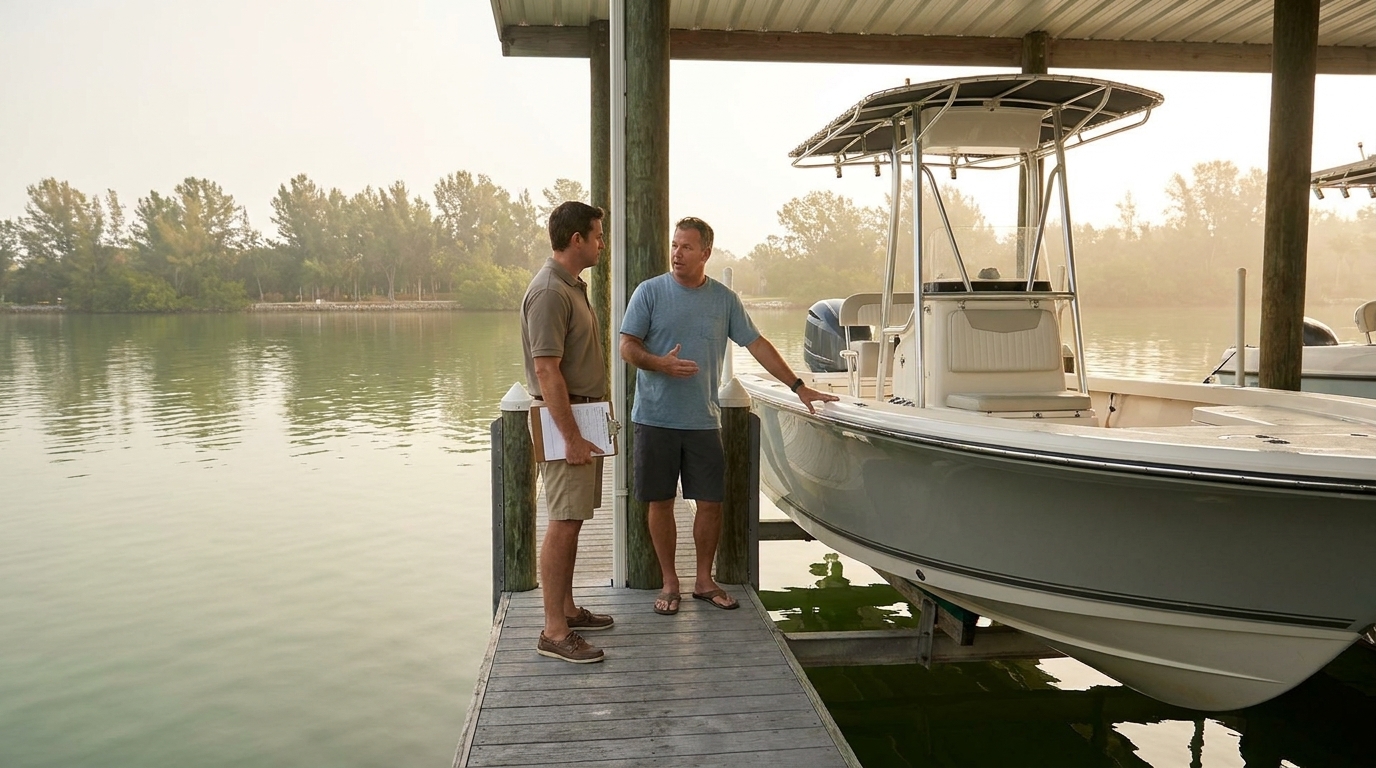
Yes, whenever possible. Attending the haul-out, sea trial, and systems inspection gives the buyer context the written report cannot fully convey — the sound of the engines, the feel of the helm, the condition of spaces photographs flatten. Surveyors generally welcome attentive buyers and will explain findings in real time, which makes the written report easier to interpret afterward.
What survey credentials should Saint Petersburg buyers require?
Buyers should require a surveyor holding recognized national accreditation credentials. National accreditation credentials serve as the practical standard for buyers evaluating surveyor qualifications in the Tampa Bay and Pinellas County markets.
Reading the report with help
A survey report is a technical document written to a professional audience, and the difference between a buyer who closes well and one who overpays often comes down to who is reading alongside them. Worldwide Yacht Sales, a family-owned brokerage founded in 1989 and based in Treasure Island, works with buyers across Saint Petersburg and the greater Tampa Bay market to interpret findings, structure renegotiation, and coordinate closing against insurance and lender timelines.
Readers in Saint Petersburg, FL who want a survey report read with them — line by line, against the deal in front of them — can reach Worldwide Yacht Sales at (727) 346-8229 or https://worldwideyachtsalesinc.com to get started.