Yacht Broker Buyer Questions in Dunedin, FL
The pre-offer checklist Dunedin, FL buyers should bring to any yacht broker meeting — the exact questions that surface risk before you sign.
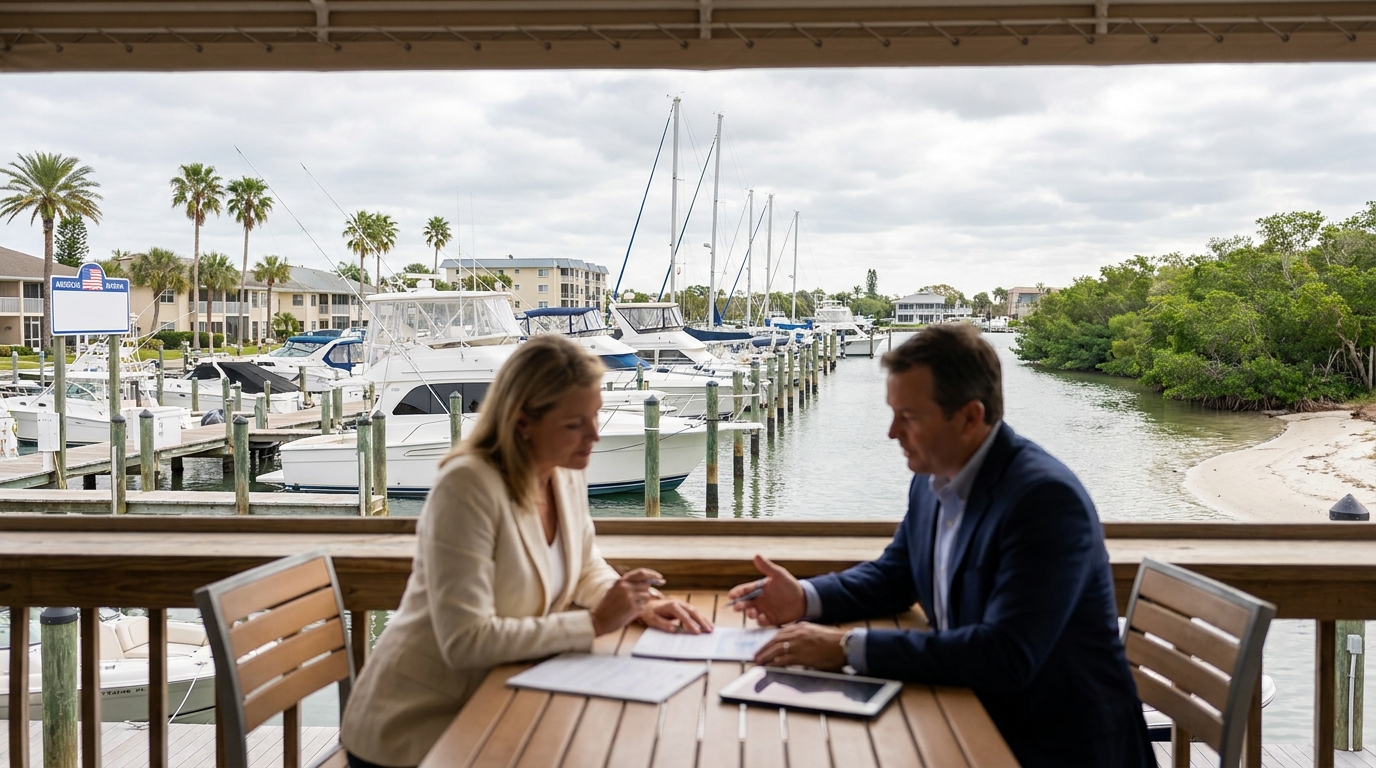
Before you make an offer on any yacht, the single most valuable hour you'll spend is the conversation with your broker. The right questions expose survey issues, title problems, undisclosed damage, and hidden costs — the kind of surprises that turn a dream vessel into a two-year headache. Below is the pre-offer checklist Dunedin, FL buyers should bring to that conversation, organized by what actually matters when money is about to change hands.
What credentials and licensing should a Florida yacht broker have?
In Florida, anyone selling a used vessel 32 feet or longer for another party must hold a yacht and ship broker license issued by the Florida Department of Business and Professional Regulation (DBPR). Ask for the license number, confirm it's active on the DBPR site, and verify the broker uses a state-approved escrow account for deposits. This one check eliminates most bad actors.
Beyond the license, ask how long the broker has been active on the Gulf Coast, whether they hold CPYB (Certified Professional Yacht Broker) status, and which yacht associations they belong to. Dunedin sits in a dense brokerage corridor between Clearwater and Tarpon Springs, so local reputation is easy to verify — and worth verifying. Worldwide Yacht Sales, for example, operates under Florida DBPR licensure and works with buyers across the Dunedin, Honeymoon Island, and Caladesi area regularly.
Who does the broker actually represent in this transaction?
Ask directly: "Are you the listing broker, a selling broker, or acting as a dual agent?" A listing broker has a fiduciary duty to the seller. A selling (buyer's) broker represents you. A dual agent represents both — legal in Florida with written consent, but you should know before you negotiate. This single question changes how much you should share about your budget and urgency.
If the broker represents the seller, consider engaging your own buyer's broker. The commission is almost always paid from the listing side, meaning buyer representation typically costs you nothing out of pocket while giving you an advocate at the table.
What is the complete ownership and title history of this vessel?
Request the full documentation trail: current USCG documentation or Florida title, chain of ownership, any liens, and the vessel's HIN (Hull Identification Number). Run the HIN through the Coast Guard's vessel documentation database and check for reported casualties. A broker who resists this request is a red flag; a competent broker offers it before you ask.
For any yacht previously titled outside Florida, ask about salvage history, freshwater vs. saltwater use, and hurricane-season storage locations. Vessels that lived through 2026's and 2026's Gulf Coast storm seasons may carry undisclosed damage — Hurricane Helene in particular displaced hundreds of boats across Pinellas County, and some quietly re-entered the market months later.
What surveys, sea trials, and inspections will the broker facilitate?
A legitimate broker welcomes an independent marine survey and captain-led sea trial as contingencies in the purchase agreement. Ask who pays for haul-out (customarily the buyer), which yards in the Dunedin–Clearwater area they typically use, and how long the inspection window is. Standard practice allows 5–10 business days between acceptance and survey completion.
Do not use a surveyor the broker "recommends most strongly" — use one you selected from SAMS (Society of Accredited Marine Surveyors) or NAMS (National Association of Marine Surveyors). Ask the broker if they'll be present at the survey and haul-out; the good ones show up.
What are the true all-in costs beyond the purchase price?
Florida charges 6% state sales tax on vessel purchases, capped at $18,000, plus local discretionary surtax (Pinellas County adds 1% on the first $5,000). Add title transfer, registration with the Pinellas County Tax Collector, documentation fees if you're USCG-documenting, and any broker-side closing fees. Ask for a written cost sheet before you offer.
| Cost Category | Typical Range (Florida, 2026) | Who Pays |
|---|---|---|
| Sales tax | 6% capped at $18,000 | Buyer |
| Pinellas County surtax | Up to $50 | Buyer |
| Marine survey | $20–$25 per foot | Buyer |
| Haul-out for survey | $400–$900 | Buyer |
| USCG documentation | $26 initial + prep fees | Buyer |
| Closing / escrow | $300–$750 | Negotiable |
| Insurance binding | 1.5%–3% of hull value/yr | Buyer |
How does the broker handle escrow, deposits, and closing?
Deposits — typically 10% of the offer — must sit in a Florida-licensed escrow account, never in the broker's operating account. Ask exactly where the funds are held, who signs to release them, and what the refund conditions are if survey findings kill the deal. Get the escrow agreement in writing before wiring anything.
Ask who prepares the Bill of Sale, the Purchase and Sale Agreement, and the closing statement. Reputable brokerages have in-house closing coordinators who manage documentation, lien releases, and title transfer end-to-end. One reviewer of Worldwide Yacht Sales noted the closing coordinator "made sure all the documentation was in perfect order" — that's the standard you're looking for.
Can the broker help with logistics, financing, and insurance?
If you're buying a vessel currently docked in St. Petersburg or Sarasota and moving it to Dunedin's marinas — the Dunedin Municipal Marina, Marker 1, or a private slip near Honeymoon Island — ask whether the broker coordinates transport, delivery captains, and dockage. For buyers outside Florida, this matters even more. Worldwide Yacht Sales's 4.8-star rating across 28 Google reviews reflects a consistent theme around remote-purchase support, including one buyer who bought in Florida and had the vessel shipped to Rhode Island.
Ask for lender introductions (marine financing runs 6.5%–8.5% for well-qualified buyers in 2026) and insurance broker referrals familiar with Gulf Coast hurricane underwriting — coverage terms tighten significantly for vessels kept in Pinellas County waters year-round.
Frequently Asked Questions
Is a yacht broker required to be licensed in Florida?
Yes. Florida requires any person or company selling a used vessel 32 feet or longer on behalf of another party to hold an active yacht and ship broker or salesperson license issued by the Department of Business and Professional Regulation. Licensure requires bonding, an approved escrow account, and continuing compliance. New vessels sold by manufacturer-authorized dealers are the primary exception.
How much should I put down as a deposit when making an offer on a yacht?
The standard deposit in Florida yacht transactions is 10% of the offer price, held in a licensed escrow account until survey and sea trial contingencies are satisfied. The deposit is refundable if the buyer rejects the vessel in writing within the inspection period defined in the Purchase and Sale Agreement. Never wire deposits to a broker's operating account.
Should I use the broker's recommended surveyor?
No. Select an independent surveyor accredited by SAMS or NAMS rather than one the listing broker recommends. Even honest brokers have working relationships that can create subconscious bias. Your surveyor works for you, reports to you, and owes their findings only to you — that independence is worth the modest cost of choosing your own professional.
What paperwork should I ask to see before making an offer?
Request the current title or USCG documentation, HIN verification, lien search results, maintenance and service logs, engine hours, prior survey reports if available, and any warranty documentation still in effect. For vessels previously registered out of state, ask for the original title chain. A broker who provides these proactively signals a well-managed listing.
Do I pay sales tax on a used yacht purchased through a broker in Florida?
Yes. Florida imposes 6% state sales tax on used vessel purchases, capped at $18,000 regardless of purchase price. Pinellas County adds a discretionary surtax of 1% on the first $5,000 (maximum $50). Tax is collected at registration or documentation. Certain interstate-delivery scenarios qualify for exemption — confirm your situation with the broker and a marine tax specialist.
How long does closing on a yacht typically take after an accepted offer?
Most Florida yacht closings run 15 to 30 days from accepted offer to funds transfer, depending on survey scheduling, financing approval, and documentation complexity. Cash purchases of well-documented vessels can close in as little as 10 days; USCG-documented vessels with liens or out-of-state titles may take 45 days. Your broker should provide a written timeline at contract signing.
Moving from questions to an offer
The questions above are the ones that separate a smooth closing from a costly education. A broker who answers them clearly, in writing, and without deflection is a broker worth working with. Readers in Dunedin, FL who want this handled professionally — from HIN verification through survey coordination to Pinellas County registration — can reach Worldwide Yacht Sales at https://worldwideyachtsalesinc.com to start the conversation before you write your first offer.