Yacht Broker Sea Trials & Surveys in Saint Petersburg, FL
Learn exactly how Saint Petersburg yacht brokers coordinate sea trials and marine surveys — who pays, what's inspected, and how buyers stay protected.
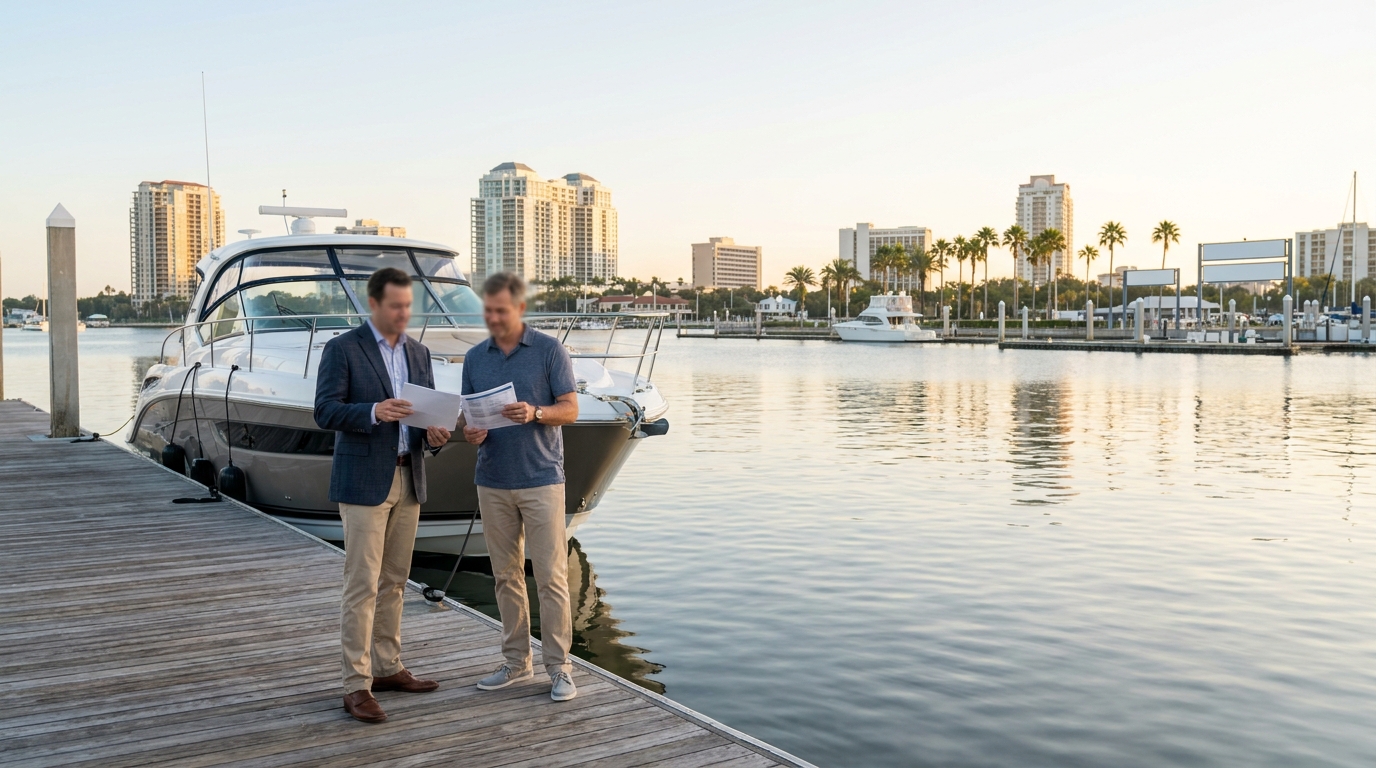
Yes — a qualified yacht broker in Saint Petersburg, FL coordinates both the sea trial and the marine survey on the buyer's behalf, though the buyer typically pays for the survey and any haul-out fees. The broker schedules the captain, surveyor, marina, and seller, attends both events, and translates the findings into a written response to the seller that can adjust price, trigger repairs, or unwind the deal.
That's the short answer. The longer answer — what actually happens on the docks at Bay Point, Salt Creek, or the Vinoy Basin — is where the value of a working broker becomes obvious.
What exactly does a yacht broker coordinate during a sea trial in Saint Petersburg?
A Saint Petersburg yacht broker coordinates the entire sea trial: booking a licensed captain, scheduling the seller and surveyor, confirming a fuel and water plan, choosing a route through Tampa Bay that exercises the vessel at cruise and wide-open throttle, and documenting engine data, electronics, and handling. The broker attends the trial and takes notes the surveyor and buyer will both rely on.
In practice, sea trials out of Saint Petersburg typically launch from the Municipal Marina, Harborage Marina, or a private slip in the Snell Isle or Coquina Key area. A good broker picks the route — often out past the Skyway pilings into open Gulf water — so the boat sees real conditions, not a glass-flat protected run. Expect roughly two to three hours on the water for a mid-size vessel.
Does the broker also handle the marine survey?
Yes. The broker helps the buyer select an accredited marine surveyor (typically SAMS or NAMS credentialed), schedules the haul-out at a Saint Petersburg-area yard such as Salt Creek Marine or Progressive Marine, and confirms the surveyor's scope covers hull, systems, rigging, and — separately — engines. The buyer chooses and pays the surveyor; the broker manages logistics.
Worldwide Yacht Sales, based in the Tampa Bay market, handles this coordination as standard practice on brokered transactions. That includes lining up a separate engine surveyor when the vessel has diesel inboards or high-hour outboards, since general marine surveyors don't tear into powerplants — that's a distinct specialty and a distinct invoice.
Who pays for the sea trial and survey?
The buyer pays for the marine survey, the engine survey (if separate), and the short-haul fee at the boatyard. The seller pays for the fuel used during the sea trial and provides the vessel and crew. The broker's commission — paid by the seller at closing — covers the broker's time coordinating and attending both events, regardless of whether the deal closes.
Typical cost ranges in the Saint Petersburg market
| Service | Who Pays | Typical 2026 Cost |
|---|---|---|
| Marine survey (hull & systems) | Buyer | $22–$28 per foot |
| Engine survey (per engine) | Buyer | $400–$900 |
| Short-haul at yard | Buyer | $300–$700 |
| Sea trial captain (if hired) | Buyer or split | $400–$800 |
| Fuel for sea trial | Seller | Varies by vessel |
| Broker coordination | Included in commission | — |
When in the transaction do the sea trial and survey happen?
Both happen after an accepted offer and signed IYBA purchase agreement, during the acceptance-of-vessel period — usually a 10 to 15 day window written into the contract. The buyer's deposit sits in escrow. If the sea trial or survey reveals material problems, the buyer can reject the vessel, renegotiate, or accept it as-is before the deadline expires.
Timing matters in Saint Petersburg specifically. Between June and November, Gulf Coast hurricane season and afternoon thunderstorms can push sea trials by days. Experienced brokers build slack into the acceptance window and monitor the National Hurricane Center forecast, because a rescheduled survey that pushes past the contract deadline without a written extension is how deals accidentally fall apart.
What does the broker do with the survey findings?
The broker helps the buyer draft a formal response to the seller within the contract's acceptance window: accept the vessel, reject it and recover the deposit, or accept conditionally pending repairs or a price adjustment. The broker negotiates that response with the listing side, using the surveyor's written report as the leverage point — not opinion, not vibes.
This is where broker experience separates outcomes. A surveyor might flag 40 items; only a handful genuinely justify a price move, and knowing which ones — moisture readings above threshold, non-compliant fuel systems, structural blistering versus cosmetic gel-coat crazing — is judgment built over hundreds of transactions.
How should you evaluate whether a broker actually handles this well?
Look for IYBA (International Yacht Brokers Association) membership, a Florida yacht broker license (required by the state for anyone brokering vessels 32 feet and over for compensation), verifiable transaction history in the Saint Petersburg market, and reviews that specifically mention survey and closing coordination — not just "nice guy, quick to respond." The state licensing requirement is enforced by the Florida Department of Business and Professional Regulation.
Worldwide Yacht Sales, for example, holds a 4.8-star rating across 28 Google reviews, with customers repeatedly citing documentation handling and remote-transaction logistics — one reviewer noted the closing team "made sure all the documentation was in perfect order." Those are the review themes that predict a smooth sea trial and survey, not generic five-star praise.
Frequently asked questions
Do I have to attend the sea trial and survey in person?
No. Buyers regularly purchase vessels in Saint Petersburg from out of state without attending. The broker attends on your behalf, the surveyor produces a written report with photos, and video walk-throughs of the sea trial are standard. One Worldwide Yacht Sales customer bought a Florida boat and had it shipped to Rhode Island without ever traveling south. Attending is ideal but not required.
Can I use my own surveyor, or does the broker pick one?
You choose your own surveyor — and you should. Ethical brokers will offer a list of SAMS or NAMS accredited surveyors working the Tampa Bay area but will not steer you to a specific one, because the surveyor works for you, not the broker. If a broker insists on a single surveyor, that's a signal to ask why.
What happens if the sea trial gets weathered out?
The broker requests a written extension of the acceptance period from the seller and reschedules. In Saint Petersburg, small-craft advisories and thunderstorm cells during summer months are common enough that experienced brokers pad the contract window. Never let the acceptance deadline pass without a signed extension — your deposit protections expire with it.
Is a haul-out required for every survey?
For any vessel you're financing or insuring, yes — a short-haul is standard so the surveyor can inspect the hull below the waterline, the running gear, and the through-hulls. Cash buyers occasionally skip it on small outboard boats, but skipping the haul on anything with an inboard, a keel, or over about 25 feet is a false economy.
How long does the full sea trial and survey day take?
Plan on a full day. A typical schedule in Saint Petersburg: 8:00 a.m. in-water inspection dockside, 9:30 a.m. sea trial out into Tampa Bay for two to three hours, midday return, early-afternoon haul-out and bottom inspection, late-afternoon debrief. Written reports usually arrive within 48 to 72 hours.
How do I find a trustworthy yacht broker near me in Saint Petersburg?
Verify Florida yacht broker licensing through the Department of Business and Professional Regulation, confirm IYBA membership, read reviews that specifically mention survey and closing execution, and ask for references from recent transactions in your boat's size and category. Firms like Worldwide Yacht Sales that show long-term repeat customers — some reviewers reference 20-year relationships — tend to be the safer choice over brokers with thin transaction histories.
The bottom line
Sea trial and survey coordination isn't a courtesy a yacht broker throws in — it's core to the job, and it's where a good broker earns their commission. The broker schedules, attends, documents, and negotiates. The buyer pays for the survey and haul-out, chooses the surveyor, and makes the final call on whether to accept the vessel.
Readers in Saint Petersburg, FL who want this handled by a brokerage with a documented track record in Tampa Bay transactions and remote-buyer logistics can reach Worldwide Yacht Sales at worldwideyachtsalesinc.com to talk through a specific vessel or listing.