Yacht Broker vs Boat Dealer in Cape Coral, FL
Deciding between a yacht broker and a boat dealer in Cape Coral? Here's how to choose based on vessel type, budget, and Gulf Coast buying realities.

If you're buying a boat in Cape Coral, the short answer is this: use a yacht broker when you want a pre-owned vessel, need help navigating survey and closing on a higher-value hull, or are shopping remotely from out of state. Use a boat dealer when you want a specific new model with factory warranty and manufacturer-backed service. For most Cape Coral buyers stepping up in size or buying used, a broker is the better fit.
Cape Coral is one of the most boat-dense markets in the country — its extensive canal system feeds straight into the Caloosahatchee River and out to the Gulf. That geography shapes what's for sale locally and who's best positioned to help you buy it. This guide walks through the real differences between brokers and dealers in Southwest Florida, when each makes sense, and what to look for before you sign.
What's the actual difference between a yacht broker and a boat dealer?
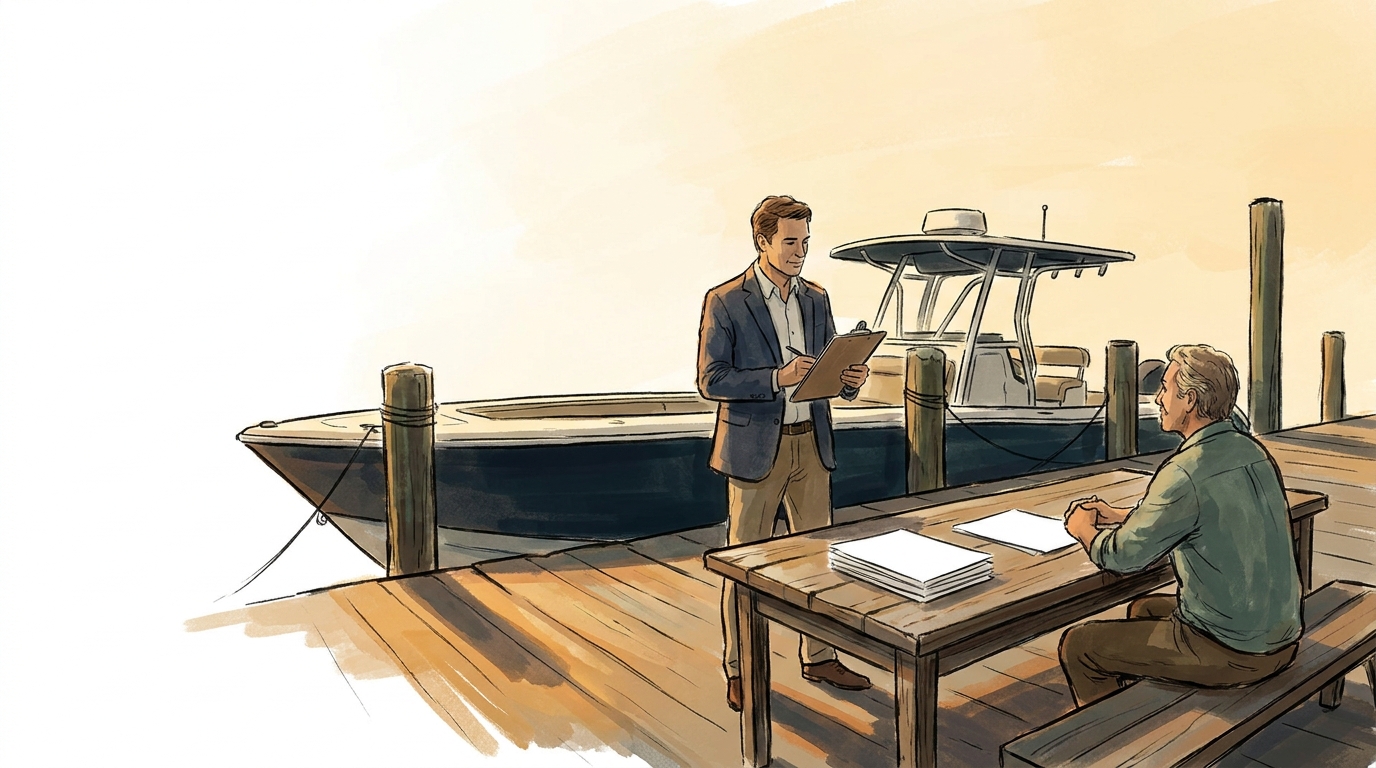
A yacht broker represents buyers or sellers in pre-owned vessel transactions across many brands, earning a commission (typically 5% to 10% of the sale price) and coordinating survey, sea trial, documentation, and closing. A boat dealer sells new boats tied to specific manufacturers with factory warranty and franchised service — a direct retail transaction, not a representation relationship.
The distinction matters more in Florida than in most states because so much of the inventory here is used, high-value, and traded between out-of-state buyers. A dealer's job ends when you drive the boat off the lot. A broker's job is to shepherd you through a transaction where the seller, the boat, and the buyer may all be in different places. Worldwide Yacht Sales operates on the brokerage side, which means the firm's role is to represent your interests through survey, negotiation, and closing — not to move a specific brand's inventory.
When does a boat dealer make more sense in Cape Coral?
A dealer is the right call when you want a new, current-model-year boat with factory warranty, you already know the exact make and model, and you value having a single franchised service center handle warranty work. Dealers are typical for runabouts, pontoons, smaller center consoles, and outboard-powered day boats — the categories that dominate Cape Coral's canal-based inventory.
If you're buying your first boat for canal cruising out of the Rosen Park area or day trips to Sanibel and Cayo Costa, and you want a new 22- to 26-foot bay boat or pontoon with a Yamaha or Mercury outboard, a local dealer is often the cleanest path. You get standardized pricing, factory financing options, and a service relationship for the outboard's break-in period and beyond.
When is a yacht broker the smarter choice?
A broker is the smarter choice when you're buying pre-owned, buying above roughly $150,000, buying remotely, or buying a vessel where condition and history matter more than sticker price. Brokers negotiate on your behalf, coordinate the marine survey and sea trial, handle Coast Guard documentation or Florida title transfer, and manage escrow — services a dealer typically doesn't provide because the dealer is the seller.
This matters in Cape Coral for a specific reason: a large share of buyers here are relocating from the Northeast or Midwest, or are snowbirds shopping during the November-to-April season without being physically present year-round. A brokerage that handles remote transactions well becomes essential. One recent Worldwide Yacht Sales customer described buying a boat located in Florida and shipped to Rhode Island, noting the broker's "responsiveness, honesty, and hand-holding throughout made the experience easy." That's the brokerage value proposition in one sentence.
How do the costs actually compare?
Dealer pricing is generally fixed at MSRP or a negotiated discount, with the dealer's margin built in. Broker transactions carry a 5% to 10% commission on the sale price, but that commission is typically paid by the seller — the buyer doesn't write a separate check for representation. Annual ownership costs run 10% to 15% of hull value regardless of how you bought, covering dockage, insurance, fuel, and maintenance.
| Factor | Boat Dealer | Yacht Broker |
|---|---|---|
| Inventory | New, brand-specific | Pre-owned, all brands |
| Typical vessel size | Under 35 ft (runabouts, pontoons, center consoles) | 30 ft and up, including 30–50 ft center consoles ($500K–$3M range) |
| Cost to buyer | MSRP or negotiated price | Commission paid by seller (5%–10% of sale) |
| Warranty | Factory-backed | Depends on age; survey drives price adjustments |
| Best for | New-model buyers, local service | Used vessels, remote buyers, higher-value hulls |
| Handles closing | In-house sales paperwork | Survey, sea trial, documentation, escrow |
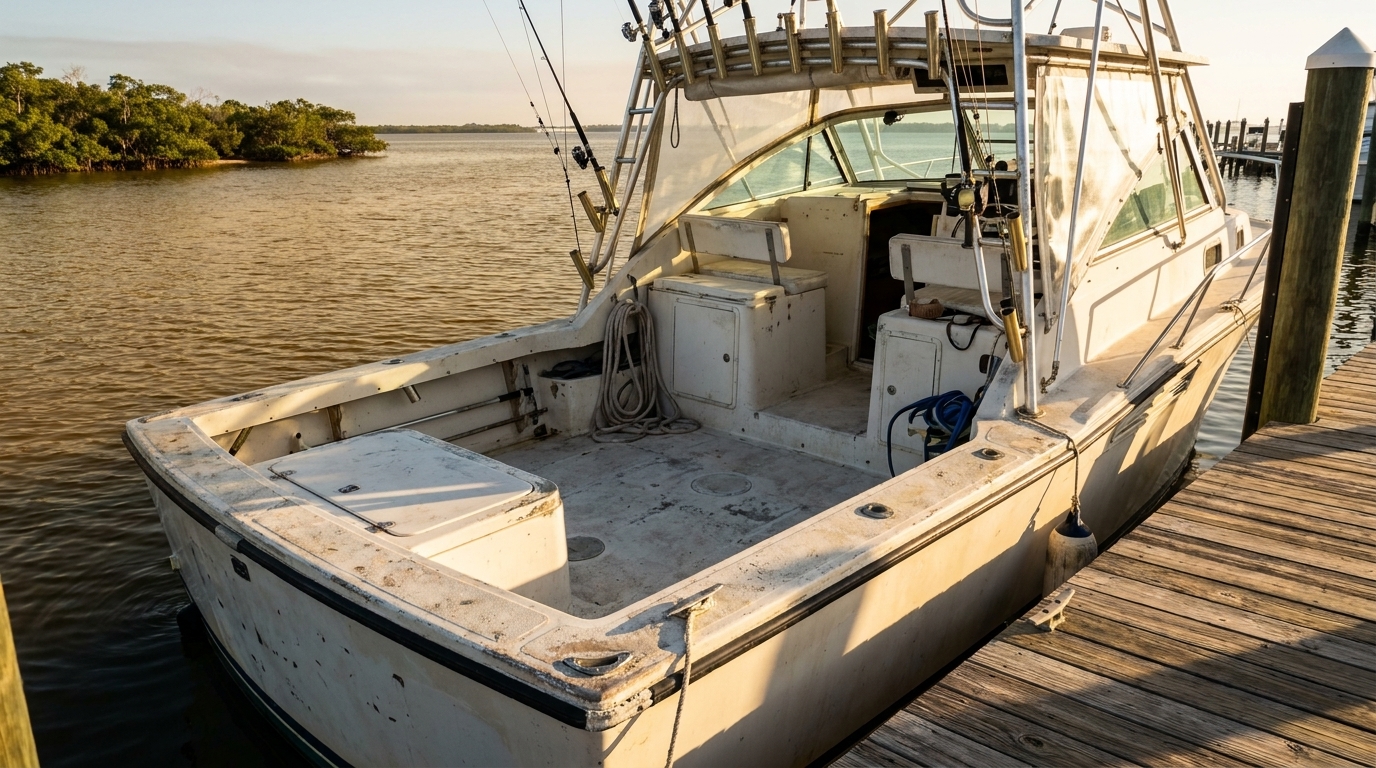
For a $750,000 pre-owned center console — a common Cape Coral purchase for offshore anglers running out to the Gulf — the broker commission comes out of the seller's proceeds, and the buyer gains professional representation through the entire due-diligence process at no direct cost.
What should Cape Coral buyers look for in a broker?
Look for professional credentials (IYBA membership or CPYB certification), verified transaction experience in Florida, transparent handling of deposits and escrow, and a track record with remote buyers. Florida yacht purchases involve state sales tax, Coast Guard documentation or state title transfer, and a purchase survey and sea trial — a competent broker manages all of it as standard practice.
The Gulf Coast market is spread across Cape Coral, Fort Myers, Naples, and Fort Lauderdale, so a broker with regional reach — not just a local storefront — often has better access to the right hull. A broker's track record with remote-transaction expertise, communication throughout the process, and coordination of financing, inspection, and transportation maps directly to what matters here. One long-term client noted having bought and sold boats through the firm "for 20 years," which is the kind of continuity that's hard to fake in this business.
Cape Coral's canal system means many buyers keep their boat behind their house rather than at a marina, which shifts priorities toward draft, air-draft under fixed bridges, and boats designed for both protected canal running and offshore Gulf work. Hurricane season (June through November) also drives insurance and haul-out considerations that a knowledgeable broker will surface before closing, not after.
Because Cape Coral's local inventory skews smaller — runabouts, center consoles, pontoons — buyers looking for cruising yachts, express cruisers, or sportfish boats above 40 feet typically shop the broader Southwest Florida market. A broker who works regionally is better positioned to source those hulls than a single-location dealer whose inventory is limited to what's on the lot.
Frequently asked questions
Do I pay the yacht broker's commission as the buyer?
No. In standard Florida yacht transactions, the broker's commission — typically 5% to 10% of the sale price — is paid by the seller out of closing proceeds. As a buyer, you get professional representation, survey coordination, negotiation, and closing management without writing a separate check for those services. This is one of the strongest arguments for using a broker on pre-owned purchases.
Can a yacht broker help me buy a new boat instead of used?
Sometimes, but new-boat purchases are usually handled through authorized dealers because manufacturers assign territorial rights. Brokers occasionally act as dealers for specific brands, but their core value is pre-owned representation. If you know you want a specific new model with factory warranty, start with a dealer; if you're open to a lightly used version of the same boat at a lower price, start with a broker.
What's included in a standard Florida yacht purchase survey?
A marine survey covers hull condition, structural integrity, mechanical systems, electrical systems, safety equipment, and often a sea trial with the surveyor aboard. Surveys are paid by the buyer and typically drive final price negotiation — findings can lead to price reductions or repair credits. In Florida, a survey and sea trial are standard steps before final acceptance, and skipping either is a serious red flag.
How does Florida sales tax work on a yacht purchase?
Florida assesses state sales tax on yacht purchases as part of closing, and the buyer is responsible for planning that cost into the transaction. Tax treatment can vary based on whether the vessel is registered in Florida, documented with the Coast Guard, or moved out of state after purchase. A broker experienced in Florida closings will walk you through the specifics for your situation rather than leaving it to guesswork.
Should I use a local Cape Coral broker or one from Fort Lauderdale?
It depends on the vessel. For sub-40-foot center consoles, bay boats, and boats designed for canal-based ownership, a broker working the Southwest Florida market — Cape Coral, Fort Myers, Naples — is often best positioned. For larger cruising yachts and sportfish boats above 50 feet, the Fort Lauderdale brokerage ecosystem offers deeper inventory. A regional broker can bridge both.
How long does a typical Cape Coral yacht purchase take?
Florida yacht transactions involve multiple sequential steps before closing. That timeline covers deposit and escrow setup, survey scheduling, sea trial, survey acceptance or renegotiation, financing (if applicable), documentation or title transfer, and final closing. Remote buyers may take slightly longer for logistics; cash buyers with pre-arranged surveys can close faster. A broker managing the process tightly is what keeps it inside that window.
The bottom line for Cape Coral buyers
If you're buying new, under 30 feet, and want a factory warranty relationship, a dealer is the straightforward path. If you're buying used, buying higher value, buying remotely, or want someone in your corner through survey and closing, a broker earns their commission — and in most Florida transactions, that commission comes out of the seller's proceeds anyway.
Readers in Cape Coral who want brokerage representation on a purchase or sale can reach Worldwide Yacht Sales at worldwideyachtsalesinc.com to start the conversation. Whether you're stepping up to your first offshore center console or listing a well-kept cruiser after a decade of Gulf runs, the right representation is what turns a complicated transaction into a smooth one.