Boat to Yacht Upgrade in Treasure Island, FL: Start Here
Stepping up from a small boat to a yacht near Treasure Island? Here's where to begin — draft, slips, Florida rules, trade-ins, and surveys explained.
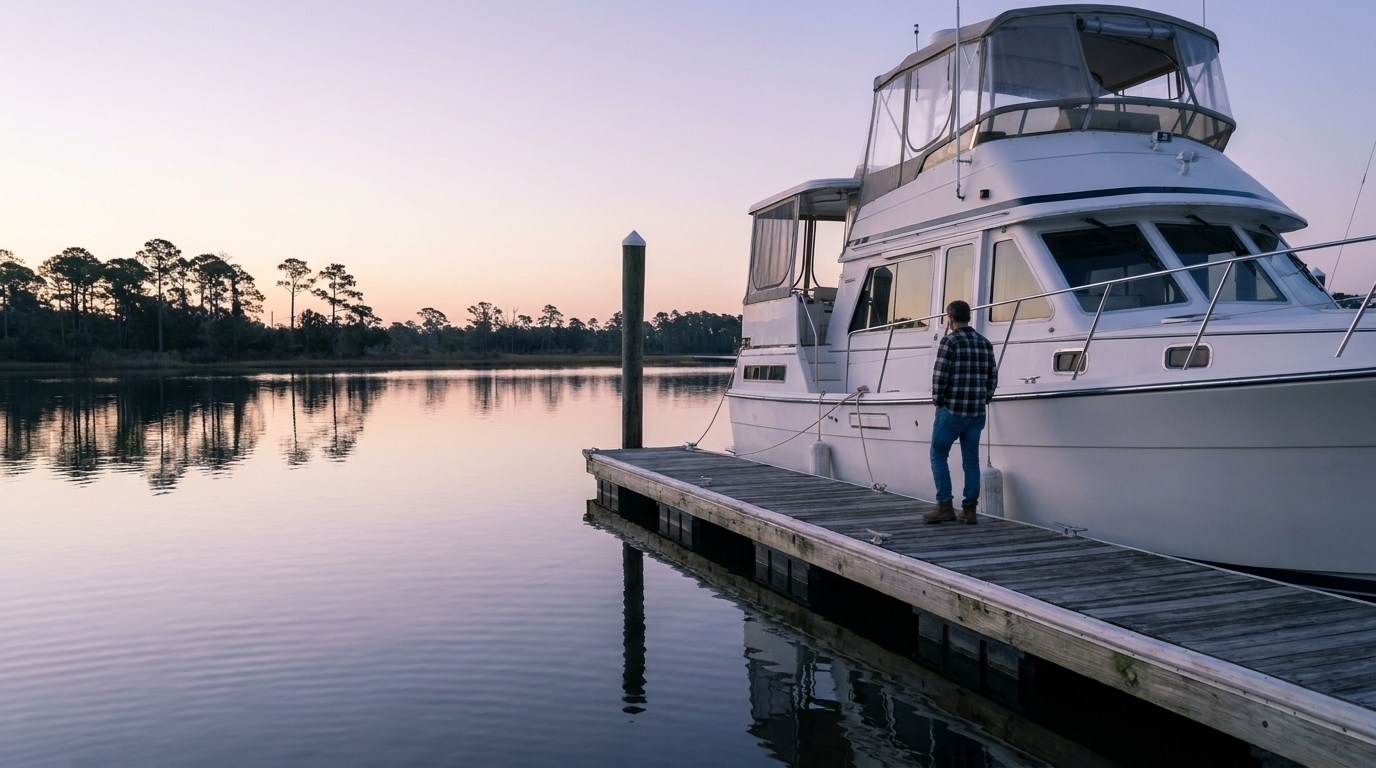
Upgrading from a small boat to a yacht near Treasure Island begins with three decisions, in this order: where the yacht will physically live, how its draft and air draft match the local water, and how the trade of the current boat will be structured against the purchase. Everything else — financing, surveys, insurance, electronics — follows those answers. The waters around Treasure Island reward buyers who make slip, draft, and storm-plan decisions before they make model decisions.
What does "stepping up to a yacht" actually mean on the Gulf Coast?
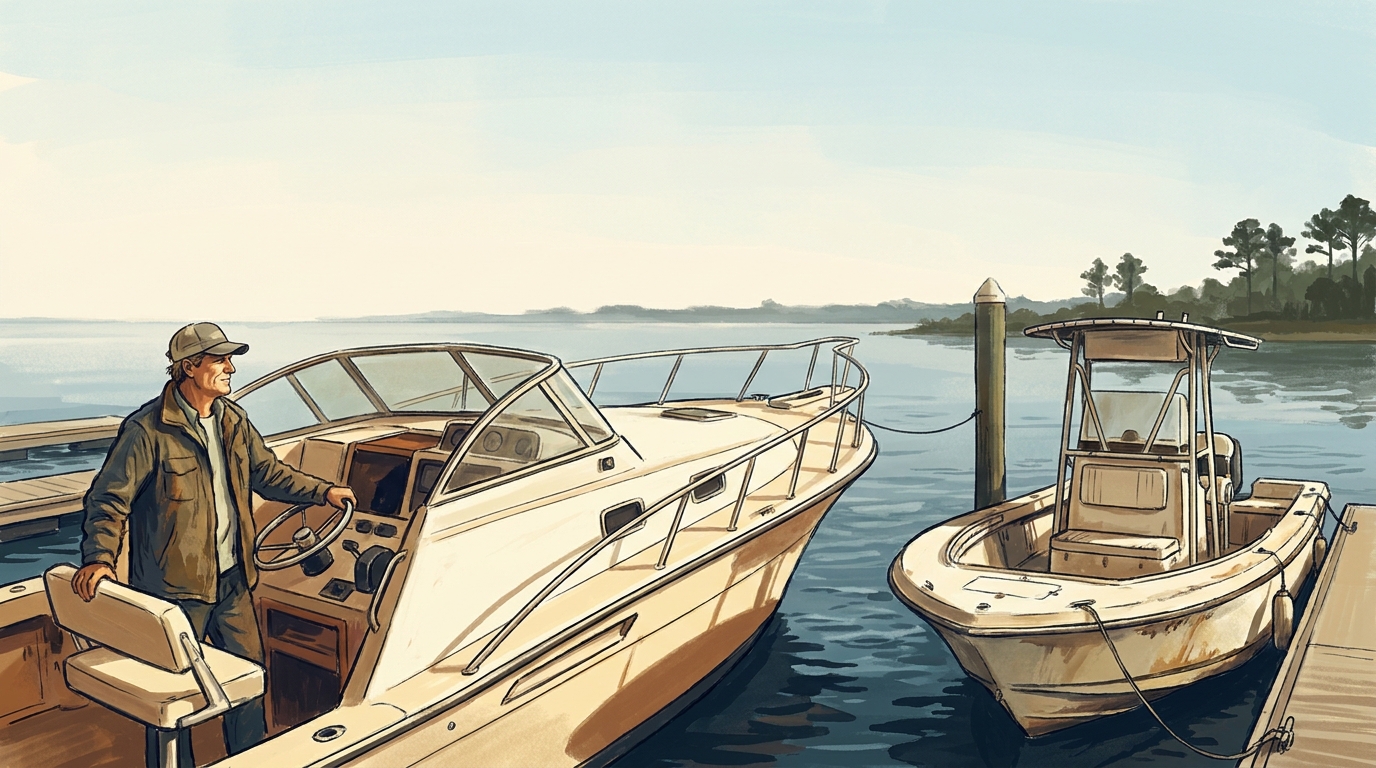
On the Gulf Coast near Treasure Island, stepping up usually means moving from a trailerable powerboat into a vessel large enough to require a wet slip, a more involved maintenance program, and a documented storm plan. The jump is as much operational as it is financial: systems complexity, draft, and insurance underwriting all change meaningfully once a boat crosses into the size range typical of entry-level cruising yachts.
Buyers coming from a smaller center console often underestimate how different the ownership rhythm feels. A yacht is rarely trailered home after a weekend; it lives at a marina, needs regular bottom work, and depends on shore power, HVAC, and sanitation systems that didn't exist on the previous boat. That is the real upgrade, and it shapes every purchase question that follows.
Where should a Treasure Island buyer begin the upgrade process?
Start with the slip, not the listing. Confirm what size, age, and hurricane plan a Treasure Island or Pinellas-area marina will accept before shortlisting any yacht, then work backward from the slip's dimensions and depth to the boats that can actually live there. Worldwide Yacht Sales, a family-owned brokerage based at 12781 Kingfish Drive in Treasure Island, routinely walks step-up buyers through this sequencing before any offer is written.
From Worldwide Yacht Sales's yacht buying team: Tampa Bay and a lot of the Gulf side are shallow, so draft matters more than buyers from deep-water areas expect. Fixed bridges on the Intracoastal limit air draft, and some marinas have size, age or hurricane-plan rules before they'll rent you a slip. Insurers here also want a written named-storm plan, so we check all of that before a buyer commits to a boat.
That guidance captures the three constraints that most often derail a step-up purchase here: shallow water, fixed bridges on local waterways, and marina or insurer rules that filter out otherwise appealing boats. A buyer who settles those first narrows the market efficiently instead of falling in love with a hull that cannot reach its own slip at low tide.
How do draft, air draft, and local waters shape the shortlist?
Draft and air draft are the two measurements that eliminate the most candidate yachts around Treasure Island. The local waters include shallow stretches and fixed bridges that cap vertical clearance; a yacht that fits the budget but not the bridge is not a candidate. Confirm the specific route from the intended slip to open water before shortlisting any model.
Practical questions a buyer should answer in writing before touring boats:
- What is the controlling depth at the slip at mean low water?
- What is the lowest fixed bridge on the normal run to the Gulf?
- Does the yacht's beam fit the slip and the fairway behind it?
- Can the boat be hauled at a yard the owner can actually reach?
How does a trade-in and purchase typically work through a broker?
A broker-run step-up usually follows a defined sequence: establish the use case and budget, document the existing boat's condition and equipment, make the larger-boat offer contingent on survey and sea trial, and coordinate the trade allowance and closing paperwork together. The trade allowance and the purchase price should be itemized separately on the paperwork so both sides of the transaction are transparent.
Worldwide Yacht Sales describes its approach to sellers as providing top-tier marketing for every listing, which matters on the trade side: the existing boat is often marketed in parallel with the upgrade search rather than simply absorbed at wholesale. Buyers should ask any broker how the trade-in will be valued, whether it will be listed or acquired, and how timing will be handled if the two transactions do not close on the same day.
| Stage | What the buyer does | What the broker handles |
|---|---|---|
| Define use case | Confirms crew size, range, overnight needs, slip | Matches criteria to realistic candidates |
| Value the trade | Gathers records, equipment list, service history | Prepares market comps and listing or trade terms |
| Offer and survey | Signs purchase agreement with contingencies | Coordinates hull, engine, and sea-trial inspections |
| Close and deliver | Reviews title/documentation and tax paperwork | Manages escrow, delivery, and registration handoff |
What Florida rules apply to a first-time yacht owner?
Florida does not issue a general boat-driver's license, but operators born on or after January 1, 1988 must generally complete approved boating-safety education to run a vessel powered by a motor of 10 horsepower or more, and must carry proof plus photo ID. Boats 16 feet or longer generally need a Coast Guard–approved throwable flotation device in addition to a wearable life jacket for each person on board.
Most motorized vessels used on Florida waters must also be registered, and many must be titled after purchase, though some federally documented yachts follow a different path. Registration, state titling, and federal documentation are distinct processes — one does not replace the others. A buyer should confirm current requirements with the Florida Fish and Wildlife Conservation Commission and the county tax collector handling the transaction before closing.
How should hurricane season shape the decision?
Treasure Island sits in a hurricane-exposed stretch of the Gulf Coast, and insurers underwriting yachts here increasingly expect a written named-storm plan before binding coverage. That plan specifies where the boat will be moved or hauled, who executes it, and on what timeline — and marinas themselves may require a copy before renting a slip to a larger vessel.
The upgrade decision therefore includes a storm-season decision: haul-out yard access, hurricane-rated slip availability, and insurance quotes should all be settled before signing. A yacht the owner cannot insure or cannot protect in a storm is a liability, regardless of how well it fits the cruising plan the other eleven months of the year.
What does the budget look like beyond the sticker price?
Purchase price is only the entry point. A step-up yacht adds dockage or dry storage, insurance, fuel, routine maintenance, haul-outs, electronics upgrades, safety gear, and the cost of a pre-purchase survey and engine inspection. Older or larger boats generally carry higher operating costs per foot, and used-market asking prices vary widely by model, year, condition, and equipment — closed-sale evidence from comparable boats is more useful than any single listing average.
Florida's tax treatment of a trade can reduce the taxable purchase amount when the trade is part of the same transaction with a registered dealer or broker, but the exact calculation depends on the structure of the deal. Confirm the current rule with the Florida Department of Revenue or a qualified tax professional before closing, and keep the trade allowance and purchase price itemized separately on the paperwork.
Frequently asked questions
Do I need a boating license to operate a yacht in Florida?
Florida does not issue a general boat-driver's license. However, operators born on or after January 1, 1988 must generally complete an approved boating-safety education course to operate a vessel with a motor of 10 horsepower or more, and must carry proof of completion along with photo ID. Exemptions can apply, so verify current requirements with the Florida Fish and Wildlife Conservation Commission.
How much yacht can I realistically keep near Treasure Island?
The practical ceiling is set by three local constraints: slip length and depth at the intended marina, the controlling depth on the route to open water, and the lowest fixed bridge clearance between the slip and the Gulf. Many Gulf-side waters are shallow, so draft often matters more than overall length. Confirm all three measurements before committing to a boat.
Should I buy new or used when stepping up for the first time?
Most first-time yacht buyers step up into a used boat because it compresses depreciation and allows a larger, better-equipped vessel for the same budget. The tradeoff is condition risk, which is why an independent hull survey, engine survey, and sea trial are essential. Used asking prices vary widely, so compare like-for-like listings by model, year, hours, and equipment rather than relying on averages.
What safety equipment is required on a yacht in Florida?
Recreational boats generally need a Coast Guard–approved wearable life jacket for each person on board. Boats 16 feet or longer generally also need a throwable flotation device, with limited exceptions. Additional federal and state requirements apply depending on the vessel's size and configuration, including visual distress signals, fire extinguishers, and navigation lights. Verify the full checklist before the first trip.
How does trading in my current boat affect the deal?
Trading in through a registered dealer or broker can reduce the taxable purchase amount when the trade is part of the same transaction, under Florida tax guidance. The trade allowance and purchase price should be itemized separately on the paperwork. Timing matters too: if the trade is listed rather than absorbed, the buyer should plan for a potential gap between selling the old boat and taking delivery of the new one.
Do I need federal documentation or state titling for a larger yacht?
Most motorized vessels on Florida waters must be registered, and many must be titled after purchase. Larger yachts are often also federally documented, which is a separate process from state titling and registration — one does not replace the others. The right combination depends on the vessel and intended use; confirm requirements with the Florida agency and USCG before closing.
Working with a Treasure Island broker
A step-up purchase near Treasure Island rewards local knowledge: the brokers who work these waters daily know which marinas accept which boats, which yards can haul what draft, and which insurers write policies on older hulls. Worldwide Yacht Sales was founded in 1989 by Bill Warner, and in 2022 Traver Smith purchased the brokerage from Warner, who remained actively involved as an advisor. The firm states it has been serving yacht buyers and sellers for nearly four decades.
Readers in Treasure Island who want a step-up search handled professionally can reach Worldwide Yacht Sales at (727) 346-8229 or https://worldwideyachtsalesinc.com to begin the process — from valuing the current boat to shortlisting yachts that fit the slip, the route, and the storm plan.