Buying a Liveaboard Houseboat in Treasure Island, FL
What first-time buyers need to verify before purchasing a liveaboard houseboat near Treasure Island, FL — slips, sewage rules, surveys, and timing.
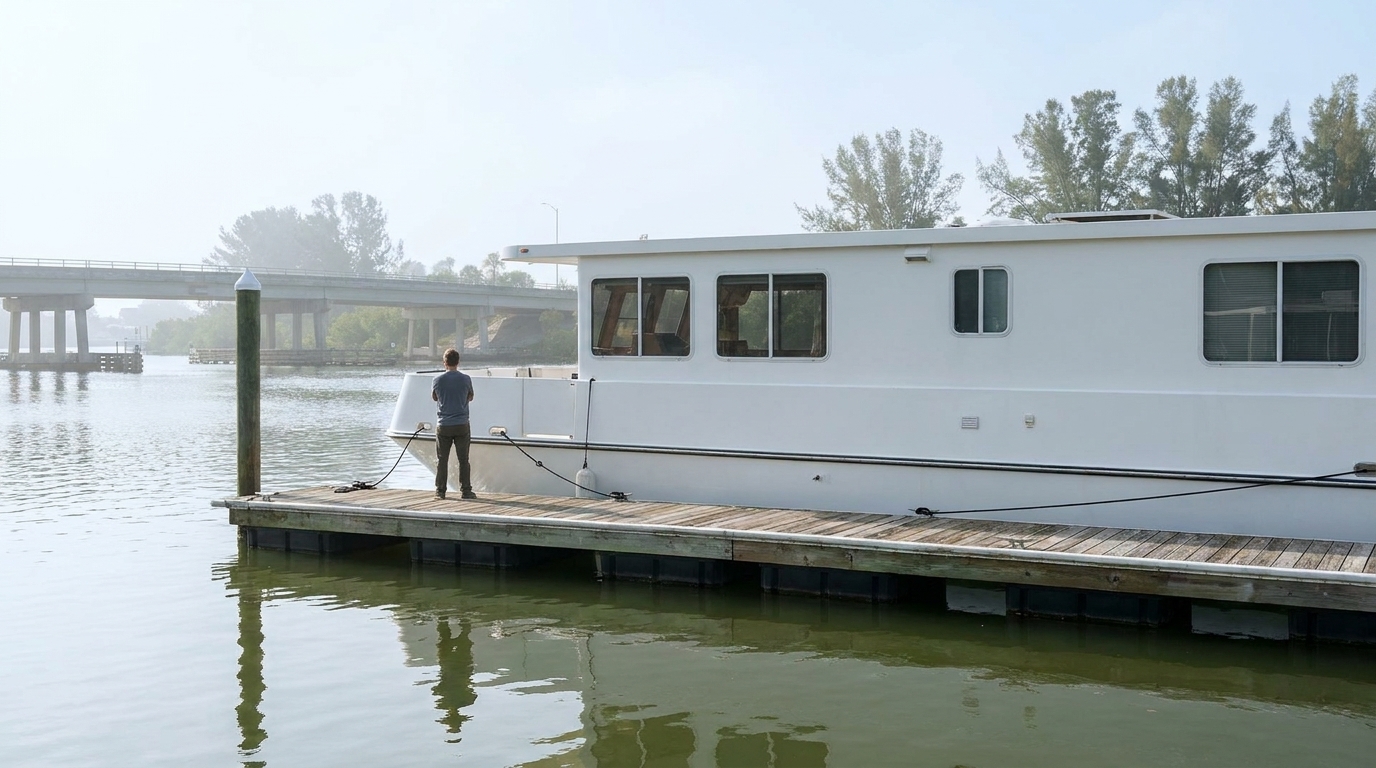
Buying a liveaboard houseboat near Treasure Island, FL is less about finding the right vessel and more about lining up a legal, insurable slip before you sign anything. The direct answer: secure a confirmed liveaboard slip, a current marine survey, and a bound insurance quote before closing — in a Gulf Coast market where qualifying slips are limited and hurricane-season underwriting tightens by summer, waiting even one season commonly means a narrower boat selection, higher insurance cost, and a slip waitlist that can stretch into the following year.
That sequencing is the whole game. The vessel you want is replaceable; the slip, the sewage pump-out access, and the policy binder are not — and each of those is governed by rules specific to Treasure Island's city limits, not generic Florida boating law.
What does "buying a liveaboard houseboat" actually mean in Treasure Island, FL?
In Treasure Island, a liveaboard purchase is a three-part transaction: the vessel itself, a marina slip zoned to permit liveaboard use, and compliant sewage handling. Florida Statutes §327.60 expressly preserves local authority to prohibit or restrict mooring or anchoring of floating structures and liveaboard vessels, so Treasure Island's own rules — not state defaults — decide where you can legally live.
Treasure Island is an incorporated municipality governed by its own zoning code, organized in Chapter 70, Planning and Zoning. That means city-level approvals, not county zoning, control marina and liveaboard uses within city limits. Worldwide Yacht Sales, headquartered at 12781 Kingfish Drive in Treasure Island, works with buyers through this local layer every week — and it is the layer most first-time buyers overlook when they begin shopping listings outside the area.
How much does waiting cost a first-time liveaboard buyer here?
Waiting compounds in three predictable ways on the Pinellas County Gulf Coast: slip scarcity, insurance tightening, and seasonal survey backlogs. Each of these moves against the buyer the longer a decision drags into spring and summer, and together they can turn a six-week purchase into a six-month one.
Slip availability narrows first
Liveaboard-approved slips in Treasure Island are a finite inventory. Because local governments have statutory authority to restrict liveaboard mooring, marinas that do allow it tend to run full and keep waitlists. A buyer shopping in November has materially more negotiating room with marina managers than one shopping in April, when snowbird departures are already spoken for.
Insurance underwriting tightens before hurricane season
Florida marine insurers routinely restrict new liveaboard bindings as the Atlantic hurricane season approaches. Buyers who wait until May or June frequently discover that carriers either won't quote until after the hurricane season ends, or require named-storm haul-out plans that the chosen marina cannot accommodate. That one delay can invalidate an otherwise complete deal.
Survey and sea-trial scheduling slips
SAMS and NAMS-credentialed marine surveyors covering the Pinellas County coast book out further in peak buying months. A survey scheduled four weeks out instead of one is four more weeks of slip-rent liability, insurance uncertainty, and the seller's right to entertain other offers.
What should buyers verify before writing an offer?
Buyers should verify, in writing, that the target marina's slip is zoned for liveaboard use under Treasure Island's Chapter 70 zoning code, that pump-out or sewage reception is available, and that the vessel can be insured at that specific slip. These three confirmations — zoning, sewage, insurance — are what separate a houseboat purchase from a houseboat problem.
From Worldwide Yacht Sales's yacht buying team: They underestimate how much the layout and systems matter day to day. They need good AC, enough fresh water and holding, a usable galley, and an engine room they can get into. They also underestimate how hard it is to find liveaboard slips and get insurance. Line those up before you buy. A good survey and sea trial are a must.
Sewage and the 10-day rule
Under Florida Statutes §327.60(4), local governments may require proof of proper sewage disposal for covered vessels or floating structures moored or anchored more than 10 consecutive days in specified areas, provided approved pump-out or waste-reception services are available. For a liveaboard — by definition moored continuously — this is not a hypothetical. Confirm the marina's pump-out schedule and whether the slip falls inside a designated no-discharge zone.
Dock, lift, or dredge work at the slip
If the slip the buyer wants needs any dock modification, that work is subject to Pinellas County dock and dredge-and-fill review standards found in Pinellas County Code Chapter 58, Article XV, §58-530(b), and separate water and navigation permits may apply. Permit timelines here routinely add months to a plan to customize a slip for a specific vessel's beam or draft.
How does the enforcement side actually work?
Enforcement in Treasure Island splits between the city and state marine officers. Florida Statutes §327.70 authorizes state and local law-enforcement officers to enforce Chapters 327 and 328 — including marine sanitation, prohibited anchoring or mooring, and long-term anchoring — by uniform boating citation. Treasure Island's own planning, zoning, and code-enforcement offices handle land-use approvals and marina-use compliance within city limits.
Pinellas County Code Enforcement operates only in unincorporated Pinellas County and does not enforce zoning or property codes for properties inside Treasure Island city limits. That jurisdictional split matters: a buyer calling the county about a Treasure Island slip issue will be redirected, and timelines reset.
What are the realistic timing tradeoffs?
| Decision Point | Act Now (Fall/Winter 2026) | Wait to Spring/Summer |
|---|---|---|
| Liveaboard slip selection | Broader inventory, more waitlist movement | Thinner inventory, longer waitlists |
| Insurance binding | Carriers quoting new liveaboard risks | Pre-hurricane-season underwriting restrictions |
| Marine survey scheduling | Typical 1–2 week lead time | Multi-week backlogs common |
| Sewage/pump-out verification | Marinas easier to reach pre-season | Peak-season responsiveness drops |
| Negotiating leverage | Seller motivated, fewer competing buyers | Multiple-offer scenarios more likely |
When is it actually smart to wait?
Waiting makes sense in three specific scenarios. First, if the buyer has not yet confirmed a liveaboard-zoned slip in Treasure Island — walking into a purchase without that is riskier than any market-timing concern. Second, if the vessel's survey reveals systems issues the seller won't address; a deferred close with written repair commitments beats a rushed close with hidden costs. Third, if hurricane-season underwriting has already frozen quotes, waiting until the November renewal window may produce better insurance terms than forcing a summer bind.
Outside those cases, the structural pressures on Gulf Coast liveaboard inventory — slip scarcity, seasonal underwriting, and permit timelines — generally reward the buyer who moves decisively in the fall and winter months.
How does working with a brokerage change the sequence?
A local brokerage compresses the verification timeline by running slip, sewage, survey, and insurance confirmations in parallel rather than in series. Worldwide Yacht Sales was founded in 1989 by Bill Warner and has been serving yacht buyers and sellers for nearly four decades; in 2022, Traver Smith purchased Worldwide Yacht Sales from founder Bill Warner, while Warner remained actively involved as an advisor. That continuity matters when the deal depends on Treasure Island-specific contacts — marina managers, pump-out operators, surveyors, and underwriters who already know the local rules.
Worldwide Yacht Sales describes itself as a family-owned business, is headquartered in Florida, and serves clients across the globe. For a first-time liveaboard buyer, the practical benefit is simple: the brokerage has already done the Chapter 70 zoning conversation with the marinas it works with.
Frequently asked questions
Do I need a special liveaboard permit in Treasure Island, FL?
Treasure Island's zoning code (Chapter 70, Planning and Zoning) governs marina and liveaboard uses within city limits, and Florida Statutes §327.60 preserves local authority to restrict liveaboard mooring. Whether a specific slip is approved for liveaboard use depends on that parcel's zoning district and any site-plan or special-use approvals. Verify directly with the local municipality before buying.
How does sewage disposal work for a liveaboard moored long-term?
Under Florida Statutes §327.60(4), local governments may require proof of proper sewage disposal for covered vessels or floating structures moored or anchored more than 10 consecutive days in specified areas, where approved pump-out or waste-reception services are available. Liveaboard owners should confirm pump-out schedules with the marina and whether the slip is in a designated no-discharge zone.
Who enforces liveaboard rules on the water?
Florida Statutes §327.70 authorizes state and local law-enforcement officers to enforce Chapters 327 and 328, including marine sanitation, prohibited anchoring or mooring, and long-term anchoring, via uniform boating citation. Within Treasure Island city limits, planning and code-enforcement offices handle zoning and land-use issues; Pinellas County Code Enforcement handles only unincorporated areas.
What happens if I want to modify the dock or slip?
Dock and dredge-and-fill activities in Pinellas County are subject to review standards in Pinellas County Code Chapter 58, Article XV, §58-530(b), and separate water and navigation permits may be required for work in or over the water. Plan for multi-month permit timelines and confirm scope with the county before committing to slip modifications.
Why does hurricane season affect my purchase timing?
Florida marine insurers tighten new liveaboard bindings as the Atlantic hurricane season approaches on June 1. Buyers who close in fall or winter typically have a wider choice of carriers and fewer named-storm haul-out requirements than buyers trying to bind coverage in May or June. Timing the close around underwriting windows can save weeks of friction.
Should I rely on Pinellas County for Treasure Island zoning questions?
County code enforcement operates only in unincorporated areas and does not enforce zoning or property codes for properties inside incorporated city limits. Treasure Island's own planning and zoning office is the correct authority for marina and liveaboard zoning questions within the city.
The bottom line for Treasure Island buyers
The decision rule is practical: if a buyer can confirm a liveaboard-zoned slip, a workable pump-out arrangement, a survey date, and a willing insurer within the next 60 days, moving now preserves inventory and avoids hurricane-season underwriting friction. If any one of those four is missing, fix that first — don't let a vessel contract outrun the slip and the policy that make it legal to live on.
Readers in Treasure Island, FL who want this sequenced professionally can reach Worldwide Yacht Sales at (727) 346-8229 or https://worldwideyachtsalesinc.com to get started.