Buying a Pontoon Boat in Treasure Island, FL: 2026 Guide
What pontoon boats cost near Treasure Island, FL in 2026, how Gulf conditions shape the choice, and what to verify before you buy.
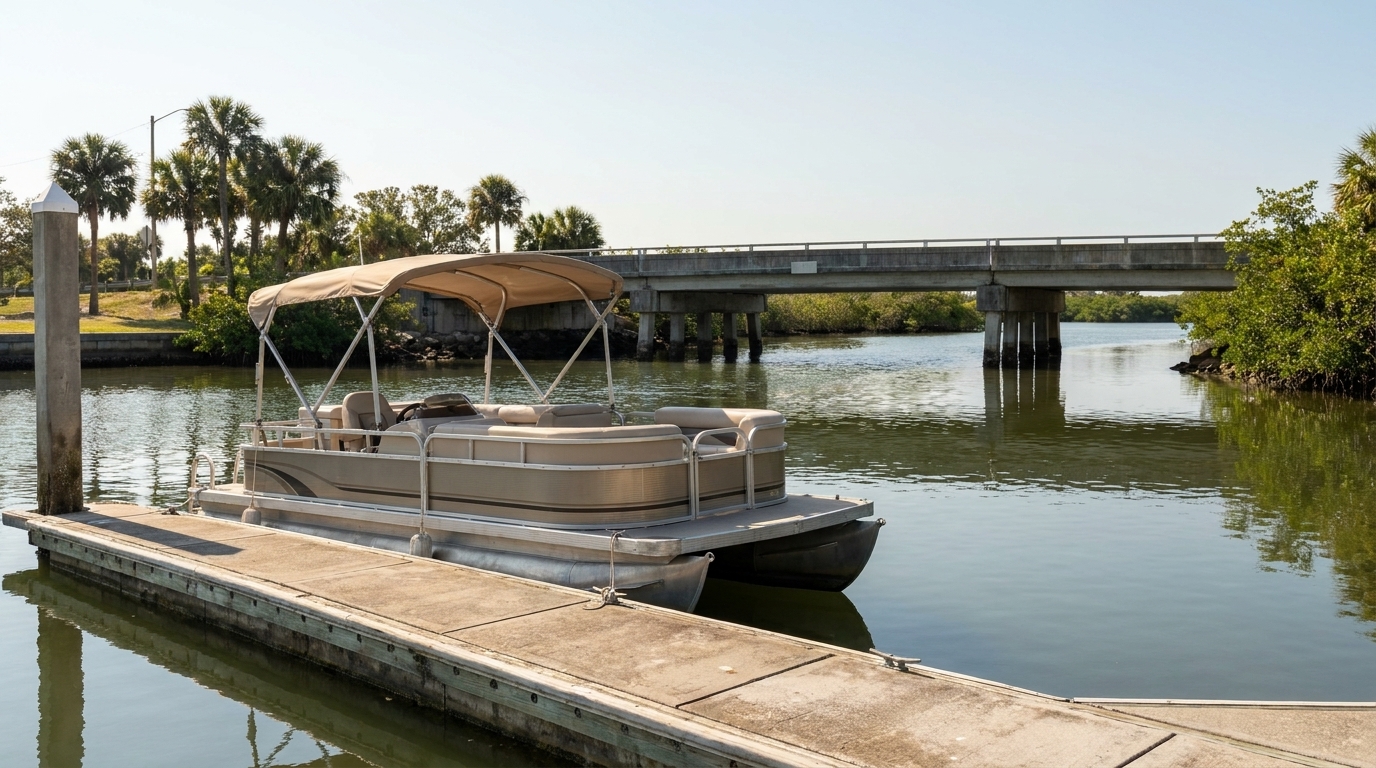
Buying a pontoon boat near Treasure Island, FL in 2026 means budgeting roughly $39,500 to $56,000 for an entry-level new 22-footer, $40,000 to $84,000 for a mid-range model, and $100,000 or more for a larger high-performance tritoon — while used asking prices in the broader Tampa Bay area range from about $3,750 to $10,400 for older or basic boats, with a median near $6,500. The right choice depends on where you plan to run the boat: protected Intracoastal cruising rewards a smaller, shallower-draft pontoon, while open Gulf runs demand more length, more horsepower, and a harder look at hull design.
Treasure Island sits on a Gulf barrier island with direct access to the Intracoastal Waterway and Tampa Bay — a setting that suits pontoons for most of the year but adds saltwater corrosion, bridge-clearance limits, and hurricane planning to the buying calculus. Worldwide Yacht Sales, headquartered in Florida and based locally in Treasure Island, works through these variables with buyers as part of its brokerage process.
What does a pontoon boat actually cost near Treasure Island in 2026?
Across the Tampa Bay/St. In the local market, new pontoons with moderate horsepower engines occupy the entry-level price tier, mid-range configurations step up considerably, and larger tritoons with high-output power push into a premium price tier.
Specific listings illustrate the spread. Tampa Bay area listings span the full price spectrum, with new entry-level models appearing at the lower end of the ranges above and larger or better-equipped boats pushing toward the upper bounds; used asking prices vary widely depending on age, condition, and configuration.
Those are asking prices, not verified sale prices, and they generally exclude freight, dealer prep, electronics, taxes, title, and registration — line items that can add meaningfully to the out-the-door number. Treasure Island-specific transaction data isn't published, so treat the ranges as the market context a brokerage uses to position a boat, not an appraisal.
Sample pricing by category
| Category | Typical range | Example listing (asking) |
|---|---|---|
| Older/basic used (Tampa Bay) | $3,750 – $10,400 | — |
| Entry-level new (22 ft, 115–150 hp) | $39,500 – $56,000 | — |
| Mid-range new (22–24 ft) | $40,000 – $84,000 | — |
| Larger/high-performance (28 ft, 250 hp) | $100,000 – $120,000+ | Not represented in cited listings |
New vs. used pontoon boat in Treasure Island: which makes more sense?
New makes sense when a buyer wants full factory warranty, the latest corrosion coatings for Gulf service, and a known maintenance record from day one. Used makes sense when budget is the constraint and the buyer is willing to pay for a marine survey, with newer pre-owned examples typically asking more than older or basic boats in the surrounding market.
Saltwater changes the math. Aluminum tubes, deck fasteners, wiring, and outboard powerheads degrade faster in a Gulf environment, so a used pontoon's maintenance history, prior storage (covered vs. open, fresh vs. salt), and corrosion condition weigh more heavily here than they would inland. A professional marine survey is the standard safeguard — a qualified surveyor will inspect hull integrity, aluminum tube condition, electrical systems, and outboard service records before money changes hands.
How do Gulf and Intracoastal conditions change which pontoon to buy?
The Intracoastal Waterway is an extensive inland waterway system that provides protected cruising conditions well suited to pontoon boats. For a Treasure Island buyer who plans to stay inside the Intracoastal and Tampa Bay, those conditions favor a mid-size pontoon with moderate horsepower, a shallow draft, and features optimized for shade and comfort at displacement speeds.
The ICW extends well beyond Florida, which is relevant context because Treasure Island owners planning longer coastal cruises will want more length, more freeboard, and tritoon construction. Open Gulf crossings are a different problem entirely: a sheltered-water pontoon can be out of its depth once seas build, which is why many Gulf-side buyers step up to a tritoon with high-output power.
From Worldwide Yacht Sales's yacht buying team: Tampa Bay and a lot of the Gulf side are shallow, so draft matters more than buyers from deep-water areas expect. Fixed bridges on the Intracoastal limit air draft, and some marinas have size, age or hurricane-plan rules before they'll rent you a slip. Insurers here also want a written named-storm plan, so we check all of that before a buyer commits to a boat.
What Florida rules and local considerations apply to pontoon buyers?
Florida requires boating-safety education for operators born on or after January 1, 1988 who run a vessel with a motor of 10 hp or more — a threshold virtually every pontoon exceeds. Operators must carry an FWC boating-safety ID card or an accepted equivalent, and most motorized vessels must be registered through the Florida Fish and Wildlife Conservation Commission or the county tax collector. Titling and registration transfers are handled through the Florida Department of Highway Safety and Motor Vehicles (FLHSMV) or the county tax collector.
Local factors shape the purchase as much as state rules. Treasure Island's barrier-island position means saltwater exposure is constant, hurricane season runs through fall, and winter and spring bring visitor demand that affects slip availability at waterfront access points. Many local marinas enforce their own size, age, and named-storm plan requirements before issuing a slip, and insurers writing hull coverage in this market often require a written storm plan as a condition of binding.
How should a Treasure Island buyer actually run the purchase?
The sequence that works: define the mission (Intracoastal day cruising vs. Tampa Bay vs. occasional Gulf runs), set a realistic all-in budget that includes storage and insurance, shortlist boats that match the mission within budget, and commission a marine survey on any used candidate before signing. Worldwide Yacht Sales — a family-owned brokerage that has been serving yacht buyers and sellers for nearly four decades — works through this sequence with buyers and provides top-tier marketing for sellers on the other side of the transaction.
Ownership change at the brokerage is relevant to buyers evaluating who to work with: Traver Smith purchased Worldwide Yacht Sales from founder Bill Warner in 2022, with Warner remaining actively involved as an advisor. The firm was originally founded in 1989 by Warner.
Frequently asked questions
What size pontoon boat is right for Tampa Bay and the Intracoastal near Treasure Island?
For protected Intracoastal cruising and Tampa Bay, a 22–24-foot pontoon with 115–150 hp handles most conditions well. Buyers who want occasional Gulf access or heavier passenger loads should size up to a 24–28-foot tritoon with 200–250 hp. Shallow-draft design matters more here than inland buyers expect, because much of Tampa Bay and the Gulf side is genuinely shallow.
Do I need a boating license to run a pontoon in Florida?
Florida requires a boating-safety education credential for any operator born on or after January 1, 1988 who runs a vessel powered by a motor of 10 hp or more. Virtually every powered pontoon crosses that threshold. Qualifying operators must carry an FWC boating-safety identification card or an accepted equivalent while underway.
How much does it cost to register a pontoon boat in Florida?
Vessel registration is handled through the Florida Fish and Wildlife Conservation Commission or the county tax collector, and titling transfers go through the Florida Department of Highway Safety and Motor Vehicles. Current fees, deadlines, and transfer requirements change periodically and should be confirmed directly with those agencies before closing on a purchase.
Is a marine survey worth it on a used pontoon in a saltwater market?
Yes. The Gulf saltwater environment accelerates corrosion on aluminum tubes, deck hardware, electrical systems, and outboard powerheads, which makes a used pontoon's condition harder to judge visually than it would be inland. A professional marine survey documents hull integrity, tube condition, wiring, and outboard service history — the exact failure points saltwater drives.
What's the difference between a pontoon and a tritoon for Gulf use?
A pontoon rides on two aluminum tubes; a tritoon adds a third center tube that improves lift, handling in chop, and horsepower capacity. For Treasure Island buyers who expect to see any Gulf conditions or want to run above cruising speed, a tritoon is generally the better match.
Can I keep a pontoon on a lift at Treasure Island?
Many Treasure Island and Pinellas County waterfront properties and marinas accommodate pontoon lifts, but size, age, and named-storm plan rules vary by facility, and slip availability tightens during winter and spring visitor months. Insurers writing hull coverage in this market also typically require a written named-storm plan. Confirm specific lift capacity and marina rules before committing to a boat.
Working with a local brokerage
Buying a pontoon near Treasure Island is less about picking a brand and more about matching mission, budget, and the Gulf operating environment — then verifying condition with a survey and running the Florida paperwork correctly. Readers in Treasure Island who want this handled professionally can reach Worldwide Yacht Sales at (727) 346-8229 or https://worldwideyachtsalesinc.com to get started.