Pre-Purchase Yacht Survey in Tampa, FL: What It Reveals
What a pre-purchase yacht survey reveals on used boats in Tampa Bay — corrosion, blisters, storm history — and why waiting to order one gets expensive.
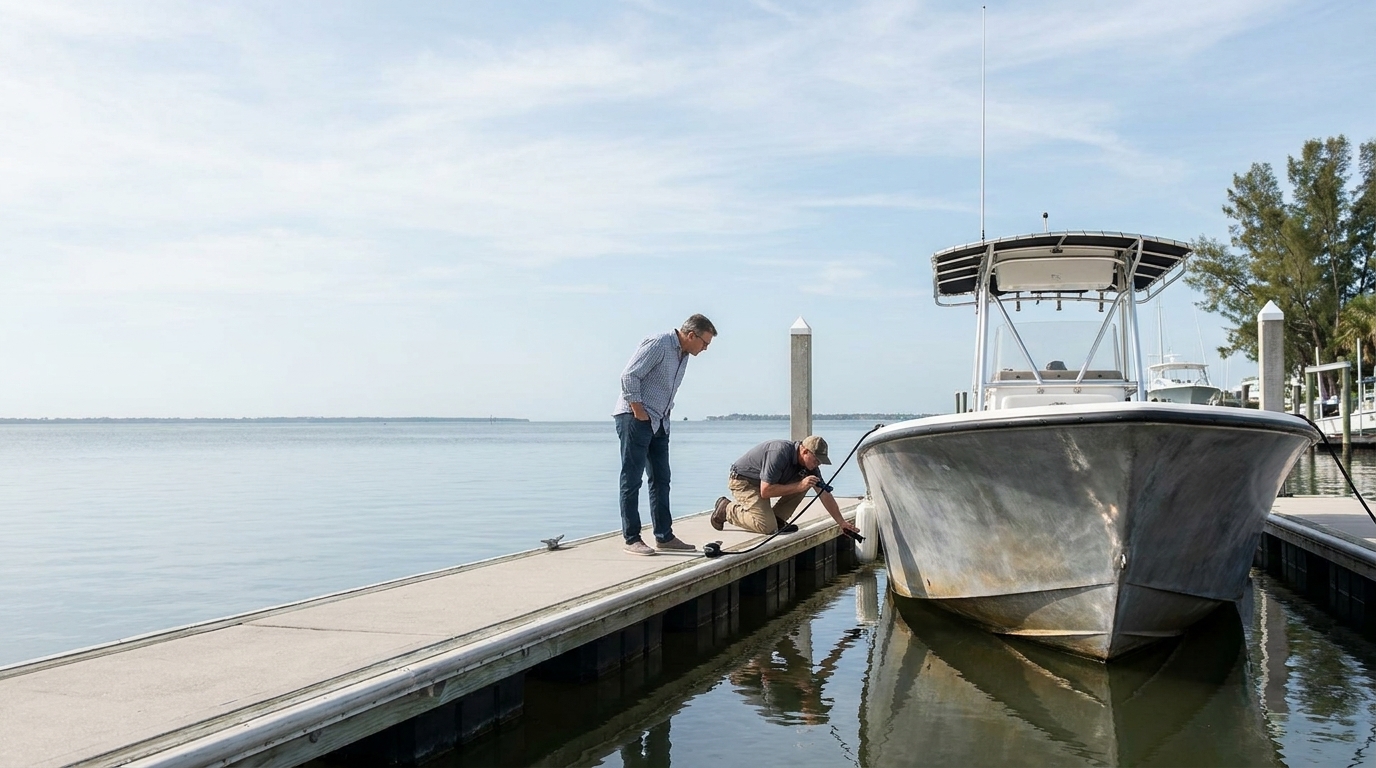
A pre-purchase yacht survey in Tampa, FL reveals the true condition of a used vessel's hull, deck, machinery, electrical, fuel, plumbing, safety equipment, and underwater gear — the findings that decide whether a boat is worth its asking price, needs a renegotiation, or should be walked away from entirely. In Tampa Bay's warm, humid, saltwater environment, those findings frequently center on corrosion, osmotic blisters, failing through-hulls, and storm-damage history. Waiting to commission a survey — or skipping it to "save" the fee — is the single most expensive decision a buyer in this market routinely makes.
What does a pre-purchase yacht survey actually reveal in Tampa Bay?
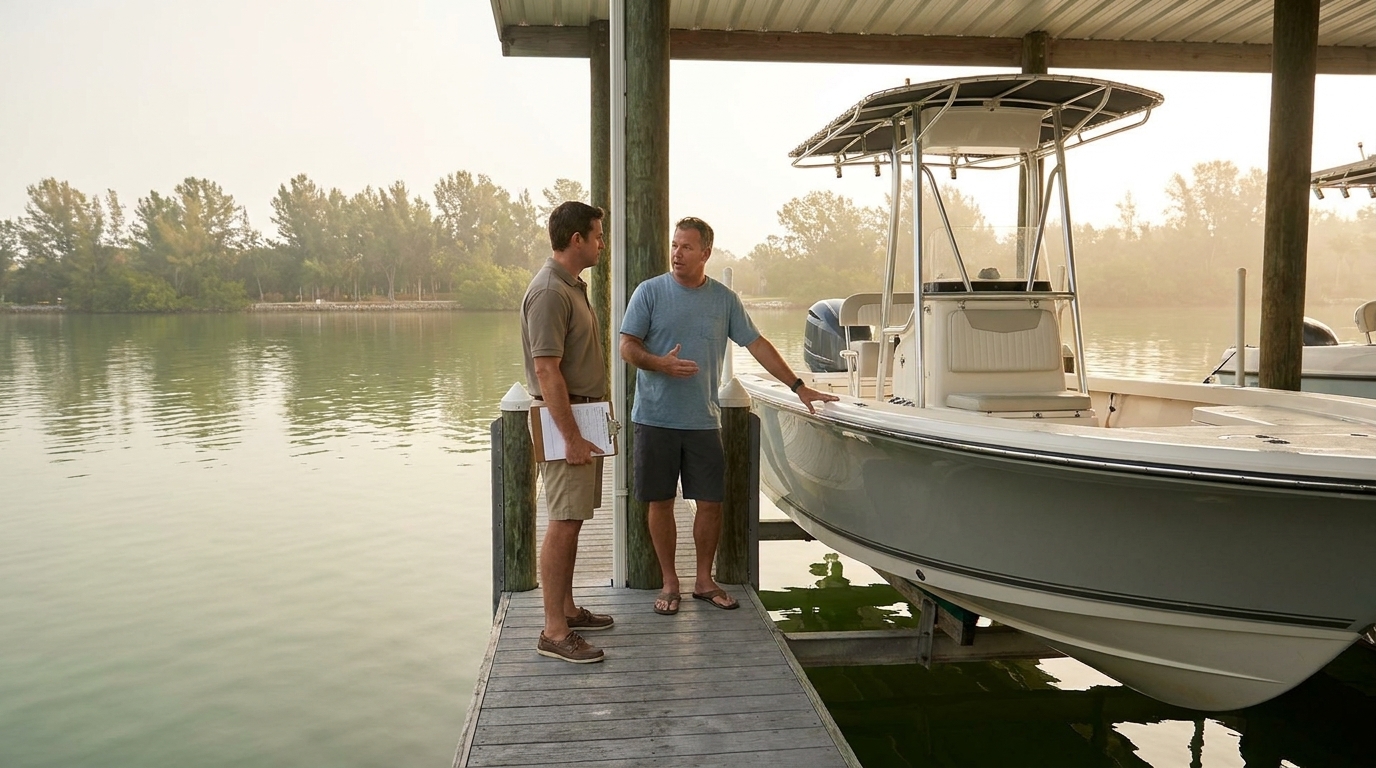
A pre-purchase survey in Tampa Bay reveals structural, mechanical, and safety condition across the entire vessel, documented in a written report that can run as long as 30 pages. On survey day, three things happen at minimum: an in-the-water inspection, a haulout for an out-of-the-water inspection, and a trial run. The report is the buyer's negotiating document and the insurer's underwriting basis.
In Tampa Bay specifically, the warm, humid, saltwater environment accelerates corrosion, water intrusion, and deterioration of through-hulls, wiring, hoses, canvas, and upholstery. A competent surveyor working a Gulf Coast boat scrutinizes those systems more aggressively than a surveyor working a freshwater vessel inland would. The same motoryacht hauled in a saltwater Gulf port and hauled in a freshwater inland port will not present the same findings — the local chemistry of the water and air guarantees it.
Worldwide Yacht Sales, a family-owned brokerage based at 12781 Kingfish Drive in Treasure Island, has handled Tampa Bay-area transactions from consultation through delivery long enough to know how survey findings translate into real negotiation leverage. Buyers who want to understand what a local survey typically uncovers — and where the money leaks — should think about the findings in three buckets: environmental, mechanical, and documentary.
Which Tampa Bay–specific findings show up most often?
The findings that recur on Tampa Bay used yachts are driven by saltwater exposure, humidity, and hurricane season. Surveyors regularly flag through-hull corrosion, blistered hull bottoms, degraded wiring and hoses, UV-damaged canvas and upholstery, and air-conditioning and refrigeration systems worn by near-continuous use. Any one of these items can run into five figures to correct.
The environment does not pause. A boat kept wet year-round in a warm saltwater estuary — which, with its long boating season, most are — runs its air-conditioning, refrigeration, and bilge systems far harder than a seasonal boat up north. Service history on those systems matters, and a surveyor who can't find records usually finds problems. The same is true for bonding systems and sacrificial anodes: saltwater electrolysis is relentless, and a boat with tired zincs and a weak bonding circuit can shed thousands of dollars of underwater metal in a single season.
Hurricane exposure is the other defining local factor. Buyers in storm-prone coastal markets should request documentation of storm preparation, named-storm damage, repairs, and any insurance claims, because storm history materially affects both price and future insurability. A boat that rode out a named storm on a poorly chosen mooring and was repaired cheaply will reveal itself under a competent survey — stress cracks around hardware, mismatched gelcoat, replaced stringers — but only if the surveyor is looking.
What does waiting on a survey actually cost?
Waiting to order a survey costs buyers money in four compounding ways: lost negotiation leverage, insurance friction, repair exposure, and deal collapse at the last minute. Each stage of delay narrows the buyer's options and widens the seller's.
In the first week after an offer is accepted, a survey ordered promptly gives the buyer time to obtain repair estimates for material findings before closing — the single most effective way to use a survey report as a negotiation tool. Delay two weeks, and the buyer is suddenly trying to schedule a surveyor, a haulout, and a sea trial inside a shrinking contingency window. Delay four weeks, and the buyer is either waiving contingencies to hit closing or losing the deposit to extend them.
The insurance side compounds the problem. Lenders and insurers typically require a pre-purchase survey by a surveyor affiliated with one of the two main marine surveyor associations — SAMS (Society of Accredited Marine Surveyors) or NAMS (National Association of Marine Surveyors) — and some insurers accept only one or the other. A buyer who waits until the last week to confirm which affiliation the insurer requires can find the surveyor they already hired is the wrong one.
Repair exposure is the hardest-dollar cost. A buyer who closes without a survey — or with a hurried one — inherits every deferred-maintenance item the seller walked away from. On a boat kept in a warm, wet saltwater environment year-round, that can mean a full canvas replacement, an air-conditioning rebuild, through-hull replacement at the next haulout, and blister repair across the bottom. None of those are small line items.
When is waiting the right call?
Waiting is defensible in two specific cases: when the vessel is genuinely still being prepared for sale (owner finishing bottom work, systems being commissioned after storage), or when the buyer has not yet confirmed financing and insurance structure. In either case, ordering a survey too early risks paying for a condition assessment that no longer reflects the boat at closing.
Outside those cases, waiting is almost always a mistake. The survey is the one document that gives the buyer a defensible basis to renegotiate price, require repairs, or walk away with the deposit intact. Delaying it delays every one of those options.
How do survey findings connect to Tampa Bay pricing?
Asking prices in Florida brokerage inventory are not sale prices, and survey findings routinely move the final number. Those are statewide figures, not Tampa Bay-specific, and should not be used as local appraisals.
The table below shows where survey findings typically land against those asking-price ranges.
| Vessel size | Statewide FL median asking | Typical Tampa Bay survey focus |
|---|---|---|
| All sizes (statewide median) | $429,229 | Through-hulls, wiring, canvas, A/C service history |
| 40–60 ft | $599,000 | Bottom blisters, bonding, generator hours, storm-damage disclosure |
| 60–80 ft | $1,699,000 | Running gear, hydraulics, stabilizers, full systems audit |
The pattern is consistent: as vessel size and price climb, the systems count climbs faster, and the cost of an undiscovered defect climbs faster still. A buyer looking at a large motoryacht and a buyer looking at a mid-size sportfish are both well served by a thorough survey — but the larger-boat buyer who skips one is risking more money per hour of inspection saved than almost any transaction in recreational boating.
What else should Tampa Bay buyers verify before closing?
Beyond the survey itself, buyers should verify Florida title and registration status, boating-safety education requirements, and route-specific operating constraints. Florida vessel title and registration are governed by Chapter 328 of the state statutes, with applications processed through the state motor-vehicle system and county tax-collector channels. Florida's boating-safety education requirement applies to persons born on or after January 1, 1988, operating a vessel with a motor of 10 horsepower or more, under Chapter 327.
Route-specific constraints matter too. Tampa Bay's mix of sheltered bay waters, shallow areas, marked channels, and Gulf of Mexico access means draft, air draft, range, and intended cruising grounds are legitimate survey and vessel-selection factors. Manatee-protection zones, posted speed restrictions, and bridge clearances shape what a given boat can actually do on the reader's intended routes.
Frequently asked questions
How long does a Tampa Bay pre-purchase yacht survey take?
Most pre-purchase surveys take a full day on the water and at the yard, covering an in-the-water inspection, a haulout for the out-of-the-water inspection, and a sea trial. The written report typically follows within a week or two and can run as long as 30 pages. Complex or larger vessels may require additional specialist inspections — engines, rigging, and electronics — scheduled around the main survey day.
Who pays for the survey and haulout in a Tampa Bay yacht purchase?
The buyer typically pays for the pre-purchase survey, the haulout, and the sea trial fuel, because the report belongs to the buyer and is used for the buyer's negotiation and insurance. Exact allocation can be negotiated in the purchase agreement. Buyers should confirm the arrangement in writing before survey day, along with who is responsible if the haulout reveals a condition that stops the trial.
Do yacht brokers handle sea trials and surveys?
Yacht brokers coordinate sea trials and surveys but do not perform the survey itself — the surveyor must be an independent professional, typically affiliated with SAMS or NAMS, hired by and reporting to the buyer. A broker's role is logistics: scheduling the haulout, coordinating with the seller, attending the sea trial, and helping the buyer interpret findings in the context of the purchase agreement.
What should Tampa Bay buyers look for beyond the survey report?
Buyers should look for documented maintenance history on heavily used systems — air-conditioning, refrigeration, generators, and bilge pumps — along with storm-preparation records, named-storm damage disclosures, and prior insurance claims. Florida title and registration status should be verified through state and county channels, and federally documented vessels require their own documentation review. Intended cruising routes should be matched against the vessel's draft and air draft.
Is a survey still worth it on a boat under $100,000?
Yes. The cost of a survey is small relative to the cost of undisclosed corrosion, blister repair, or a failing diesel on almost any used yacht, and insurers frequently require one regardless of price. On smaller or older vessels, surveys often reveal that the asking price does not reflect deferred maintenance — which is exactly the information a buyer needs before closing.
Can a survey be waived to speed up closing?
A survey can technically be waived, but doing so transfers every undiscovered defect to the buyer and typically eliminates lender and insurer participation. In Tampa Bay's saltwater environment, waived surveys routinely result in post-closing discoveries — through-hulls, blisters, wiring — that would have been grounds for renegotiation or walk-away. The time saved is rarely worth the exposure.
The bottom line for Tampa Bay buyers
A pre-purchase survey is a condition assessment, not a guarantee of soundness — but in Tampa Bay, it is the single most reliable tool for understanding what saltwater, humidity, and hurricane exposure have done to a used yacht. The cost of waiting on one is measured in lost leverage, insurance friction, and post-closing repair bills that the seller should have carried.
Readers in Tampa, FL who want this handled professionally — from identifying candidates through survey coordination and closing — can reach Worldwide Yacht Sales, which has been serving yacht buyers and sellers for nearly four decades, at (727) 346-8229 or https://worldwideyachtsalesinc.com to get started.
I had never purchased a boat remotely and Traver's responsiveness, honesty, and hand-holding throughout made the experience easy. The boat was located in Florida and shipped to me in Rhode Island. The boat was in even better condition than expected. Traver's informative, patient, no pressure demeanor made this nervous novice's experience truely enjoyable.